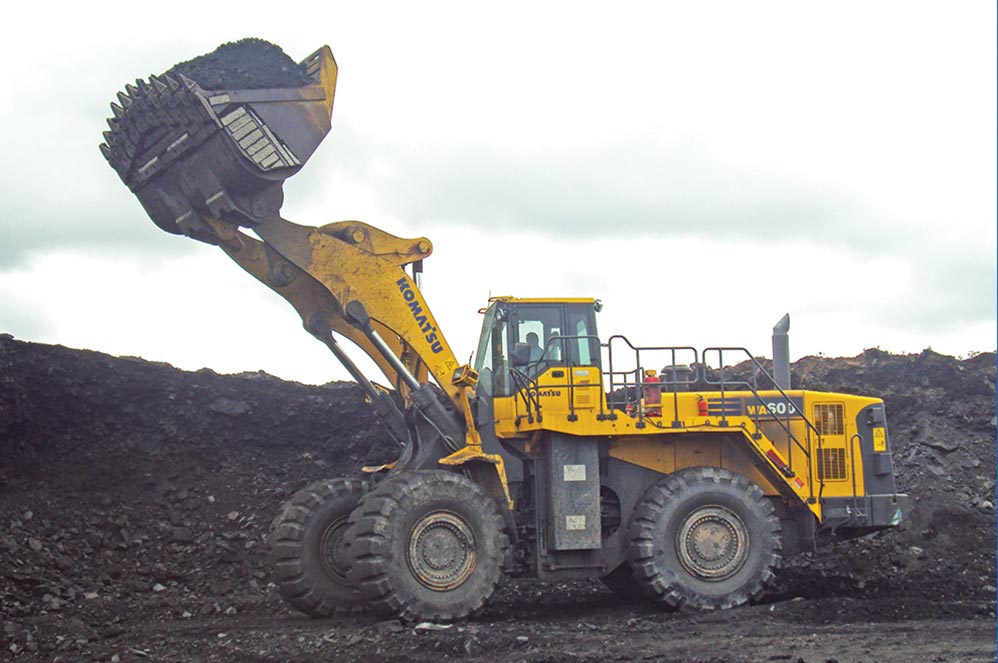
Cat 988K vs Komatsu WA600-6R: the two differ on 69 of 85 listed specs. The main differences are Engine (Cat 580 HP vs Komatsu 530 HP), Max Torque (2852 Nm @ 1200 rpm vs NA), Operating Weight (51062 kg vs 52700 - 52900 Kg), Weight (51062 kg vs 52900 Kg). The other 16 specs are the same.
* Ex-factory price ranges are indicative for Oct 2026 and change with variant, city and offers; confirm with the dealer. On-road cost adds transport, RTO, insurance and accessories. Disclaimer
The comparisons provided are based on the technical specifications published by the respective OEMs on their official websites and brochures. Please confirm these details directly with the OEMs before making any final decision.
Key Highlights
Cat 988K
Komatsu WA600-6R
Cat 988K
VS
Komatsu WA600-6R
Wheel Loader
Cat 988K vs Komatsu WA600-6R: the two differ on 69 of 85 listed specs. The main differences are Engine (Cat 580 HP vs Komatsu 530 HP), Max Torque (2852 Nm @ 1200 rpm vs NA), Operating Weight (51062 kg vs 52700 - 52900 Kg), Weight (51062 kg vs 52900 Kg). The other 16 specs are the same.
Specs from OEM brochures · comparison updated Sep 2026
Cat 988K
Price Available Soon
Komatsu WA600-6R
Price Available Soon
Particulars
Cat 988K
Komatsu WA600-6R
Cat 988K vs Komatsu WA600-6R: Which One Should You Buy?
Both machines are big wheel loaders. They load trucks fast in mines, quarries, and large stockyards. The tables below give you all the numbers. The real question is which one fits your work and your site. The Cat 988K has more engine power and takes many bucket sizes. This helps when your material keeps changing. The Komatsu WA600-6R can lift a heavier load and dumps a little higher. This helps when you load tall trucks all day with the same heavy material.
These are costly machines that run long hours. So the small daily things matter more than one number. Is the Cat or Komatsu dealer near your site? How fast can you get parts and a trained driver? How much diesel does it burn in a shift? Will it be easy to sell later? Think about these first. You can also see all the machines in our wheel loader range and read our wheel loader buying guide.
Cat 988K
Pros:
Higher engine power of 580 HP for greater work efficiency
4-stroke, turbocharged and aftercooled Cat C18 ACERT™ engine meets U.S. EPA Tier 4 Final/EU Stage IV emission standards
Exclusive Cat Planetary Power Shift Transmission enhances drivetrain efficiency
Impressive maximum torque of 2852 Nm at lower rpms for strong pushing power
Comprehensive safety with oil-cooled, multi-disc service brakes compliant with ISO 3450:2011
Has a larger bucket capacity range of 4.7-13 m³, providing versatile options for material handling
Heavier operating weight may result in increased stability during heavy operations
Cons:
Slightly lower top speed in reverse compared to the Komatsu WA600-6R
Engine displacement is less than Komatsu's offering which may impact engine durability and life span
Lacks clear specification on width over tyres and turning radius, which could be deciding factors in maneuverability
Komatsu WA600-6R
Pros:
Features a Komatsu SAA6D170E-5 engine which complies with EPA Tier 3 and EU Stage IIIA standards
Slightly higher top forward and reverse speeds, which might offer better maneuverability and cycle times
Includes a double-acting, piston-type pump which can deliver optimized pump flow control
Hydraulically actuated, wet disc service, and parking brakes provide reliable stopping and holding capabilities
Larger fuel and hydraulic system capacities than the Cat 988K, possibly ensuring longer operational periods between refills
Greater dumping height and max hinge pin height potentially allows for dumping over higher edges
Cons:
Lower engine power of 530 HP might affect heavy-duty material handling efficiency
The omission of key specifications such as payload, maximum torque, and turning radius, which are essential for full comparison
Older engine emission standards could pose limitations in increasingly stringent regulatory environments
Pros:
Cons:
Closing Recommendation
If your work needs strong pulling power, many bucket choices for changing material, and firm brakes on slopes, the Cat 988K fits that work. If your work needs easy turning in tight spots, a cleaner engine, and steady heavy loading into tall trucks, the Komatsu WA600-6R fits that work. Also check which dealer is near you for service, parts, trained drivers, and easy resale — then match the machine to your work: Cat 988K for tough mixed jobs, Komatsu WA600-6R for steady heavy truck loading.
Cat 988K Vs Komatsu WA600-6R Wheel Loader Price, Technical Specifications & Features
With superior load capacity, the Cat 988K wheel loader is ideal for India’s heavy-duty material handling requirements, making this wheel loader a reliable choice for demanding applications.
Designed for heavy-duty tasks, the Komatsu WA600-6R wheel loader excels in India’s mining and quarrying operations, making this wheel loader a reliable choice for demanding material handling applications.
Cat 988K vs Komatsu WA600-6R: Which One Should You Buy?
Both machines are big wheel loaders. They load trucks fast in mines, quarries, and large stockyards. The tables below give you all the numbers. The real question is which one fits your work and your site. The Cat 988K has more engine power and takes many bucket sizes. This helps when your material keeps changing. The Komatsu WA600-6R can lift a heavier load and dumps a little higher. This helps when you load tall trucks all day with the same heavy material.
These are costly machines that run long hours. So the small daily things matter more than one number. Is the Cat or Komatsu dealer near your site? How fast can you get parts and a trained driver? How much diesel does it burn in a shift? Will it be easy to sell later? Think about these first. You can also see all the machines in our wheel loader range and read our wheel loader buying guide.
Cat 988K
Pros:
Higher engine power of 580 HP for greater work efficiency
4-stroke, turbocharged and aftercooled Cat C18 ACERT™ engine meets U.S. EPA Tier 4 Final/EU Stage IV emission standards
Exclusive Cat Planetary Power Shift Transmission enhances drivetrain efficiency
Impressive maximum torque of 2852 Nm at lower rpms for strong pushing power
Comprehensive safety with oil-cooled, multi-disc service brakes compliant with ISO 3450:2011
Has a larger bucket capacity range of 4.7-13 m³, providing versatile options for material handling
Heavier operating weight may result in increased stability during heavy operations
Cons:
Slightly lower top speed in reverse compared to the Komatsu WA600-6R
Engine displacement is less than Komatsu's offering which may impact engine durability and life span
Lacks clear specification on width over tyres and turning radius, which could be deciding factors in maneuverability
Komatsu WA600-6R
Pros:
Features a Komatsu SAA6D170E-5 engine which complies with EPA Tier 3 and EU Stage IIIA standards
Slightly higher top forward and reverse speeds, which might offer better maneuverability and cycle times
Includes a double-acting, piston-type pump which can deliver optimized pump flow control
Hydraulically actuated, wet disc service, and parking brakes provide reliable stopping and holding capabilities
Larger fuel and hydraulic system capacities than the Cat 988K, possibly ensuring longer operational periods between refills
Greater dumping height and max hinge pin height potentially allows for dumping over higher edges
Cons:
Lower engine power of 530 HP might affect heavy-duty material handling efficiency
The omission of key specifications such as payload, maximum torque, and turning radius, which are essential for full comparison
Older engine emission standards could pose limitations in increasingly stringent regulatory environments
Pros:
Cons:
Closing Recommendation
If your work needs strong pulling power, many bucket choices for changing material, and firm brakes on slopes, the Cat 988K fits that work. If your work needs easy turning in tight spots, a cleaner engine, and steady heavy loading into tall trucks, the Komatsu WA600-6R fits that work. Also check which dealer is near you for service, parts, trained drivers, and easy resale — then match the machine to your work: Cat 988K for tough mixed jobs, Komatsu WA600-6R for steady heavy truck loading.
Cat 988K Vs Komatsu WA600-6R Wheel Loader Price, Technical Specifications & Features
With superior load capacity, the Cat 988K wheel loader is ideal for India’s heavy-duty material handling requirements, making this wheel loader a reliable choice for demanding applications.
Designed for heavy-duty tasks, the Komatsu WA600-6R wheel loader excels in India’s mining and quarrying operations, making this wheel loader a reliable choice for demanding material handling applications.
69 differ · 16 identical
Key highlights: Cat 988K vs Komatsu WA600-6R Wheel Loader
Cat 988K
Komatsu WA600-6R
Engine Make
Cat® C18 ACERT™
Komatsu SAA6D170E-5
Max Torque
2852 Nm @ 1200 rpm
NA
Fuel Tank
712 L
718 L
Hydraulic System
580 L/min
239 + 239 L/min
Min. Ground Clearance
568 mm
525 mm
Payload
11300 kg
NA
Steering Angle
±43°
±43°
Drive Type
4-wheel drive (4WD)
4-wheel drive (4WD)
Wheelbase
4550 mm
4500 mm
Tyres
35/65-R33 tire
35/65-33
Max. Breakout Force
371 kN
387 kN
Overall Length
12204 mm
11985 mm
Warranty
1 Year
1 Yr. / 3000 hr.
AC Cabin
Standard
Standard
GPS
Standard
Standard
Key highlights: Cat 988K vs Komatsu WA600-6R Wheel Loader
Cat 988K
Komatsu WA600-6R
Engine Make
Cat® C18 ACERT™
Komatsu SAA6D170E-5
Max Torque
2852 Nm @ 1200 rpm
NA
Fuel Tank
712 L
718 L
Hydraulic System
580 L/min
239 + 239 L/min
Min. Ground Clearance
568 mm
525 mm
Payload
11300 kg
NA
Steering Angle
±43°
±43°
Drive Type
4-wheel drive (4WD)
4-wheel drive (4WD)
Wheelbase
4550 mm
4500 mm
Tyres
35/65-R33 tire
35/65-33
Max. Breakout Force
371 kN
387 kN
Overall Length
12204 mm
11985 mm
Warranty
1 Year
1 Yr. / 3000 hr.
AC Cabin
Standard
Standard
GPS
Standard
Standard
Full specifications: Cat 988K vs Komatsu WA600-6R Wheel Loader
Questions buyers ask about the Cat 988K vs Komatsu WA600-6R
Ans.
Both hold their value well because both are strong, well-known machines. What matters most is service history and running hours. A machine with full service records and lower hours sells faster and for a better price. Keep every service bill. Buyers in mining and quarry work know both the Cat and the Komatsu, so you will find takers for either one.
Ans.
Yes, for both, but check which brand is stronger near your site first. Cat and Komatsu both have large dealer networks in India. On a big loader, even one day of waiting for a part costs you a lot of work. So pick the brand whose dealer and parts store is closest to where you dig. Trained drivers for both machines are easy to find in mining areas.
Ans.
Diesel use depends more on your work and your driver than on the badge. On a big loader, fuel is your largest running cost. The Cat 988K has a newer, cleaner engine, which can help fuel use. The Komatsu WA600-6R has a bigger engine. Ask each dealer for the fuel use per hour for your kind of work, and ask other owners near you what they really get.
Ans.
The Komatsu WA600-6R is a strong pick for steady heavy loading in mines and quarries. It can lift a heavier load and dumps a bit higher, so it fills tall trucks well. The Cat 988K is better when your material and bucket size keep changing across different jobs. Match the machine to the work you do most.
Ans.
Yes, all three are easy for machines this size. Banks, finance companies, and the Cat and Komatsu dealers all give loans and lease plans for big loaders. Many fleet and EPC firms take a lease to save cash at the start. How much you pay each month depends on your down payment and your record. Ask two or three lenders before you decide.
Ans.
Yes, very useful, mainly for fleet and EPC owners with many machines. On your phone or computer you can see where each loader is, how many hours it has run, how much fuel it uses, and when it needs service. This helps you plan service and stop wastage. Cat has Product Link and Komatsu has KOMTRAX for this.
Cat 988K Vs Komatsu WA600-6R - Compare Price & Availability Across 600+ Locations in India
Compare Cat 988K Vs Komatsu WA600-6R price and availability across all major cities in India including Mumbai, Pune, Kolkata, Hyderabad, Chennai, Bengaluru, Delhi, Ahmedabad, Indore, Jaipur, Guwahati, and 600+ more locations.
Desi Machines is a platform where you can see and compare construction equipment. It showcases images, brochures, features, technical specifications, brand details & dealer information. All these are taken from respective brand websites, brochures, and other public resources. We do not claim ownership of these materials and strive to ensure their accuracy. However, the disparity may happen and we advise users to verify directly with respective brands and dealers. Desi Machines is not liable for any inaccuracies or reliance on the information provided. Use of this website is at your own discretion.

 Excavator
294 models
Excavator
294 models  Backhoe Loader
51 models
Backhoe Loader
51 models  Crane
68 models
Crane
68 models  Concrete Mixer
79 models
Concrete Mixer
79 models  Wheel Loader
54 models
Wheel Loader
54 models  Compactor / Roller
45 models
Compactor / Roller
45 models  Motor Grader
42 models
Motor Grader
42 models  Dozer
41 models
Dozer
41 models  Concrete Pump
66 models
Concrete Pump
66 models  Skid Steer Loader
11 models
Skid Steer Loader
11 models  Telehandler
13 models
Telehandler
13 models