Excavator
294 models
Excavator
294 models  Backhoe Loader
51 models
Backhoe Loader
51 models  Crane
68 models
Crane
68 models  Concrete Mixer
79 models
Concrete Mixer
79 models  Wheel Loader
54 models
Wheel Loader
54 models  Compactor / Roller
45 models
Compactor / Roller
45 models  Motor Grader
42 models
Motor Grader
42 models  Concrete Pump
66 models
Concrete Pump
66 models  Skid Steer Loader
11 models
Skid Steer Loader
11 models  Telehandler
13 models
Telehandler
13 models 


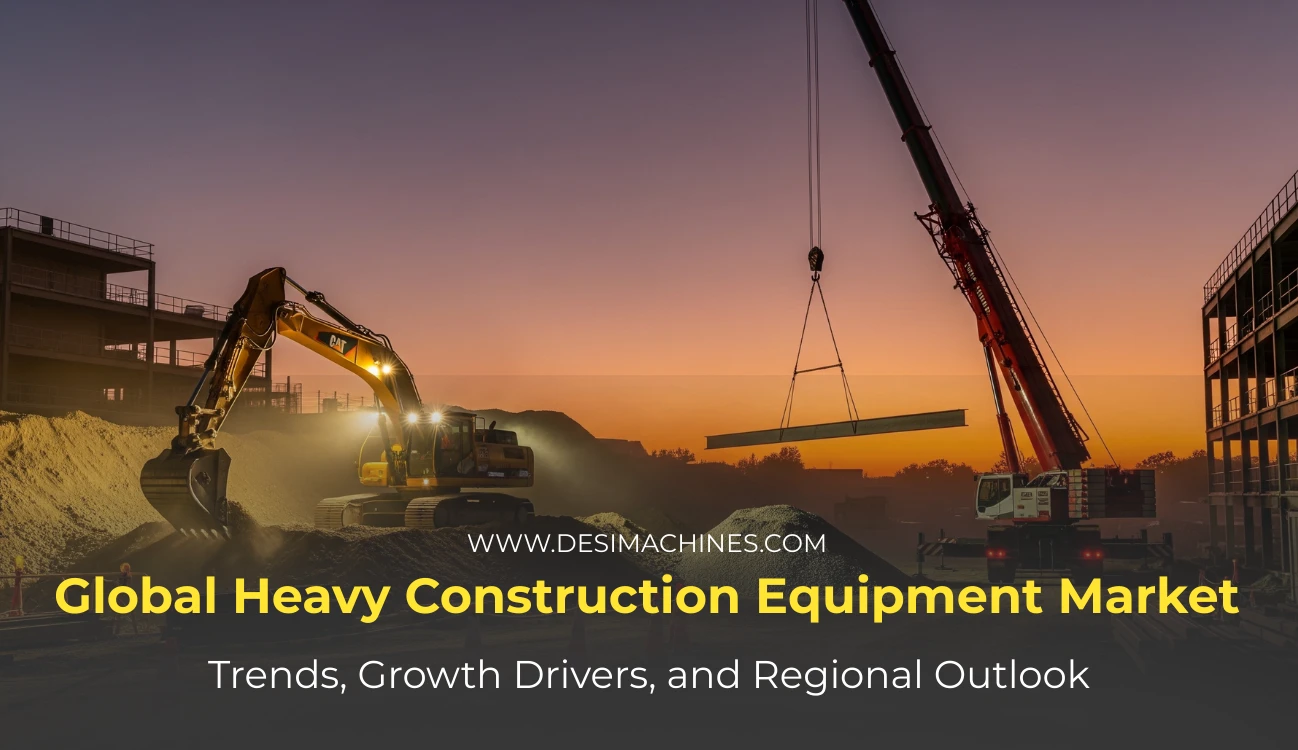
The global heavy construction equipment market is projected to surpass $344 billion by 2033, driven by rapid urbanization, mining, and sustainable infrastructure projects. Key trends include the rise of electric and hybrid machines, smart connected equipment, rental models, and automation. Asia-Pacific leads demand with large-scale infrastructure projects, while North America and Europe focus on eco-friendly machinery. For contractors, builders, and fleet owners, platforms like Desi Machines let buyers compare specifications, check indicative prices and line up finance on the same machine before committing.
Specifications are as announced by the manufacturer and vary by variant and model year. Confirm the final specification and current price with the dealer or OEM before you buy. Compare current listings for excavators and motor graders, or check equipment finance options, against the trends below.
The heavy construction equipment market is on course to cross $344 billion by 2033. With rapid infrastructure development, smart city projects, and increasing demand for sustainable construction solutions, the sector is witnessing unprecedented growth. For contractors, builders, and fleet owners, this means a larger selection of advanced machines—ranging from excavators and loaders to cranes and motor graders—each designed to maximize productivity and efficiency.
At Desi Machines, we recognize that investing in the right machine goes beyond just comparing prices—it’s about understanding trends, applications, specifications, and long-term returns. That’s why we bring clarity and transparency to the world of heavy construction equipment, helping you make informed and confident decisions.
Market Size and Growth Outlook
According to Market Data Forecast, the global heavy construction equipment market is projected to grow steadily at a CAGR of over 4%, surpassing the $344 billion mark by 2033. This growth is driven by:
- Urbanization and smart cities: Rapid infrastructure development in emerging economies is fueling the demand for excavators, loaders, and road construction machinery.
- Mining and resource extraction: Increased demand for minerals, coal, and aggregates is boosting sales of earthmoving and drilling equipment.
- Green and sustainable construction: Manufacturers are developing electric and hybrid machines to reduce emissions and improve efficiency.
That steady rise is as much about financing, insurance and lifecycle management as it is about the machines themselves — services that Desi Machines is positioned to simplify for buyers and contractors.
Key Trends Shaping the Heavy Construction Equipment Market
The next decade of heavy construction equipment will be decided on intelligence, efficiency and adaptability as much as on size and power. Below are the major trends:
1. Rise of Electric and Hybrid Equipment
With stricter emission norms and rising sustainability goals, the industry is shifting toward eco-friendly machines. Electric excavators, hybrid loaders, and battery-powered compact machines are gaining traction, particularly in Europe and North America.
2. Smart and Connected Machinery
IoT, AI, and telematics are transforming heavy equipment. Fleet owners can now track fuel consumption, machine health, and productivity in real-time. This reduces downtime, lowers operational costs, and increases ROI.
3. Rental and Leasing on the Rise
Given the high cost of purchasing new equipment, many contractors are opting for rental or leasing. This model allows businesses to access advanced machinery without a heavy upfront investment. Platforms like Desi Machines further simplify this by showcasing a wide variety of machines along with financing options.
4. Automation and Robotics in Construction
From autonomous bulldozers to remotely controlled excavators, automation is slowly entering the sector. While adoption is still in early stages, it promises to revolutionize safety and efficiency.
5. Focus on Operator Comfort and Safety
Manufacturers are now designing cabins with ergonomic seating, advanced controls, and enhanced visibility. Safety systems like collision avoidance and automatic braking are becoming standard.
Segmentation of the Heavy Construction Equipment Market
Understanding market segmentation is crucial for buyers and fleet owners. Here’s how the industry breaks down:
- By Equipment Type: Earthmoving equipment (excavators, loaders, bulldozers), material handling equipment (cranes, forklifts), and road construction machinery (graders, rollers, pavers).
- By Application: Infrastructure, commercial construction, residential projects, mining, and oil & gas.
- By End User: Contractors, rental companies, government bodies, and industrial players.
- By Region: North America, Europe, Asia-Pacific, Latin America, Middle East & Africa.
Each category has its own growth driver. For example, the excavator segment dominates earthmoving, while the crane segment is expected to rise sharply with global metro rail and high-rise construction projects.
Regional Outlook: Where Growth Will Happen
1. Asia-Pacific (APAC)
- Dominates the global market due to large-scale infrastructure projects in India, China, and Southeast Asia.
- India’s National Infrastructure Pipeline and rapid urbanization are major demand boosters.
- Excavators, backhoe loaders, and road construction machines see the highest adoption.
2. North America
- Growth driven by smart city initiatives, urban redevelopment, and renewable energy projects.
- The U.S. has a strong rental market for cranes, loaders, and graders.
- The focus on electric and hybrid machines is higher here due to strict emission norms.
3. Europe
- Leading in sustainable construction and eco-friendly machinery adoption.
- EU’s green infrastructure projects are fueling demand for compact and hybrid equipment.
4. Middle East & Africa
- Major investments in oil & gas, mining, and mega construction projects like NEOM city in Saudi Arabia.
- High demand for heavy lifting equipment and earthmoving machines.
5. Latin America
- Brazil and Mexico are driving growth with large-scale housing and transport infrastructure projects.
- Focus on affordable and versatile equipment for varied terrains.
You may also like: Construction Equipment Sales Trends in India
Growth Drivers Behind the Market Surge
Several factors explain why the heavy construction equipment market is expanding so rapidly:
- Infrastructure development initiatives: Governments worldwide are investing in roads, bridges, railways, and housing projects.
- Mining and resource demand: Higher consumption of minerals and aggregates is creating consistent demand for earthmoving equipment.
- Technology integration: Telematics, AI, and automation are making machines smarter and more efficient.
- Shift to rental models: Renting heavy machinery provides flexibility and cost savings for contractors.
- Sustainability concerns: Growing emphasis on reducing carbon emissions is pushing for hybrid and electric solutions.
Why This Matters for Buyers and Contractors
For a contractor or fleet owner, this global market boom means access to:
- More equipment options tailored to specific applications.
- Cost-effective rental and financing solutions.
- Smarter, safer, and more sustainable machines.
Desi Machines lists construction machinery across categories so you can compare models side by side and shortlist on specification rather than on brochure claims. Whether you’re looking for an excavator for a mining site, a motor grader for road construction, or financing and insurance solutions, we help you make the most informed choice.
Conclusion
The heavy construction equipment market is on track to surpass $344 billion by 2033, powered by infrastructure expansion, smart technology, and sustainable machinery. As the industry evolves, staying updated on trends and regional opportunities is key to making the right investments.
At Desi Machines, we bridge the gap between buyers and the world of heavy equipment by offering clarity, transparency, and expert insights. Whether you run one machine or forty, the aim is the same: enough specification and price detail in one place to make the call yourself.