Excavator
294 models
Excavator
294 models  Backhoe Loader
51 models
Backhoe Loader
51 models  Crane
68 models
Crane
68 models  Concrete Mixer
79 models
Concrete Mixer
79 models  Wheel Loader
54 models
Wheel Loader
54 models  Compactor / Roller
45 models
Compactor / Roller
45 models  Motor Grader
42 models
Motor Grader
42 models  Dozer
41 models
Dozer
41 models  Concrete Pump
66 models
Concrete Pump
66 models  Skid Steer Loader
11 models
Skid Steer Loader
11 models  Telehandler
13 models
Telehandler
13 models 


A payloader is simply the older, popular name for a wheel loader — a wheeled machine with a large front bucket that lifts, carries and loads loose material such as sand, gravel, coal and soil into trucks. The name comes from the Hough Company’s 1930s "Hough Payloader"; today ISO and manufacturers officially call it a wheel loader. Same machine, two names. In India a payloader runs from about ₹19 lakh for a 4-tonne compact machine to ₹1.55 crore for a 52-tonne mining loader, with the common 10–12 tonne site class at roughly ₹47–56 lakh (indicative, September 2026).
In mining, construction, agriculture, and industrial work, machinery is the pillar of productivity. One of the most critical heavy machines is the payloader, or technically nowadays the wheel loader. Although the name payloader is still in common usage, the generally accepted name in instruction books, trade, and industry is wheel loader.
This blog discusses the origin of the word ‘payloader’, the reasons behind the industry shift to wheel loaders, the most important features, applications, advantages, comparisons, and how the shift in terminology affects the current usage of heavy equipment.
What is a Payloader Machine?
The term “payloader” was named by the Hough Company. They marketed the product by naming it “Hough Payloaders” during the 1930s. The machines were originally designed to load sand, gravel, coal, and dirt into trucks with efficiency. Similar to the term “Xerox” being used generically for photocopying, or “Jeep” for Sport Utility Vehicles, the brand name “Payloader” has become a generic term for any front-end loading equipment.
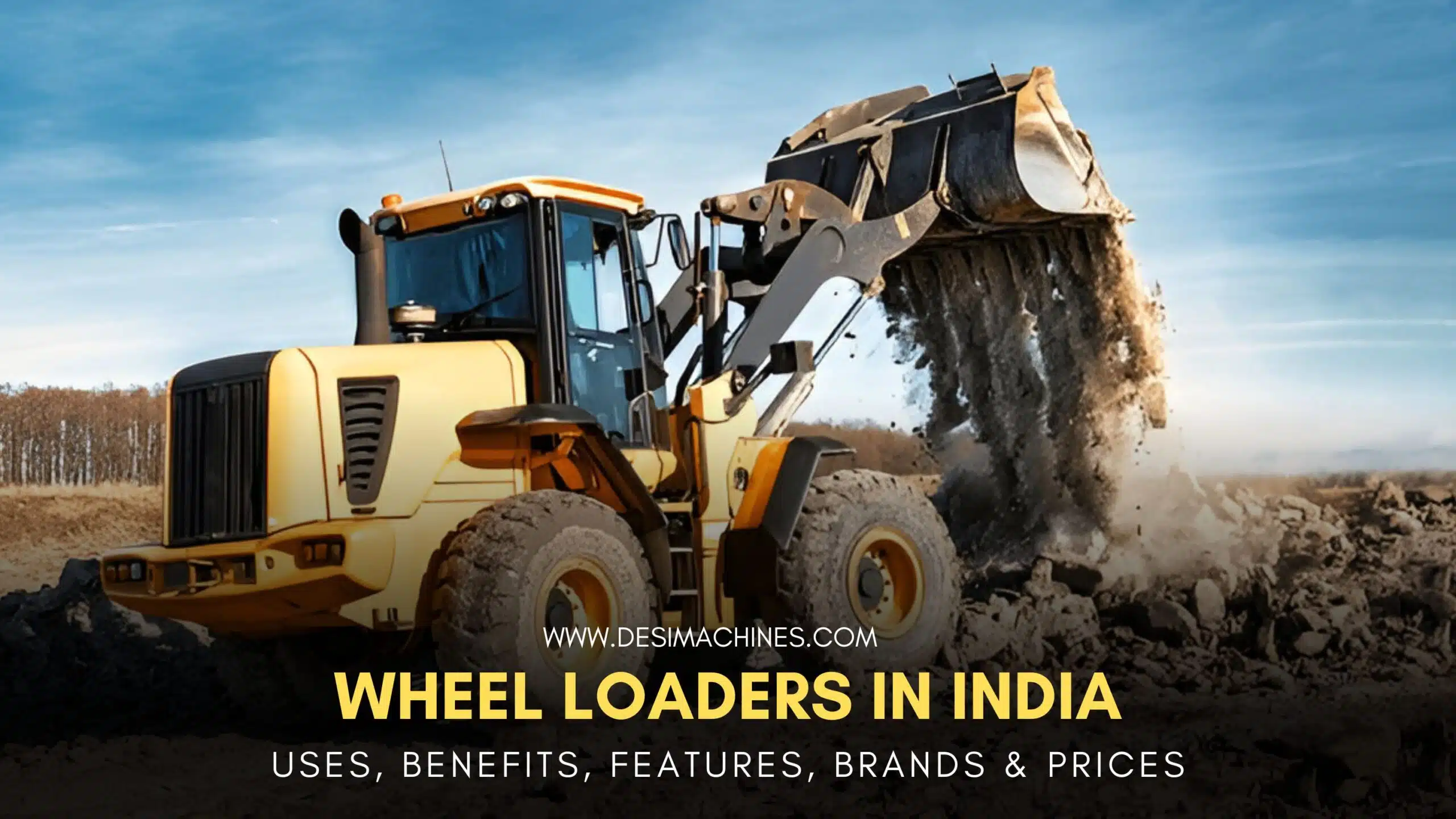
A pay loader (or wheel loader) is essentially a heavy-duty front-end loader with a large bucket attached at the front. It is utilized to lift, carry, and dump bulk materials like:
- Sand and gravel
- Soil and builder’s waste
- Coal and minerals
- Agricultural produce
- Industrial and recycling waste
Unlike track loaders, payloaders run on wheels, offering greater mobility and faster movement on roads.
Payloader Size, Specs and Price in India (2026)
A payloader is sorted by operating weight, and that single number pulls bucket size, engine power and price along with it. The four classes below are the ones an Indian buyer actually chooses between, with figures taken from the wheel loaders listed on DesiMachines.
| Class | Bucket capacity | Operating weight | Engine power | Indicative price |
|---|---|---|---|---|
| Compact ACE ALN 100, Liugong 818N |
1.0–1.2 m³ | 4,000–5,610 kg | 74–75 HP | ₹19–37 lakh |
| Site standard Tata Hitachi TL340H, Hyundai HL930I, L&T 9020, XCMG ZL33FV, Liugong 836N |
1.5–3.5 m³ | 10,600–12,210 kg | 121–160 HP | ₹47–56 lakh |
| Heavy Liugong 856H MAX, XCMG ZL48GV, Hyundai HL950I, CAT 950GC |
2.5–5.5 m³ | 17,300–18,849 kg | 225–230 HP | ₹65 lakh–₹1.4 crore |
| Mining Liugong 8128H |
6.5–12 m³ | 52,000 kg | 569 HP | ₹1.5–1.55 crore |
Most Indian contractors buy in the site-standard class, because a 10–12 tonne machine with a 1.5–3.5 m³ bucket loads a tipper in three to four passes and still travels between sites on its own wheels. Go compact only if the work is inside sheds and narrow yards; go heavy only if you are feeding a crusher or working a quarry face, where the extra bucket pays for the extra diesel. Current model-wise figures are on the wheel loader price page.
Why is Payloader Now Called Wheel Loader?
While the payloader name continues to dominate discussions, the industry technical and professional term is wheel loader. Several reasons account for this shift:
1. Industry Standardization
The International Organization for Standardization (ISO) and the Society of Automotive Engineers (SAE) were the first to introduce and apply the term “wheel loader” in their technical literature, giving it an international definition and explaining how to distinguish it from other loaders like skid loaders or track loaders.
2. Avoiding Trademark Conflicts
Because Payloader was an original trademarked name by Hough (subsequently lost to International Harvester and Case), other companies could not legally market their machines as payloaders. The neutral name wheel loader facilitated equitable competition.
3. Clarity & Functionality
In opposition to a payloader, a wheel loader has an inherently self-describing name: it asserts wheeled mobility and loading operations that make it easier to comprehend worldwide by operators and purchasers.
4. Global Trade & Manuals
As construction equipment increased around the world, manufacturers, suppliers, and catalogs focused on wheel loaders. This provided them with a homogeneous vocabulary for manuals, training, spare parts, and worldwide sales.
5. Technological Evolution
Modern wheel loaders are equipped with advanced technology. New features like GPS tracking, telematics, hybrid power, comfortable cab for the operator are equipped in the new models. This transition from the old models has given the name “wheel loader”.
Key Features of a Wheel Loader (Payloader)
Modern-day wheel loader offers multiple features as they are equipped with advanced capabilities, making them diverse and powerful
- Front Bucket Loader – Large bucket for bulk lifting.
- Wheel-Based Mobility – Faster travel than tracked loaders.
- Articulated Steering – Smooth movement in a compact space.
- Multiple Attachments – Multiple attachments, like forks, grapples, snowplows, and sweepers, can be attached.
- Operator Cabin – The operator’s cabin is equipped with ergonomic design, climate control, and safety features.
- Durability – Reinforced tires, robust hydraulic arms, and resilient chassis.
Applications of Payloader / Wheel Loader
The payloader (wheel loader) is the most versatile heavy equipment, and therefore it is an essential asset to industries. The following is a detailed explanation of its applications:
1. Construction Industry
Wheel loaders are the huge machines at a construction site. These are used for hard-working site preparation, like leveling terrains, loading soil, and throwing away trash before real work can begin. With extremely large bucket sizes, these are capable of handling fast-moving sand, gravel, and building materials for downstream project operations. Loading or dumping material by wheel loader keeps material flow uninterrupted for road, bridge, or skyscraper construction.
2. Mining Sector
Wheel loaders face the challenge of handling heavy loads of coal, ores, and minerals inside operational mines. One of the most important tasks of wheel loaders is in the movement of stockpiles, with materials moving from excavation to crushers, conveyors, or trucks. Their strong build and capacity to endure demanding ground conditions are exceptionally suitable in quarries and large open-pit mines where speed and capacity are of paramount importance.
3. Agriculture
They are equally helpful in modern farms. They transport silage, grains, or harvested crops all over the large area of the field and into storage. They are also used in transporting manure and fertilizers, which are gigantic aids to bulk farm work. They may also be equipped with forks or grapples, which further enhances their use in the handling of hay bales, feed, and land clearing for cultivation.
4. Industrial Use
Waste recycling and disposal industries rely on wheel loaders since the equipment is able to scoop, move, and dump waste material into recycling or processing facilities. The equipment is also used in factories and warehouses for loading raw material, bulk inventory management, or cleaning production floors. It is also used in docks and ports to enable fast transportation of cargo or bulk products from storehouses to transport vehicles.
5. Public Infrastructure
Wheel loaders make it possible for a range of infrastructure projects. They are an essential component of roadwork, where they transport aggregates, fill, and assist with paving. They are also snow removers in cold climates, removing highways and city streets effectively. Urban municipal governments utilize them for waste removal and ground development, making it possible for efficient management of cities.
Benefits of Using a Wheel Loader (Payloader)
- High Efficiency – Transfers large amounts fast and securely.
- Mobility – Performs optimally on roadways, off-road, and on construction.
- Versatility – They are versatile as they support many attachments for many activities.
- Operator Comfort – Operator’s fatigue is reduced with ergonomic design in modern cabins.
- Durability & Reliability – Modern wheel loaders are built strong to withstand rough working conditions.
Also Read: Wheel Loaders: Benefits, Applications, Features
Practical Implications of the Terminology Shift
The transition from payloader to wheel loader has important implications for operators and companies in turn:
Procurement & Comparisons – Buyers can compare wheel loaders across manufacturers based on standardized specs like bucket capacity and horsepower.
Maintenance & Parts – Catalogs and websites now carry “wheel loader parts,” which are more accessible than the former “payloader parts.”
Training & Safety – Workforce training programs overall teach wheel loader operations, avoiding confusion and increasing site safety.
SEO & Online Visibility – Companies gain enhanced rankings using “wheel loader” as the main keyword, while at the same time including “payloader” to preserve legacy familiarity.
Payloader vs Other Loaders
- Payloader (Wheel Loader) vs Track Loader
- Wheel loaders = faster, better road mobility.
- Track loaders = stronger on extreme terrains but slower.
- Payloader vs Skid Steer Loader
- Wheel loaders = heavy-duty, suited for large-scale operations.
- Skid steers = compact, ideal for small projects.
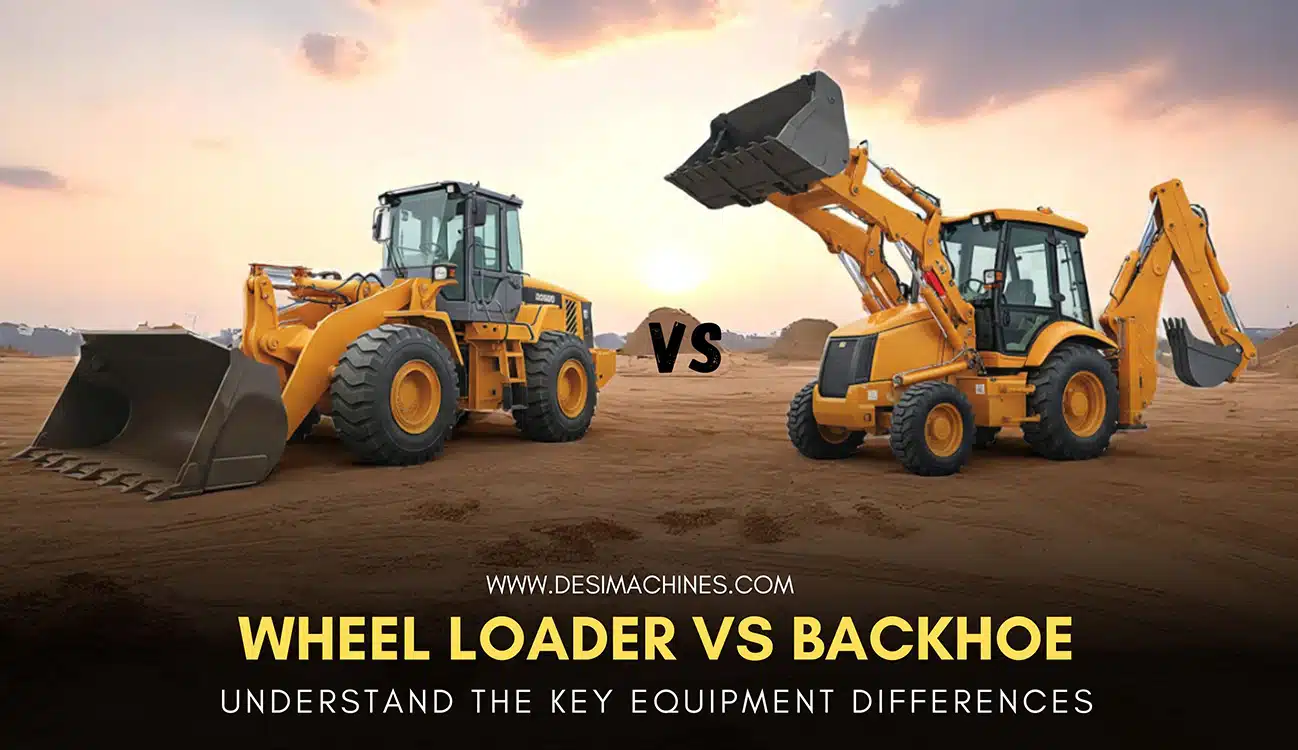
Also Read: Wheel Loader vs Backhoe Loader: Key Differences
Payloader, backhoe loader or skid steer: which one do you actually need?
Buyers searching for a payloader are usually deciding between three machines, and the wrong pick is expensive. A wheel loader (payloader) is the right machine when the job is moving volume — loading trucks, stockpiling aggregate, feeding a crusher — because the bucket is large and the machine is built to shuttle. A backhoe loader trades bucket size for a rear digging arm, so it suits a site that has to dig and load with one machine and one operator. A skid steer loader is the compact option for tight urban work and attachment-heavy jobs, not for sustained loading.
The rule of thumb owners use: if you are loading more than you are digging, buy the payloader. If trenching is half the work, the backhoe pays for itself. We compare the first two head to head in wheel loader vs backhoe loader, and the compact class in top skid steer loader brands in India. If you are buying second-hand, the checks that matter are in our used equipment buying guide, and the running-cost picture over a full ownership cycle is in how long heavy machinery lasts.
The Legacy of Payloader
Even though the market has officially changed to the term “wheel loader,” many experienced operators still colloquially use the term “payloader.” This colloquialism has been in existence since the early 1930s and remains the colloquial term used in common talk on the work site. However, for technical, international, and commercial use, “wheel loader” has become the international term.
Future of Wheel Loaders
The evolution from brand-specific “payloader” to the sophisticated wheel loader of today is the culmination of the history of heavy equipment. Wheel loaders of the future will incorporate:
- AI and automation will be included to make it operator-free.
- Electric and hybrid models are being introduced to ensure sustainability.
- Advanced telematics and real-time monitoring help signal timely maintenance and predictive maintenance.
These innovations will make wheel loaders smarter, greener, and more productive than ever.
Why payloader became wheel loader
The term wheel loader does not refer to a new machine; it is an indication of the evolution in how the industry operates under standardization and trade. Payloader has been replaced by wheel loader (the name) in connection with present-day heavy-equipment applications.
Regardless of the term used to describe this equipment, it is still being used today throughout the building, mining, agriculture, and industrial sectors as an essential tool for progress and growth.
So while payloader and wheel loader are two names for the same machine, understanding their features, applications, and advantages helps you make informed equipment choices. If you’re looking to compare wheel loader models, prices, and specifications with 100% transparency, visit Desi Machines—where you can compare construction and heavy equipment across India.
Looking for a payloader for your site? Compare current prices, bucket capacities and EMI options on every wheel loader sold in India — Komatsu, CAT, JCB, L&T, XCMG, Tata Hitachi and more.
Model availability, bucket capacities and prices shown on the linked wheel loader pages are indicative and change with variant, attachments and state registration. Confirm specifications and the final on-road figure in writing with our team or OEM before you commit.
Compare wheel loaders side by side
These pairs put two wheel loaders next to each other, with specifications and price ranges.