Excavator
294 models
Excavator
294 models  Backhoe Loader
51 models
Backhoe Loader
51 models  Crane
68 models
Crane
68 models  Concrete Mixer
79 models
Concrete Mixer
79 models  Wheel Loader
54 models
Wheel Loader
54 models  Compactor / Roller
45 models
Compactor / Roller
45 models  Motor Grader
42 models
Motor Grader
42 models  Dozer
41 models
Dozer
41 models  Concrete Pump
66 models
Concrete Pump
66 models  Skid Steer Loader
11 models
Skid Steer Loader
11 models  Telehandler
13 models
Telehandler
13 models 


The 20 Ton excavator — what most Indian contractors still call a “Poclain” or simply “JCB” — dominates Indian construction sites in 2026. And for good reason. Every machine in this class is a tracked machine, so it helps to first understand how crawler excavators are built and priced. With NHAI pushing Bharatmala packages across Rajasthan, MP, and the Northeast, Smart City projects running in 100+ cities, and state PWD tenders flooding the market every dry season, the 20 Ton (20,000 kg) segment handles more cubic metres of Indian soil than any other excavator class. This guide compares the top 10 models available in India — with real specs, indicative prices, fuel consumption, and the applications where each machine actually performs. No fluff. Just what you need to make the right call.
Every price below is an indicative range around the figure listed for that machine in our listings at the time of writing.
What is a 20 Ton Excavator?
A 20 Ton excavator refers to machines with an operating weight between 19,000 kg and 22,000 kg. Industry folks call this the “medium” or “standard” excavator class — though there’s nothing medium about what it can do. These machines sit in the sweet spot: powerful enough to handle highway trenching, basement excavation, and quarry loading, yet manoeuvrable enough to work in semi-urban sites without destroying everything around them.
Think of it this way. A 20 Ton excavator (heavier than 3 fully loaded Tata Prima trucks) moves 150–200 cubic metres per hour in standard soil conditions. That’s the balance contractors pay for — enough muscle for serious earthmoving, enough control for precision work near existing structures. Too small and you’re running two shifts to finish what one machine should handle. Too large and you’re paying for transport permits, wider access roads, and a machine that can’t turn around on a congested site.
Why 20 Ton Excavators are Most Popular in India 2026
Walk any NHAI highway package from Udaipur to Guwahati. Count the excavators. Eight out of ten will be 20 Ton machines. That’s not coincidence — it’s economics.
- Versatility: One machine handles trenching, loading, breaking, and grading. Highway projects, metro rail corridors, irrigation canal lining, PMAY housing foundations — the 20 Ton class does all of it.
- Cost-effectiveness: Across the 19,000–22,000 kg machines we list a price for, the range runs from about ₹50–55 Lakh at the entry end (XCMG XE210i) up to ₹75–88 Lakh for a CAT 320D3 GC, with the long-reach Tata Hitachi EX 215LC-SLR listed at ₹79–84 Lakh (indicative, as of Sep 2026). Going heavier is not automatically a ₹1 Crore decision. Our cheapest machine at 30 Tonne (30,000 kg) and above, the LiuGong 930E XLR, lists at ₹75–80 Lakh, and the 33 Tonne LiuGong 935E HD at ₹82–88 Lakh. But the better-known models in that class do cost more — the JCB 315LC HD runs ₹1.10–1.12 Crore.
- Transportation ease: A 20 Ton excavator fits on a standard trailer without oversize permits in most states. Try moving a 35 Ton machine from Nagpur to Raipur — you’ll spend three days on paperwork alone.
- Ideal project fit: Contractors handling ₹5–50 Crore projects find the 20 Ton class matches their scope perfectly. Not overkill. Not underpowered.
And here’s what most equipment blogs won’t tell you: the 20 Ton segment has the strongest second-hand market in India. When you sell after 8,000–10,000 running hours, you will find a buyer faster than in any other class. Nobody publishes a resale table for Indian excavators, so treat any percentage a dealer quotes you as his estimate rather than a number you can bank. What you actually recover turns on hours run, service records and the state of the undercarriage.
Top 10 Best 20 Ton Excavators in India 2026
Every model below was evaluated on five criteria: raw performance, fuel efficiency, price-to-value ratio, service network reach, and real-world application fit. No brand paid for placement here. These are the machines Indian contractors actually buy — and the reasons why.
1. JCB NXT 205
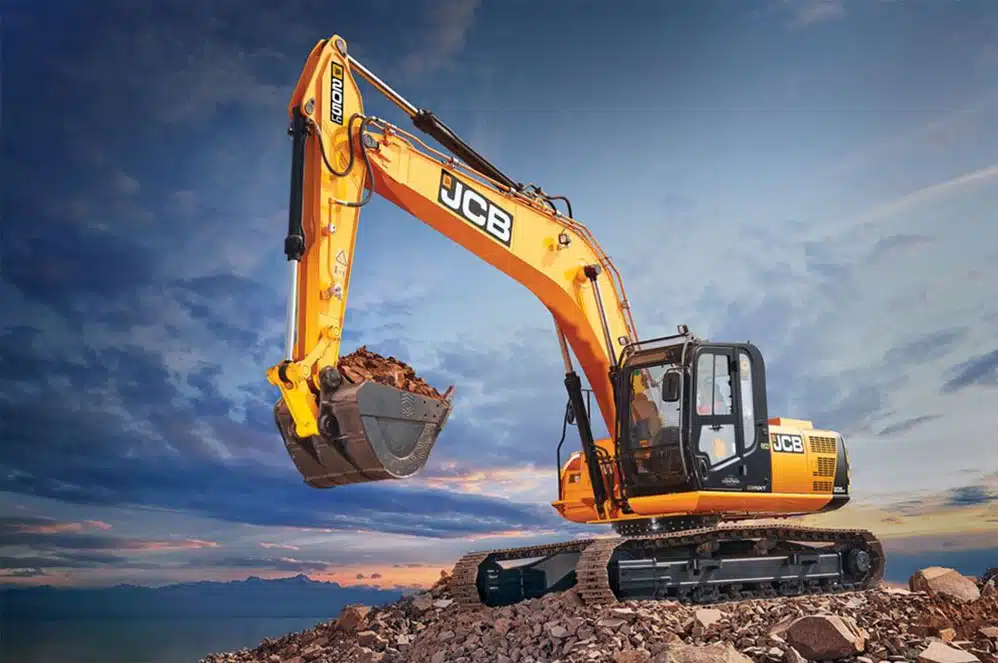
Operating Weight: 20,500 kg (20.5 Ton)
Engine: 140 HP Cummins
Price: ₹52–56 Lakh (indicative, as of Sep 2026)
The JCB NXT 205 is what most contractors default to — and that default isn’t wrong. JCB’s service network is the widest in India. Period. A breakdown in Jaisalmer or Imphal? JCB has a mechanic within 100 km. That matters more than any spec sheet number.
The machine delivers responsive hydraulics, a spacious cabin with good visibility, and 32% reduced fuel consumption compared to older JCB models. Best for trenching, road projects, and general construction where uptime is non-negotiable. The NXT 205 won’t win awards for innovation, but it won’t leave you stranded either. It simply does the job on site, day after day.
2. Tata Hitachi EX 210LC Prime
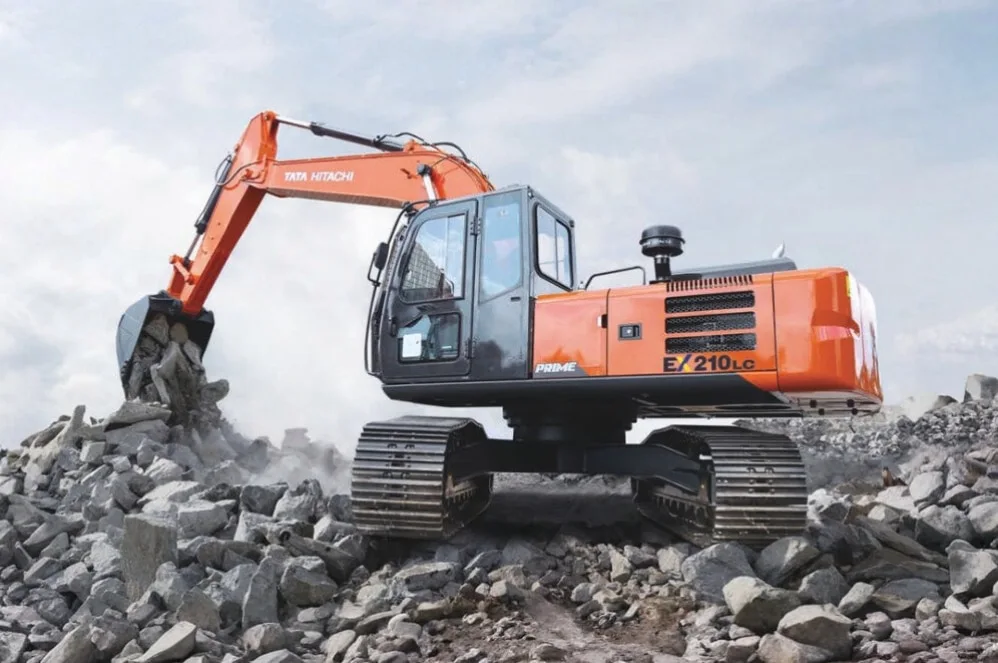
Operating Weight: 20,600–20,800 kg (20.6–20.8 Ton)
Engine: 131 HP (97.6 kW) Cummins
Price: ₹60–65 Lakh (indicative, as of Sep 2026)
Tata Hitachi brings Japanese build quality with Indian service support. The EX 210LC Prime is built for long-hour operations — the kind of 16–18 hour shifts NHAI contractors run from October to May. Fuel efficiency is excellent, durability is proven across thousands of Indian sites, and the machine holds up in the laterite patches of Goa and the black cotton soil near Nagpur equally well.
Tata Hitachi’s service network is strongest in eastern and central India — Jharkhand, Odisha, Chhattisgarh, MP. If your projects cluster in those regions, this machine makes sense. Best for infrastructure projects, NHAI packages, and any operation where the excavator runs 3,000+ hours per year.
3. Hyundai R210 SMART X Plus
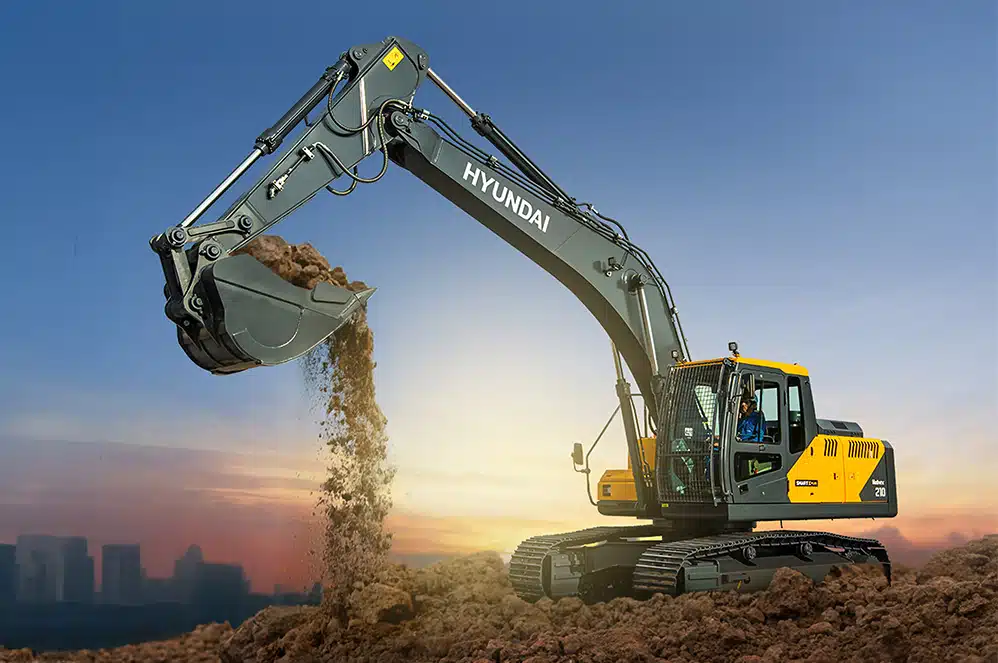
Operating Weight: 21,200 kg (21.2 Ton)
Price: ₹63–65 Lakh (indicative, as of Sep 2026)
The Hyundai R210 SMART X Plus brings telematics and operator comfort features that most Indian machines still lack. The cabin is quieter, the controls are smoother, and the smart technology helps fleet owners track fuel consumption and idle time remotely. For contractors managing 5+ machines across multiple sites, that visibility saves money.
Best for commercial construction and urban development projects where operator fatigue matters. A tired operator makes mistakes. Mistakes cost money. The Hyundai addresses that problem directly.
4. SANY SY215C-9LC SPARC

Operating Weight: 21,400 kg (21.4 Ton)
Engine: 140 HP Cummins
Price: ₹53–59 Lakh (indicative, as of Sep 2026)
SANY is the value play. The SY215C SPARC delivers powerful hydraulics and a proven Cummins engine at a listed price roughly ₹7 Lakh below a Tata Hitachi EX 210LC Prime, about ₹12 Lakh below a Komatsu PC210-10M0 or Kobelco SK220, and more than ₹20 Lakh below a CAT 322. For budget-conscious contractors who need a workhorse for earthmoving, this is the machine.
But — and this is important — verify SANY service availability in your specific region before buying. SANY’s network is expanding rapidly, but in remote locations (think Arunachal, interior Rajasthan, parts of Chhattisgarh), you might wait 3–5 days for a mechanic. In metros and Tier 1 cities? No problem. Tell the dealer exactly what you need before signing anything.
5. Komatsu PC210-10M0
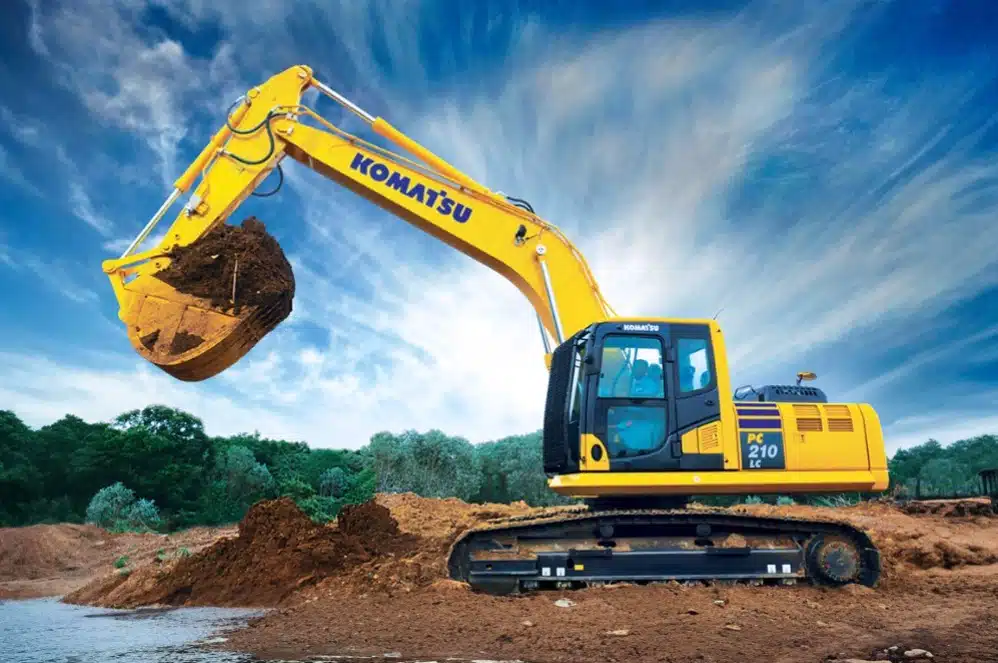
Operating Weight: 20,900 kg (20.9 Ton)
Price: ₹65–75 Lakh (indicative, as of Sep 2026)
Komatsu (sold through L&T in India) is the premium choice for heavy-duty applications. The PC210 offers exceptional durability, fuel efficiency that competitors struggle to match, and a digging depth that handles deep foundation work and quarrying without strain.
This machine costs more upfront. That’s the trade-off. But contractors running in mining support roles or quarrying operations — where the machine faces abrasive rock and 20-hour shifts — find the Komatsu outlasts cheaper alternatives by 2,000–3,000 running hours. Over a 10-year ownership cycle, that durability pays for the premium.
6. Volvo EC210

Operating Weight: 20,700–21,300 kg (20.7–21.3 Ton)
Price: ₹62–72 Lakh (indicative, as of Sep 2026)
Volvo builds for operator comfort and low noise — features that matter more than most contractors realise until they’ve spent a week on an urban site with noise complaints from neighbours. The EC210 is fuel-efficient, smooth in operation, and built for precision work.
Best for urban projects, metro rail work, and any site where the excavator operates near residential areas. The premium price reflects Swedish engineering standards. Whether that premium is worth it depends on your project mix.
7. CAT 322
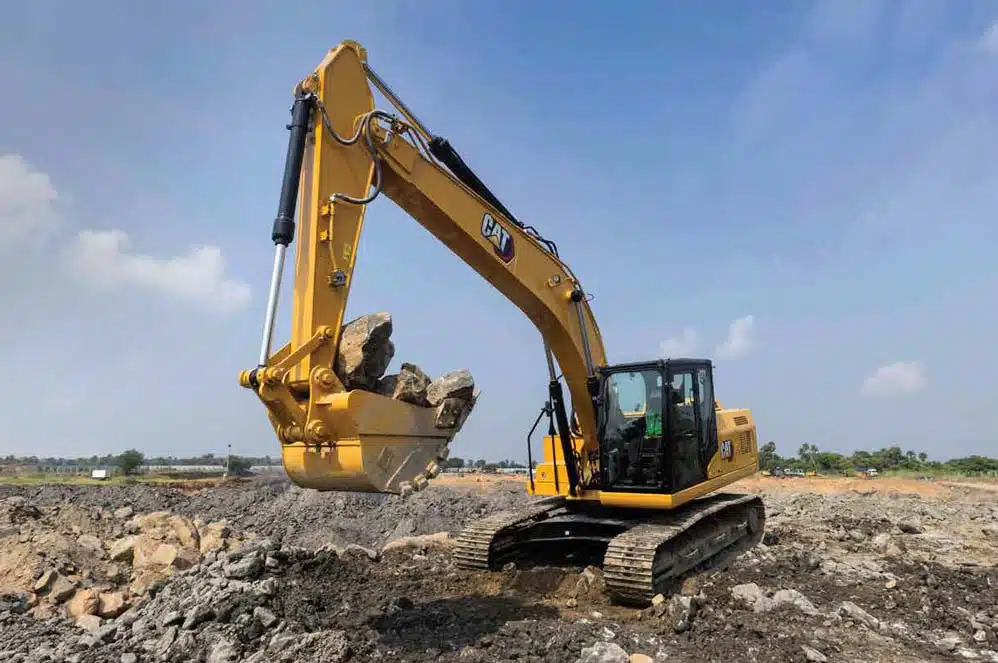
Operating Weight: 20,700 kg (20.7 Ton)
Price: ₹75–85 Lakh (indicative, as of Sep 2026)
Caterpillar sells the 322 on smart diagnostics that flag maintenance before a part fails, a premium cab and a dealer network with remote support. At 134 HP (100 kW) it is rated below every machine on this list except the EX 210LC Prime, so it is not bought for raw power. Fuel-saving and parts-delivery claims in this class come from the manufacturer and cannot be checked against listed data, so weigh them against your own dealer’s record.
Best for large-scale infrastructure and mining support, where a stopped machine costs you a full day of crew, hired tippers and a slipped milestone. Work that number out from your own site costs before you compare purchase prices. The CAT 322 is not cheap. But for contractors who calculate cost per cubic metre moved — not just purchase price — the numbers often work out.
8. Tata Hitachi ZAXIS 220LC Ultra
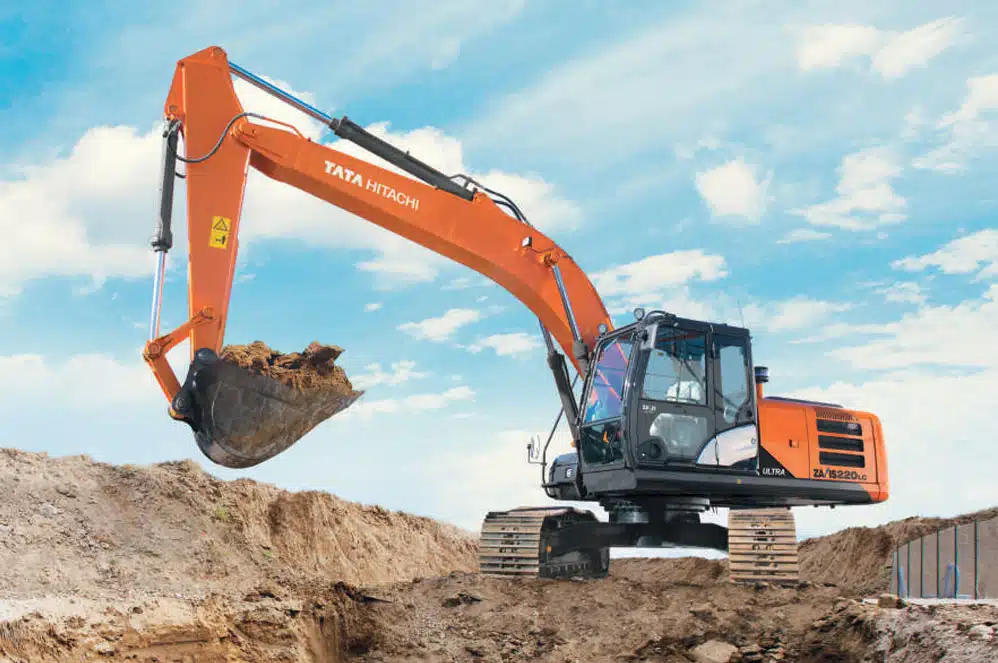
Operating Weight: 21,700 kg (21.7 Ton)
Engine: 168 HP (125 kW)
Price: ₹69–71 Lakh (indicative, as of Sep 2026)
The ZAXIS 220LC Ultra is the heavier-duty sibling in Tata Hitachi’s lineup. With 168 HP and a larger bucket capacity, this machine handles high-volume earthmoving and mining applications where the EX 210LC Prime might feel underpowered.
The powerful hydraulics move more material per cycle. Simple as that. For contractors working in the coal belts of Jharkhand or the iron ore regions of Odisha, the ZAXIS 220LC Ultra matches the terrain.
9. CASE CX220C

Operating Weight: 21,600 kg (21.6 Ton)
Engine: 157 HP FPT
Price: ₹72–74 Lakh (indicative, as of Sep 2026)
CASE brings the CIHS (Intelligent Hydraulic System) — a feature that optimises hydraulic flow based on the task, reducing fuel consumption without sacrificing power. The FPT engine is proven globally and performs well in Indian conditions.
Best for mid-scale construction, foundation digging, and canal work where precision matters. CASE’s price point is premium, but the fuel efficiency gains offset some of that cost over 5,000+ running hours.
10. Kobelco SK220

Operating Weight: 20,600 kg (20.6 Ton)
Price: ₹65–70 Lakh (indicative, as of Sep 2026)
Kobelco is the quiet achiever. The SK220 features a quiet engine, optimised fuel consumption, and smooth hydraulics that reduce operator fatigue. For contractors focused on operating cost reduction — the daily running cost of a machine — Kobelco delivers.
The brand is less recognised than JCB or Tata Hitachi in India, which affects resale value. But if you’re buying for long-term ownership (10,000+ hours), the lower running costs matter more than the resale discount.
Quick Comparison Table
| Model | Operating Weight | Engine HP | Indicative Price (₹ Lakh, Sep 2026) | Best Application |
|---|---|---|---|---|
| JCB NXT 205 | 20,500 kg | 140 HP | 52–56 | General construction, roads |
| Tata Hitachi EX 210LC Prime | 20,600–20,800 kg | 131 HP | 60–65 | NHAI projects, infrastructure |
| Hyundai R210 SMART X Plus | 21,200 kg | 140 HP | 63–65 | Urban development, commercial |
| SANY SY215C-9LC SPARC | 21,400 kg | 140 HP | 53–59 | Budget earthmoving |
| Komatsu PC210-10M0 | 20,900 kg | 165 HP | 65–75 | Mining support, quarrying |
| Volvo EC210 | 20,700–21,300 kg | 137 HP | 62–72 | Urban projects, precision work |
| CAT 322 | 20,700 kg | 134 HP | 75–85 | Large infrastructure, mining |
| Tata Hitachi ZAXIS 220LC Ultra | 21,700 kg | 168 HP | 69–71 | High-volume earthmoving |
| CASE CX220C | 21,600 kg | 157 HP | 72–74 | Foundation digging, canal work |
| Kobelco SK220 | 20,600 kg | 158 HP | 65–70 | Cost-conscious operations |
Key Specifications to Compare Before Buying
Specs matter. But not all specs matter equally. Here’s what actually affects your daily output and running cost:
- Operating weight: Heavier machines (21–22 Ton) offer more stability and digging force. Lighter machines (19–20 Ton) are easier to transport. Match to your typical project size.
- Engine horsepower: More HP means faster cycle times — but also higher fuel consumption. The machines here run from 131 HP (97.6 kW) on the Tata Hitachi EX 210LC Prime to 168 HP (125 kW) on the ZAXIS 220LC Ultra. No manufacturer publishes a litres-per-hour figure, so treat every consumption number you are given, ours included, as a field estimate: operators typically report 2 to 3 litres per hour between the lightest and the heaviest machine on this list, which over 3,000 hours a year is 6,000 to 9,000 litres of diesel.
- Bucket capacity: Standard buckets on the machines listed here run 0.8–1.1 m³, with optional buckets up to 1.7 m³ on the Komatsu PC210-10M0. Larger buckets move more material per cycle but require more hydraulic power. Match bucket size to your typical material — loose soil vs compacted clay vs rock.
- Digging depth: Across the ten machines here, maximum digging depth runs from 5,910 mm (5.91 m) on the Tata Hitachi EX 210LC Prime to 6,650 mm (6.65 m) on the CASE CX220C. For deep foundation work or canal excavation, verify the specific model meets your requirements.
- Fuel consumption: The single biggest running cost. A machine that burns 2 litres less per hour saves about 6,000 litres over 3,000 hours. Multiply that by the diesel rate you actually pay at your pump to see what it is worth on your site.
- Hydraulic system quality: Smooth, responsive hydraulics reduce operator fatigue and improve precision. Ask for a test run before buying — you’ll feel the difference immediately.
One more thing a spec sheet won’t flag: if your machine will spend time on rock or demolition, budget for a breaker and the auxiliary hydraulic line to run it. Our hydraulic rock breaker guide covers sizing one to a 20-ton carrier.
Which Brands Have Best Service Network in India?
A machine is only as good as the service support behind it. A breakdown 200 km from the nearest service centre means 3–5 days idle. Three to five days of zero output, EMIs still running, client still calling. That’s the reality.
- JCB: Widest network across India. Service centres in Tier 2 and Tier 3 towns where other brands don’t exist. If your projects move across states frequently, JCB’s reach is unmatched.
- Tata Hitachi: Strong in eastern and central India — Jharkhand, Odisha, Chhattisgarh, West Bengal, MP. For contractors based in these regions, Tata Hitachi service response is excellent.
- CAT: Premium support with remote diagnostics. Higher service costs, but faster response and good parts availability. Best for contractors who can’t afford downtime.
- SANY: Rapidly expanding network, but verify availability in your specific location. Strong in metros and industrial corridors. Weaker in remote areas. Call the service centre — not the sales team — before buying.
- Komatsu (L&T): Solid network in mining regions and major cities. Parts availability is good. Service costs are premium but predictable.
How to Choose the Right 20 Ton Excavator for Your Project
Am I overcomplicating this? Maybe. But here’s the straightforward process that works:
Step 1: Identify your project type. Road construction needs different features than basement excavation. Mining support needs different durability than urban development. Start with what you’ll actually do with the machine 80% of the time.
Step 2: Consider terrain and site conditions. Black cotton soil near Nagpur behaves differently than sandy riverbeds in UP. Waterlogged clay in Bengal during monsoon destroys undercarriages faster than rocky terrain in Jharkhand. Match the machine to your typical conditions.
Step 3: Evaluate budget vs features. A SANY at around ₹53–59 Lakh and a Komatsu at ₹65–75 Lakh are not the same machine. But for many applications, the SANY does the job. Don’t pay for features you won’t use.
Step 4: Check local dealer support. Before signing anything, call the service centre. Ask how many mechanics they have within 100 km of your typical project locations. Ask about parts availability for common wear items. Compare first, buy second.
Step 5: Assess fuel efficiency for long-term cost. Most contractors compare purchase price. Smart contractors compare cost per cubic metre moved over 10,000 hours. Fuel is 40–50% of total operating cost. A machine that costs ₹5 Lakh more but burns 2 litres less per hour saves about 6,000 litres a year at 3,000 hours. Price those litres at your own diesel rate to see how quickly the difference comes back.
Step 6: Consider resale value. JCB, Tata Hitachi, Volvo, CAT, Hyundai and SANY command stronger second-hand prices due to brand recognition. A lesser-known brand might cost less today but fetch less when you sell — and as noted above, nobody publishes a resale table for Indian excavators, so treat any percentage you are quoted as a guess rather than a figure to plan around.
Ready to find the right machine for your project? Explore all models and request a quote on Desi Machines.
Before you shortlist any 20 ton machine, it helps to know how the major parts wear and what they cost to fix. Our excavator components guide walks through the undercarriage, hydraulics and bucket wear parts that drive long-term running cost.
A 20 tonner sits in the medium band. If you are still fixing the size rather than the model, our guide to excavator size classes explains the classes above and below it.
Prices, specifications and features are indicative, vary by variant, location and date, and should always be confirmed with the official OEM or authorised dealer before any purchase decision. DesiMachines is not liable for decisions taken on the basis of information that may have changed after publication.