Excavator
294 models
Excavator
294 models  Backhoe Loader
51 models
Backhoe Loader
51 models  Crane
68 models
Crane
68 models  Concrete Mixer
79 models
Concrete Mixer
79 models  Wheel Loader
54 models
Wheel Loader
54 models  Compactor / Roller
45 models
Compactor / Roller
45 models  Motor Grader
42 models
Motor Grader
42 models  Dozer
41 models
Dozer
41 models  Concrete Pump
66 models
Concrete Pump
66 models  Skid Steer Loader
11 models
Skid Steer Loader
11 models  Telehandler
13 models
Telehandler
13 models 


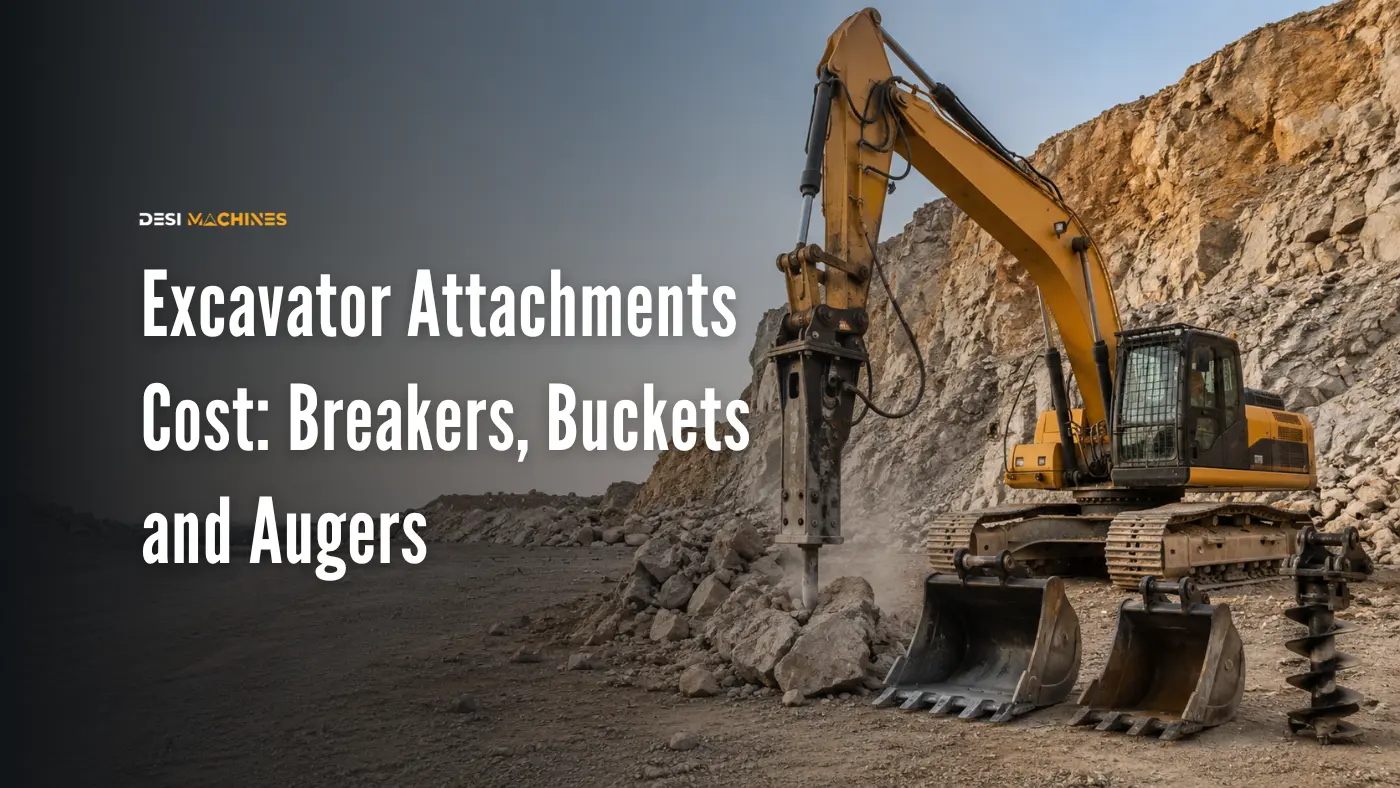
The excavator attachment cost that matters is not the sticker alone, it is the sticker plus the fuel, wear and idle time the attachment adds. What you pay is set by the machine class the tool has to fit, the type of attachment, the make and build quality, and whether it is new, used or genuine OEM. A hydraulic breaker sits at the top of that range and a plain digging bucket at the bottom. Ask your dealer to quote against your machine model and spec, then judge the quote per day of actual use: buy what you use often, rent what you use rarely, and match every attachment to real work rather than to what looks useful in the yard.
An excavator is only as versatile as what you hang on the end of it. The right attachment turns one machine into several, but each one costs money to buy, money to run, and money in idle capital if it sits unused. This is a buyer’s view of what attachments cost in India, what moves the price, and how to decide whether to own, rent or share. For what each tool actually does, our excavator attachments guide covers the types in detail; here we stay on the money.
Excavator attachment cost: what sets the number
Prices swing widely with size, type, make and whether the part is new, used or genuine OEM, and no published list price survives contact with a real order. So the table below sets out what each tool does and what moves its price. Take it to a supplier with your machine model and spec, and ask for a written quote.
| Attachment | What it does | What moves its price |
|---|---|---|
| General-purpose bucket | Everyday digging | Machine class, width and capacity, tooth system, shell thickness |
| Rock / heavy-duty bucket | Hard, abrasive ground | Wear-plate grade and hardfacing, tooth and side-cutter spec, machine class |
| Hydraulic rock breaker | Breaking rock and concrete | Service weight class, top or side mount, make, chisel size |
| Auger / drill | Post holes, foundations | Drive torque, flight diameter and length, soil or rock tooling |
| Grab / grapple | Handling scrap, rock, wood | Fixed or rotating, jaw size and count, cylinder protection |
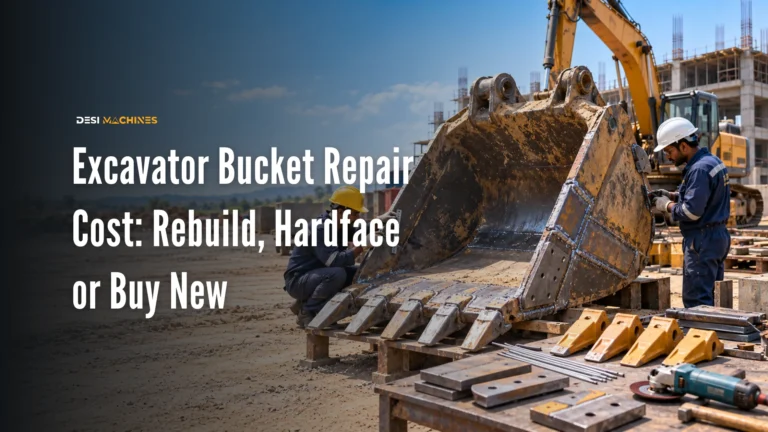
A worn bucket can often be rebuilt for less than a new one. What each repair costs, and when hardfacing pays, is set out in excavator bucket repair cost.
The breaker is usually the biggest single spend, and the one owners most often get wrong: buying a large unit for occasional work that a rented one would have covered. On demolition the attachment you choose also decides how much material survives, which we cover in demolition cost per square foot.
What actually drives the price
Four things move the number more than anything else:
- Machine class and size. An attachment for a 30-ton machine costs far more than the same tool for an 8-ton one. Buy for your machine, not a bigger one.
- Type. A breaker or a specialised grab sits well above a plain digging bucket.
- Make and build quality. An attachment from an established manufacturer, with better steel and welding, costs more upfront but usually survives longer under abuse and holds resale value.
- New or used. A good used attachment can be sound value; a cheaply built breaker often is not, because it fails fast or damages the machine.
The attachment market has a wide field of makers, from global specialists to Indian manufacturers, and it pays to know the names before you buy. On breakers you will see the likes of Epiroc, Rammer, Montabert, Soosan, Everdigm and NPK, alongside the OEMs’ own lines from JCB, Tata Hitachi and Komatsu, and Indian manufacturers such as Indeco and Dozco, which makes rock breakers, buckets, pins and bushes locally and supplies wear parts through a pan-India network. Compare them on the things that matter to a working owner: build quality, warranty, the price of wear parts, and whether the supplier can service what they sell.
The cost you don’t see: fuel, wear and idle capital
The purchase price is only half the story. A rock breaker raises fuel burn and stresses the excavator’s hydraulics and structure, and it carries wear parts of its own: chisels, bushes and seals that need regular replacement. An attachment also ties up capital while it sits in the yard between jobs. The real question is not “what does it cost to buy” but “what does it cost per day of actual use”, which is the same logic we apply to the whole machine in our guide to excavator cost per hour.
Buy, rent or share?
A simple rule keeps you out of trouble:
- Buy the attachments you use most weeks: the standard bucket, and a breaker if breaking is your bread and butter.
- Rent the ones you need a few times a year, such as an auger, a specialised grab, or an oversized breaker for one contract.
- Share or sub-hire where a neighbouring owner has the tool idle; many small owners trade attachments informally.
Work out roughly how many days a year you will genuinely use the attachment. Below a certain utilisation, renting wins on pure economics, and the capital stays in your pocket for the machine itself or the next job.
Put a number on it before you decide, using your own quotes rather than anyone’s published guess. Take the day rate your hirer charges for the attachment and divide the purchase quote by it: that is roughly how many days of use it takes before owning is cheaper than renting. Quick, if breaking is your regular work; never, if it is four jobs a year. Add the wear parts and the extra diesel to the owning side, and be honest about the days rather than optimistic — the attachment that looks cheap is the one that sits in the yard.
Which excavator attachments to buy and which to rent?
Attachments are where an excavator earns its keep, but each one is a small business decision: buy the frequent tools, rent the rare ones, and price in the fuel and wear, not just the sticker. Match every purchase to real work and the machine pays for itself faster. When you are planning that spend, it helps to see the whole ownership picture first: read our breakdown of the cost of owning an excavator, and compare machines and their attachment options across the excavator range before you decide.
Attachment prices, specifications and running costs vary by make, size, machine and date, and should be confirmed with the OEM, manufacturer or authorised dealer before any purchase. DesiMachines is not liable for decisions taken on information that may have changed after publication.