Excavator
294 models
Excavator
294 models  Backhoe Loader
51 models
Backhoe Loader
51 models  Crane
68 models
Crane
68 models  Concrete Mixer
79 models
Concrete Mixer
79 models  Wheel Loader
54 models
Wheel Loader
54 models  Compactor / Roller
45 models
Compactor / Roller
45 models  Motor Grader
42 models
Motor Grader
42 models  Dozer
41 models
Dozer
41 models  Concrete Pump
66 models
Concrete Pump
66 models  Skid Steer Loader
11 models
Skid Steer Loader
11 models  Telehandler
13 models
Telehandler
13 models 


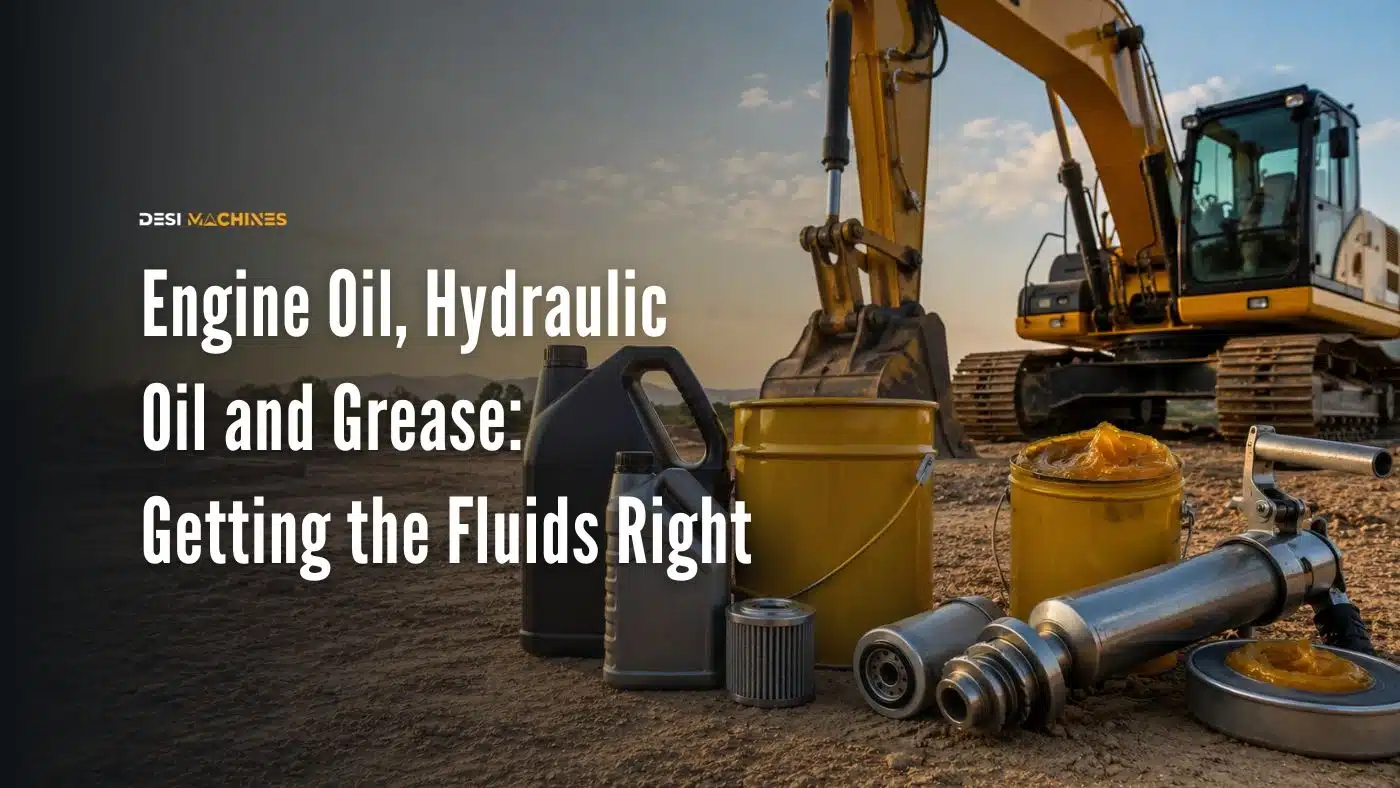
The right engine oil for construction equipment is simply the grade your machine’s maker specifies — usually a heavy-duty 15W-40 diesel oil for the engine, an ISO VG 46 anti-wear hydraulic oil for the hydraulics, and the correct greases for pins and bushings. Oil is a small cost next to fuel or a repair bill (indicative), but the wrong grade or a skipped change is one of the cheapest ways to damage an expensive machine. Match the manual, buy the grade it names, change on the hour-meter.
Owners obsess over diesel and EMIs and then pour whatever oil the corner shop hands over into a fifty-lakh machine. It is the wrong place to economise. Lubricants are what keep the engine, hydraulics and drivetrain alive between services, and getting them right costs very little while getting them wrong costs a great deal. This is a plain guide to the fluids your machine actually needs, how often to change them, and where owners go wrong.
Why the right engine oil matters more than the price
Your machine has three or four separate oils doing very different jobs, and each has a grade set by the manufacturer for a reason. The engine oil handles extreme heat and combustion soot. The hydraulic oil transmits the force that digs. The gear and final-drive oils carry heavy shock loads. Put the wrong one in, or let it run long past its change, and wear accelerates in ways you do not see until something fails on a busy day.
The money argument is simple. On a working excavator, fuel and downtime are the big running costs — we break that down in our guide to the real cost of owning an excavator. Oil is a minor line item by comparison, but it protects the parts that cost lakhs to rebuild. Saving a few hundred rupees on a service to risk a hydraulic pump or an engine is a bad trade every time.
Engine oil: match the grade, change on the hour-meter
Most modern diesel construction engines run a 15W-40 heavy-duty diesel oil meeting an API class such as CI-4 or CK-4. Newer BS-IV and BS-V engines with cleaner exhaust systems often need a specific low-ash oil so the emissions hardware is not fouled — this is exactly where the manual matters and a generic oil does not. Change the engine oil and filter on the interval your maker sets, typically an indicative 250-500 engine hours, shortened on dusty or high-load sites.
India has a deep market of heavy-duty and off-highway lubricants, and several established brands cover the grades a construction machine needs. The names you will come across most often include Servo (Indian Oil), Castrol, Shell, Mobil, Gulf Oil, HP Lubricants, MAK (Bharat Petroleum), Valvoline and Veedol — all of them offer off-highway engine oils, hydraulic fluids and greases built for Indian conditions. The badge on the can matters far less than the grade inside it: buy the specification your machine’s manual calls for, from a genuine source, whichever of these brands your dealer supports.
Hydraulic oil: the machine’s digging power
The hydraulic oil is what turns engine power into the force at the bucket. Most excavators use an anti-wear hydraulic oil in ISO VG 46 (sometimes VG 32 or 68 depending on climate and machine). It runs far longer than engine oil — an indicative 2,000-5,000 hours — but it is very sensitive to contamination. Dirt or water in the hydraulic oil shows up quickly as slow, jerky or weak operation, and it wears pumps and valves that are costly to replace.
- Keep it clean. Change hydraulic filters on schedule and never leave the system open to dust.
- Match the grade. Top up only with the same viscosity; mixing grades upsets performance.
- Watch the signs. Sluggish or noisy hydraulics often trace back to tired or dirty oil. Our note on common hydraulic excavator issues covers what to look for.
Grease and gear oils: the parts owners forget
Greasing is the cheapest maintenance there is and the most often skipped. Pins, bushings and the slew ring need the right grease at the interval the manual gives — often daily on hard-working machines. Under-greasing wears out pins and bushes that then cost real money to replace. Gear oils and final-drive oils change far less often but carry heavy loads, so use the specified grade and do not stretch the interval.
| Fluid | Typical grade (check your manual) | Indicative change interval |
|---|---|---|
| Engine oil | 15W-40 CI-4 / CK-4 (or OEM low-ash) | 250-500 hrs |
| Hydraulic oil | ISO VG 46 anti-wear | 2,000-5,000 hrs |
| Final-drive / gear oil | As specified (85W-140 range) | 1,000-2,000 hrs |
| Grease (pins, slew) | Lithium / EP as specified | Daily to weekly |
Buy genuine — counterfeit oil is a real risk
Counterfeit and adulterated lubricants circulate in the Indian market, and a fake oil can quietly damage an engine over months while looking exactly like the real thing. Protect yourself the boring way: buy from authorised dealers or the maker’s own network, check for tamper-evident seals and batch codes, keep the invoice, and be suspicious of prices well under the market. The same discipline applies to filters and spares — our piece on why fake excavator parts are a false economy makes the case.
Get oil grades and change intervals right
Fluids are the cheapest insurance on your machine and the easiest thing to get wrong. Use the grades your maker specifies, change them on the hour-meter rather than the calendar, grease what needs greasing, and buy genuine. Do that and the oil bill stays a rounding error against the fuel and repair costs it prevents — and fuel is the line that actually dominates, as our numbers on excavator fuel consumption per hour show. For a fuller picture of what regular servicing saves you, read our breakdown of the cost of owning an excavator, and when you are choosing your next machine, compare service intervals and running costs across the excavator range before you buy.
For what a grease gun and a bucket of EP2 grease cost today, see the JCB grease gun price guide.
Oil grades, service intervals and specifications vary by machine, engine and operating conditions. Always follow the operator’s manual and confirm the correct lubricant and interval with your OEM or authorised dealer before servicing. DesiMachines is not liable for decisions taken on information that may have changed after publication.