Excavator
294 models
Excavator
294 models  Backhoe Loader
51 models
Backhoe Loader
51 models  Crane
68 models
Crane
68 models  Concrete Mixer
79 models
Concrete Mixer
79 models  Wheel Loader
54 models
Wheel Loader
54 models  Compactor / Roller
45 models
Compactor / Roller
45 models  Motor Grader
42 models
Motor Grader
42 models  Dozer
41 models
Dozer
41 models  Concrete Pump
66 models
Concrete Pump
66 models  Skid Steer Loader
11 models
Skid Steer Loader
11 models  Telehandler
13 models
Telehandler
13 models 


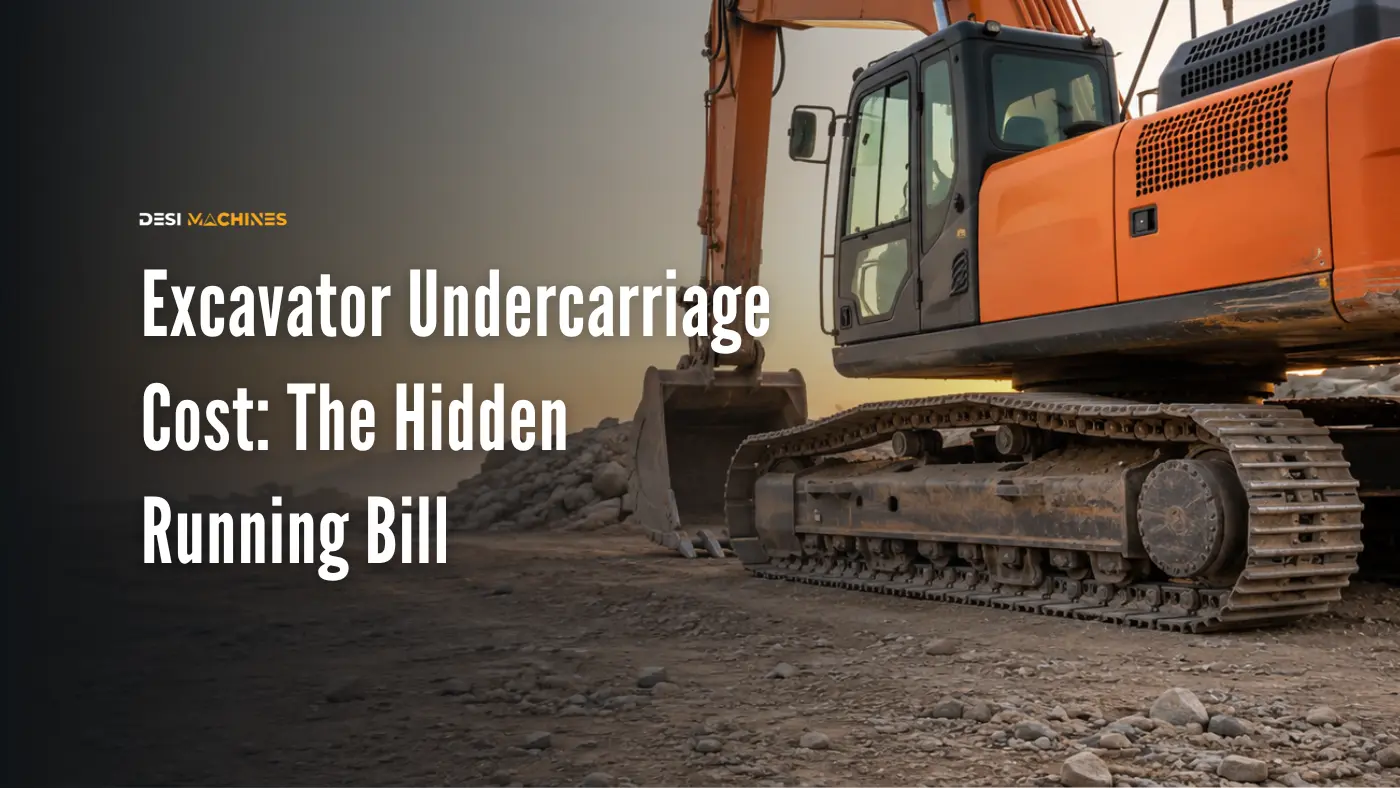
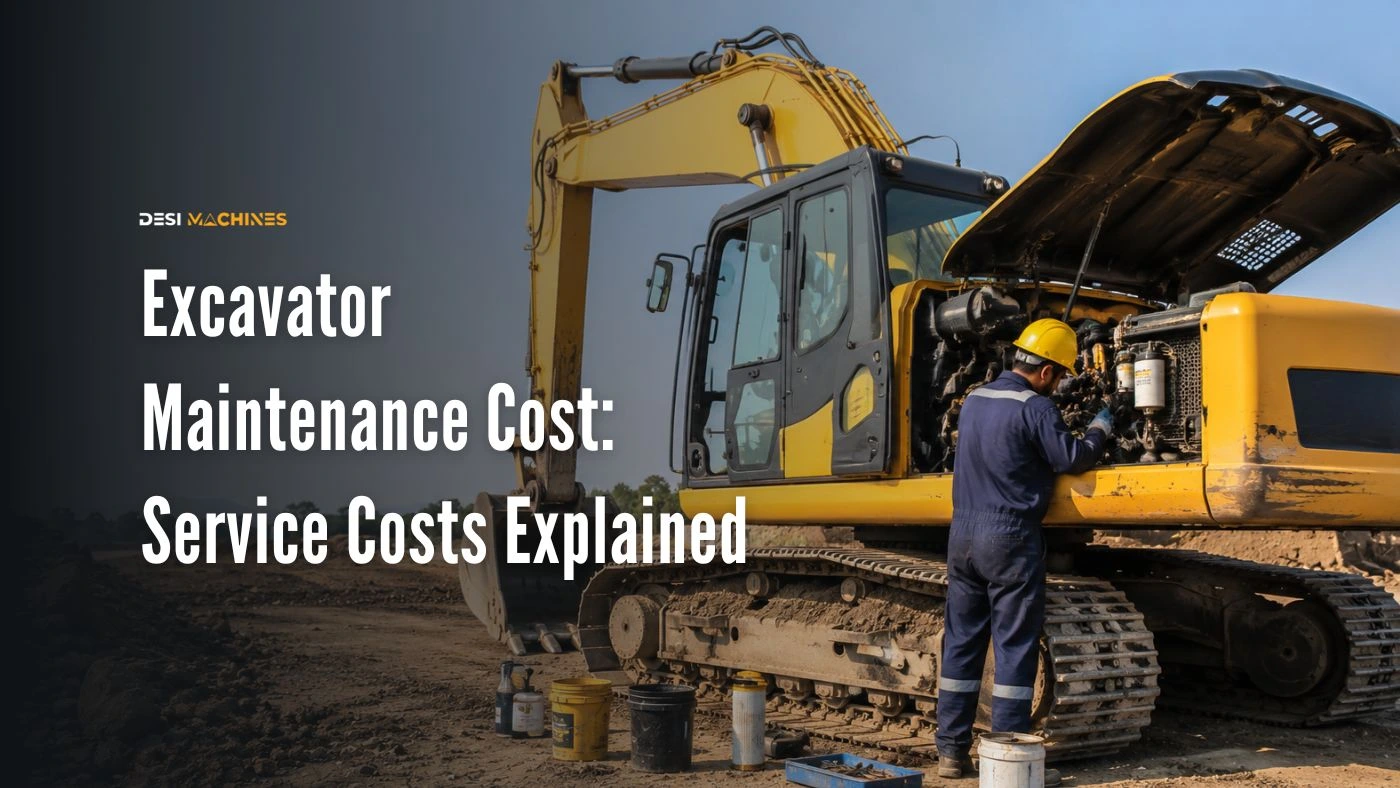
Excavator undercarriage cost is one of the biggest hidden running bills you will face. A full replacement of tracks, rollers, idlers and sprockets on a 20-ton machine runs an indicative ₹3-6 Lakh (as of Jul 2026), typically due somewhere around 4,000-5,000 hours — sooner on rocky or abrasive ground. It builds up quietly and then lands all at once, so the owners who plan for it, and who operate to make tracks last, keep the bill down.
Ask an owner what their excavator costs to run and they will mention fuel and diesel and maybe the operator. Few think about the undercarriage until the day it is worn out and the quote lands. Yet on a tracked machine it is one of the largest maintenance costs over the life of the machine, and unlike fuel it arrives as a single big bill rather than a steady trickle. This piece explains what the undercarriage costs, what wears it out, and how to stretch its life — the third big lever, after fuel and downtime, in the real cost of owning an excavator.
What the undercarriage is — and why it wears
The undercarriage is everything the machine runs on: the track chains and shoes, the rollers that carry the weight, the idlers that guide the track, and the sprockets that drive it. All of it takes constant abrasion and carries the full weight of the machine, so it wears steadily every hour the machine moves. The rate of wear depends heavily on the ground: soft soil is kind, while rock, sand, slag and demolition debris chew through tracks fast.
Excavator undercarriage cost: the indicative numbers
Here is a rough indicative picture for a 20-ton class machine. Individual parts wear at different rates, so you often replace them in stages rather than all together, which spreads the spend.
| Component | Job it does | Indicative cost (20-ton, Jul 2026) |
|---|---|---|
| Track chains + shoes (pair) | What the machine runs on | ₹1.5-3 Lakh |
| Rollers (track + carrier) | Carry the weight | ₹60,000-1.5 Lakh |
| Idlers (pair) | Guide the track | ₹40,000-90,000 |
| Sprockets (pair) | Drive the track | ₹30,000-80,000 |
| Full undercarriage | Everything, replaced together | ₹3-6 Lakh |
Because these parts are large and take heavy abuse, quality matters. What matters is that the part is matched to the machine and made from good steel by an established manufacturer, which is sound value, especially on an older machine. The trap is the cheapest generic part, which wears fast or damages what it runs against — the same false economy we describe in our note on avoiding fake excavator parts.
Undercarriage is a specialist field with a handful of well-known names. Beyond the machine makers themselves, such as Caterpillar and Komatsu, the big undercarriage specialists include Berco and ITR, both sold widely in India, alongside manufacturers such as Dozco, which makes undercarriage parts, pins and bushes across its Indian and international operations. Compare them on fit, material quality, warranty and parts support rather than price alone — a cheap, low-grade part wears fast or damages what it runs against.
How to make it last longer
The undercarriage bill is one of the most controllable running costs, because operating habits change its life more than almost anything else:
- Keep track tension correct. Too tight wears everything faster; too loose lets the track slip and jump. Check it on the ground you actually work.
- Clean out packed mud daily. Mud and debris packed into the running gear grind it down and force components out of line.
- Avoid needless sharp turns and side-slopes. Counter-rotating and travelling across slopes puts heavy side-load on tracks and rollers.
- Match the shoe to the ground. Wider shoes for soft ground, narrower for rock — the wrong choice wears fast.
- Inspect regularly. Catching one worn part early stops it damaging the others and turning a small job into a full replacement.
These habits cost nothing and can push a major undercarriage job thousands of hours further out. On a machine you rely on daily, that deferral is real money — and real uptime, since the cost of the parts is only half the pain. The other half is the downtime while the work is done.
The wheeled equivalent: tyre cost and life
Undercarriage is the tracked machine’s problem. If you run wheeled machines — a
backhoe loader or a
wheel loader — the same money leaks through
tyres instead, and it behaves the same way: quiet for years, then a single large bill. When a big-ticket repair and a tired engine land in the same year, weigh them together: deciding between an engine overhaul, a replacement engine and selling the machine turns on exactly this comparison.
| Machine | Indicative full set (Aug 2026) | Typical life |
|---|---|---|
| Backhoe loader (2 small front + 2 large rear) | ₹80,000-1.6 Lakh | 3,000-5,000 hours |
| Wheel loader (4 equal, larger) | ₹1.5-3.5 Lakh | 3,000-6,000 hours |
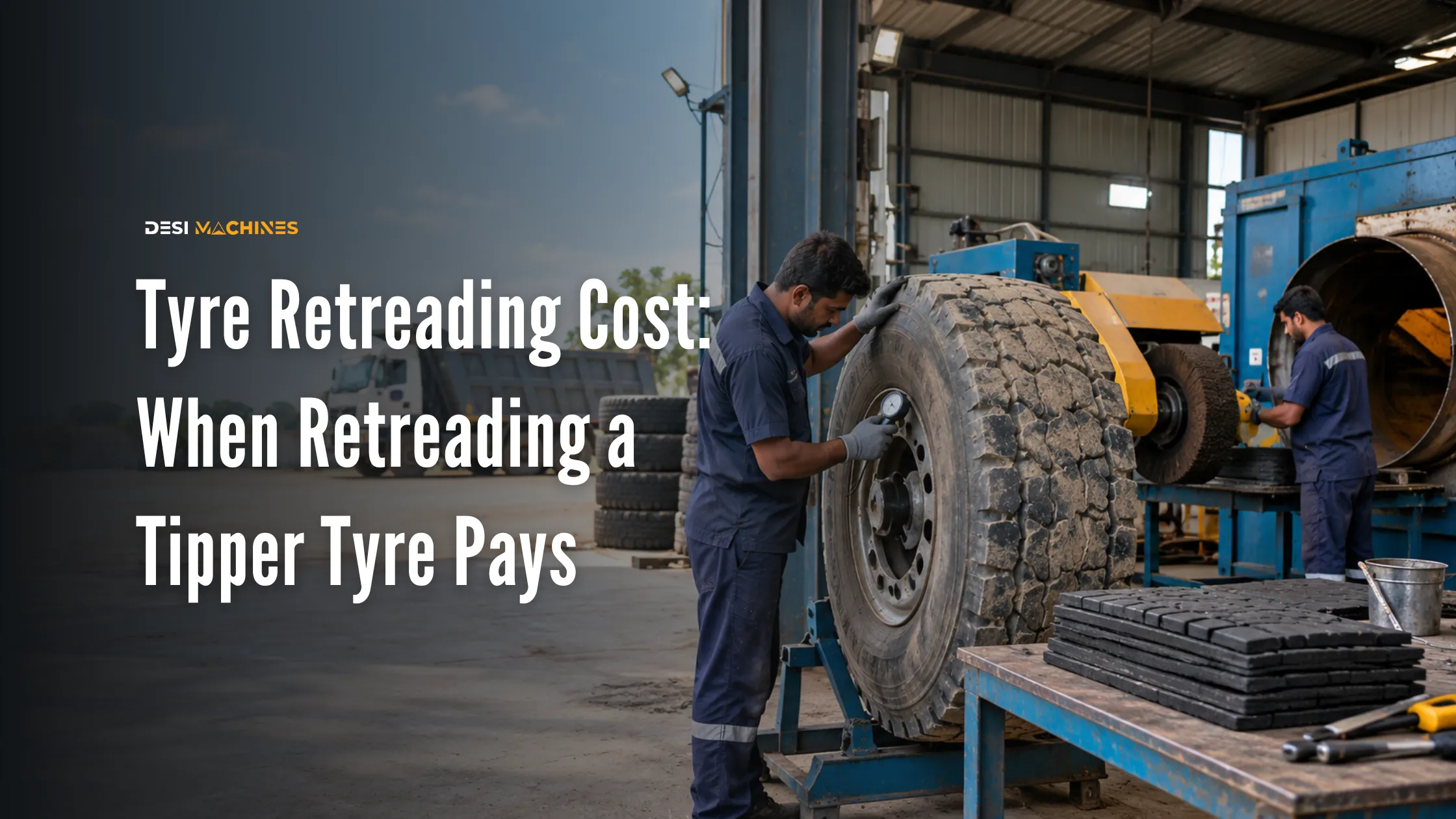
The wear drivers are the mirror image of undercarriage wear. Abrasive surfaces — rock, slag,
demolition debris and concrete yards — cut tyre life hardest, while soft soil and made-up roads
are kind. What is different is that tyres punish two habits tracks do not: wheel spin
while loading, which scrubs rubber off in seconds, and running under-inflated
, which flexes the sidewall until it fails. Correct pressure checked cold, a loading
technique that does not spin, and rotating tyres before the wear goes uneven will routinely add
a thousand hours to a set.
Tracks or tyres: which costs more to run?
Per hour, tyres are usually the cheaper running gear — a ₹1.2 Lakh backhoe set over 4,000 hours
is about ₹30 an hour, against ₹3-6 Lakh of undercarriage over 4,500 hours at roughly ₹90-130 an
hour. That gap is one of the real reasons a wheeled machine is cheaper to own on mixed municipal
and road work, and why tracked machines earn their keep where flotation and digging force matter
more than running cost. Neither number belongs in the “surprise” column once you know it is
coming — budget both the same way you budget the
service schedule.
Budget for undercarriage wear before it hits
The undercarriage is the running cost owners forget until it is too late. Budget for it, watch for wear, operate to protect it, and buy quality parts from a supplier who stands behind them, and you turn a nasty surprise into a planned expense. When you are weighing a machine or a used purchase, factor undercarriage condition into the price — it is one of the first things to check. It sits alongside routine servicing in the wider excavator maintenance cost, which is worth budgeting the same way. See the full ownership picture in our guide to the cost of owning an excavator, and compare machines and their running gear across the excavator range before you decide.
Undercarriage prices, wear life and specifications are indicative, vary widely by machine, ground conditions, part make and date, and should be confirmed with the OEM, manufacturer or authorised dealer before any purchase. DesiMachines is not liable for decisions taken on information that may have changed after publication.
Figures above are indicative as of 18 August 2026 and vary by variant, state levies, hours, site conditions and date. Confirm the current part price, fitment and warranty with the dealer, OEM or authorised parts supplier before you commit.