Excavator
294 models
Excavator
294 models  Backhoe Loader
51 models
Backhoe Loader
51 models  Crane
68 models
Crane
68 models  Concrete Mixer
79 models
Concrete Mixer
79 models  Wheel Loader
54 models
Wheel Loader
54 models  Compactor / Roller
45 models
Compactor / Roller
45 models  Motor Grader
42 models
Motor Grader
42 models  Dozer
41 models
Dozer
41 models  Concrete Pump
66 models
Concrete Pump
66 models  Skid Steer Loader
11 models
Skid Steer Loader
11 models  Telehandler
13 models
Telehandler
13 models 


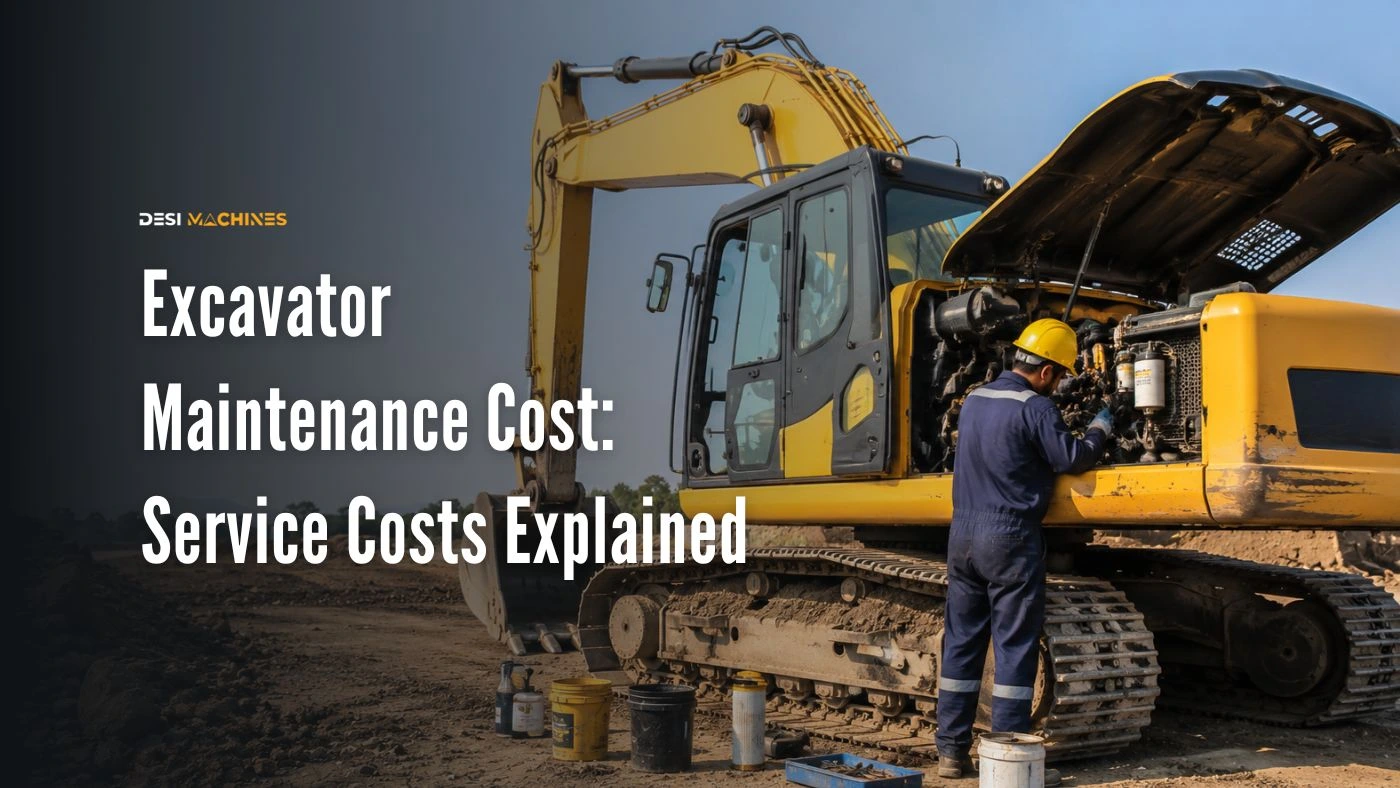
The routine excavator maintenance cost for a mid-size (20-tonne) machine running 1,500–2,000 hours a year is roughly ₹80,000–1.8 Lakh a year (indicative, as of Jul 2026) — or about ₹60–120 per operating hour — covering oils, filters, coolant and scheduled labour. That figure deliberately leaves out undercarriage and tyre wear, which are separate and often larger. Maintenance is the one running cost you can plan for, and planning it on the hour-meter is far cheaper than paying for it after a breakdown.
Diesel is the running cost owners feel every day, but maintenance is the one that decides how long the machine keeps earning. Skip it and the repair bills — and the idle days — arrive on the site’s schedule, not yours. Plan it, and it becomes a known, budget-able line you can price into every job.
This is a practical schedule and a budget for a mid-size crawler excavator in India. Treat every figure as indicative — your make, model, duty and dealer decide the exact number, and your own operator manual is always the final word on intervals.
The service schedule at a glance
Almost every machine is serviced on its hour-meter, not the calendar. The intervals below are the common pattern for a mid-size excavator; a backhoe loader or a mini follows the same logic at different numbers. What each service costs is indicative and swings with oil prices, filter brands and labour rates in your city.
| Service | Interval (hours) | Main work | Indicative cost |
|---|---|---|---|
| Daily check | Every 10 (daily) | Grease, oil/coolant levels, leaks, tracks | Operator time only |
| Routine service | ~250 | Engine oil + oil filter, fuel-filter check, greasing | ₹8,000–15,000 |
| Filter service | ~500 | + Fuel filters, air filter, hydraulic return filter | ₹15,000–25,000 |
| Inspection service | ~1,000 | + Hydraulic oil sampling, valve and belt checks | ₹25,000–40,000 |
| Major service | ~2,000 | + Full hydraulic oil change, coolant, all filters | ₹40,000–70,000 |
Indicative figures (as of Jul 2026) for a 20-tonne class crawler excavator, parts plus labour, excluding undercarriage and tyres. A machine on a dealer AMC pays a flat contracted amount instead of these one-off bills — more on that below.
What the excavator maintenance cost actually covers
The routine number is made of a few predictable things. Engine oil and filters are the heartbeat — cheap, frequent, and the single most important spend for engine life. Hydraulic oil and filters are the bigger, less frequent cost; the major service near 2,000 hours is where the year’s largest routine bill usually lands. Grease, coolant, belts and air filters are small but constant. Neglect that side and the bill stops being routine: what a failure actually costs is covered in the note on hydraulic pump repair cost.
Then there’s labour. A dealer service centre costs more per hour than a good local mechanic but keeps your service record clean, which matters for warranty and for resale. Many owners split the difference: dealer for warranty-period and major services, trusted local hand for routine oil-and-filter work.
Quality of consumables shows up here too. Genuine filters and the right-grade oil cost more up front but protect the two most expensive systems on the machine. The engine oil, grease and hydraulic-fluid choices are worth getting right — we cover the grades and why they matter in our note on engine oil, hydraulic oil and grease for machines. The cab AC is one of the cheapest systems to keep right and one of the first to fail in dust; the 500-hour filter and condenser cleaning is set out in our piece on excavator AC repair.
The yearly budget: turn services into a per-hour number
One-off service bills are hard to plan around. The fix is to convert them into a per-hour provision and set that money aside every month, the way you would a maintenance sinking fund.
| Annual hours | Routine maintenance/yr (indicative) | Per-hour provision |
|---|---|---|
| Light use — ~1,000 hr | ₹60,000–1.1 Lakh | ₹60–110/hr |
| Typical — ~1,500 hr | ₹90,000–1.5 Lakh | ₹60–100/hr |
| Heavy use — ~2,000+ hr | ₹1.2–1.8 Lakh | ₹60–90/hr |
These are routine-maintenance figures (indicative, as of Jul 2026) and deliberately exclude two big wear items. If you add them, the per-hour number climbs. Set aside the provision monthly and the ₹60,000 major service stops being a shock — it’s already funded.
How maintenance cost varies by machine class
The 20-tonne excavator above is the reference point, but the schedule scales up and down with the machine. A mini excavator sips oil and carries smaller filters, so its routine bills are a fraction of the mid-size. A backhoe loader sits close to the mid-size excavator on engine work but is usually gentler on hydraulics. A large 30-tonne-plus excavator carries far more oil and bigger everything, and its undercarriage bill alone can dwarf a mini’s entire maintenance budget.
| Machine class | Routine maintenance/yr (indicative) | Per-hour provision |
|---|---|---|
| Mini excavator (up to ~5 t) | ₹35,000–70,000 | ₹35–70/hr |
| Backhoe loader (e.g. JCB 3DX class) | ₹60,000–1.2 Lakh | ₹45–90/hr |
| Mid-size excavator (~20 t) | ₹80,000–1.8 Lakh | ₹60–120/hr |
| Large excavator (30 t+) | ₹1.5–3 Lakh+ | ₹90–160/hr |
Indicative annual figures (as of Jul 2026) at typical use, routine servicing only, excluding undercarriage and tyres. The pattern to take away: bigger machines don’t just cost more to buy, they cost proportionally more to keep — a point worth weighing when a heavier machine tempts you with more reach or capacity than the job needs.
The costs this budget leaves out (and why they matter)
Two running costs are large enough that owners should track them separately from routine servicing, or the maintenance budget quietly understates the truth.
Undercarriage. Tracks, rollers, idlers and sprockets on a crawler excavator are a slow, expensive wear cost — sometimes the biggest single maintenance line over a machine’s life. It builds up invisibly and then lands as one large bill. We break down how it accumulates and how to slow it in our piece on excavator undercarriage cost.
Wear parts and repairs. Bucket teeth, cutting edges, hoses and the occasional unplanned repair sit outside the service schedule but hit the same wallet. A realistic ownership budget adds a repair contingency on top of the routine figure above — how it all rolls up over five years is laid out in our full excavator cost-of-ownership breakdown, which is the parent guide this schedule sits under.
Dealer AMC or pay-as-you-go?
An Annual Maintenance Contract turns your servicing into a fixed, predictable amount — the dealer handles scheduled work for a contracted fee. It removes the cash-flow lumpiness and usually keeps a clean service history. The trade-off is that a lightly-used machine may pay more under AMC than it would on pay-as-you-go, while a heavily-used or older machine often comes out ahead because it would have racked up bigger bills anyway.
The decision comes down to how hard you run the machine and how much you value predictability. A first-time owner still learning the machine, or anyone financing tightly where a surprise ₹60,000 bill would hurt, usually benefits from the certainty. Whatever you choose, keep the service record — it protects both warranty and resale value. Once the machine is out of warranty, the other lever on this bill is the part itself — our note on choosing replacement parts works out where the cheaper part is really cheaper per hour.
How maintenance ties into the bigger money picture
Maintenance rarely gets decided on its own. It sits between the EMI you’re paying and the revenue the machine earns, and the per-hour provision here should go straight into your cost-per-hour working — see the method in our excavator cost-per-hour guide. Price your jobs with maintenance already built in and every service is pre-funded; leave it out and you’re eating into margin every time a bill lands.
Set aside money monthly for routine maintenance
Budget the routine excavator maintenance cost at ₹60–120 per hour, or ₹80,000–1.8 Lakh a year for a mid-size machine at typical use (indicative), and set that money aside monthly rather than paying only when a bill arrives. Then track undercarriage and repairs separately so the number stays honest. Service on the hour-meter, keep the record clean, and maintenance becomes a planned cost instead of an emergency.
Getting the maintenance figure right also sharpens the buying decision — a cheaper machine with costly parts can work out dearer to keep. Weigh the whole picture and compare equipment finance and EMI options before you commit, and browse the live range of excavators and JCB backhoe loaders to see how running costs stack up across machines.
Prices, specifications and features are indicative, vary by variant, location and date, and should always be confirmed with the official OEM or authorised dealer before any purchase decision. DesiMachines is not liable for decisions taken on the basis of information that may have changed after publication.
Keep the running cost next to the buying cost
Maintenance is only half the ownership picture. Compare machines in the comparison tool, check indicative prices across the excavator range, and size the EMI alongside the service budget on the equipment finance page.
Prices above are indicative ex-showroom ranges as of 16 August 2026 and vary by variant, state levies, attachments and dealer. Confirm the current service rates and AMC terms with the dealer or OEM before you buy.