Excavator
294 models
Excavator
294 models  Backhoe Loader
51 models
Backhoe Loader
51 models  Crane
68 models
Crane
68 models  Concrete Mixer
79 models
Concrete Mixer
79 models  Wheel Loader
54 models
Wheel Loader
54 models  Compactor / Roller
45 models
Compactor / Roller
45 models  Motor Grader
42 models
Motor Grader
42 models  Concrete Pump
66 models
Concrete Pump
66 models  Skid Steer Loader
11 models
Skid Steer Loader
11 models  Telehandler
13 models
Telehandler
13 models 


In short: BRO contractor registration means getting enlisted with the Border Roads Organisation, whose Director General is the enlisting authority. What enlistment buys is a practical thing: if you have put up a standing security deposit, you do not have to attach earnest money to each bid. The catch that disqualifies firms is that the exemption has a ceiling — in one 2026 case it was Rs 11,00,000 against an earnest money demand of Rs 15,00,000, and the firm had to furnish the difference or lose the bid. The MSME route beside it exempts only micro and small firms, not medium ones.
Who BRO is, and what BRO contractor registration means
The Border Roads Organisation builds and maintains roads in border and strategic areas. It sits under the Ministry of Defence, is headed by the Director General Border Roads at Seema Sadak Bhawan in Delhi Cantonment, and executes work through Chief Engineer project formations and Border Roads Task Forces in the field.
The department’s own word is enlistment. Court records describe the Director General Border Roads as the enlisting authority, and an enlisted firm is carried on the BRO list of contractors under an index number issued at headquarters — one Gauhati High Court record from March 2026 names a firm enlisted under index number S-68 at HQ DGBR.
That index is not decoration. It is the reference the tender board reads your entitlements off, which is the subject of the rest of this article.
What enlistment buys: the earnest money exemption
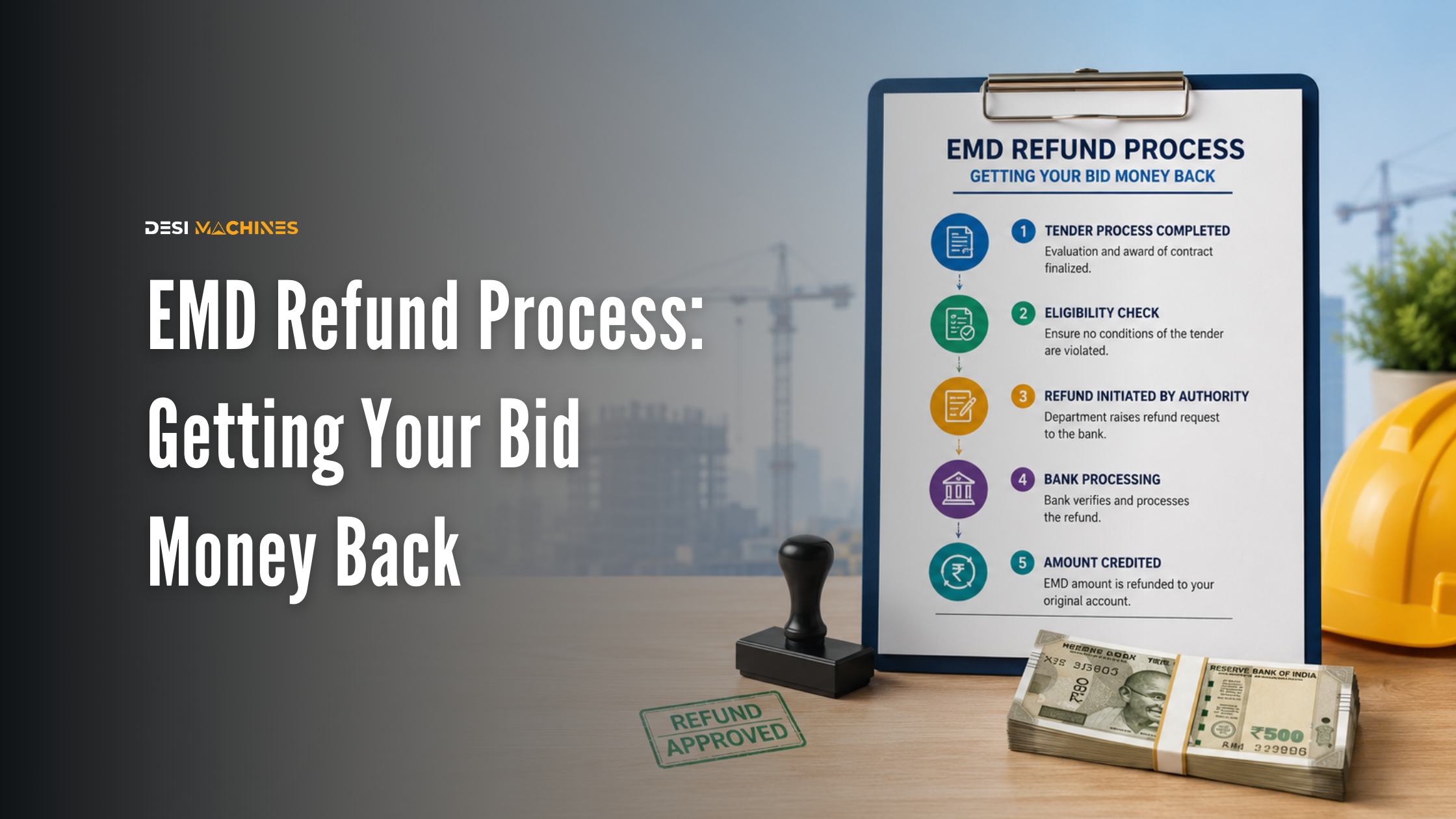
Earnest money is the deposit you attach to a bid so the authority knows the offer is serious. On a job of any size it is real working capital tied up for months, and getting out of posting it is worth money.
A BRO notice inviting tender reproduced in that 2026 judgment puts the exemption in plain terms at clause 11: earnest money is not required to be attached by a valid enlisted contractor with BRO who has submitted a standing security deposit, and by MSME registered firms, as per Rule 170(i) of the General Financial Rules 2017 — but it is required from other contractors, who must attach it with the technical bid.
So there are two separate doors to the same exemption. One is enlistment plus a standing security deposit. The other is being a registered micro or small enterprise. They are governed by different conditions, and mixing them up is how bids die.
The ceiling nobody mentions
Here is the part that costs firms live tenders, and it is the single most useful thing on this page.
Your exemption is capped. The standing security deposit you have lodged buys exemption only up to a limit recorded against your enlistment — it is not a blanket pass for any tender at any value. In the Gauhati High Court matter, the board of officers recorded its reason for disqualification in so many words: the earnest money exemption limitation was Rs 11,00,000 for that firm as enlisted under index number S-68, the tender sought earnest money of Rs 15,00,000, the firm had not submitted the additional security amount against the difference, and it was therefore disqualified.
| What the tender asked | Amount | Effect on the bid |
|---|---|---|
| Earnest money sought in the notice | Rs 15,00,000 | The figure the bid had to be covered for |
| Exemption available on the enlistment | Rs 11,00,000 | Covered by the standing security deposit |
| Shortfall the firm had to furnish | Rs 4,00,000 | Not furnished, so the bid was disqualified |
Those figures are from one tender in one case and are not a standard scale — treat the arithmetic as the lesson, not the amounts. Before you rely on the exemption, read the earnest money figure on the notice and compare it against the ceiling on your own enlistment. If the notice asks for more, you top up the security for that tender or you post the difference. Nobody will do that comparison for you, and the board will not treat the gap as an oversight to be cured later.
If you have not had to think about earnest money mechanics before, the general position on how earnest money is held and refunded covers the ground the BRO notice assumes you know.
The MSME route, and why medium firms get caught
The second door is MSME registration, and it is narrower than contractors expect. Rule 170(i) of the GFR 2017 exempts micro and small enterprises. Rule 171 does not carry that exemption across to medium enterprises. A firm that has grown into the medium category has quietly lost the exemption it used to enjoy.
Two things decide which category you are in on the day, and both trip people up.
The first is the classification on your Udyam certificate and the date it carries. In the same 2026 matter the authority checked the firm’s registration on the Udyam portal against the Government of India gazette notification S.O. 1364(E) dated 21 March 2025, and the certificate produced for one year showed the enterprise classified as small while a certificate uploaded with the bid classified it as medium. When the two do not agree, the authority reads the one filed with the bid.
The second is the annual update. The portal requires the registration to be updated each year with income tax and GST filing details, and the classification can move when it is. An out-of-date Udyam registration is not a paperwork problem; it changes the category the tender board sees. If your registration has been sitting untouched, read how Udyam registration works for contractors before your next bid rather than after it.
Claim the right exemption in the right column
The online bid form carries a specific column for earnest money exemption, and what you write there frames what you can rely on afterwards. In the case above the firm filled that column by referring only to its BRO enlistment, and then tried to rely on its MSME status when the enlistment ceiling fell short.
Rule 170(iii) of the GFR also calls for a declaration where the MSME exemption is claimed. A certificate sitting somewhere in your uploaded bundle is not the same as a claim made in the field provided for it. If both grounds are open to you, say so where the form asks, and attach the documents each ground needs.
Enlistment can be taken away
The application for enlistment contains an undertaking that is easy to sign and worth reading. At paragraph 14, the applicant agrees that the appropriate Border Roads authority has the right to decide not to issue tender forms in any particular case, and to ban, suspend, remove, downgrade or blacklist the firm from the BRO list of contractors.
That power gets used. A Jammu and Kashmir High Court matter from 2022 concerned an enlisted contractor removed after submitting false and forged documents, with the enlisting authority acting on a reference made some time after the conduct. The court noted that the integrity agreement signed with the bid fixed no period of limitation for action on a breach. A bid file you closed three years ago is not beyond reach.
BRO also circulates lists of enlisted and un-enlisted contractors carrying an assessment column on whether a firm is considered capable of handling more load, and firms can find themselves on a negative list and later taken off it. Your standing on that list, not only your class of work, affects what comes your way.
Where BRO sits beside your other registrations
BRO is one client among several that run their own enlistment. Military Engineer Services enlistment works on a class ladder with an upper tendering limit and a five-year cycle; state PWD enlistment runs a class system of its own. The paperwork overlaps heavily — completed works, turnover, solvency, plant — so a file built for one is most of the file for the next.
What differs is what each enlistment buys. With BRO the headline benefit is the earnest money exemption and its ceiling, which is a cash-flow question more than a qualification one. The broader qualification questions are the same ones you meet in bidding for government construction work anywhere.
The bottom line
Enlistment with BRO puts you on the list under an index number and lets your standing security deposit stand in for earnest money — up to a ceiling. Check that ceiling against the earnest money on every notice before you rely on it, keep your Udyam category and its annual update current if you are claiming the MSME route instead, and claim whichever ground applies in the column the form provides. The exemption is worth having; assuming it is unlimited is what loses bids.
Work in border areas is machine-heavy and access-limited, so the fleet you can put on site is part of what makes you worth enlisting. Browse excavator models and prices or compare backhoe loaders and connect with a dealer, and watch live government works tenders for what is coming up.
Enlistment criteria, security deposit amounts, earnest money figures and MSME classification thresholds are revised from time to time, and the amounts quoted here come from dated court records of individual tenders rather than from a current departmental circular. Confirm the current position with the tendering authority or another official source before you act on it.