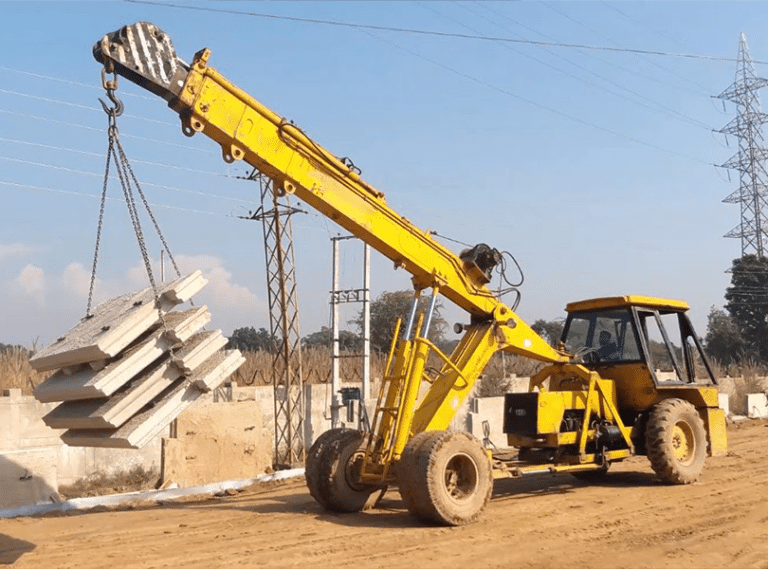
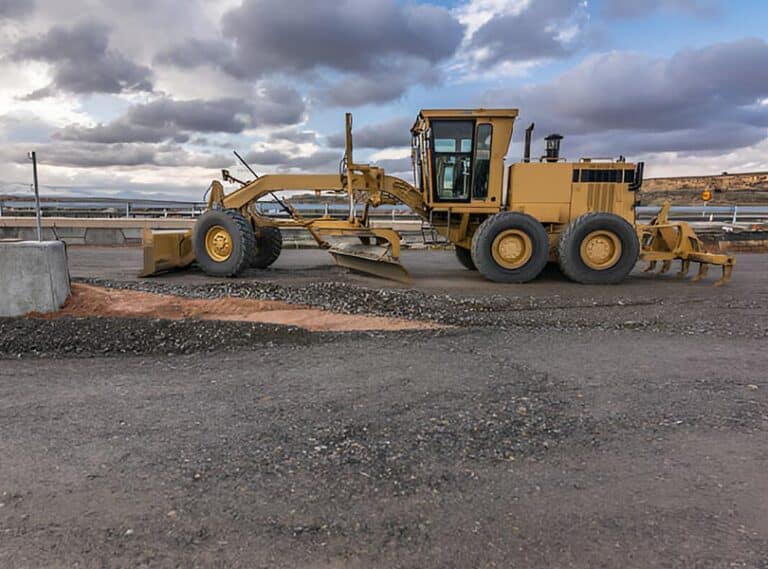
Excavator
294 models
Excavator
294 models  Backhoe Loader
51 models
Backhoe Loader
51 models  Crane
68 models
Crane
68 models  Concrete Mixer
79 models
Concrete Mixer
79 models  Wheel Loader
54 models
Wheel Loader
54 models  Compactor / Roller
45 models
Compactor / Roller
45 models  Motor Grader
42 models
Motor Grader
42 models  Concrete Pump
66 models
Concrete Pump
66 models  Skid Steer Loader
11 models
Skid Steer Loader
11 models  Telehandler
13 models
Telehandler
13 models 


In short: The GST composition scheme for contractors is not the scheme most people think it is. A works contract is treated as a supply of services under GST, and the ordinary composition route in section 10(1) is closed to service suppliers. The door that is actually open is section 10(2A), for a registered person whose aggregate turnover in the previous financial year did not exceed fifty lakh rupees. The Act caps the rate at three per cent of turnover in the State, with a matching provision in your State GST Act. The price of admission is steep: no input tax credit, and no tax collected from your client.
Every second contractor who hears the words “composition scheme” thinks of a one per cent flat rate and a quarterly return. That version exists. It is just not the one available to you if you build, erect, repair or commission anything fixed to the ground.
The confusion is worth clearing up properly, because opting into the wrong scheme is not a paperwork mistake. It changes what you can put on an invoice, and it changes whether a main contractor will work with you at all.
Why a works contract closes the ordinary door
Start with what the law calls your work. Section 2(119) of the Central Goods and Services Tax Act, 2017 defines a works contract as a contract for building, construction, fabrication, completion, erection, installation, fitting out, improvement, modification, repair, maintenance, renovation, alteration or commissioning of any immovable property, where transfer of property in goods is involved in executing it.
That covers almost everything a civil contractor does. Road work, a building, a culvert, a boundary wall, a pump house, structural repair.
Then comes the decisive bit. Paragraph 6(a) of Schedule II to the Act says a works contract as defined in section 2(119) shall be treated as a supply of services. Not goods. Services.
Now read section 10(2)(a). To be eligible for the composition levy under section 10(1), a registered person must not be “engaged in the supply of services”, except for the small allowance in the first sub-section. That allowance is narrow: a composition dealer may supply services of value not exceeding ten per cent of turnover in a State, or five lakh rupees, whichever is higher.
For a contractor, services are not ten per cent of the business. They are the whole business. Section 10(1) is shut.
The GST composition scheme for contractors lives in section 10(2A)
Parliament noticed the gap and wrote a separate sub-section for it. Section 10(2A) opens with the words that matter to you: a registered person “not eligible to opt to pay tax under sub-section (1) and sub-section (2)” may still opt in, if aggregate turnover in the preceding financial year did not exceed fifty lakh rupees.
Note the limit carefully. Fifty lakh, not one crore fifty lakh. The higher figure that circulates in WhatsApp groups is the ceiling the Government may notify under section 10(1), and section 10(1) is the goods route you cannot use.
Section 10(2A) also lists what disqualifies you:
- Supplying goods or services not leviable to tax under the Act
- Making any inter-State outward supplies
- Supplying through an electronic commerce operator required to collect tax at source under section 52
- Being a manufacturer of goods, or supplier of services, that the Government notifies as excluded
- Being a casual taxable person or a non-resident taxable person
The inter-State bar is the one that catches equipment owners out. If you take a job across the state line, or hire your machine out to a site in the next state, that route is closed to you while you are under composition.
There is also a PAN rule worth knowing. Where more than one registered person holds the same PAN, none of them can opt in unless all of them do. You cannot run one GSTIN under composition and another under the regular scheme on the same PAN.
What it costs, and what the Act actually fixes
Section 10(2A) says the tax is calculated “at such rate as may be prescribed, but not exceeding three per cent of the turnover in State or turnover in Union territory”.
Two things follow, and it is worth being precise about both.
First, the three per cent is a statutory ceiling on the central levy, not the rate itself. Your State GST Act carries a mirror provision with its own ceiling, so the outer limit across both is six per cent of turnover.
Second, the rate actually payable is prescribed by notification, not fixed in the Act. The Act sets the maximum; the notification sets the number. Before you opt in, get the current prescribed rate confirmed by your tax adviser rather than working off a figure someone quoted you last year.
The part that decides it: no credit, no collection
Section 10(4) is one sentence and it governs the whole commercial decision. A person paying tax under the composition levy shall not collect any tax from the recipient on supplies made by him, nor shall he be entitled to any credit of input tax.
Read that twice, because it cuts both ways.
You cannot claim credit on your own purchases. The GST on your cement, your steel, your diesel bills, your machine hire, your input credit on construction equipment, all of it becomes a cost rather than a credit. On a works contract, where bought-in material is often the largest line, that is a real number.
And your client cannot claim credit from you. Under section 31(3)(c), a person paying tax under section 10 issues a bill of supply, not a tax invoice. There is no tax on it for anyone to take credit of.
| What changes | Regular scheme | Composition under 10(2A) |
|---|---|---|
| Turnover limit | No composition limit applies | Rs 50 lakh (preceding year) |
| Document you issue | Tax invoice | Bill of supply |
| Tax collected from client | Yes | Not permitted (s.10(4)) |
| Input credit on your purchases | Available, subject to conditions | Not available (s.10(4)) |
| Credit passed to your client | Yes | None |
| Work in another state | Permitted | Barred (s.10(2A)(b)) |
| Rate | As notified for the supply | Capped at 3% State, 3% Centre |
The option can lapse mid-year
Section 10(3) is blunt. The option “shall lapse with effect from the day on which his aggregate turnover during a financial year exceeds the limit specified”.
From that day, not from the start of the next quarter and not from 1 April. If you cross fifty lakh in November, you are on the regular scheme from that date, and the invoices you raise afterwards have to be tax invoices. A contractor who lands one large order late in the year can trip this without noticing, which is why turnover needs watching monthly rather than at audit time.
Section 10(5) then provides that where a person has paid tax under the composition levy but was not eligible, the tax can be recovered along with a penalty, with the demand and recovery provisions applying.
So who should actually take it
The scheme is built for a contractor whose customers cannot use input credit. Think of a small builder working for individual house owners, a repair and maintenance outfit billing residential societies, or a contractor doing local work for unregistered buyers. Those clients do not care that your document carries no tax, because they were never going to claim it.
It works badly in the opposite case. If you are a subcontractor billing a main contractor or an EPC firm, part of what they are buying is the credit on your invoice. Hand them a bill of supply and your quote has to drop by roughly the credit they lose before it is comparable to a competitor’s. That is usually a worse trade than the compliance you saved.
Two practical checks before you decide. Look at your bought-in material share, because the higher it is, the more credit you are writing off under section 10(4). And look at whether you ever take work across a state border, because section 10(2A)(b) closes that off for as long as you stay in.
If you are still working out whether you need to be registered at all, start with the GST registration limit for contractors, which deals with the threshold question rather than the scheme question. If you are weighing how a machine purchase sits alongside all this, our equipment finance section sets out what lenders look at.
The bottom line
A works contract is a service under GST, so the familiar one per cent composition scheme was never yours to take. Section 10(2A) is the provision that applies, it stops at fifty lakh rupees of previous-year turnover, and it is capped at three per cent centrally with a matching state levy.
The decision is not really about the rate. It is about section 10(4). If your clients need credit, composition costs you more in lost competitiveness than it saves you in tax and paperwork. If they do not, it is a genuinely simpler way to run a small contracting business.
Planning a machine purchase around the same decision? Compare what the numbers look like on our equipment finance pages, and read GST on the sale of old machinery before you dispose of anything already on your books.
Tax provisions, prescribed rates and turnover limits change, and the rate under section 10(2A) is set by notification rather than by the Act. Confirm current terms with a qualified tax adviser or the official source before you opt in or out of any scheme.