Excavator
294 models
Excavator
294 models  Backhoe Loader
51 models
Backhoe Loader
51 models  Crane
68 models
Crane
68 models  Concrete Mixer
79 models
Concrete Mixer
79 models  Wheel Loader
54 models
Wheel Loader
54 models  Compactor / Roller
45 models
Compactor / Roller
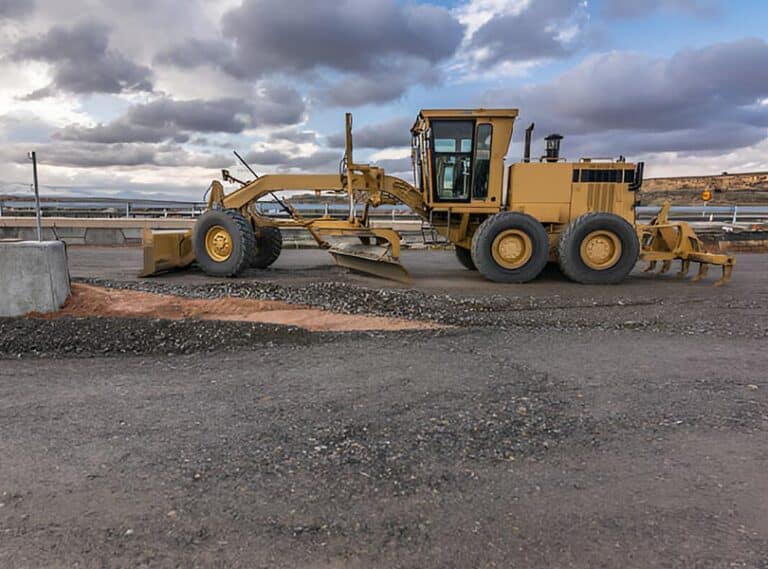
45 models  Motor Grader
42 models
Motor Grader
42 models  Concrete Pump
66 models
Concrete Pump
66 models  Skid Steer Loader
11 models
Skid Steer Loader
11 models  Telehandler
13 models
Telehandler
13 models 


In short: GST on mobilisation advance falls due when the money reaches you, not when you raise your first running bill. A works contract is a supply of services under Schedule II, and section 13(2) of the CGST Act fixes the time of supply at the earliest of the invoice date or the date of receipt of payment. You must also issue a receipt voucher under section 31(3)(d). Plan for it, because the tax is payable out of the same money you were going to mobilise with.
A mobilisation advance is meant to solve a cash-flow problem. You need to move machines, put up a site office, hire people and buy the first lot of material before a single bill can be raised, so the client funds the start.
What catches contractors out is that the tax authorities treat the arrival of that money as a taxable event in its own right. The advance is not a loan and it is not a deposit. Under GST it is payment for a supply, and the clock starts the day it lands.
This piece deals only with the tax timing. For what the advance is, what security you give against it and how it is recovered bill by bill, read our separate note on the mobilisation advance in a construction contract.
Why the answer turns on three words
The whole question resolves on how the law classifies your work.
Section 2(119) of the CGST Act defines a works contract as a contract for building, construction, fabrication, completion, erection, installation, fitting out, improvement, modification, repair, maintenance, renovation, alteration or commissioning of any immovable property, where transfer of property in goods is involved in executing it.
Then paragraph 6(a) of Schedule II says a works contract as defined in section 2(119) shall be treated as a supply of services.
That classification is what decides the timing. Goods and services have different time-of-supply rules, and yours is the services rule in section 13.
GST on mobilisation advance follows the earlier of two dates
Section 13(1) says the liability to pay tax on services arises at the time of supply. Section 13(2) then tells you what that time is. It is the earliest of:
- the date of issue of invoice by the supplier, if the invoice is issued within the period prescribed under section 31, or the date of receipt of payment, whichever is earlier; or
- the date of provision of service, if the invoice is not issued within the prescribed period, or the date of receipt of payment, whichever is earlier; or
- the date on which the recipient shows the receipt of services in his books, where neither of the above applies.
Look at what both of the first two limbs have in common. Each one ends with “or the date of receipt of payment, whichever is earlier”. Payment is a trigger in its own right, sitting in parallel with the invoice.
On a mobilisation advance there is normally no invoice yet and no service yet provided. Receipt of payment is therefore the earliest date on the list, and it sets the time of supply.
There is one small relief worth knowing. A proviso to section 13(2) says that where a supplier of taxable service receives an amount up to one thousand rupees in excess of the amount indicated in the tax invoice, the time of supply for that excess may, at the supplier’s option, be the date of issue of the invoice relating to it. That covers rounding and small overpayments. It does not help with a mobilisation advance.
“Date of receipt of payment” is defined, and it is the earlier date
Contractors sometimes assume they can manage the timing through their books. The Act closes that off.
The Explanation to section 13(2) says the date of receipt of payment shall be the date on which the payment is entered in the books of account of the supplier, or the date on which the payment is credited to his bank account, whichever is earlier.
So if the money hits your current account on 28 March and your accountant posts it on 6 April, the date that counts is 28 March. The bank credit and the book entry are both in play, and the earlier of the two wins. On a financial year boundary that difference decides which return the liability falls into.
The same Explanation adds that the supply is deemed to have been made to the extent it is covered by the payment. A part advance triggers tax on that part, not on the whole contract value.
The document you owe on the same day
Receiving the advance creates a documentation duty as well as a tax one.
Section 31(3)(d) says a registered person shall, on receipt of advance payment with respect to any supply of goods or services or both, issue a receipt voucher or any other document containing the prescribed particulars, evidencing receipt of such payment.
A receipt voucher is not a tax invoice and does not replace one. The tax invoice still comes later, when the supply is made. Skipping the voucher is the most common slip here, because the advance often arrives as a plain bank transfer against a contract clause and nobody treats it as an invoicing event at all.
| Event | What the Act requires | Provision |
|---|---|---|
| Advance credited to your account | Time of supply is triggered | s.13(2) |
| Same date | Issue a receipt voucher | s.31(3)(d) |
| Work executed, bill raised | Issue a tax invoice | s.31(2) |
| Job called off, money returned | Issue a refund voucher | s.31(3)(e) |
If the job never starts
Contracts fall through, and the Act has a document for that too.
Section 31(3)(e) provides that where a registered person has issued a receipt voucher against an advance, but subsequently no supply is made and no tax invoice is issued, he may issue a refund voucher to the person who made the payment.
The voucher is the paper trail. How the tax already paid on that advance is then dealt with in your returns is a return-filing question with prescribed mechanics, so put it in front of your accountant rather than working it out on the site office laptop.
The cash-flow trap, in numbers
Here is why this matters more than most timing rules.
Say you win a road contract and receive a mobilisation advance of Rs 40,00,000 (indicative) in the second week of the month. You have earmarked all of it: low-bed charges to move two machines, a site office, the first diesel and material purchases, wages for the mobilising crew.
Under section 13(2) the time of supply for that amount is the date you received it. The tax on it belongs to that month’s return, payable in cash before you have raised a single running bill, and long before the client pays against one.
The contractors who handle this well do one simple thing: they treat a slice of every advance as already spent on tax and never mobilise against the full figure. The ones who get hurt spend the whole advance, then meet the liability out of a business that has not yet been paid for any work. Add the normal delays on government payment and a strong order becomes a working-capital problem in the first quarter.
Two related decisions are worth taking at the same time. If a government department is your client, the deduction on your later bills is covered in GST TDS on works contract. And if your turnover is small enough that you are weighing the simpler route, the GST composition scheme for contractors changes what you can charge and claim.
The bottom line
A works contract is a service, and services are taxed at the earlier of invoice or payment. A mobilisation advance is almost always the earlier of the two, so it is taxed on arrival, on the date the bank credits it or you book it, whichever comes first.
Issue the receipt voucher the same day, set aside the tax before you spend the advance, and get the recovery of the advance against later bills mapped by your accountant at the start of the contract rather than at the first audit.
Sizing up the machines you need to mobilise with? Our equipment finance section sets out what lenders look at, and how the first year of repayments sits against a contract like this one.
Tax provisions, prescribed forms and return mechanics change. Confirm current terms with a qualified tax adviser or the official source before acting on any figure or timing described here.