Excavator
294 models
Excavator
294 models  Backhoe Loader
51 models
Backhoe Loader
51 models  Crane
68 models
Crane
68 models  Concrete Mixer
79 models
Concrete Mixer
79 models  Wheel Loader
54 models
Wheel Loader
54 models  Compactor / Roller
45 models
Compactor / Roller
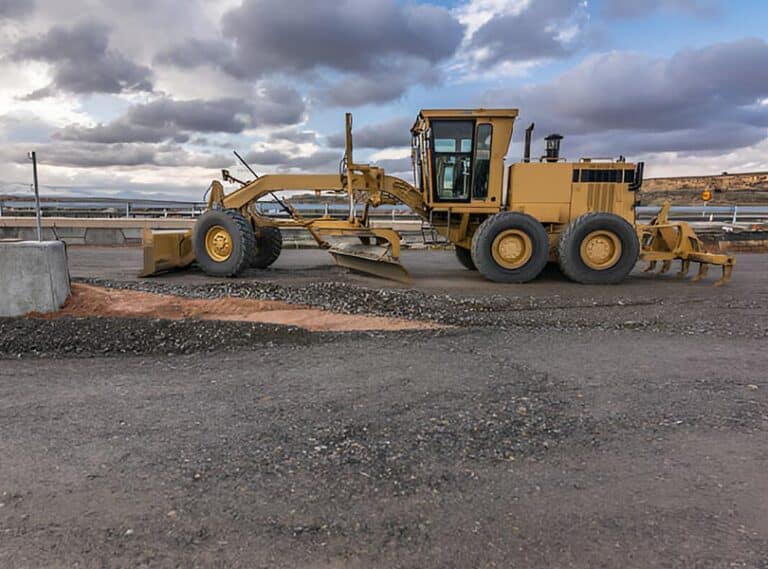
45 models  Motor Grader
42 models
Motor Grader
42 models  Concrete Pump
66 models
Concrete Pump
66 models  Skid Steer Loader
11 models
Skid Steer Loader
11 models  Telehandler
13 models
Telehandler
13 models 


In short: GST on interest on delayed payment follows from section 15(2)(d) of the CGST Act, 2017, which says the value of a supply shall include interest or late fee or penalty for delayed payment of any consideration. The interest is not treated as a separate financial item sitting outside GST. It attaches to the supply it relates to. The same sub-section also pulls in cesses and fees charged separately, incidental expenses, and certain subsidies, which is why the taxable value of a contractor’s bill is often larger than the rate multiplied by the quantity.
Chasing a delayed payment is the least enjoyable part of contracting. When the money finally moves and you are entitled to interest on top, it feels like recovery rather than revenue.
The Act does not see it that way. Section 15 decides what your bill is worth for tax, and interest for late payment is on the list of things it adds in.
Start with what section 15(1) says the value is
Section 15(1) sets the default. The value of a supply is the transaction value, which is “the price actually paid or payable for the said supply”, provided two conditions hold: the supplier and the recipient are not related, and the price is the sole consideration for the supply.
That is the ordinary case for a contractor billing an unrelated client at an agreed rate. If either condition fails, section 15(4) says the value is worked out in the prescribed manner instead.
So far, straightforward. The work is in sub-section (2), which lists what gets added to that price.
GST on interest on delayed payment comes from clause (d)
Section 15(2)(d) is short enough to quote whole. The value of supply shall include:
“interest or late fee or penalty for delayed payment of any consideration for any supply”.
Three things are worth drawing out of that line.
It names three different labels: interest, late fee and penalty. Calling the charge something other than interest in your contract does not move it outside the clause.
It attaches to delayed payment of consideration for a supply. This is not about interest in general. Interest on a fixed deposit or on a loan you have given is a different question entirely. This clause is about money owed to you for work you did, paid late.
And it says the value shall include it. The interest rides on the supply it relates to rather than standing alone.
In practice this bites at exactly the moment a contractor feels least like paying more tax. You have carried a receivable for eight months, you have finally negotiated or claimed interest on it, and that recovery arrives already carrying a tax consequence. Our note on contractor payment delays on government work covers how the interest claim itself is built; this is what happens to it afterwards.
One honest caveat. Interest that arises under a statute rather than under your contract has been argued about, and the answer can turn on the facts and on how the claim is framed. The provision above is what the Act says on its face. Put your own situation in front of a tax adviser before you decide how to bill it.
What else section 15(2) adds
Clause (d) is one of five. The others catch contractors just as often.
| Clause | What gets added to the value | Typical site example |
|---|---|---|
| 15(2)(a) | Taxes, duties, cesses, fees and charges under any law other than the GST Acts, if charged separately | A cess or fee you show on its own line |
| 15(2)(b) | Any amount you were liable to pay for the supply, but which the client incurred, and which is not already in the price | Client settles a charge that was your obligation |
| 15(2)(c) | Incidental expenses, including commission and packing, and anything charged for work done at or before supply | Mobilising, shifting, handling charged on top |
| 15(2)(d) | Interest, late fee or penalty for delayed payment of consideration | Interest recovered on an overdue RA bill |
| 15(2)(e) | Subsidies directly linked to the price, excluding Central and State Government subsidies | A price-linked subsidy from a non-government source |
Clause (a) is the one that surprises people most. Contractors often assume that showing a statutory charge on a separate line of the bill keeps it out of the taxable value. The clause says the opposite: amounts levied under any other law, if charged separately by the supplier, are included. Separating a line item is a presentation choice, not a tax outcome.
Clause (b) catches the informal arrangement where the client pays something directly that was contractually yours to pay, and everybody treats it as outside the bill. If it was your liability in relation to the supply and it is not in the price, section 15(2)(b) adds it back.
Clause (c) reaches “any amount charged for anything done by the supplier in respect of the supply at the time of, or before delivery”. Mobilisation and handling charges added on top of the rate sit squarely there. On the timing of an advance against that same work, see GST on mobilisation advance.
Discounts are the one thing taken out, on conditions
Section 15(3) works the other way, and it is strict about how.
A discount given before or at the time of supply is excluded if it has been duly recorded in the invoice issued for that supply. Straightforward: record it on the bill.
A discount given after the supply is excluded only if both of these hold:
- it was established in terms of an agreement entered into at or before the time of the supply, and is specifically linked to relevant invoices; and
- the input tax credit attributable to the discount has been reversed by the recipient, on the basis of a document issued by you.
That second condition is the one that fails in real life. A rebate negotiated months later, with no prior agreement and no reversal at the client’s end, does not reduce the value of supply however genuine the commercial concession was. If you expect to settle at less than billed, the time to write it into the agreement is before the work, not during the argument.
Why this matters more than it looks
Section 15 is not a compliance detail. It decides the base that every other GST number is calculated on.
The deduction a government client makes from your bill runs on the taxable value, which is why GST TDS on works contract is worked out after stripping the tax but on everything section 15 has added in. If you are weighing the simpler route instead, the GST composition scheme for contractors changes the picture again, because there you can neither collect tax nor claim credit.
The practical habit is small. When you price a job, price the additions too, not just the rate. Mobilisation, handling, any charge you intend to raise separately, and the interest you expect to claim if payment runs late. If those are priced as though they are outside the tax and section 15 says they are inside it, the shortfall comes out of your margin.
The bottom line
Interest for late payment is part of the value of the supply under section 15(2)(d), not a separate recovery that sits outside GST. The same sub-section adds separately-charged cesses and fees, costs the client bore that were yours, incidental and pre-delivery charges, and price-linked subsidies other than government ones.
Discounts come out only on the conditions in section 15(3), and the after-the-fact ones usually fail them. Build both sides into the quote rather than discovering them at filing.
Working out whether the next machine pays for itself on contracts like these? Our equipment finance section sets out what lenders look at, and retention money in a construction contract covers the other amount that never quite arrives on time.
Tax provisions and their interpretation change, and the treatment of statutory interest can turn on your own facts. Confirm current terms with a qualified tax adviser or the official source before relying on anything described here.