Excavator
294 models
Excavator
294 models  Backhoe Loader
51 models
Backhoe Loader
51 models  Crane
68 models
Crane
68 models  Concrete Mixer
79 models
Concrete Mixer
79 models  Wheel Loader
54 models
Wheel Loader
54 models  Compactor / Roller
45 models
Compactor / Roller
45 models  Motor Grader
42 models
Motor Grader
42 models  Dozer
41 models
Dozer
41 models  Concrete Pump
66 models
Concrete Pump
66 models  Skid Steer Loader
11 models
Skid Steer Loader
11 models  Telehandler
13 models
Telehandler
13 models 


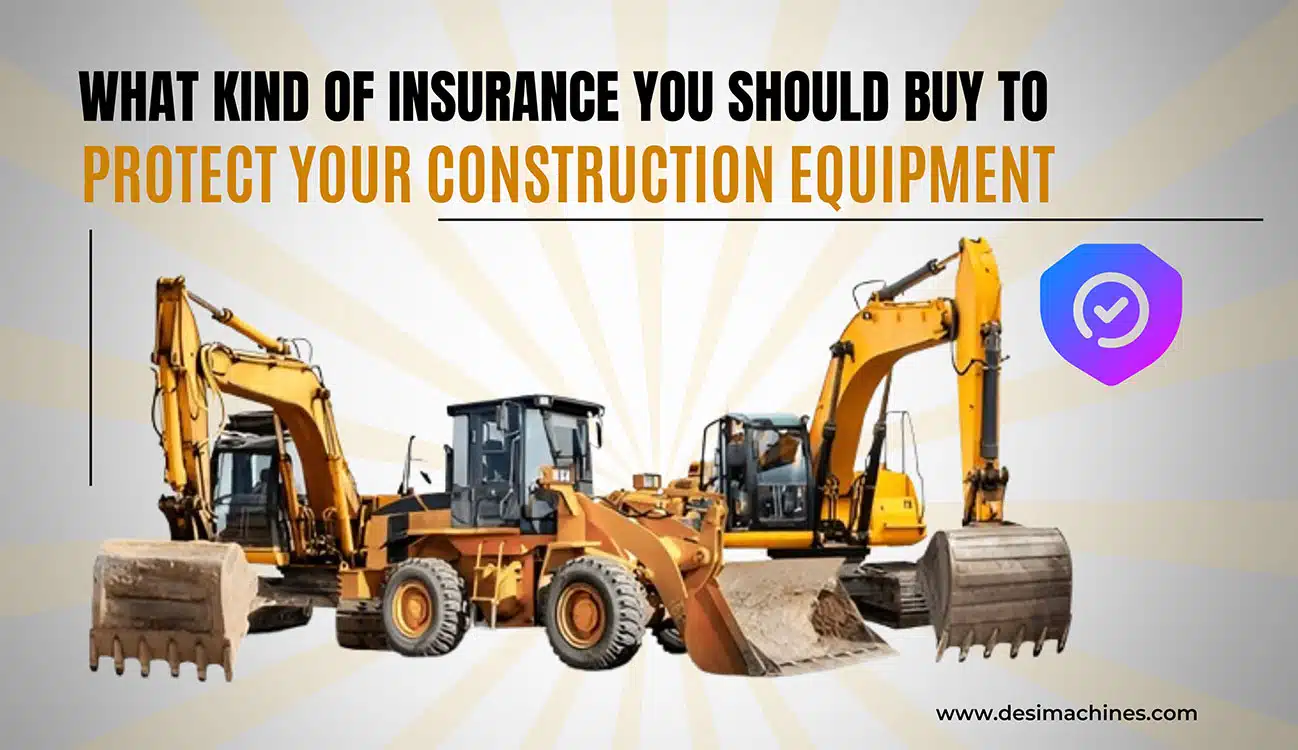
Construction equipment in India is normally covered by one of three insurance policies. Contractors’ Plant and Machinery (CPM) covers owned machines while they are working, idle or in transit between sites. Contractors’ All Risks (CAR/EAR) attaches the cover to a project rather than to the machine, and is what a principal contractor usually asks for. A commercial motor policy is required for anything registered to travel on public roads. Most owners add third-party liability on top, plus theft and transit cover for machines that move often. Which one you need turns on whether you own the machine, who it is working for and whether it is road-registered — not on what it cost.
Protecting your excavation machine, excavator machine, mini excavator, or crawler excavator with the right insurance is crucial due to risks like theft, damage, or breakdowns. With high excavator prices in India and rising Mini excavator prices in India, choosing suitable policies like CPM, theft insurance, and marine transit cover ensures financial safety and equipment longevity.
The construction and mining industries are at a growing stage in India. These industries require heavy machines and equipment. From cranes and bulldozers to excavators and backhoe loaders, these machines are the backbone of the industries. These machines are very expensive, so acquiring them involves risk factors of theft, damage, accidents, etc. So, to avoid that, these machines are insured against theft, damage, natural disasters, etc.
In this blog, we will ponder the types of threats for which insurance is required, the types of insurance, and points to remember before choosing an insurance brand.
Why Do You Need Insurance for Heavy Machinery & Construction Equipment?
Heavy machinery and construction equipment face numerous risks, including
- Accidental damage: Mishandling, falls. Accidents or operational errors can lead to damage.
- Theft: These machines can be stolen, or parts of these machines can be stolen.
- Natural Disasters: Natural disasters like earthquakes, tsunamis, and floods can destroy machinery.
- Third-party liability: These are heavy machines and can cause accidents while operating. Not only is the operator prone to danger, but the people or property surrounding the machine can also get injured or damaged.
- Operational Breakdown: Improper maintenance can lead to damaged parts, which can lead to a breakdown.
Types of Insurance for Heavy Machinery & Construction Equipment
- Contractor’s Plan and Machinery (CPM) Machinery: This type of insurance is the most commonly done insurance. This type of insurance covers fires, explosions, lightning, theft or burglary, accidents like falls or collisions, and natural calamities like floods, earthquakes, or cyclones. Damages caused by wear and tear and overloading are not covered under this type of insurance.
- Third-party Liability Insurance: This type of insurance is required when a person is injured or property is damaged by machinery. It covers legal expenses and compensation claims by a third party. This type of insurance is essential when working in small spaces like urban areas.
- Comprehensive Machinery Insurance: This policy covers damage during operation, transit, or while in storage. It is most suitable for companies running multiple sites with different types of machines. This insurance covers accidental damage, natural disaster, fire, loss during transportation, and mechanical and electrical breakdown in some cases.
- Equipment Breakdown Insurance: This type of insurance especially covers spare parts replacement and repair costs. It reduces downtime caused by the breakdown of the machine.
- Theft and Burglary Insurance: As these machines are very expensive, they are prone to theft. This insurance covers theft, which can cause financial losses. It offers security when the machines are kept in an unsecured location and have a high chance of theft.
- Marine Transit Insurance: Marine transit means moving your machine from one site to another via road, rail, air, or sea. Marine transit insurance covers insurance against any mishap during transit, like pilferage, theft, damage, accidents, etc. Marine transit insurance is very essential when your machine is getting transported to different locations.
Factors to Consider While Choosing Insurance
Factors that should be kept in mind while choosing insurance for your heavy machines are
- Nature of operation: Evaluation of the nature of operation is very crucial. Different types of operations require different machinery. Equipment used for mining requires different insurance, while equipment for urban landscaping may require different insurance types depending on the associated risk.
- Value of equipment: You should do a valuation of the equipment to prevent undervaluation or overvaluation.
- Geographical Location: Determination of risk involved in different locations is necessary. For example, machines used in hilly regions involve different kinds of risk compared to working in the heat of Rajasthan.
- Policy Add-ons: Some insurance companies provide add-on coverages like damaged spare parts, loss of income, or employee liability coverage. So, identifying correct insurance coverage for your machines is essential.
- Reputation of the Insurer: In India, many insurance companies offer insurance, but identifying a reputable insurer is important; i.e., some of the insurance companies refuse to cover after an accident, showing different clauses. Transparency in agreement is necessary, and only reputable brands can provide such assurance and good customer service.
- Deductibles and Premiums: While opting for insurance, premiums and deductibles should be compared from multiple insurance companies.
- Compliance with Legal Requirements: The policy must meet legal obligations, especially in third-party coverages.
How to File an Insurance Claim
The following steps should be taken when filing an insurance claim:
- Notify the insurer immediately: The insurance company should be notified immediately of the accidents so that they can process it quickly and can come for verification.
- Document the Damage: Sometimes the insurance company wants proof. So, documenting the incident or the moment after the incident should be done to place it before the insurance company.
- Submitting Proper Documents: All the relevant documents should be submitted to the insurance company, like policy paper, invoice, detailed claim form, etc.
- Inspection by Supervisor: After informing the insurance company, an investigating officer will come to see the scenario and accident spot.
- Claim Settlement: After the approval, the insurer will process the disbursement.
Tips to protect Heavy Machinery and Construction Equipment
- Regular Maintenance: Regular maintenance is necessary to reduce the risk of damage or breakdowns.
- Operator’s Training: Trained operators should be hired to carefully handle the machine and get optimal performance.
- Installation of Security: Security systems such as CCTV cameras, GPS trackers, and alarms should be installed to prevent theft.
- Maintain Records: Keeping a record of maintenance history, operating hours, insurance details, etc., helps to track the health of the machine. Timely renewal of insurance and changing of spare parts, oil, and lubricant are necessary.
- Work with Reputed Insurers: Working with renowned brands that have expertise in covering these types of machines is advised.
Leading Insurers in India for Heavy Machinery Insurance and Construction Equipment
Some of the leading insurance companies in India that specialize in construction equipment are
- New India Assurance
- National Insurance
- ICICI Lombard
- Tata AIG General Insurance
- HDFC ERGO General Insurance
- Reliance General Insurance
- Shriram General Insurance
- Royal Sundaram General Insurance
- SBI General Insurance
- Bajaj Allianz
- IFFCO-Tokio
Moving a machine between sites is a separate exposure from operating it, and it is covered by a different policy — see transit insurance for construction equipment.
Getting the sum insured right
The policy you choose matters less than the value you declare against it. Premiums are quoted as a percentage of the insured value, so declaring a low value to save premium is a false economy — insurers scale a claim down in the same proportion, and an under-declared machine can leave you carrying most of a repair bill yourself. Review the declared value whenever the machine is upgraded or the replacement cost moves. Our construction equipment insurance pages set out what Indian insurers cover for each machine category, and if the equipment is still on a loan, the lender will normally specify the cover it wants maintained — the terms sit alongside the equipment finance options. For a machine you are still shortlisting, insurance and finance are part of the running cost, not an afterthought: see our heavy machinery buying guide.
How to pick equipment insurance for your machine
Choosing the right insurance for your machinery is very essential. These are very expensive machines and the premiums for these machines are also very high. So, research is needed to choose the appropriate insurance based on the operating area, nature of the operation, premiums, etc.
Policy names, inclusions and exclusions vary between insurers and change with each renewal. Confirm the exact scope of cover, add-ons, deductibles and premium with the insurer or a licensed broker before you rely on any of the above.