Excavator
294 models
Excavator
294 models  Backhoe Loader
51 models
Backhoe Loader
51 models  Crane
68 models
Crane
68 models  Concrete Mixer
79 models
Concrete Mixer
79 models  Wheel Loader
54 models
Wheel Loader
54 models  Compactor / Roller
45 models
Compactor / Roller
45 models  Motor Grader
42 models
Motor Grader
42 models  Dozer
41 models
Dozer
41 models  Concrete Pump
66 models
Concrete Pump
66 models  Skid Steer Loader
11 models
Skid Steer Loader
11 models  Telehandler
13 models
Telehandler
13 models 


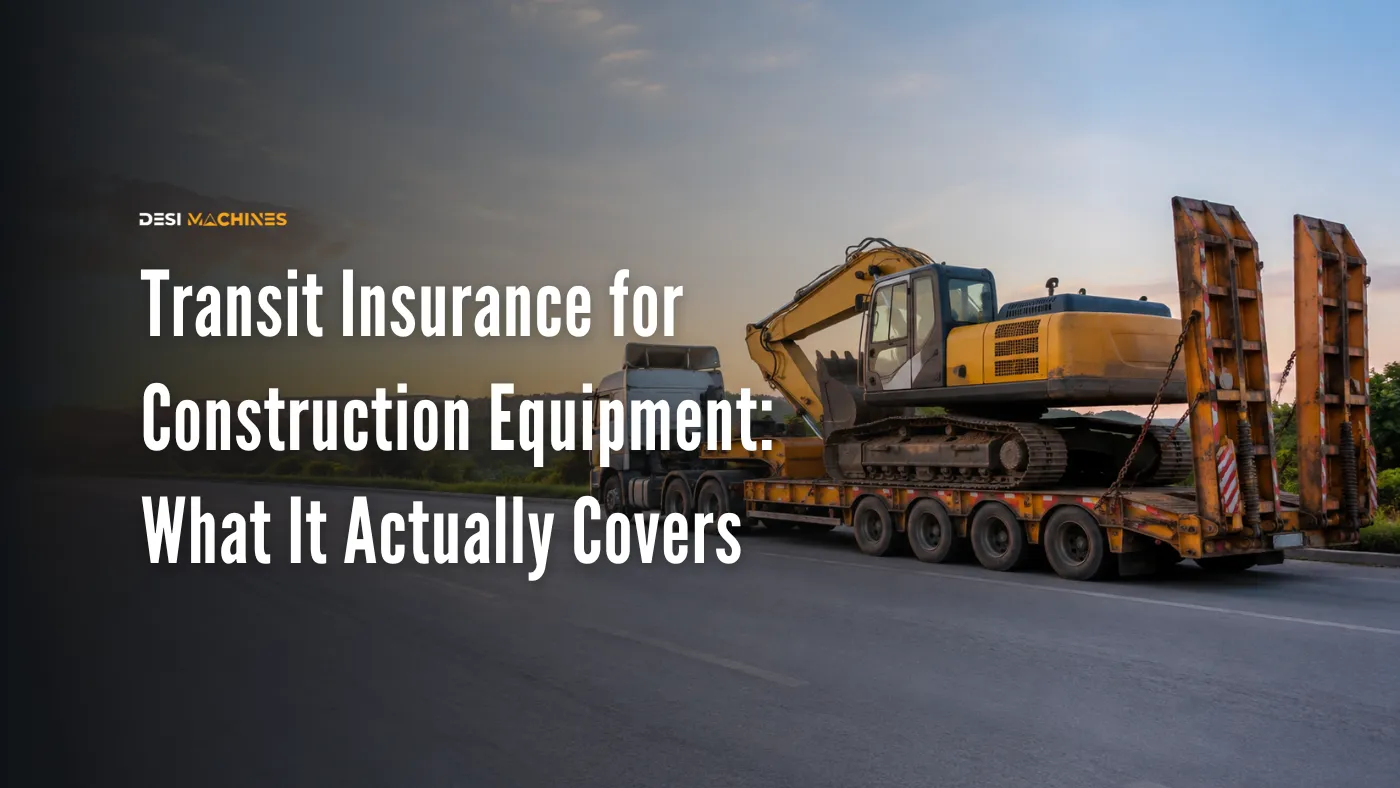
Transit insurance for construction equipment covers your machine while it is being moved by road, and you need it because the law caps what your transporter owes you. Section 10(1) of the Carriage by Road Act, 2007 limits a common carrier’s liability for loss or damage to a prescribed amount, not to what your excavator is worth, unless you have expressly taken the higher risk rate. So the machine on the trailer is your risk by default. Fix three things before it moves: whether road movement sits inside your existing policy or needs an extension, what the goods receipt says about liability, and who is responsible for loading and lashing.
What transit insurance for construction equipment actually covers
The cover answers a narrow question: who pays if the machine is damaged, or lost, between the yard and the site. That includes the obvious events on the highway, and it also includes the two moments owners forget about, which are loading and unloading. A machine that slides off a ramp has not had a road accident, but it has certainly had a loss.
What matters is the trigger. Cover for a machine in use at a site and cover for the same machine strapped to a trailer are not the same thing, and they are not always in the same policy. Your construction equipment insurance is written around the machine working. Road movement is normally handled either as an extension to that policy or as a separate transit policy, and the only way to know which one you have is to ask.
Do that in writing. A verbal “yes sir, covered hai” from an agent is not a policy term, and the day you need it, the wording is what gets read.
Your transporter’s liability is capped by law, not by your machine’s value
This is the part that surprises owners. Under section 10(1) of the Carriage by Road Act, 2007, a common carrier’s liability for loss of or damage to a consignment is limited to an amount prescribed under the Act — having regard to the value, freight and nature of the goods — unless you or someone authorised by you has expressly undertaken to pay the higher risk rate the carrier fixes under section 11.
Read that again with a 20-tonne machine in mind. Unless you have specifically bought up, the transporter’s exposure is a prescribed figure, and yours is the rest.
Section 11 is the buy-up route: the carrier may charge for the higher risk, and the liability then runs on the terms agreed with you. There is a condition on the carrier, and it is worth knowing — to claim a rate higher than the ordinary one, the carrier must have exhibited a printed or written notice of that higher rate, in English and in the vernacular language of the state, at the premises where the business is carried on.
So you have two routes to the same protection: pay the carrier’s higher risk rate, or insure the movement yourself. The second is usually the one owners can price properly, because a premium is a number you can compare while a carrier’s liability terms are a negotiation.
Where the cover comes from
| Route | How it works | What to check |
|---|---|---|
| Extension to your existing machine policy | Road movement added to the plant and machinery cover you already hold | Whether it is limited to named sites, a distance, or a number of movements a year |
| Separate transit policy for the movement | Cover bought for a specific machine on a specific journey | Declared value, and whether loading and unloading are inside the cover |
| Carrier’s higher risk rate under section 11 | You pay the carrier more, and the agreed terms set the liability | That the required rate notice exists, and what the agreed terms actually say |
The third row is not insurance and should not be treated as a substitute for it. It changes a contractual liability, which still has to be enforced against the transporter if something goes wrong.
The goods receipt is the document that decides the argument
Section 9 of the Act does more work than its dull name suggests. The carrier must issue a goods receipt — in triplicate, with the original given to you — and that receipt is prima facie evidence of the weight or measure and other particulars of what was handed over. Section 9(4) also requires the receipt to include the carrier’s undertaking about liability under section 10 or section 11.
That last line is how you find out, before the machine moves, which liability regime you are on. Read it at the yard, not after the phone call about the accident.
Two practical habits cost nothing. Photograph the machine from four sides at loading, with the trailer’s registration number visible in at least one frame. And keep the original goods receipt with those photographs, because a damage claim is an argument about condition before and after, and you only control the “before” half.
What the transporter is not answerable for
Section 17 makes the carrier responsible for loss, destruction, damage, deterioration in transit or non-delivery, with a listed set of exceptions: act of God, act of war or public enemy, riots and civil commotion, arrest or seizure under legal process, and orders or restrictions imposed by government. The proviso matters as much as the list — the carrier is not relieved of responsibility if the loss could have been avoided by exercising due diligence and care.
There is one more provision worth carrying into a dispute. Section 12(2) says that in a suit against the carrier for loss, damage or non-delivery, you do not have to prove that it was caused by negligence or a criminal act. That is a meaningful shift in who has to prove what, and most owners settle without ever knowing it exists.
If the damage is to someone else rather than to your machine, that is a different policy again — see third party liability cover, which is the claim that does the real financial damage to owners.
What decides what you pay
Premium follows declared value, the machine’s age and condition, the distance and route, and whether loading and unloading sit inside the cover. Declare the value honestly: under-declaring to save premium is the fastest route to a proportionate settlement that leaves you carrying most of the loss. The same discipline applies here as on your annual policy, where the sum insured drives everything — the mechanics of that are set out in what decides your equipment insurance premium.
Budget the cover alongside the freight rather than after it. What a movement actually costs, head by head, is worked through in what it costs to transport an excavator — and the insurance line belongs in that list, not as an afterthought once the quote is agreed.
Before the trailer leaves: a five-minute check
Settle who is responsible for loading and lashing, in writing, before the machine goes up the ramps. The cover argument is easier when the vehicle is right in the first place — our guide to picking a trailer for excavator movement covers the weights that decide it. Confirm whether your policy covers the movement or needs an extension. Read the liability undertaking on the goods receipt. Photograph the machine and keep the original receipt. And name, in the transporter’s order, who carries the risk from yard to site.
If a claim does become necessary, the process is the same discipline as any other equipment claim — intimation without delay, documents kept together, and the condition evidence you gathered at loading. The full sequence is in our guide to getting an equipment damage claim paid.
What transit insurance covers and what the carrier owes
The machine on the trailer is your risk unless you have deliberately made it someone else’s. The Act caps the carrier at a prescribed amount, gives you a buy-up route you have to ask for, and hands you one document — the goods receipt — that tells you which side of that line you are standing on. Sort it out at the yard, while you still have options.
Compare cover and connect with an insurer on our equipment insurance page before your next movement, and if you are still choosing the machine, browse live excavator models and prices.
Policy wordings, statutory limits and rates change, and cover depends on the terms of your own policy and contract. Confirm current terms and the exact position for your machine with your insurer, broker or transporter before deciding.