Excavator
294 models
Excavator
294 models  Backhoe Loader
51 models
Backhoe Loader
51 models  Crane
68 models
Crane
68 models  Concrete Mixer
79 models
Concrete Mixer
79 models  Wheel Loader
54 models
Wheel Loader
54 models  Compactor / Roller
45 models
Compactor / Roller
45 models  Motor Grader
42 models
Motor Grader
42 models  Dozer
41 models
Dozer
41 models  Concrete Pump
66 models
Concrete Pump
66 models  Skid Steer Loader
11 models
Skid Steer Loader
11 models  Telehandler
13 models
Telehandler
13 models 


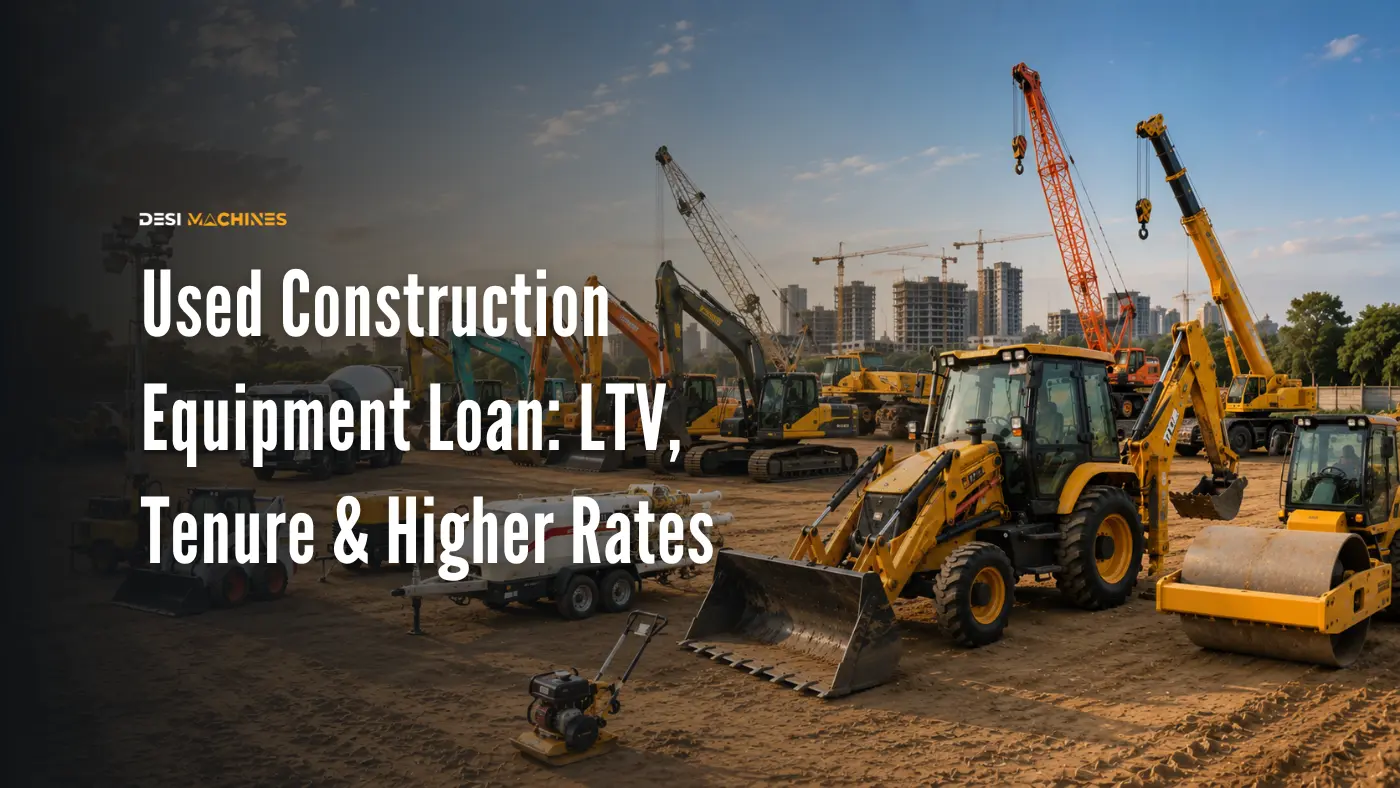
A used construction equipment loan is priced off the lender’s valuation of the machine, not off the price you negotiated. Expect a smaller share of the cost funded, a shorter tenure tied to the machine’s remaining working life, and a rate above the new-machine bands (an indicative 9–12% at public-sector banks, 10–13% at private banks and 13–18% at NBFCs as of July 2026). Get the valuation basis, the LTV and the hypothecation papers settled before you pay a token — that is where these files usually break. Confirm current terms with your bank or NBFC before you decide.
The worked EMI comparison below was re-checked on this date.
▶ Watch: JCB Loan ka Poora Hisaab: Down Payment, EMI aur Byaj ka Sach — the complete machine-loan math in 11 minutes (Hindi, English subtitles).
Financing a new machine is a fairly standard process: the dealer quotes, the lender funds a known percentage, the paperwork is clean. A used machine is a different animal. The price is negotiated privately, the history is uncertain, and the lender is being asked to secure a loan against an asset that has already spent part of its life. Understanding how the lender sees that machine is most of what decides whether your file goes through, and on what terms.
A used construction equipment loan starts with the valuation
The first thing to understand about a used construction equipment loan is that the lender does not fund a percentage of your purchase price. It funds a percentage of its own assessed value, arrived at through an inspection or a valuer’s report that looks at the year of manufacture, the hour meter, the service history, the condition of the undercarriage or tyres, and how easily that make and model resells in your region.
That distinction has a direct cash consequence. If you agree ₹18 lakh for a machine and the valuer assesses it at ₹15 lakh, the funding is calculated on ₹15 lakh — and the ₹3 lakh gap lands on you, on top of the margin money you had already planned. Ask two questions before any token money changes hands: what percentage will you fund, and on what value.
Why used machine rates sit above new
Nobody hides this, but few buyers plan for it. A lender pricing a used-machine file is looking at security that is worth less than a new machine, falls in value faster, carries repair risk that could interrupt your repayment, and would take longer to sell if it ever had to be repossessed. All of that goes into the rate.
| Lender type | New-machine rate p.a. (indicative, Jul 2026) | On a used machine |
|---|---|---|
| Public-sector banks | ~9–12% | Fund selectively; strictest on age and papers |
| Private banks | ~10–13% | Comfortable with popular, liquid models |
| NBFCs / financiers | ~13–18% | Most willing on older machines; priced accordingly |
Read those as the reference bands you would have got on the same machine new — the full comparison sits in bank vs NBFC equipment loan rates. A used-machine file normally prices above the band its borrower would otherwise have qualified for, and how far above depends on the machine’s age and your own profile more than on the lender’s brochure.
What that costs in rupees is easy to see. On a ₹10 lakh loan over four years, the EMI at 12% is about ₹26,300 with roughly ₹2.64 lakh of total interest; at 15% it is about ₹27,800 with roughly ₹3.36 lakh (indicative). Three percentage points is a little over ₹70,000 across the loan on a modest amount — worth one more conversation with a second lender before you sign.
Tenure is tied to the machine’s remaining life
Lenders will not run a loan past the point where the machine is worth less than the outstanding balance. So the older the machine, the shorter the tenure they offer — and a shorter tenure lifts the EMI even when the loan amount is small. This is the part that surprises buyers who compared only the sticker prices: a five-year-old machine at half the price of a new one can still carry an EMI close to the new machine’s, because it is being repaid in three years rather than seven.
Work it the other way round. Decide the EMI your worst month can carry, then see what loan amount and tenure that supports, and shop for a machine inside that. The same discipline applies whichever route you take — the structures are compared in loan vs lease vs cash.
The paperwork that actually stalls these files
New-machine loans fail on eligibility. Used-machine loans fail on documents. The usual set:
- Sale agreement and the seller’s original purchase invoice, so the chain of ownership is traceable.
- RC and insurance where the machine is registered, in the seller’s name and current.
- NOC and hypothecation removal if the machine carried an earlier loan. This is the single most common reason a used file stalls — the seller’s old lender has not released the charge, and no new lender will fund a machine that is still pledged elsewhere.
- Valuation or inspection report, usually from a valuer the lender empanels rather than one you appoint.
- Your file: KYC, bank statements, ITRs, GST returns if applicable, and details of existing loans.
Two things are worth doing before you apply rather than after. Check your credit position early, because on a used-machine file it carries more weight than it would on a new one — the CIBIL score for a machinery loan guide covers what lenders read into it. And run through the standard equipment loan eligibility checks so nothing in your own profile is the surprise.
Getting a better outcome on a used file
A few things genuinely move the terms. Put in a larger margin — every extra rupee of your own money reduces the lender’s exposure and usually the rate with it, and the down payment guide shows how far that lever goes. Choose a liquid, popular model, because a machine that resells easily in your region is better collateral than an unusual import. Buy a machine with a documented service history; it survives valuation better and costs you less afterwards. And approach the seller’s own financier if the machine has an existing loan, since they already know the asset.
The buying side of the same decision — inspection, pricing, what to walk away from — is covered in the used equipment buying guide, and it is worth reading before the finance conversation rather than after, because a machine that fails inspection will also fail valuation.
One route deserves separate treatment. If the used machine you are funding is coming out of a lender’s recovery yard rather than a dealer’s, the sale terms, the inspection window and the funding timeline all change — the checks to run first are in bank auction construction equipment.
How a used machine loan differs from a new one
A used construction equipment loan is available and often the right call — the total outgo on a well-chosen used machine usually beats a new one even after a higher rate. Just plan for how it differs: funding is calculated on the lender’s valuation and not your negotiated price, the tenure is capped by the machine’s remaining life so the EMI stays higher than you expect, and the file lives or dies on the hypothecation and ownership papers. Settle those three before you pay a token, and confirm the current rate, LTV and tenure with your bank or NBFC before you commit.
Working out what you can carry? Compare equipment finance options against your own numbers, and browse live excavator and backhoe loader models and prices to see what your budget actually buys, new or used.
Interest rates, funding ratios, tenures, charges and eligibility rules are indicative, differ between lenders, and change constantly. The figures here are indicative as of July 2026 — always confirm current terms with the bank, NBFC or financier before any borrowing decision. DesiMachines is not liable for decisions taken on the basis of information that may have changed after publication.