Excavator
316 models
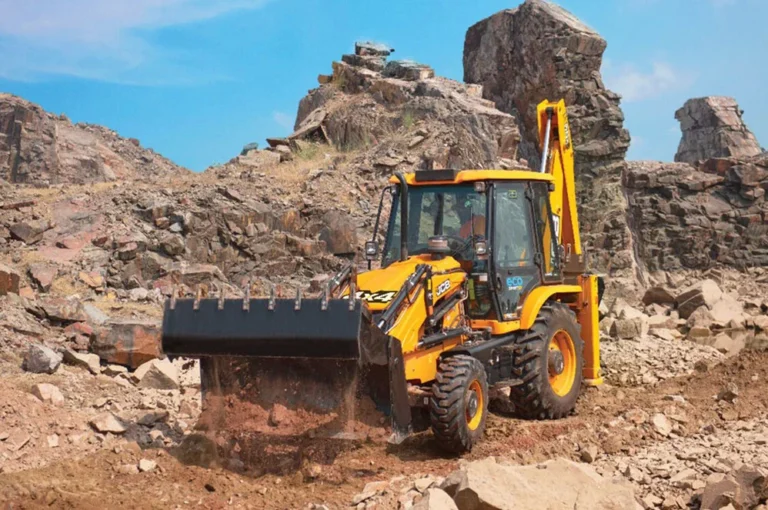
 Backhoe Loader
54 models
 Crane
68 models
 Concrete Mixer
79 models
 Wheel Loader
71 models
 Compactor / Roller
45 models
 Motor Grader
42 models

 Concrete Pump
66 models
 Skid Steer Loader
11 models


Buying used construction equipment safely comes down to five checks, and none of them is optional: the hours on the meter read against the machine’s age, a written maintenance history rather than a verbal one, a physical inspection of the undercarriage, hydraulics and structure, clean paperwork (registration, the invoice chain and confirmation that no financier still holds a lien), and a load test under something like real working conditions. Get all five right and a well-kept used machine is sound value. Skip one and the saving tends to disappear into the first major repair.
The construction and mining industries are experiencing a rapid boom. With this growth, the demand for heavy machines is also rising. Companies in these industries are looking for cost-effective and reliable machinery, as these machines are costly. The alternatives are using second-hand or used machinery, which is available in the market for a relatively low cost. New machines are very costly and not always feasible for small- and medium-scale companies. Moreover, sometimes the scope of work doesn’t financially match the idea of buying a new one. So, financially evaluating the need is always necessary. Here are a few tips you can keep in mind while buying a second-hand or used machine.
1. Define Your Equipment Needs and Application:
The first point to consider while buying a second-hand or used machine is the scope of work. The need for the machine is to be identified first. If the work scope includes earthmoving operations, then you should go for machines like excavators, backhoe loaders, or motor graders. Whereas when the work is loading, unloading, or material handling, then forklifts, telehandlers, cranes, or wheel loaders are appropriate. So, identifying the job is as important as selecting the machine to buy or rent, according to job type.
2. Assess the Equipment’s Age and Usage History:
The age and operating hours are important factors to consider when buying a used machine. Most of the machines, like cranes, skid steer loaders, and dump tippers, are often measured in hours of operation. The more operating hours, the more it is prone to wear and tear. So, it is important to see the logbook and meter reading before buying a used machine. Machines that have been used for a long time and have been in frequent use must be avoided.
Read the hours against the year of make. The excavator maintenance cost guide works on a 20-tonne machine running 1,500 to 2,000 hours a year (November 2026), so a five-year-old excavator in steady work would read about 7,500 to 10,000 hours. A much lower reading needs an explanation: long idle spells, or an hour meter that was replaced. A replaced meter starts again from its own count, as the hour meter guide explains, so ask for the bill that records both readings. If you find the machine through the Desi Machines used machines service, every listing passed on carries dated photos of the hour meter and the serial plate; match the plate to the RC or the invoice before you go further.
3. Inspect for Physical Wear and Tear:
The machine should be thoroughly checked before buying. Important parts such as engines, undercarriages, hydraulics, and tires should be checked for damage and longevity. Overall inspection should be done to check for rust, damage, or cracks. If the damage is high and the repair cost is higher, the machines should be avoided from buying. For example, for an excavator, the bucket, arm, and boom need to be checked. In hydraulic excavators, the hydraulic hoses must be checked to avoid costly repairs later.
4. Evaluate Maintenance Records:
These types of machines require regular maintenance. The owner should maintain these machines at regular intervals. When buying a second-hand machine, look for maintenance records to get an idea of the maintenance. Regular maintenance includes oil changes, cleaning of undercarriages, and maintenance of hydraulics. These will keep the machine in good condition for a long time. Machines with bad service records will face frequent breakdowns, and vice versa.
5. Verify Legal Documentation:
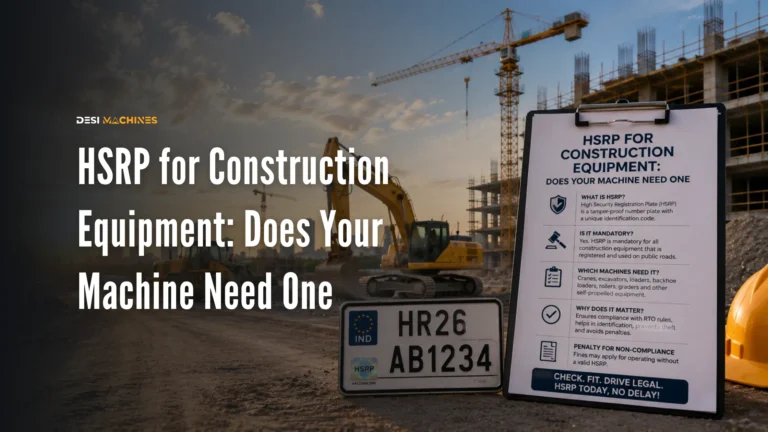
Unlike other vehicles, these machines also require documents. So, when buying a second-hand machine, one must look at the documents carefully. Documents include a registration certificate, insurance, a pollution under control certificate, and a road tax receipt. Check the number plate too: a registered machine must carry a high security registration plate, so a missing or ordinary plate on a machine the seller says is registered is worth a question (see HSRP for construction equipment). If the machine was imported, ask for the bill of entry, the customs document that records its import; the size of the machine, whether a crane or a long-reach excavator, does not change that. Documents are important to prevent future legal problems.
For a registered machine, the transfer runs on RTO forms. The seller reports the sale in Form 29 and you apply for the transfer in Form 30, according to the Parivahan ownership-transfer page, within 14 days when the machine is registered in the same state and within 45 days when it was registered in another state. Section 50(1)(b) of the Motor Vehicles Act, 1988 gives the buyer 30 days to report the transfer, so filing inside the shorter window meets both. A machine registered in another state also needs a no objection certificate, which the seller applies for in Form 28 to the RTO that registered it.
If the machine was bought on a loan, the RC carries the financier’s name. Parivahan removes that entry on Form 35, signed by the registered owner and the financier, with the financier’s certificate that the dues are cleared, and the Desi Machines used machines page warns that a buyer needs the lender’s no-objection or a foreclosure letter before the transfer. Get those papers before you pay, because until the loan is closed the lender still has a claim on the machine. A tracked excavator or dozer normally has no RC, so for one the original tax invoice, and the sale papers that lead back to it, take its place; the used machines page asks sellers for exactly that. The full RTO steps are in RC transfer for construction equipment.
6. Test the Equipment in Operation:
When you buy construction equipment, test the machine thoroughly and by an expert. Test-run the machine under real conditions and its attachments to check its performance and reliability. Each machine has a different operation and specific purpose. Here’s what to check for each machine:
- Excavator: The hydraulic system is an important part of an excavator. The hydraulic system should be checked for smooth arm, bucket, and boom movement. Overall, leaks, damage, rust, or unusual noise during digging and trenching should be checked.
- Backhoe loaders: They comprise a front loader and a rear digging arm. Both need to be checked to check their efficiency in digging, trenching, loading, and material handling.
- Wheel Loaders: The lifting and dumping mechanism must be tested with different loads in different terrains. Checking of tires and joints must be done to see whether it can take sharp turns.
- Cranes: Cranes are used to lift materials from places where we can’t reach. The boom extension and the lifting mechanism should be tested under different loads. The stability of outriggers and load indicators must function properly.
- Bulldozers: The important parts are the blades and the rippers, which should be checked for efficient cutting, pushing, and leveling of soil or debris.
- Forklifts: Lifting masts and forks should be checked for stability under different loads at different heights. Maneuverability should be checked in tight spaces.
- Dumper Truck: Stability should be ensured when loaded. No hydraulic lag and no oil leaks should be present.
- Telehandlers: Testing of the machine’s ability to lift, move, and place materials at different heights and angles needs to be done.
- Motor Graders: To check its ability to level surfaces accurately, the moldboard should be tested. The hydraulic system for leaks, as well as the turning radius, should be checked.
- Skid-Steer Loaders: Check the maneuverability in tight spaces as well as the compatibility of attachments like buckets, augers, or grapples.
7. Evaluate Spare Parts Availability:
Some of the brands have the issue of unavailability of spare parts in certain parts of India. So, it is better to look out for the availability of spare parts. Some of the used machines often become outdated, and spare parts cannot be found on the market. Some machines, like bulldozers and motor graders, require specialized parts, so ensuring parts availability is a must.
8. Consider the Reputation of the Seller:
Whenever you are looking for sellers or dealers of second-hand equipment, always choose the reputable ones. Some brand dealers sell certified-used machines with a warranty, and the Desi Machines used machines service passes on such stock from dealers in your region, but the certification terms are the dealer’s, so read what the warranty covers and for how long.
9. Compare Prices and Negotiate:
Prices vary for different reasons, like the age of the machine, brand, and condition. The market survey should be made for prices of similar products, and then check who offers a better deal.
Desi Machines does not publish used prices, so measure every used quote against the new price of the same model on its model page. As of November 2026 the JCB 3DX lists at ₹28–32 lakh new, the Tata Hitachi EX 210 Infra at ₹57–63 lakh and the ACE 14XW pick-and-carry crane at ₹17–19 lakh. When a used quote comes close to the new price on EMI, the new machine may be the better buy, because the used loan is smaller and shorter: the Desi Machines finance page puts a used-machine loan at about 60–70% of the value over two to three years at 13–18% a year (November 2026), against 75–90% on a new machine. The lender funds a share of its own valuation, not of the price you agreed, as the guide to the used construction equipment loan explains, so a price above the valuation comes out of your pocket. Desi Machines does not lend: it passes your enquiry to banks and NBFCs, and the lender deals with you directly.
10. Inspect for Compliance with Safety and Environmental Standards:
Nowadays, every company is making sustainable machines with fuel efficiency. It should be checked whether the machine is environmentally friendly or not. The machine should be checked to ensure that it is equipped with features like ROPS (Roll Over Protection System) and FOPS (Falling Object Protection System).
Pricing, finance and cover on a used machine
Two things change once the machine is second-hand. Lenders fund a smaller share of the price, so the down payment is usually higher than on a new machine: the bands are set out in how much down payment you need, and the lenders active in this market are listed on the construction equipment finance pages (Desi Machines does not lend; it passes your enquiry to them). Insurers also underwrite a used machine differently, and the declared value matters more, not less: see equipment insurance (Desi Machines does not sell insurance; the insurer quotes and issues the policy). If you are still deciding between used, new and rented, start from the used equipment buying guide and compare against renting versus buying.
Inspect a used machine before you pay
In India, buying a used machine can be a good and cost-effective decision. But careful checking and inspection are necessary before buying these expensive machines. If you follow the above points, then the chances of a wrong product are reduced. Keep quality, reliability and compliance with safety standards in view as well, because a machine that breaks down on site stops the job and the earnings with it.
For the checks in a fixed order you can carry to the yard, work through the used equipment inspection checklist.
Inspection points and documentation requirements here are general guidance. Condition, hours and title vary machine by machine — confirm the service history, outstanding finance and current market value with the seller, an authorised dealer or an independent valuer before you pay. Prices here are new-machine prices listed on Desi Machines as of November 2026. Confirm the current price and variant with the dealer or OEM before you buy.