Excavator
294 models
Excavator
294 models  Backhoe Loader
51 models
Backhoe Loader
51 models  Crane
68 models
Crane
68 models  Concrete Mixer
79 models
Concrete Mixer
79 models  Wheel Loader
54 models
Wheel Loader
54 models  Compactor / Roller
45 models
Compactor / Roller
45 models  Motor Grader
42 models
Motor Grader
42 models  Dozer
41 models
Dozer
41 models  Concrete Pump
66 models
Concrete Pump
66 models  Skid Steer Loader
11 models
Skid Steer Loader
11 models  Telehandler
13 models
Telehandler
13 models 


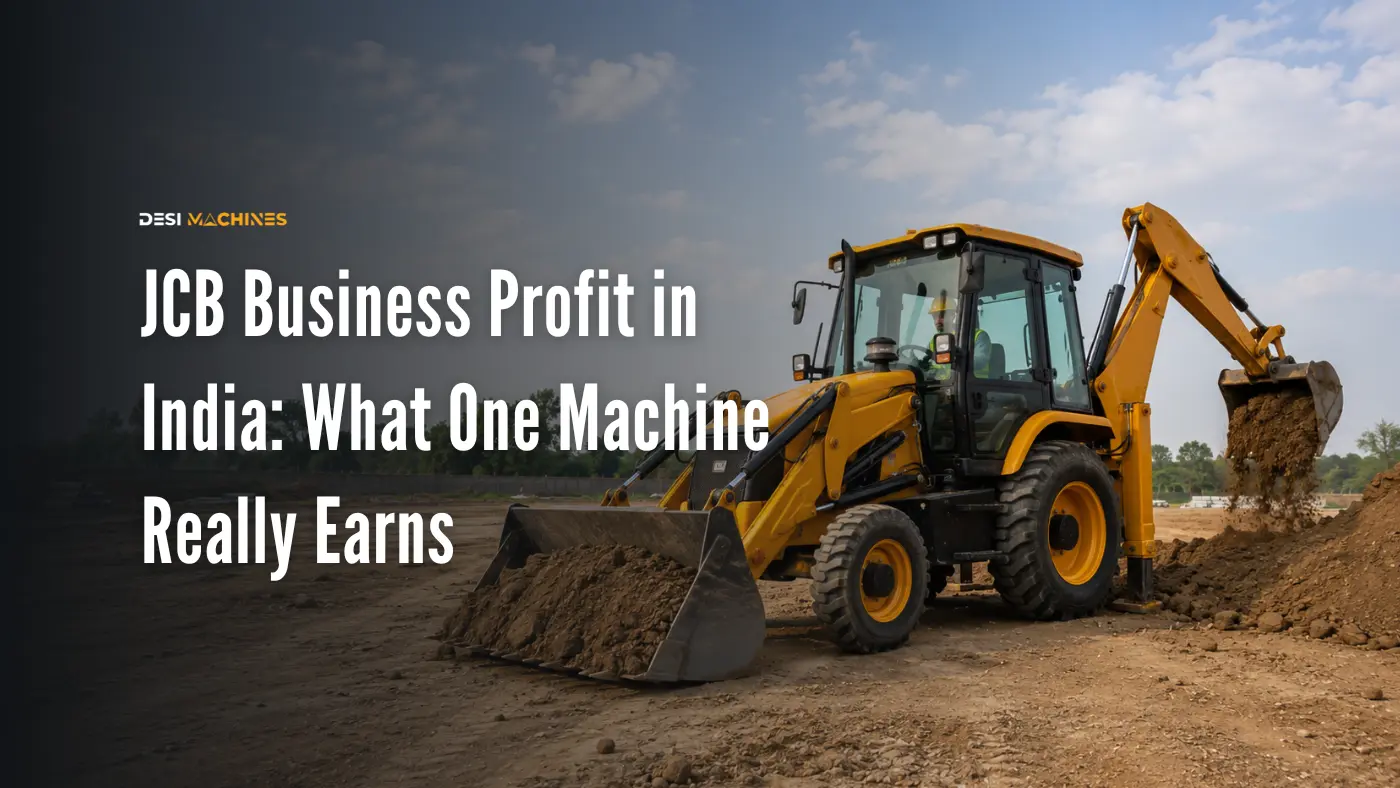
JCB business profit in India is decided by utilisation, not by the hire rate. At indicative July 2026 dry-hire rates of ₹90,000–1,40,000 a month, a backhoe bought with a ₹20 lakh loan (EMI about ₹44,500 at 12% over five years) leaves roughly ₹35,000–90,000 a month before insurance, overheads and idle days. Bill 20 days a month and the machine pays well. Bill eight, and the same machine loses money — because the EMI never takes a holiday. Confirm local hire rates and your own loan terms before you plan on any of these figures.
Ask ten machine owners in any district whether the business pays, and you will get ten different answers. That is not because the rates differ that much. It is because one owner’s machine worked 22 days last month and another’s worked nine. The machine is the same; the business is not. Before you buy your first backhoe or excavator, it is worth sitting with the arithmetic the way a lender would.
What a machine actually earns
Start with the income side, because that is the part most people already half-know. Hire in India is quoted two ways. Dry hire means you supply only the machine — the hirer brings the operator and the diesel. Wet hire means you supply the operator, and usually the fuel, and quote a higher rate to cover both.
| Basis | Indicative rate (Jul 2026) | Who pays diesel and operator |
|---|---|---|
| Per hour, dry | ₹550–900 | Hirer |
| Per month, dry hire | ₹90,000–1,40,000 | Hirer |
| Per hour, wet | ₹900–1,300 | You |
The gap between the two is not profit. A wet quote looks ₹300–400 an hour better and then hands you the fuel bill and an operator on your payroll. Full district-by-district figures for other machines sit in the equipment rental rate card. Whichever basis you work on, the number that matters is not the rate — it is the rate multiplied by the days you actually billed.
JCB business profit: the monthly numbers
Take a common case. A backhoe in the JCB 3DX class, an indicative ₹30–32 lakh ex-showroom on our own listings, bought with about ₹10 lakh down and a ₹20 lakh loan at 12% over five years. Put it on steady dry hire.
| Monthly line (indicative, Jul 2026) | Amount |
|---|---|
| Dry-hire income, machine steadily deployed | ₹90,000–1,40,000 |
| Loan EMI (₹20 lakh, 12%, 5 years) | − ₹44,500 |
| Routine maintenance provision (backhoe class) | − ₹5,000–10,000 |
| Insurance, permits, parking, admin | − your own figure |
| Left before idle time and repairs | ≈ ₹35,000–90,000 |
That maintenance provision comes from the service schedule, not a guess: a backhoe in regular work runs an indicative ₹60,000–1.2 lakh a year in routine servicing and wear parts, which is where the maintenance cost by machine class figures land. Insurance is left blank on purpose — your premium depends on the machine’s value, your claim history and the cover you pick, so take it from your own equipment insurance quote rather than an average.
Look at the spread. The same machine, same loan, same district: ₹35,000 or ₹90,000, depending on whether it sat or worked. That range is the entire business.
Utilisation is the whole game
Here is the part that sinks first-time owners. The EMI is fixed. Insurance is fixed. Your operator, if you keep one, is largely fixed. The income is the only line that moves — and in Indian conditions it moves a lot: monsoon weeks, a project that stalls for clearance, a client who releases the site late, a breakdown that takes eleven days because one part came from another state. Those swings largely follow India’s construction season, and planning the year around it is what separates a good year from an average one.
An idle day is not a zero. It is a real cost, because the fixed lines keep running whether the bucket moves or not. Counted properly — EMI share, retained operator, fixed overheads, the hire you did not bill — an idle day on a 20-tonne excavator runs to an indicative ₹16,000–25,000, before any repair bill.
So the honest way to plan a purchase is not “the rate is ₹700 an hour”. It is “how many days a month can I genuinely keep this machine busy, in my district, in a bad month as well as a good one?” If the answer is under fifteen working days, the numbers do not hold up, and renting a machine when you need one is the cheaper decision. That trade-off is worked through in full in buy vs rent for construction equipment.
Where the money quietly leaks
Owners rarely lose money in one dramatic event. It goes in small, boring leaks:
- Delayed payments. A contractor who pays at 90 days instead of 30 does not reduce your profit on paper, but he decides whether you can pay the EMI this month. Working capital, not margin, is what kills small equipment businesses.
- Diesel on wet hire. If you supply fuel, every careless operating habit — long idling, harsh operation, unmetered top-ups — comes straight out of your margin. Owners who move to dry hire often do it for this reason alone.
- Deferred servicing. Skipping a ₹10,000 service to save cash in a lean month is how a ₹1 lakh hydraulic repair starts. The true cost per hour of running a machine assumes the schedule is kept.
- Operator churn. A trained operator who leaves takes fuel efficiency and machine care with him. At an indicative ₹22,000–30,000 a month for an experienced backhoe hand — see the operator salary guide — paying a little above the market is usually cheaper than replacing him twice a year.
- Under-quoting to stay busy. Taking work below your cost per hour to keep the machine moving feels productive. It is a slow way to fund somebody else’s project.
Finding the work is the actual business
Owning the machine is the easy half. Keeping it deployed is the job, and it is where most single-machine owners never build a system — they wait for the phone. The owners who stay busy work three channels at once: repeat contractors who know the machine and the operator, a spread of small local jobs that fill the gaps between big deployments, and formal work through tenders and project contracts.
That third channel is the one most small owners ignore, and it is where the steady multi-month deployments live. Live government and infrastructure requirements are published daily on the equipment and construction opportunities desk, and the practical playbook for the other two sits in how to get more work for your machine.
The same arithmetic behaves differently on other machines. A concrete truck is paid by the trip and capped by how far its plant can send it, which changes the utilisation question completely; that version of the sum is worked through in transit mixer business profit.
When one machine should become two
The second machine is where good businesses go wrong, because the fixed cost doubles on the day of delivery and the work usually arrives a few months later. Three things should be true before you sign:
The first machine is consistently busy — not busy in a good season, busy across a full year including monsoon. Your collections are predictable enough that you know roughly what lands in the bank each month. And you have a cash buffer of at least a few months of EMI, so one delayed payment does not turn into a default that costs you your rate on the next loan.
Add to that a practical point: a second machine of the same class is easier to run than a different one. Same spares, same operator skills, same service network, and you can send either machine to either job. If the loan side is the constraint, the current bands are in bank vs NBFC equipment loan rates, and you can compare structures on the equipment finance options before you commit. The funding routes for machine number two, and the test for whether one cash flow can carry two EMIs, are set out in our guide to fleet expansion finance.
Weighing this against a tipper or dumper on the same capital? The comparison that settles it is return on the money you put in, not monthly earnings — the three-line sum is in tipper, dumper or backhoe: which earns more.
What one machine can realistically earn each month
A single machine run properly is a decent small business, not a windfall. On indicative July 2026 numbers a financed backhoe on steady dry hire leaves roughly ₹35,000–90,000 a month before insurance, overheads and idle days — and that spread is set almost entirely by how many days you keep it billing. Before you buy, count the working days you can realistically fill in your own district, price the machine against that, and keep a buffer for the months the work does not come. Confirm current hire rates, loan terms and premiums with a local rental operator, bank and insurer before you decide.
Working out whether the numbers hold for you? Compare live backhoe loader and excavator models and prices, check the finance options against the earnings above, and line up work on the opportunities desk before the machine reaches your yard.
Prices, hire rates, interest rates, wages and running costs are indicative, vary by district, season, variant and date, and change constantly. The figures here are indicative as of July 2026 — always confirm current terms with the OEM, bank or insurer before any purchase or business decision. DesiMachines is not liable for decisions taken on the basis of information that may have changed after publication.
Figures here are indicative and are reviewed against our live listings each refresh — confirm specifications, service intervals and pricing with the OEM dealer before you act on them.