Excavator
294 models
Excavator
294 models  Backhoe Loader
51 models
Backhoe Loader
51 models  Crane
68 models
Crane
68 models  Concrete Mixer
79 models
Concrete Mixer
79 models  Wheel Loader
54 models
Wheel Loader
54 models  Compactor / Roller
45 models
Compactor / Roller
45 models  Motor Grader
42 models
Motor Grader
42 models  Dozer
41 models
Dozer
41 models  Concrete Pump
66 models
Concrete Pump
66 models  Skid Steer Loader
11 models
Skid Steer Loader
11 models  Telehandler
13 models
Telehandler
13 models 


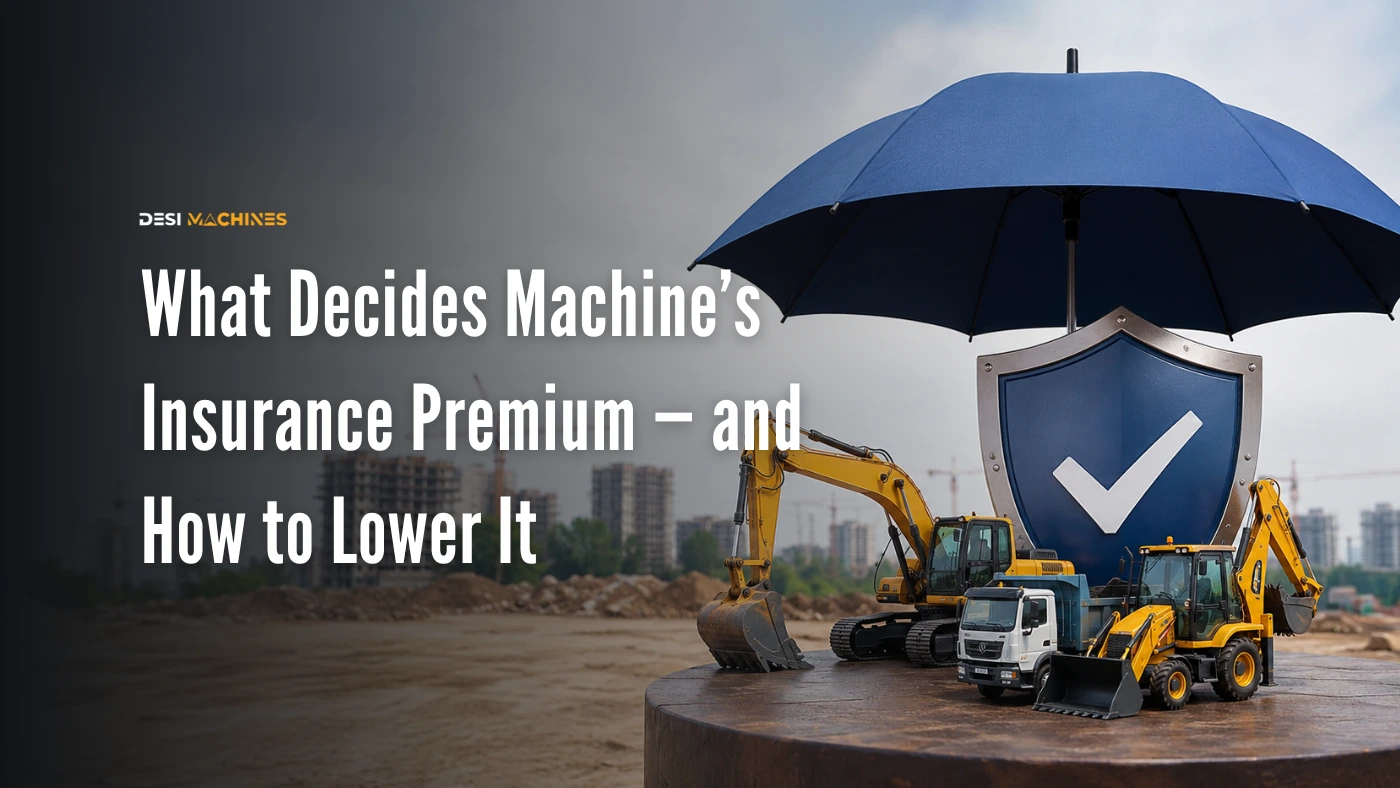
Your construction equipment insurance premium is driven mostly by one number — the IDV (Insured Declared Value) — plus the machine’s age, where and how hard it works, the add-ons you pick and your claim history. A comprehensive policy typically costs about 1%–3% of IDV per year (indicative) — nearer 1% for a newer machine on light urban work, nearer 3% on mining, quarry and flood-prone sites — so roughly ₹28,000–₹85,000 on a ₹28 Lakh machine. Most of those levers are in your hands — but cutting the premium by under-insuring the machine is the one “saving” that costs you the most when a claim lands.
Premium bands here and in our construction equipment insurance guide were reconciled on this date so both quote the same range.
Two contractors buy the identical backhoe loader in the same month. One pays ₹34,000 a year to insure it, the other ₹72,000. Same machine. The gap is not luck — it is a set of decisions each of them made, some without realising it. Once you know what the insurer is actually pricing, you can move your own number in the right direction.
What the insurer is really pricing
An insurer is estimating two things: how likely your machine is to cost them money, and how much it would cost if it did. Every line in the quote traces back to one of those. These are the main drivers:
| Driver | Effect on premium |
|---|---|
| IDV (insured value) | The biggest lever. Higher IDV = more to pay out = higher premium. It is a percentage of this number. |
| Machine age | Older machines break down more, so the rate on the IDV climbs even as the IDV falls. |
| Where and how it works | Mining, quarry, heavy rock or flood-prone sites are rated higher than light urban or farm use. |
| Cover type and add-ons | Comprehensive costs more than basic; each add-on (theft, flood, extra liability) adds to it. |
| Deductible | A higher voluntary deductible lowers the premium — you carry the small stuff yourself. |
| Claim history | A clean record earns no-claim benefit; frequent claims push the renewal rate up. |
The overall shape of the cover — what a comprehensive policy includes and why it matters in Indian conditions — is laid out in our construction equipment insurance guide, which quotes the same 1%–3% band against a ₹30 Lakh machine. This piece is about the number at the bottom of the quote.
IDV: the number that moves everything
Because the premium is a percentage of IDV, this is where owners lose or waste the most money — usually by setting it wrong.
Set it too low to shave the premium, and you are under-insured. If the machine is stolen or written off, the insurer pays out the low IDV, not what the machine is really worth — you take the loss on the difference. Set it too high, and you pay premium every year on value you can never actually recover, because a claim is capped at the machine’s real market value regardless of what you declared.
The right IDV is the machine’s honest current market value — what it would fetch today given its age and hours. It falls each year, which is normal and correct; your premium rupees should fall with it. If your renewal quote keeps the IDV flat on a three-year-old machine, question it.
The levers you actually control
Some drivers — the machine’s age, the terrain you work on — you cannot change. These you can:
Raise the voluntary deductible. Agreeing to carry, say, the first ₹15,000–₹25,000 of any claim yourself lowers the premium. It makes sense if your cash flow can absorb small repairs and you would not claim for them anyway.
Protect your no-claim record. Not claiming for a minor dent you could pay for out of pocket keeps your no-claim benefit intact, which is often worth more over a few years than the small claim itself.
Fit and declare security. Anti-theft locks, immobilisers and telematics/GPS lower theft risk, and a machine that can be tracked and recovered is cheaper to insure. Declare them so you actually get the credit.
Right-size the add-ons. Pay for the covers your work needs — theft where machines sit on open sites, flood cover in monsoon-prone belts — and drop the ones that do not fit how the machine is used. Do not, though, drop a cover you clearly need just to trim the quote.
Compare at every renewal. The single most effective move is not any one lever — it is getting fresh quotes from two or three insurers each year instead of auto-renewing. The premium is set differently by each, and loyalty is rarely rewarded.
Where cutting the premium costs you more
A cheaper quote is not a cheaper year if it is cheap for the wrong reasons. Before you switch to save a few thousand rupees, check the cheap quote is not cheap because of these:
| What makes it “cheap” | What it costs you later |
|---|---|
| IDV set below real value | Underpayment on a total loss or theft — you eat the gap. |
| Very high deductible | Most small and mid claims come out of your own pocket anyway. |
| Key add-ons stripped out | The one risk you actually face is the one not covered. |
| Narrow exclusions you did not read | Claim rejected on a clause you never saw. |
Insurance is one running cost among several — it belongs in the same view as fuel, maintenance and finance when you work out what a machine really costs to own. The cost of ownership of an excavator shows where the premium sits against the rest, and if you are financing the machine, weigh a bundled policy against standalone quotes rather than taking it by default — the lender will require cover for the loan tenure either way, as our construction equipment loan eligibility checklist sets out.
Ways to lower your machine insurance premium
Your construction equipment insurance premium is not a fixed price handed to you — it is the sum of decisions, most of which you can influence. Set the IDV at the machine’s honest value, protect your claim record, tune the deductible and add-ons to how the machine actually works, and re-quote every year. Aim for the policy that pays out cleanly when you need it, not the one with the smallest number on the renewal notice.
Sorting out cover for a new machine? Start with the right protection on the equipment insurance side, line up your equipment finance in parallel, and get a written quote for your exact machine and IDV before you commit.
Most new machines already carry a maker’s tracking unit; the guide to LiveLink, CareTrack, KOMTRAX and other telematics systems explains what each one records.
Premiums, IDV bands, add-on availability and the indicative figures here vary by insurer, machine, variant, location, usage and date, and reflect the position as of July 2026. Confirm the exact cover, exclusions and premium for your machine with the insurer or a licensed insurance advisor before deciding. DesiMachines is not liable for decisions taken on information that may have changed after publication.