Excavator
294 models
Excavator
294 models  Backhoe Loader
51 models
Backhoe Loader
51 models  Crane
68 models
Crane
68 models  Concrete Mixer
79 models
Concrete Mixer
79 models  Wheel Loader
54 models
Wheel Loader
54 models  Compactor / Roller
45 models
Compactor / Roller
45 models  Motor Grader
42 models
Motor Grader
42 models  Concrete Pump
66 models
Concrete Pump
66 models  Skid Steer Loader
11 models
Skid Steer Loader
11 models  Telehandler
13 models
Telehandler
13 models 


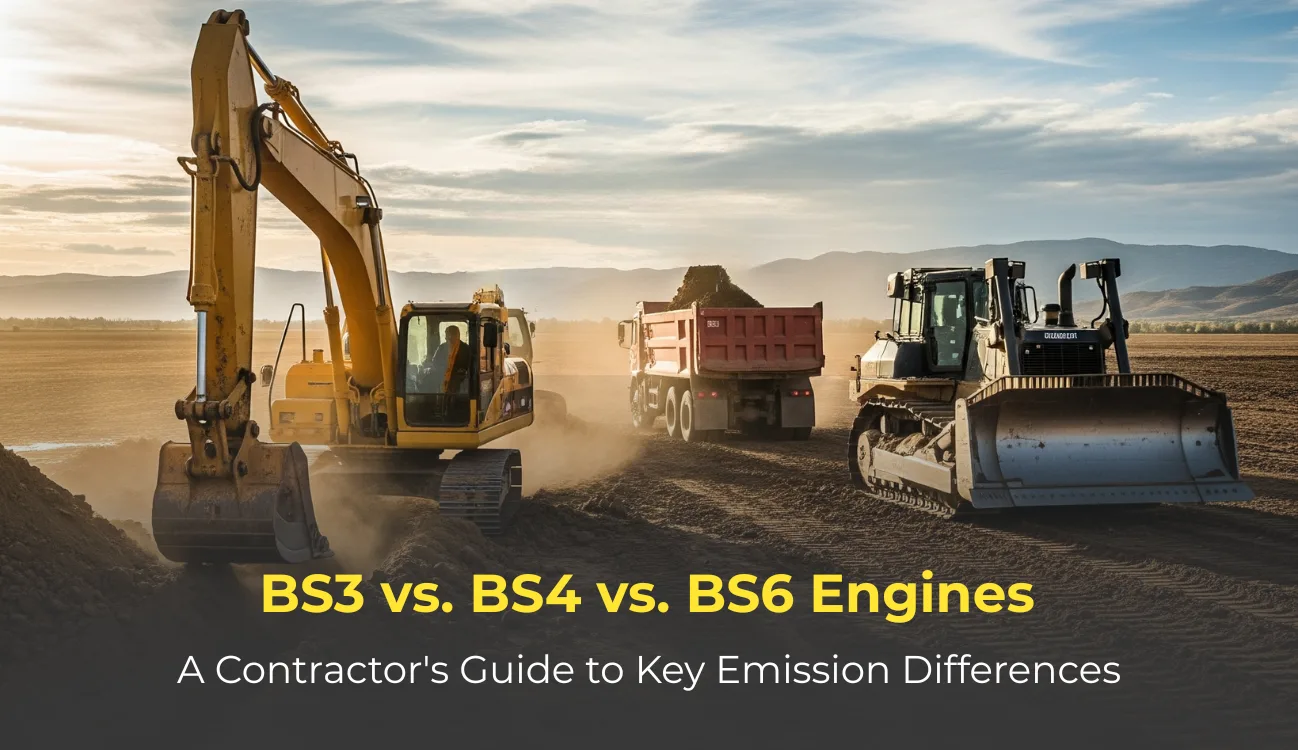
In short: BS stands for Bharat Stage, India’s emission standard for engines — so BS3 is Bharat Stage III, BS4 is Bharat Stage IV, and a BS6 engine is one built to Bharat Stage VI, the strictest of the three. On the limits used through this article, BS3 allows 2.0 g/kWh of NOx and 0.2 g/kWh of particulate matter, BS4 tightens that to 1.5 and 0.1, and BS6 cuts it to 0.4 and 0.02. One distinction decides most buying questions: the BS ladder is the on-road standard for trucks, buses and cars, while construction equipment is certified under a separate CEV ladder (CEV BS-III, CEV BS-IV, CEV BS-V). A machine sold as “BS6” is shorthand — the number that counts is the CEV level on its engine plate.
Bharat Stage norms regulate engine emissions in India, and the parallel CEV norms are what actually cover heavy machinery like excavators. BS3 engines (2005) allow higher NOx and PM, while BS4 engines (2010) reduce these. BS6 engines (2020) offer the strictest limits, cutting NOx by about 73% and PM by 80% compared to BS4. Using advanced technologies like SCR, BS6 engines ensure cleaner, efficient performance. The difference between BS4 and BS6 lies in fuel needs. BS6 requires ultra-low-Sulphur diesel and long-term ROI from better fuel economy. Desi Machines helps you compare BS6 engine equipment for sustainable construction projects.
| Norm | Introduced | NOx limit (g/kWh) | PM limit (g/kWh) | Key requirement |
|---|---|---|---|---|
| BS3 | 2005 | 2.0 | 0.2 | Basic emission control |
| BS4 | 2010 | 1.5 | 0.1 | Tighter limits, better fuel |
| BS6 | 2020 | 0.4 | 0.02 | SCR/DPF tech, ultra-low-sulphur diesel |
Bharat Stage (BS) norms are India’s emission standards. Set by the Central Pollution Control Board, they limit pollutants from engines in vehicles and heavy machinery. These rules aim to curb air pollution and bring Indian limits closer to European ones.
For construction equipment like excavators, these norms are critical. Compliance level is now one of the first filters buyers apply when they shortlist an excavator or a compactor. Non-road engines contribute heavily to emissions on job sites, which is why the norm a machine was built to now shows up in tender conditions and in resale conversations alike.
What are BS3, BS4, and BS6 Engines?
BS3 engines, initiated in 2005, were the first step towards clean technology. More pollution was permitted in these, which are not suitable for urban areas. BS4 engines, introduced in 2010, made regulations tighter for clearer air.
In 2020 India skipped BS5 altogether and moved straight from BS4 to BS6, pulling on-road limits level with Euro 6 in a single step. BS6 engines are made to reduce emissions to a great extent; hence, they are the most suitable for green construction.
Emission Limits of BS3, BS4, and BS6 Engines
The emission limits are also the main difference between BS3, BS4, and BS6 engines. BS3 has a limit of 2.0 g/kWh of nitrogen oxide (NOx) and 0.2 g/kWh of particulate matter (PM). These are higher figures that create smog and medical problems.
BS4 engines lower NOx to 1.5 g/kWh and PM to 0.1 g/kWh. BS6 engines go even further, limiting NOx to 0.4 g/kWh and PM to 0.02 g/kWh. This BS6 engine reduces particulate matter (PM) by 80% and NOx by about 73% compared to BS4, making operations cleaner — both figures follow directly from the limits in the table above.
Technology That Powers Change
BS3 engines are equipped with simple mechanical fuel injection. It doesn’t burn fuel efficiently and therefore drinks more fuel. It is less appropriate for tough construction use.
BS4 engines come with Exhaust Gas Recirculation (EGR) and Diesel Particulate Filters (DPF). Electronic fuel injection makes it more accurate, striking a balance between power and pollution for medium-level jobs.
BS6 engines are technically very advanced. Their NOx is minimized with Selective Catalytic Reduction (SCR) and AdBlue. Advanced EGR, electronic controls, and Onboard Diagnostics (OBD) get them to run smoothly. That after-treatment stack is also what makes a BS6 engine dependent on fuel quality, which the next section covers.
Fuel Requirements Simplified
The quality of fuel is important for the difference between BS4 and BS6 engines. BS3 engines use diesel containing a maximum of 0.35% (3500 ppm) Sulphur. It causes higher emissions and wear and tear of parts.
BS4 engines need low-Sulphur diesel (0.05% or 500 ppm) to burn efficiently. BS6 engines need ultra-low-Sulphur diesel (0.005% or 50 ppm) to run efficiently. Run BS4 diesel in a BS6 engine and the higher sulphur clogs the DPF and poisons the SCR catalyst, so emissions climb and the after-treatment needs work. The reverse is safe: BS6 fuel runs fine in older BS3 and BS4 engines.
Performance and Power Output
BS3 engines offer basic power but guzzle fuel and need frequent fixes. This hikes costs on long projects. BS4 engines improve efficiency, delivering steady power for mid-level tasks.
BS6 engines excel with optimized combustion. They provide strong torque and reliability, ideal for rugged sites like mining or landscaping. For excavators, BS6 engines ensure peak performance.
Cost and ROI Breakdown
The 10–20% premium lands on the invoice, not on the fuel bill, so most buyers spread it — equipment finance terms decide how much tenure changes the monthly figure. Emission class also feeds into how long a machine stays sellable, which is the resale side of the lifespan of construction equipment.
The BS6 engine set is costlier at first by 10-20% but comes with better technology. The BS3 and BS4 models cost less to buy but are less efficient. BS6 provides up to 10% better fuel efficiency, saving money in the long run.
Environmental Impact Matters
BS3 and BS4 engines emit more pollutants, harming air quality in cities like Delhi. They often face restrictions in high-pollution zones. BS6 engines slash emissions, supporting cleaner air and health.
BS6 complies with Real Driving Emission (RDE) tests, ensuring real-world performance. This makes it future-proof for strict regulations. For a buyer comparing BS6 options, the emission class matters most where the project is: metro and NCR sites apply the tightest restrictions first.
Key Differences Between BS3, BS4, and BS6 Engines
| Aspect | BS3 Engines | BS4 Engines | BS6 Engines |
|---|---|---|---|
| NOx Emissions (g/kWh) | Up to 2.0 | Up to 1.5 | Up to 0.4 |
| PM Emissions (g/kWh) | 0.2 | 0.1 | 0.02 |
| Key Technologies | Mechanical Fuel Injection | EGR, DPF, Electronic Injection | SCR, Advanced EGR, OBD, RDE |
| Fuel Sulphur Content | Up to 3500 ppm | Up to 500 ppm | Up to 50 ppm |
| Performance | Basic, high consumption | Improved efficiency | Optimal efficiency, reliable |
| Initial Cost | Low | Moderate | Higher |
| Environmental Impact | High emissions | Reduced emissions | Minimal emissions |
This table shows why BS6 engines lead in modern construction.
BS vs CEV: Which Norm Actually Applies to Construction Equipment?
This is the part most buyers get wrong. The BS3/BS4/BS6 ladder above is the on-road standard — it governs trucks, buses and cars. Construction equipment in India is a separate category, CEV (Construction Equipment Vehicle) — set out in the BS-CEV emission norms — and it runs on its own timetable: CEV BS-III, then CEV BS-IV, which became the requirement for new CEV engines in the main power band from October 2020, with CEV BS-V notified as the next step. CEV BS-V implementation dates have moved more than once, so treat any single date you read online as provisional.
What that means in practice when you are buying an excavator, backhoe or compactor:
- A machine advertised as “BS6” is usually shorthand. Ask the dealer for the CEV compliance level printed on the engine plate — that is the number that matters for registration and for tender eligibility.
- CEV BS-IV engines above 37 kW use SCR and AdBlue much like BS6 road engines, so the fuel and AdBlue logic in this article still applies to them.
- Some public-works tenders now specify a minimum CEV level. Check the tender wording before you buy, not after.
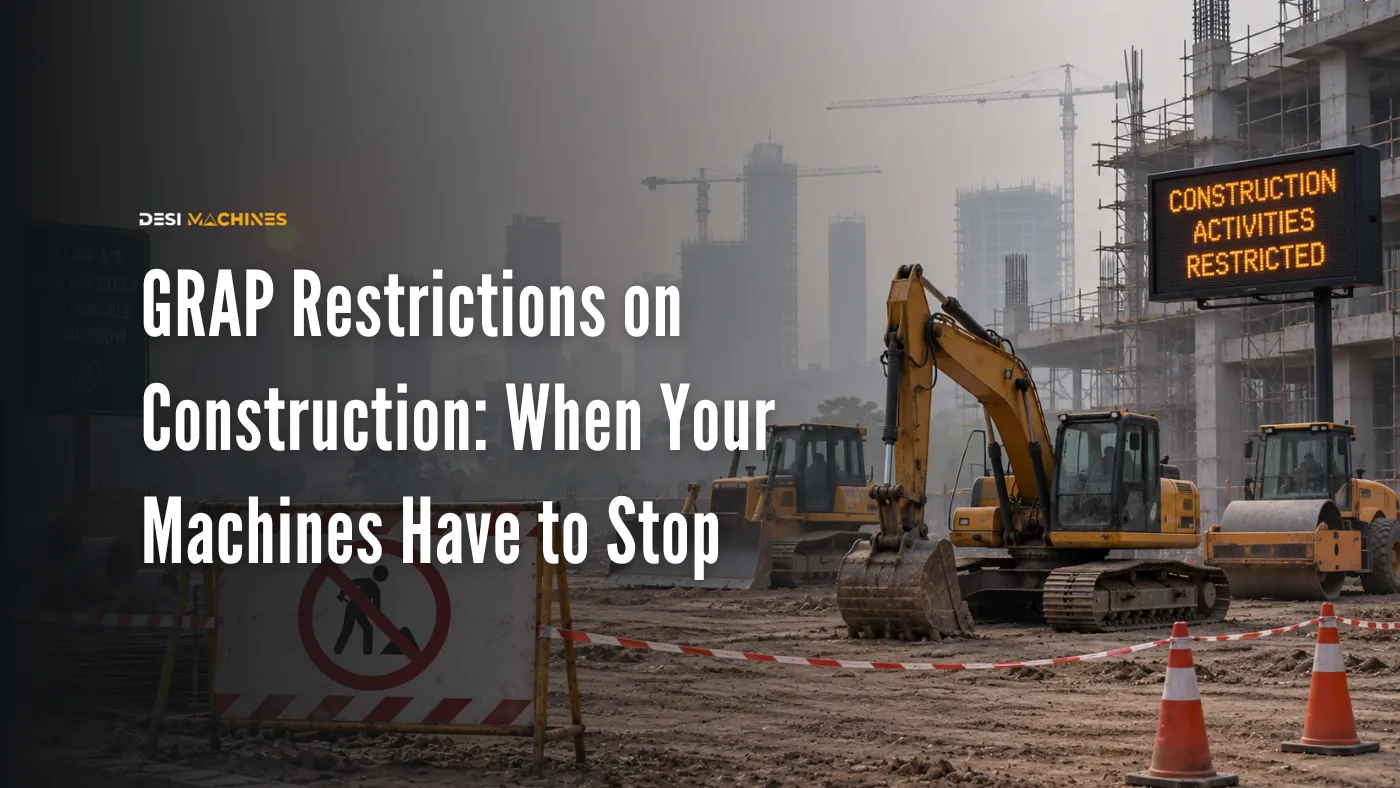
- In Delhi-NCR the norm on your plate also decides whether you can move in winter: at the higher GRAP restriction stages, BS-IV and below diesel goods vehicles are barred from Delhi and site work itself is halted.
- Resale follows compliance. An older CEV BS-III machine is harder to place in metro projects than the same machine at CEV BS-IV.
- The norm also sets your pollution-certificate cycle — six months for older machines, twelve for BS-IV and BS-VI ones — which is why the PUC certificate rules for construction equipment start by establishing the norm.
Why BS6 Is the Smart Choice
In the BS4 vs. BS6 debate, BS6 engines win for forward-thinking projects. They offer low emissions, advanced tech, and better fuel savings. This suits construction, mining, and infrastructure work.
Compare BS6 engine models from leading brands, check the compliance level each one is certified to, and speak to a dealer before you commit.
Specifications, emission norms and dealer offers change between model years — confirm the current spec and compliance status with the dealer or OEM before you commit.