Excavator
294 models
Excavator
294 models  Backhoe Loader
51 models
Backhoe Loader
51 models  Crane
68 models
Crane
68 models  Concrete Mixer
79 models
Concrete Mixer
79 models  Wheel Loader
54 models
Wheel Loader
54 models  Compactor / Roller
45 models
Compactor / Roller
45 models  Motor Grader
42 models
Motor Grader
42 models  Concrete Pump
66 models
Concrete Pump
66 models  Skid Steer Loader
11 models
Skid Steer Loader
11 models  Telehandler
13 models
Telehandler
13 models 


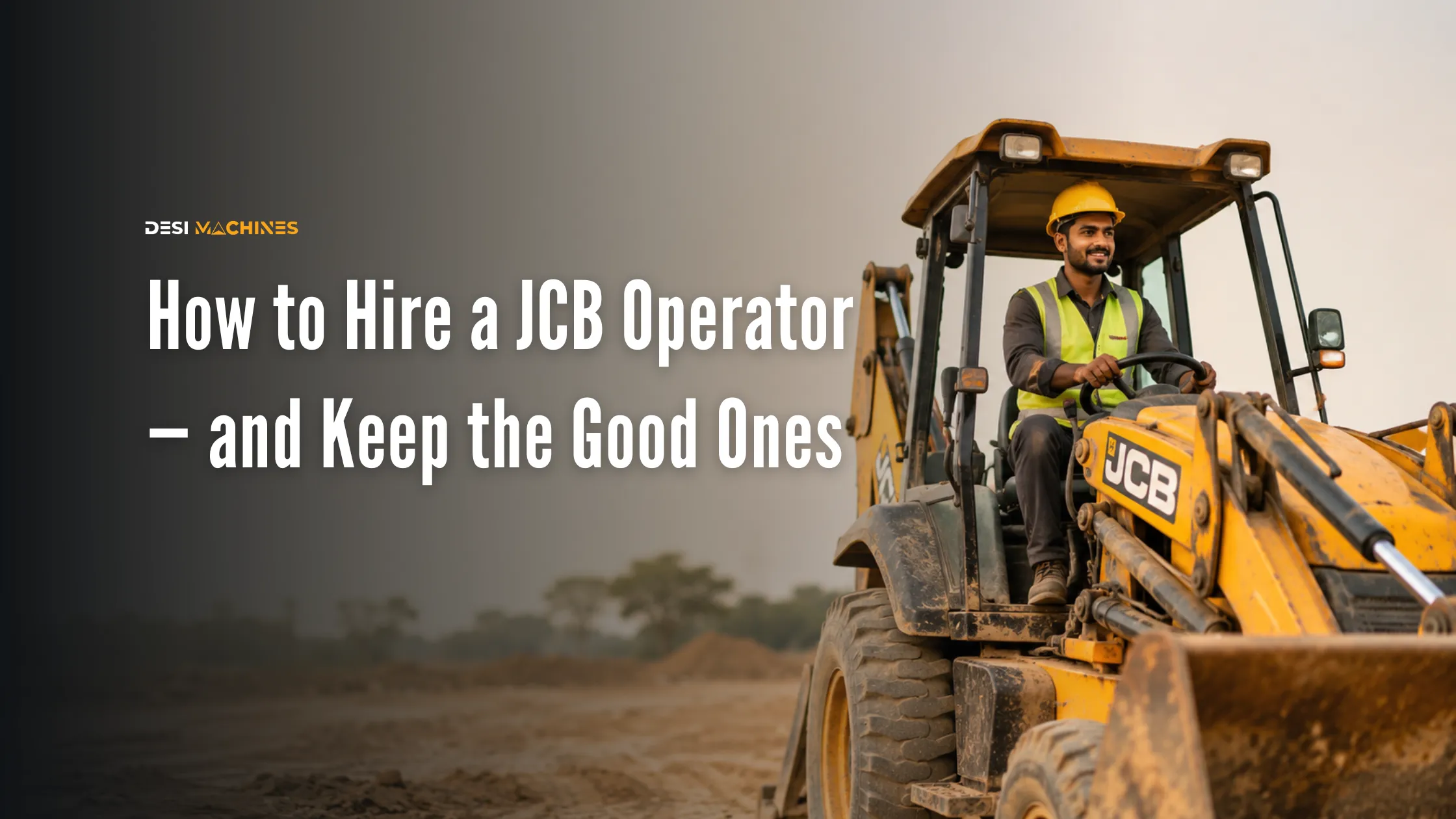
In short: To hire a JCB operator in India, budget an indicative ₹18,000–28,000 a month for a competent hand with two to five years behind him, and ₹28,000–45,000 for a senior man — plus overtime, which often adds 20–40% in a busy season. Referrals beat advertisements. A half-day paid trial on your own site tells you more than any interview. And the wage is due on idle days too, so the man is a fixed cost sitting on top of a variable business.
A machine does not earn money. A machine with the right person in the seat earns money. Most owners spend three months deciding between a 3DX and a 3DX Plus, then hire the first operator who walks up to the yard gate — and then wonder why the fuel bill is high, the undercarriage is worn and the site engineer keeps complaining.
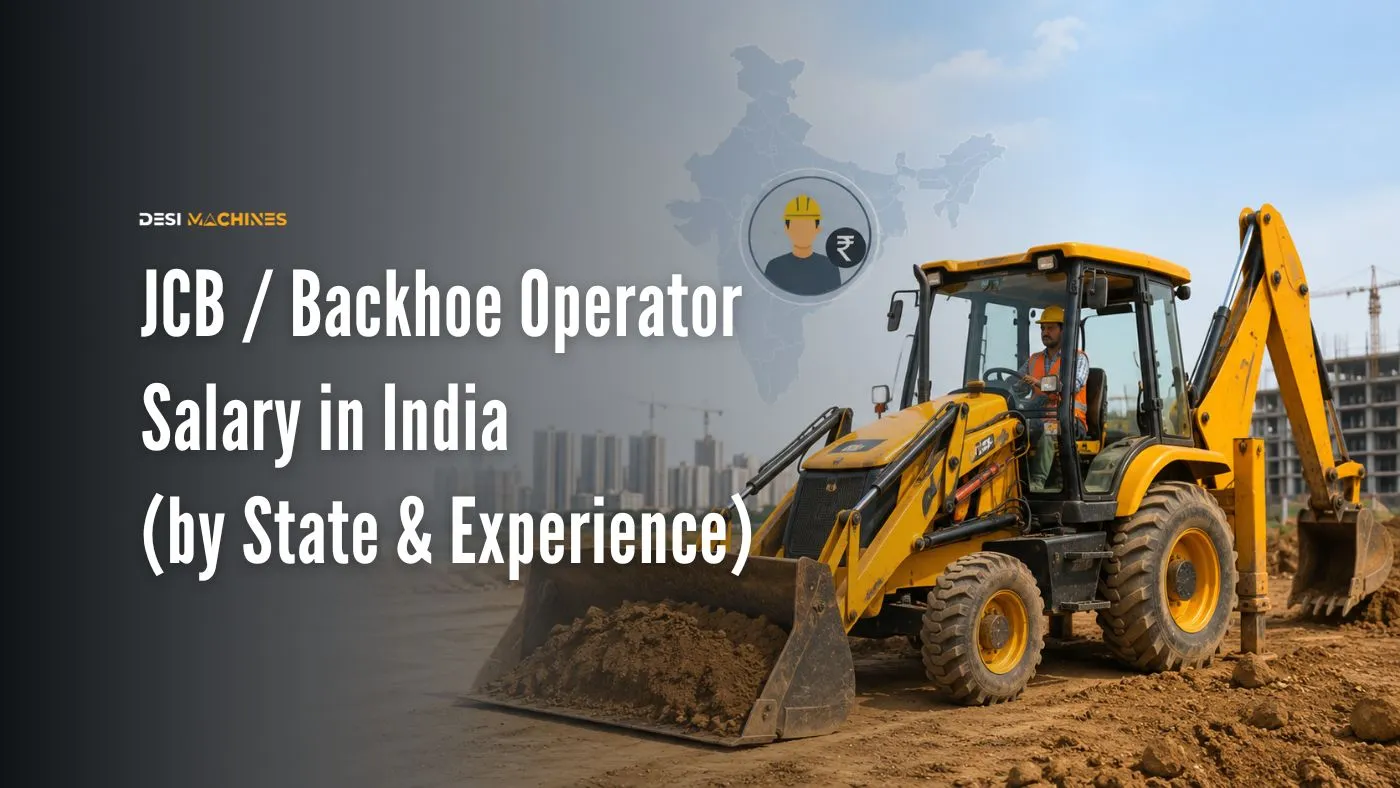
This is the owner’s side of a question our JCB operator salary guide answers from the operator’s side. Here: what the man costs you, where to find him, how to test him, and how to keep him once you have found a good one.
What it costs to hire a JCB operator
Start with the honest bands. These are indicative monthly figures for backhoe work, before overtime and allowances.
| Experience | Indicative monthly pay | What you get |
|---|---|---|
| Fresher / trainee (0–1 yr) | ₹12,000–18,000 | Simple digging and loading, needs supervision |
| Operator (2–5 yrs) | ₹18,000–28,000 | Independent on most site work |
| Skilled / senior (5+ yrs) | ₹28,000–45,000 | Precision work, tough sites, trusted alone |
| Specialist / lead | ₹45,000+ | Rare skills, or running a crew |
Most owners running one backhoe land at an indicative ₹22,000–30,000 a month for an experienced hand. Where you work moves this: Maharashtra, Gujarat, Delhi-NCR and Karnataka sit at the top of the bands, project corridors in MP, Rajasthan and UP in the middle, and smaller eastern markets at the bottom.
Two costs owners routinely forget. Overtime is not a bonus — on a deadline job it can add 20–40% to the month, and an operator who expected it will leave if it does not come. And the wage runs on idle days. A machine that works 12 days in a monsoon month still owes a full salary, which is why the operator belongs in your fixed costs when you price a job. Our JCB business profit breakdown shows what that does to a monthly P&L.
Where owners actually find operators
| Channel | Hit rate | Watch for |
|---|---|---|
| Referral from your operator or another owner | Highest | Ask why he left the last job, and ask the referrer, not the man |
| Dealer service network | Good | Fewer names, but the mechanics know who treats a machine well |
| Training institutes and ITIs | Mixed | Certificate hours are not site hours; expect to train further |
| Contractor circle on your own sites | Good | Poaching sours a working relationship — be careful whose man you take |
| Local advertisement or job boards | Fills fastest | Needs the most screening; verify everything |
The referral route wins because someone has already watched the man work for a year. That is information no interview produces.
What to check before you hand over the keys
You are handing a near-stranger a machine worth ₹22–39 lakh (indicative) and a fuel card. Twenty minutes of checking is cheap.
- Hours on your class of machine. A good excavator operator is not automatically a good backhoe hand — the loader end, the road travel and the stabiliser discipline are different habits.
- Why he left the last two jobs. Ask for the previous employer’s number and actually call. Owners talk to owners honestly.
- Daily-check habits. Ask him to describe his morning routine. A man who mentions grease points, coolant, hydraulic level and a walk-around before you prompt him has been trained properly.
- Road movement. If your machine drives between sites on public roads, settle the licence and documentation question with your dealer or RTO before he drives — do not assume, and do not take the operator’s word for what is required.
- Attitude to the hour meter. Someone who has never noticed the reading has never been held to output.
The trial run tells you what the interview cannot
Pay for half a day on your own site. It is the single best money you will spend on hiring. Watch four things:
- A trench to a line and level — depth held, sides clean, spoil placed so it does not have to be moved twice.
- Loading a tipper — how many swings, how much spillage, whether he keeps the truck waiting.
- The walk-around — does it happen without being asked.
- How he treats the machine when tired — the last hour tells you more than the first.
Smoothness matters more than speed. A fast operator who slams the boom and rides the stabilisers costs you undercarriage, hoses and downtime that never show up on his salary line.
How you pay changes who stays
Pay structure is a retention tool, and most owners use it badly.
Pay by bank transfer with a payslip. It costs you nothing and it is worth real money to him — a documented salary is what a lender looks at the day he wants to finance his own machine, and an operator who can see that path stays longer. Be explicit about food and stay: a ₹25,000 job with both provided beats a ₹28,000 job without, and confusion on this point loses more operators than the base figure does. If he is on proper payroll, PF and ESI cost you a little and buy loyalty from a man who has never had a safety net.
Then tie a small monthly incentive to something he controls — litres per hour, or hours billed — rather than to raw speed. Fuel is the biggest running cost after the EMI, and the method for measuring it is in our guide to fuel consumption per hour.
The liability that arrives with the hire
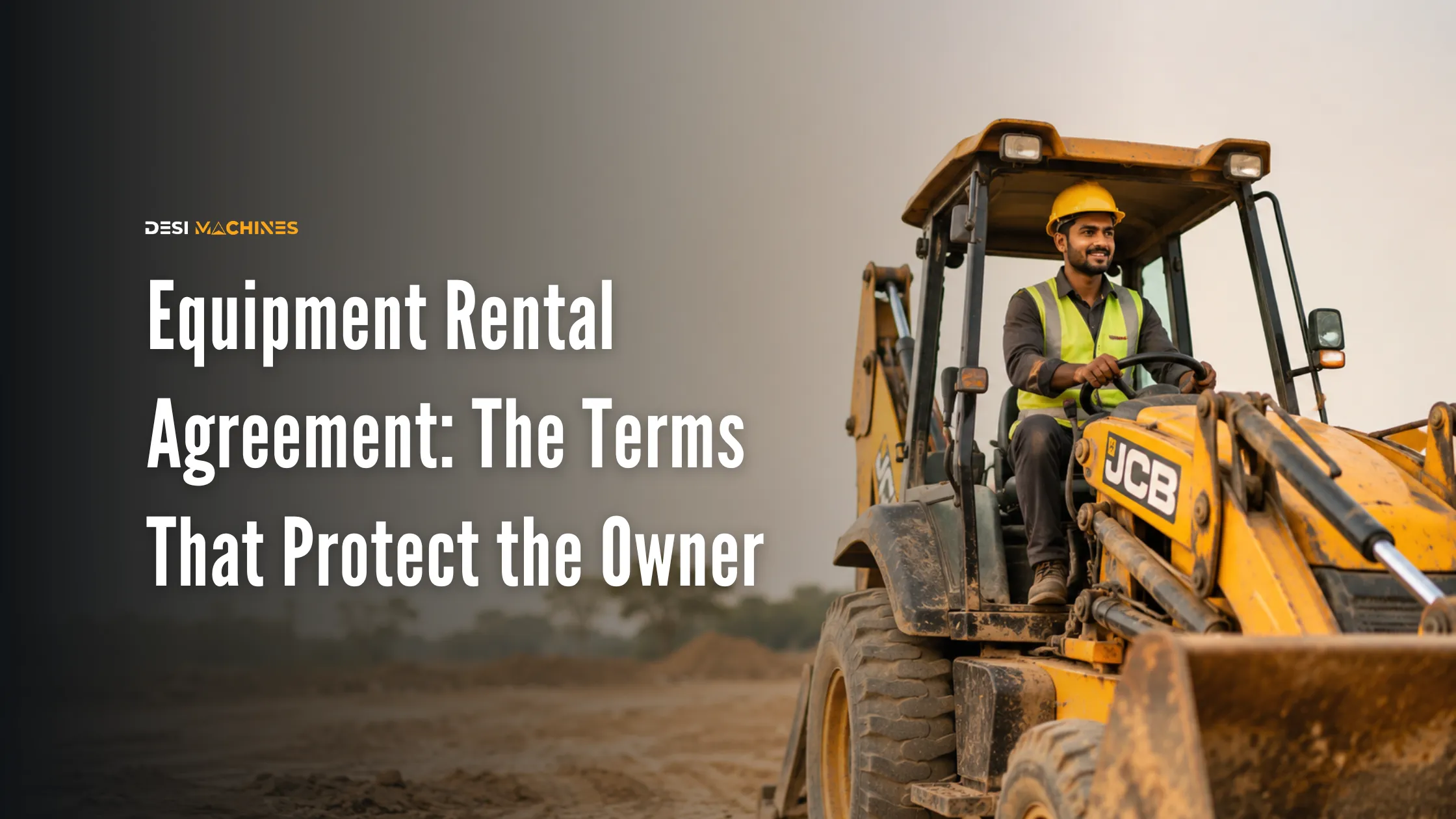
The day a man becomes your employee, his mistakes become your exposure. Two points owners get wrong: your operator is not a “third party” under a standard liability cover, so his own injury is a separate question from damage he causes to someone else — we set this out in third-party and operator liability. And if you send the machine out on hire with your man on it, the agreement must say who directs him and who pays for damage from instructions that breach the machine’s rated capacity — a clause covered in our equipment rental agreement guide.
Before the new man starts, read your policy for how it treats operator error and check the cover limits against the sites you actually work on. Start with construction equipment insurance if you are not sure what you are carrying.
What losing a good operator actually costs
Owners underpay to save ₹2,000 a month and then lose ₹50,000. The replacement arithmetic is unforgiving: two or three idle days while you find someone, at an indicative ₹16,000–25,000 a day of lost billing, plus a learning-curve period where fuel per hour rises and output falls, plus the risk of damage from a man who does not yet know your machine.
A ₹2,000 raise costs ₹24,000 a year. One week of idle machine costs more. If the man is good, pay him.
And if hiring is the part of the business you do not want, there is a legitimate alternative: put the machine out on wet lease rather than dry lease, or take on hire when you need capacity, and let someone else carry the payroll.
The mirror image of this problem is a business in itself: supplying operators and crews to other people’s sites rather than staffing your own. If that is the direction you are thinking in, what it takes to become a labour contractor covers the licence, the wage liability and the cash gap.
The bottom line
Budget an indicative ₹22,000–30,000 a month for a competent backhoe operator, hire on a referral, test him for half a day before you commit, pay him through a bank, and be clear about food, stay and overtime. The difference between a good operator and an average one shows up in fuel, in repairs and in whether your site engineer calls you back next month — and it is worth far more than the gap in their salaries.
If you are still sizing the machine that seat sits in, compare current backhoe loader models and prices, and look at equipment finance options if the second machine is the next step.
Wages, rates, schemes and prices change and vary by state, site and season — all figures here are indicative. Confirm current terms with our team, the OEM, bank or insurer before deciding, and treat employment and licensing questions as ones to settle with your dealer, RTO or a qualified advisor.
Wage bands are indicative market rates, not a published scale.
Operator wages vary widely by state, machine class and season, and statutory minimum wages apply. Confirm current local rates and your PF, ESI and insurance obligations with the contractor, employer or an official source before you agree terms.