
 Excavator
316 models
 Backhoe Loader
54 models
 Crane
68 models
 Concrete Mixer
79 models
 Wheel Loader
65 models
 Compactor / Roller
45 models
 Motor Grader
42 models

 Concrete Pump
66 models
 Skid Steer Loader
11 models


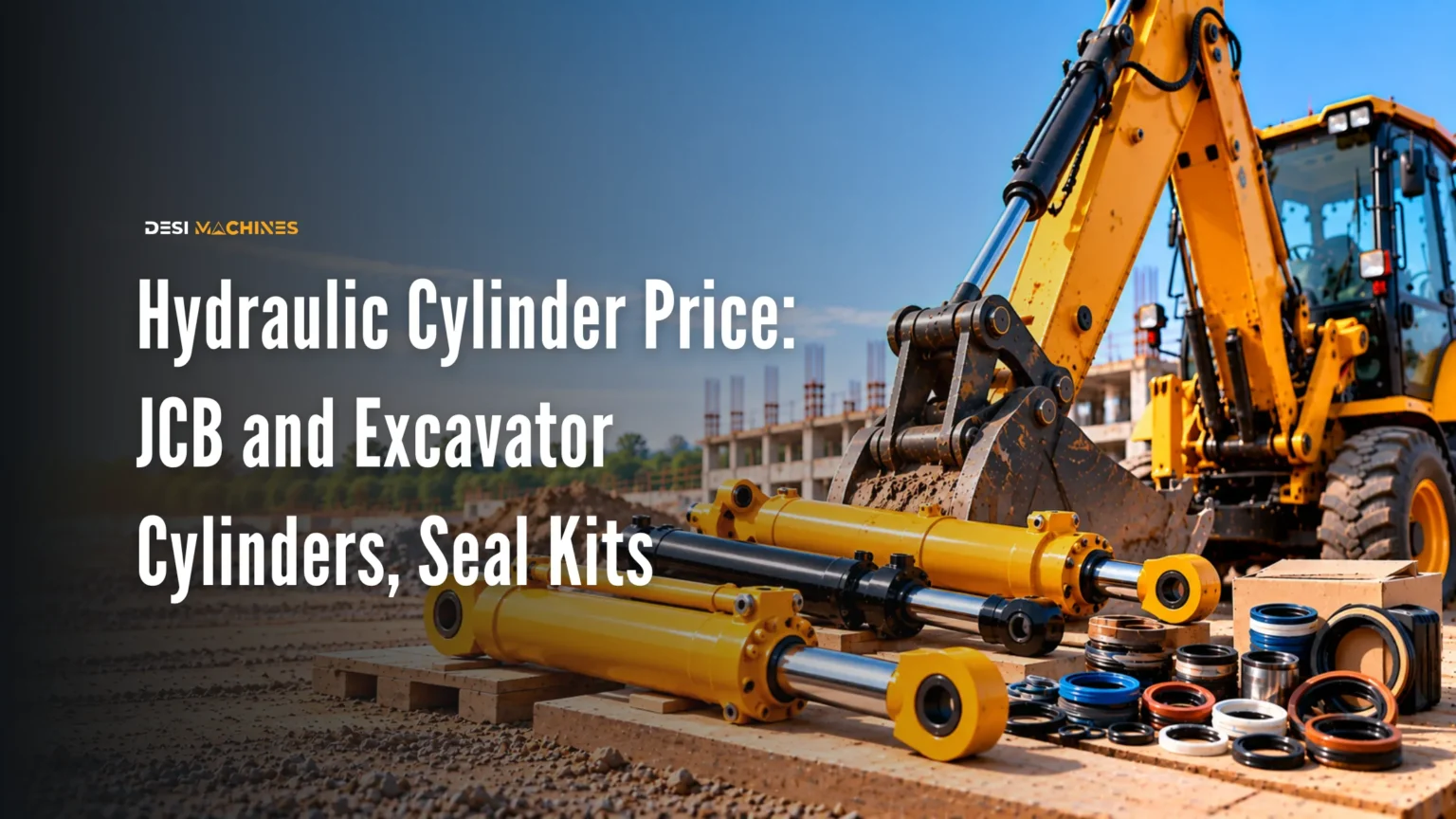
What a hydraulic cylinder costs is decided by four things: which cylinder it is, the class of machine it has to fit, its bore, rod and stroke, and whether you are buying a complete cylinder, a bare barrel or only a seal kit. A seal kit for one cylinder is the smallest job on that list and a new boom cylinder for a large excavator the biggest. Because the same cylinder is sold in all of those forms, the only figure worth acting on is a written quote against your machine model, its serial number and the part number stamped on the barrel.
This page covers which cylinders a backhoe loader and an excavator carry, what moves the price of each one, how bore, rod and stroke decide the size, when a reseal is enough and when the cylinder has to be replaced. Where each cylinder sits on the machine is explained in the guides to backhoe loader parts and excavator components.
Which hydraulic cylinders does a backhoe loader or excavator have?
Every cylinder turns oil pressure into a straight push or pull. The ones you will be asked about when you order a part are these.
| Machine | Cylinder | What it moves |
|---|---|---|
| Backhoe loader, rear | Boom | Raises and lowers the backhoe boom |
| Backhoe loader, rear | Dipper | Swings the dipper arm in and out |
| Backhoe loader, rear | Bucket | Curls the rear bucket to dig and dump |
| Backhoe loader, rear | Swing (slew) | Turns the whole backhoe arm left and right |
| Backhoe loader, rear | Extending dipper | Slides the inner dipper out for extra reach, on machines that have one |
| Backhoe loader, rear | Stabiliser | Pushes the two legs down to lift the rear wheels |
| Backhoe loader, front | Loader lift | Raises the loader arms |
| Backhoe loader, front | Loader bucket (tilt) | Tips the front bucket to fill and dump |
| Excavator | Boom | Raises the boom; usually the biggest cylinder on the machine |
| Excavator | Arm (stick) | Pulls the bucket through the ground on the digging stroke |
| Excavator | Bucket | Curls and dumps the bucket |
Backhoe loaders also have a steering cylinder, and many small excavators add a blade cylinder and a boom-swing cylinder.
What decides the price of a hydraulic cylinder?
Two quotes for “a bucket cylinder” can be for very different things. Read what each one actually includes before you compare them. For backhoe loaders in particular, many sellers price the barrel, which is the outer tube on its own, rather than the whole cylinder with its rod, piston, gland and seals already in it. For excavators, complete cylinders are quoted more often. These are the things that move the figure.
| What changes | Why it moves the price |
|---|---|
| Complete cylinder, bare barrel or seal kit | The three are sold as separate items for the same cylinder. A barrel still needs the rod, piston, gland and seals before it works |
| Cylinder position | A boom cylinder is the largest on the machine and the stabiliser and swing cylinders the smallest, and the steel and chrome in each follows that order |
| Machine class | A 3 tonne mini excavator, a 3DX-class backhoe loader and a 20 to 21 tonne excavator take bores and rods that step up with machine size, and so does the price |
| Bore, rod and stroke | A longer stroke needs a longer barrel and a longer chromed rod, which is the costliest part of the cylinder to make |
| New, reconditioned or rebuilt | A reconditioned unit, or your own cylinder with the rod re-chromed and the barrel honed, is quoted well below a new one. Ask which you are being offered |
| OEM or aftermarket | A cylinder carrying the machine maker’s part number, bought through a dealer, is quoted above a local-make equivalent, and the warranty differs |
| Rod and chrome quality | Hard chrome thickness and the straightness of the rod decide how long the next set of seals lasts, and a cheap rod shows up as a repeat leak |
| Fitment detail | Pin centres, pin diameters, port positions and port threads have to match. A cylinder that needs the eyes machined costs workshop time on top |
| Quantity and timing | Two or three cylinders ordered together, or ordered in the off-season rather than the day the machine stops, are quoted better than one in a hurry |
New boom cylinders for excavators, and complete boom and dipper cylinders for backhoe loaders, are rarely quoted off a shelf at all, because they are built to the serial range. Ask the dealer or a hydraulic workshop for a written quote that says “complete cylinder”, and check what it includes.
Take these to the counter and the quote comes back usable the first time:
- the machine make, model and serial number, and the year
- which cylinder it is and where it sits, for example rear dipper or loader lift
- the part number stamped on the barrel, or a photo of the stamping if it is worn
- bore, rod diameter, stroke and the distance between the two mounting pin centres
- whether you want a complete cylinder, a barrel, a rod, or only the seal kit
- whether the price is for an OEM, aftermarket or reconditioned part, and what warranty comes with it
What is in a seal kit, and what changes its price?
A seal kit holds the rubber and plastic rings that stop oil leaking past the rod and the piston: the rod seal, the wiper that scrapes dirt off the rod, a buffer seal, the piston seal, wear rings and the O-rings for the gland. Kits are sold for one cylinder, identified by the machine and the cylinder position, and often by a part number. A kit for a large excavator boom cylinder is a bigger set of larger rings than a kit for a backhoe loader stabiliser cylinder, and that size difference is most of the price difference.
| What changes | Why it moves the price |
|---|---|
| Bore and rod size | Kits are sized to the cylinder, so a 120 mm bore kit holds more and larger rings than a 65 mm one |
| How complete the kit is | Some kits carry every ring, others only the rod and piston seals and leave out the wear rings and back-up rings |
| Seal maker and material | Listings name makers such as NOK, Hallite and Parker, and polyurethane, nitrile and PTFE-faced seals are not priced alike |
| One cylinder or a machine set | A kit covers one cylinder. A full-machine set is several kits, and is usually quoted better than buying them one at a time |
| Single kit or full repair kit | A repair kit for one cylinder adds the wear bands, gland bush and sometimes the pin bushes to the seals |
| Dealer or local market | A genuine kit through the machine dealer and a local-make kit from a parts market are different purchases, and they do not last alike |
A cheap kit that leaves out the wear rings or back-up rings saves a little at the counter and costs a second strip-down, which is labour plus another day of the machine standing. Ask the seller to list what is in the kit before you agree the price. The companies that build the cylinders themselves, rather than the seals inside them, are listed in our guide to hydraulic cylinder, pump and hose makers in India.
How do bore, rod and stroke decide the size?
Three numbers describe a cylinder. The bore is the inside width of the barrel, which is also the width of the piston. The rod is the width of the shiny steel shaft that comes out. The stroke is how far the rod travels. Seal kits are sized by bore and rod, and a replacement cylinder must also match the stroke and the distance between the two mounting pins.
The push a cylinder makes rises with the area of the piston. A 120 mm bore has about 1.8 times the area of a 90 mm bore, so at the same oil pressure it pushes about 1.8 times as hard. That is why cylinders grow with the machine.
| Machine class (example model) | Cylinder | Bore / rod |
|---|---|---|
| 3 – 3.5 tonne mini excavator (Kubota U35-4) | Boom / arm / bucket | 80 / 45 mm · 75 / 45 mm · 65 / 40 mm |
| Backhoe loader (JCB 3CX, one serial range) | Boom | 90 / 50 mm |
| 20 – 21 tonne excavator (Hyundai R210LC-9) | Boom / arm / bucket | 120 / 85 mm · 140 / 100 mm · 120 / 85 mm |
This is a general guide based on machine size class. Always confirm the fit with your machine’s operator manual or the manufacturer before buying or fitting.
Sizes change between models, arm lengths and even serial ranges of the same model. Give the seller the machine model, its serial number, the cylinder position and the part number stamped on the barrel. If there is no number, measure the rod with a vernier and let the workshop measure the bore once the cylinder is open.
How do you know a cylinder needs new seals?
- Oil running down the rod or dripping from the gland end, enough to mark the ground overnight. A thin film on the rod is normal.
- Drift: the boom, loader arms or stabiliser legs sink slowly with the lever in neutral. The excavator boom drift guide shows how to test for it on site.
- A cylinder that moves slowly or feels weak while the others work normally.
- Dirt packed behind a torn wiper, which will soon cut the rod seal too.
Drift and weakness can also come from the control valve, so a workshop should check which side of the circuit is leaking before opening the cylinder. General care of hoses, rods and seals, and the monsoon and dust precautions, are in the guide to hydraulic system maintenance.
Should you reseal or replace a hydraulic cylinder?
Reseal when the rod is straight, the chrome is smooth, and the barrel is not scored inside. That covers most leaks. The bill is the seal kit plus the workshop’s labour to strip, clean and rebuild, so ask for a quote that shows the kit, the labour and any machining as separate lines.
Replace, or have the rod rebuilt, when:
- the rod is bent, pitted or scored. A damaged rod cuts every new seal it passes through, so the leak comes back within weeks.
- the barrel is scored or bulged inside, or the piston has worn loose.
- the gland or the mounting eyes are cracked, or the pin bores have worn oval. Worn eyes are a pins and bushes job before they are a cylinder job.
Many hydraulic workshops can straighten or re-chrome a rod and hone a barrel, and on a large machine that is usually quoted well below a new cylinder. On a small backhoe loader cylinder the gap narrows, because the labour is much the same on a small cylinder as on a big one while the new part is far cheaper, so a straight swap can work out the better buy. Get both quoted and compare them with the labour counted in.
A leaking cylinder also loses oil and lets dirt into the system. Keep the hydraulic oil topped up with the right grade (see the hydraulic oil price guide), and replace any chafed hose feeding the cylinder at the same visit, using the hydraulic hose sizes and fittings guide. If a pump is also on the bill, read what drives a hydraulic pump repair cost before you agree the quote.
For the machines themselves, see the backhoe loader and excavator price lists.
This guide gives no part prices, because hydraulic cylinders and their seal kits vary too much by machine, cylinder position, serial range and seller for a printed figure to stay true. A dealer quote against your machine and the part number on the barrel is the only reliable price.
Prices, specifications and fitments are indicative, vary by maker, model, city and date, and should be confirmed with the manufacturer or an authorised dealer before buying. DesiMachines is not liable for decisions taken on the basis of information that may have changed after publication.
Get a hydraulic cylinder price from a dealer near you
Tell us your machine and what you need, and we will ask the nearest dealer to reach out to you with a price.