
 Excavator
316 models
 Backhoe Loader
54 models
 Crane
68 models
 Concrete Mixer
79 models
 Wheel Loader
54 models
 Compactor / Roller
45 models
 Motor Grader
42 models

 Concrete Pump
66 models
 Skid Steer Loader
11 models


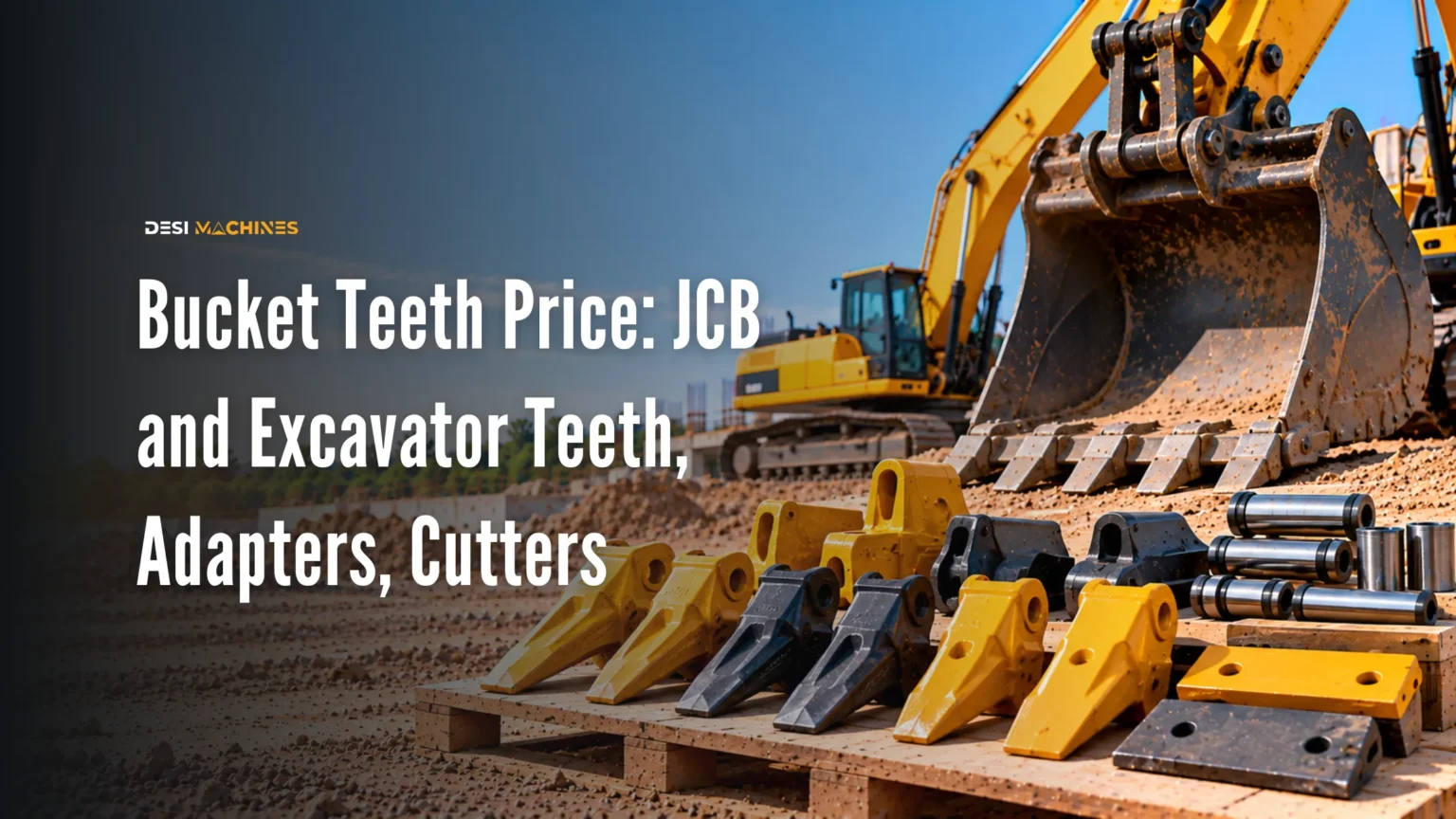
Four things set the bucket teeth price in India: the size of the machine, the part (tooth point, adapter or side cutter), the tooth type and who made it. A tooth point for the rear bucket of a JCB 3DX-class backhoe loader is a small bolt-on part, while a 20-tonne excavator point weighs about 7 kg and sits on an adapter welded to the bucket lip. The heavier the part, the more steel you pay for.
This page covers what moves the price of teeth, adapters and side cutters for each machine class, how tooth systems fit, which type to buy, when to change them, how to work out their cost per hour from your own invoices and how to get a dealer quote. The bucket itself is covered in the backhoe loader bucket price guide.
What decides the price of bucket teeth for each machine class?
Teeth are priced by the piece. The larger the machine, the heavier the tooth: a mini excavator point weighs about 1 kg, a JCB-type rock point about 2 kg and a 20-tonne excavator point about 7 kg.
| Machine class | Part | How it is sold |
|---|---|---|
| JCB 3DX-class backhoe loader, rear bucket | Tooth point | Each, or as a set of 5 with bolts and nuts |
| JCB 3DX-class backhoe loader, rear bucket | Full kit: points plus side cutters | As one kit |
| JCB 3DX-class backhoe loader, rear bucket | Side cutters | Each or as a set |
| JCB 3DX-class backhoe loader, front bucket | Loader bucket plate | Each; ask whether it is the bolt-on cutting edge |
| Mini excavator, 3 – 7 tonne | Tooth point | Each |
| Mini excavator, 7 tonne class | Adapter | Each |
| 20 – 22 tonne excavator | Tooth point | Each |
| 20 – 22 tonne excavator | Adapter | Each |
| 29 – 30 tonne excavator | Tooth point | Each |
| 29 – 30 tonne excavator | Adapter | Each |
| 45 – 50 tonne excavator | Tooth point | Each |
A 20-tonne bucket carries five teeth, so a normal change is five points with new pins and locks. Adapters are welded to the bucket lip and last through several sets of points, so they are not part of a normal change.
Besides the machine class, the price moves with the tooth type, since a rock chisel carries more metal than a standard point, and with whether the part comes from the machine maker or from an Indian foundry or forge. The same point is listed at very different prices in different cities, and some listings leave GST out.
To get a price, give the dealer your machine model, the part number on the old point or adapter (or the adapter nose size), the tooth type and how many you need. Ask whether pins, locks and GST are included. Genuine parts for every machine type are also on the spare parts page.
The front loader bucket on most backhoe loaders works with a bolt-on cutting edge instead of teeth. The one plate listed for the 3DX does not say whether it is that edge, so ask before you order.
What is a tooth system: tooth, adapter, pin and lock?
A tooth on an excavator bucket is made of parts that come off at different times.
- The adapter is welded to the bucket lip. It carries the tooth and is replaced only when its nose wears or cracks.
- The tooth point slides over the adapter nose. This is the part you change most often.
- A pin and a lock (a rubber or steel retainer) hold the point on. They are cheap, but reuse a worn lock and the point can drop off in the pit.
Backhoe loader rear buckets in the JCB 3DX class use a simpler system: the point bolts straight onto the bucket lip with a nut and bolt. That is why backhoe teeth are sold as sets with fasteners.
Tooth systems are not interchangeable across makers. A point for a Komatsu PC200 adapter will not lock onto a CAT 320-style adapter, even on machines of the same size.
| Machine class | How the tooth is held | What to give the seller |
|---|---|---|
| Backhoe loader, 3DX class | Bolt-on point, nut and bolt | Machine model and the part number on the old point |
| Mini excavator, 2 – 7 tonne | Small pin-on point on a welded adapter | Machine model, bucket width and adapter nose size |
| 20 – 30 tonne excavator | Point on a welded adapter with a side pin and lock | Machine model, adapter part number or nose size (40 mm on PC200-class adapters) |
| 35 tonne and above | Heavy point on a welded adapter; several makers use their own lock design | Adapter part number; photos of the adapter nose help |
This is a general guide based on machine size class. Always confirm the fit with your machine’s operator manual or the manufacturer before buying or fitting.
ITR and IH are among the tooth makers named in Indian listings, alongside many Indian foundries and forges. For how the teeth, cutting edge and side cutters work together on the bucket, see the excavator components guide; bucket types are covered in the excavator bucket guide. DOZCO lists its bucket teeth, adapters and side cutters for construction and mining machines.
Which tooth type should you buy?
| Type | Shape | Use it for |
|---|---|---|
| Standard (general purpose) | Medium width, blunt tip with plenty of wear metal | Soil, murram, mixed digging and loading |
| Rock chisel | Long, narrow and thick | Rock, hard pan and abrasive ground; it lasts longer there |
| Tiger (single point) | Sharp, pointed tip | Hard clay, frozen or compacted ground and trenching, where it must bite in |
| Twin tiger | Two points side by side | Trench corners and very hard ground |
| Flare | Wide, flat tip | Loose sand and soil, loading and leaving a flatter trench floor |
A sharp tiger tooth penetrates well but wears quickly in sand. A rock chisel is slower to bite but carries more metal. Most contractors keep standard points for daily work and switch to rock points for a quarry or road-cutting job.
When should bucket teeth be replaced?
Replace a point when it has lost about 30% of its length, and do not run it past half. At that stage the wear starts on the adapter nose, and a new adapter means cutting and welding the bucket lip. Achilles Machinery, an Australian parts supplier, gives the same 30% rule for mini excavators.
Other signs to watch:
- The bucket skates on hard ground instead of biting in, and each pass takes longer.
- Points that are rounded and blunt, or a point that has cracked.
- Loose or missing pins and locks, or a point that rocks on its adapter.
- Side cutters worn to the bucket side plate. Once the side plate itself starts to wear, it needs a side wear plate.
Swap the corner teeth with the middle ones halfway through their life: corner teeth wear faster, and rotating them gets more hours from a set. The daily check of teeth and locks is part of the spare parts care guide.
How do you work out what bucket teeth cost per hour?
Divide the price of a set on your dealer’s quote by the hours the set lasts. For mini excavators, Achilles Machinery puts a set’s life at 250 to 400 hours in soft soil, 150 to 250 hours in mixed ground and 80 to 120 hours in rock, so the same set costs two to five times as much per hour in rock as in soft soil. Your own figure, from your last few invoices and the hour meter, is the one to budget with.
Blunt teeth cost more than new ones: the machine pushes harder, burns more diesel and strains its pins and cylinders. Keep a spare set on site so a worn set is changed on time, and do not wait for the next parts run.
When a bucket is also on a breaker, the chisel is a separate wear part; see the breaker chisel guide. Other attachments for the rear arm are in the backhoe loader attachments guide, and bucket sizes by excavator class are in the excavator bucket capacity guide. For the machines themselves, see the backhoe loader and excavator price lists.
Tooth weights and lives are typical figures and vary by maker and ground. Prices, specifications and features are indicative, vary by variant, location and date, and should always be confirmed with the official OEM or authorised dealer before any purchase decision. DesiMachines is not liable for decisions taken on the basis of information that may have changed after publication.
Get a bucket teeth price from a dealer near you
Tell us your machine and what you need, and we will ask the nearest dealer to reach out to you with a price.