
 Excavator
294 models
 Backhoe Loader
51 models
 Crane
68 models
 Concrete Mixer
79 models
 Wheel Loader
54 models
 Compactor / Roller
45 models
 Motor Grader
42 models

 Concrete Pump
66 models
 Skid Steer Loader
11 models


A seal coat on an Indian bitumen road uses only 6.8 to 9.8 kg of paving bitumen for every 10 square metres, yet the road is not supposed to carry traffic until it is down. It is the last and thinnest coat on a bituminous road: a layer of binder with fine stone chips or sand that closes the open pores of the surface below, so rain water cannot soak in and loosen the stones.
The rulebook for it is the MoRTH Specifications for Road and Bridge Works (Ministry of Road Transport and Highways, 5th revision, Clause 511). It allows two types. Type A is a liquid seal coat: hot bitumen sprayed on the road and covered with small stone chips. Type B is a premixed seal coat: sand or grit mixed with bitumen and spread thin. Below are the quantities for both, how each one is laid and rolled, how a seal coat differs from premix carpet and surface dressing, and when the road can be opened.
What is the purpose of a seal coat on a road?
A seal coat closes the gaps in a surface that would otherwise let water in. Clause 511.1 puts it in one line: the work is “sealing the voids in a bituminous surface”.
The surface it usually seals is premix carpet. Premix carpet, which MoRTH calls open-graded premix surfacing, is a 20 mm wearing course of small stones lightly coated with bitumen. “Open-graded” means the stones are mostly of one size, so gaps stay between them even after rolling. Rain enters those gaps. Water slowly strips the bitumen off the stone, and stones then come loose under tyres. Engineers call this ravelling.
That is why MoRTH ties the two together. Clause 510.1.3.6 says a seal coat “shall be applied to the surface immediately after laying the surfacing”, and clause 510.1.4 says no traffic is allowed on the road until the seal coat has been laid. The emulsion version of premix carpet (clauses 510.2.5 and 510.2.6) carries the same two rules.
There are two other places the code calls for one:
- Exposed bituminous macadam. Clause 504.5 says bituminous macadam must be covered by the next course within 48 hours. If that is delayed, it gets a seal coat before any traffic runs on it, at the contractor’s own cost.
- Temporary diversions. Clause 112 lists “premix carpet with seal coat/mix seal surfacing” as the top layer for a diversion road built around a work site.
What are the types of seal coat in road construction?
MoRTH clause 511.1 allows two types, and the contract names which one the road gets. The figure shows where each sits; the table sets out the differences.
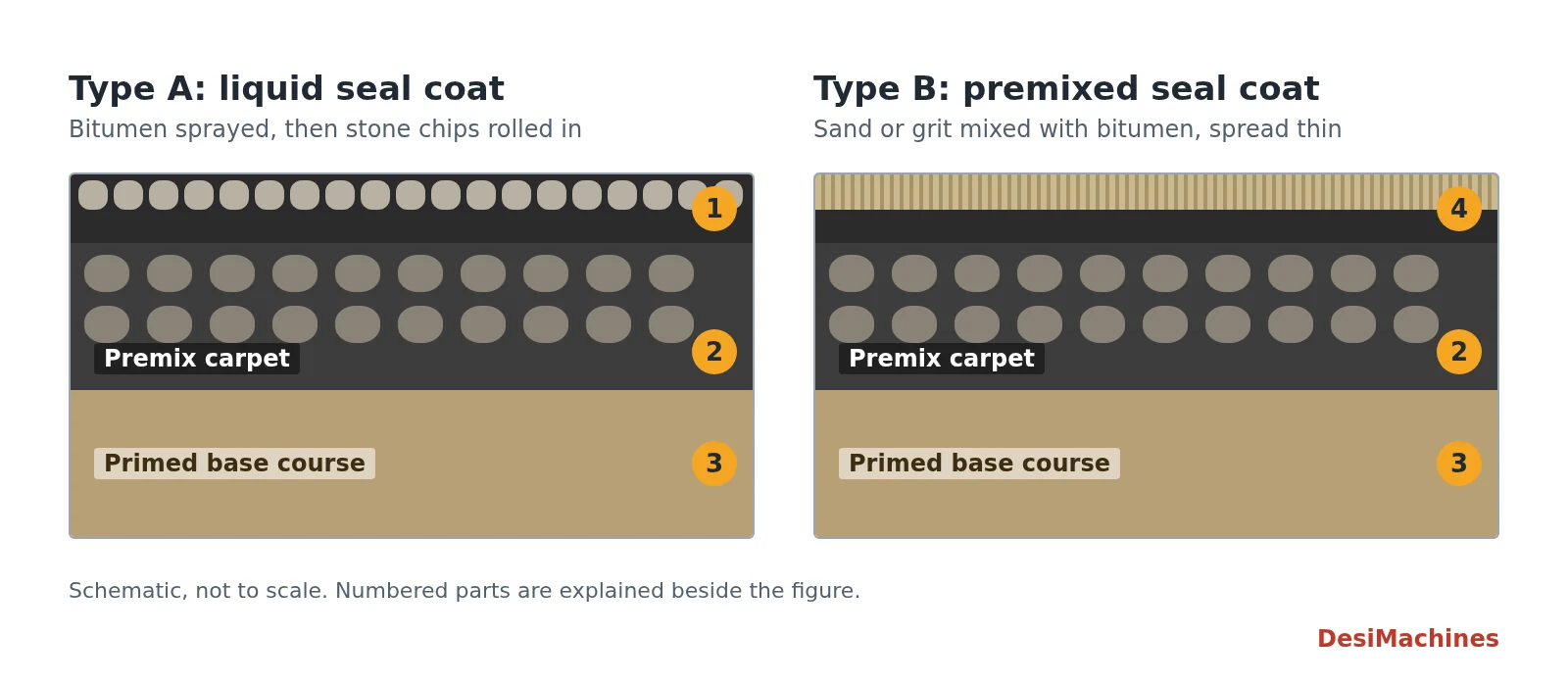
Table 1: Type A and Type B seal coat compared (MoRTH 5th revision, clause 511)
| Point | Type A (liquid seal coat) | Type B (premixed seal coat) |
|---|---|---|
| What it is | A sprayed layer of bitumen covered with stone chips | Sand or grit premixed with bitumen and spread thin |
| Paving bitumen per 10 m² | 9.8 kg | 6.8 kg |
| Bitumen emulsion per 10 m² (if emulsion is used) | 15 kg | 10.5 kg |
| Aggregate | 6.7 mm stone chips: all pass the 11.2 mm sieve and stay on the 2.36 mm sieve; water absorption 1% or less | Sand or grit that passes the 2.36 mm sieve and stays on the 180 micron sieve, clean and dust-free |
| Aggregate per 10 m² | 0.09 m³ (about 3.2 cft) | 0.06 m³ (about 2.1 cft) |
| Laid like | Surface dressing (clauses 509.3.3 to 509.3.5) | Premix carpet (clause 510.1.3, or 510.2.4 with emulsion) |
| Traffic allowed | From the next day | Once the mix has cooled to air temperature after final rolling |
The practical difference shows on the finished road. Type A leaves a surface of tightly packed chips with a coarse feel underfoot. Type B leaves a smoother, sandy finish. Type A needs a bitumen sprayer and a chip spreader on site. Type B needs a mixing plant, because the sand and bitumen are mixed hot before they reach the road.
How much bitumen and aggregate does a seal coat need?
MoRTH fixes the quantities per 10 m² of road, and everything else is multiplication. Per square metre that is 0.98 kg of bitumen for Type A and 0.68 kg for Type B.
Take a single-lane road with a 3.75 m carriageway. One kilometre of it is 3,750 m², which is 375 lots of 10 m². A Type A seal coat on it needs 375 × 9.8 = 3,675 kg of bitumen, about 3.7 tonnes, and 375 × 0.09 = 33.75 m³ of chips. At 35.31 cubic feet to the cubic metre, that is about 1,190 cft of chips, close to 12 brass in the 100 cft trade unit.
Table 2: Seal coat material quantities by road area (from MoRTH clause 511.2; no wastage added)
| Material | Per 10 m² | Per 100 m² | 1 km at 3.75 m wide (3,750 m²) | 1 km at 7 m wide (7,000 m²) |
|---|---|---|---|---|
| Type A, paving bitumen | 9.8 kg | 98 kg | 3,675 kg | 6,860 kg |
| Type A, bitumen emulsion (instead) | 15 kg | 150 kg | 5,625 kg | 10,500 kg |
| Type A, 6.7 mm stone chips | 0.09 m³ | 0.9 m³ | 33.75 m³ (about 1,190 cft) | 63 m³ (about 2,225 cft) |
| Type B, paving bitumen | 6.8 kg | 68 kg | 2,550 kg | 4,760 kg |
| Type B, bitumen emulsion (instead) | 10.5 kg | 105 kg | 3,937.5 kg | 7,350 kg |
| Type B, sand or grit | 0.06 m³ | 0.6 m³ | 22.5 m³ (about 795 cft) | 42 m³ (about 1,483 cft) |
These are the specification quantities. The site engineer adds wastage and checks the real spray rate on the job, so the figure on the measurement book can differ a little.
The seal coat is small next to the layer it protects. Table 500-23 of the same code puts the 20 mm premix carpet itself at 0.27 m³ of aggregate and 14.6 kg of bitumen per 10 m². So premix carpet plus a Type A seal coat takes 24.4 kg of bitumen per 10 m² in all, and premix carpet plus Type B takes 21.4 kg.
What is the difference between seal coat, premix carpet and surface dressing?
Premix carpet and surface dressing are wearing courses, the layer the tyres actually run on. A seal coat is a thin closing layer laid on top of a wearing course. The confusion comes from the method: a Type A seal coat is built exactly like a surface dressing, because clause 511.3.3 sends the reader straight to the surface dressing clauses.
Table 3: Thin bituminous surfaces in MoRTH Section 500
| Surface | Clause | What it is | Bitumen | Aggregate |
|---|---|---|---|---|
| Close-graded premix surfacing (mix seal surfacing) | 508 | A 20 mm wearing course of graded aggregate premixed with bitumen; Type A grading where rainfall is over 150 cm a year | Set by the mix grading | Graded, so fewer gaps |
| Surface dressing | 509 | One or two coats of sprayed binder, each covered with chips and rolled in; a wearing course on its own | About 0.75 to 1.2 kg/m² for 6 to 19 mm chips (Table 500-22) | 0.003 to 0.015 m³/m², by chip size |
| Premix carpet (open-graded premix surfacing) | 510 | A 20 mm wearing course of small stones lightly coated with bitumen | 14.6 kg per 10 m² | 0.27 m³ per 10 m² (13.2 mm and 11.2 mm stones) |
| Seal coat | 511 | A thin layer that closes the gaps in the surface below | 9.8 kg (Type A) or 6.8 kg (Type B) per 10 m² | 0.09 m³ chips or 0.06 m³ sand per 10 m² |
Surface dressing in two coats has its own rule: the second coat waits until the first has carried traffic for two weeks (clause 509.3.6). Slurry seal (clause 512) and microsurfacing are different again. They are cold mixes of fine aggregate and bitumen emulsion, used mostly to renew a worn road, and the types of pavement failure guide covers where each repair fits.
How is a seal coat laid on site?
A seal coat goes down straight after the premix carpet, on the same stretch, before any vehicle uses it. Clause 511.3.2 says “immediately”, and the surface must first be swept free of dust.
Weather comes first. Clause 501.5.1 stops all bituminous laying in any of these conditions:
- water standing on the surface, or the layer below is damp;
- rain is about to fall or is falling, or there is fog or a dust storm;
- the air temperature is below 10°C for ordinary bitumen, or below 15°C for modified bitumen;
- wind is above 40 km per hour, measured 2 m above the ground.
Laying a Type A seal coat
- Clean the premix carpet with a mechanical broom or compressed air until no dust is left.
- Spray the hot bitumen evenly with a mechanical sprayer. MoRTH wants the truck speed and pump speed locked together by an automatic control, so every square metre gets the same amount. For VG-10 bitumen through whirling spray jets, the spraying temperature is 180 to 200°C.
- Spread the chips at once, while the bitumen is still hot and sticky, with a mechanical chip spreader. One layer of chips should cover the whole surface.
- Roll, preferably with a pneumatic tyre roller. Start at the edges and work towards the centre (on a banked curve, from the low edge up), overlapping each pass by at least one third. Throw extra chips by hand onto any bare patch while rolling.
- Stop when every chip is firmly held in the bitumen and the surface looks closed and even.
Laying a Type B seal coat
- Mix the sand or grit with hot bitumen in a hot mix plant that heats the aggregate in a separate dryer. The bitumen and aggregate must be within 14°C of each other at mixing.
- Carry the mix to site covered, and spread it thin over the premix carpet, by paver unless the contract allows otherwise.
- Roll with 8 to 10 tonne smooth-wheel tandem rollers, edge to centre, overlapping each pass by one third. Keep the drums damp with water so the mix does not stick. MoRTH bans diesel or lubricating oil on the drums for this.
- Never park a roller on the fresh, hot layer, and finish rolling before the mix cools below its rolling temperature.
If prime coat and tack coat are new terms, the prime coat and tack coat guide explains how the layers below are bonded before the premix carpet goes on. The temperature limits for each bitumen grade are in the bitumen grades guide.
When can traffic use the road after a seal coat?
It depends on the type. Clause 511.4 gives the rule:
- Type B: traffic may run soon after the final rolling, once the premixed sand has cooled down to the air temperature.
- Type A: no traffic on the newly sealed area until the following day. In special cases the engineer may open it right after rolling, but then traffic must be held to 20 km per hour until the next day.
The same next-day rule applies to a fresh surface dressing (clause 509.4). For a village, this matters more than it sounds. A tractor-trolley that turns hard on a Type A seal coat a few hours old can scatter chips the bitumen has not yet gripped.
Why does a seal coat fail?
Most early failures trace back to a step in the clauses above that was skipped. The common ones:
- Chips come off within weeks. The surface was dusty or damp, the chips were dusty, the chips went down after the bitumen had cooled, or traffic came on too soon. Clause 509.3.4 wants the chips spread “immediately” for this reason.
- Black, sticky patches in summer. Too much bitumen, from uneven spraying or from sealing a surface that was already rich in bitumen. Clause 509.3.2 asks for excess bitumen on such a surface to be removed first.
- The premix carpet ravels anyway. The seal coat was skipped or delayed and rain got into the carpet first, or the Type B layer was too thin to fill the gaps.
Bleeding, ravelling and the repair for each are covered in the pavement failure guide.
Which machines are used for a seal coat?
A seal coat crew is small, but each machine has one job and the work goes wrong when one is missing.
- A mechanical broom or air compressor to clean the surface.
- A bitumen sprayer (Type A) with the binder heated on site. On small works the bitumen is often heated in a bitumen boiler.
- A chip spreader (Type A), or a hot mix plant, tippers and an asphalt paver (Type B).
- Rollers, which are the machines a contractor is most likely to own.
For Type A the code prefers a pneumatic tyre roller, because its rubber tyres press the chips into the bitumen without crushing them. Listed examples include the Volvo PT220 at 10,500 kg operating weight, the L&T 2490 HD at 12,800 kg and the Dynapac CP275 at 14,000 kg, all three able to take ballast for heavier work (catalogue figures as of November 2026).
For Type B and for the premix carpet below it, MoRTH asks for 8 to 10 tonne smooth-wheel tandem rollers. The SANY STR90C-10 PRO at 9,200 kg and the Volvo DD90 at 8,700 kg sit in that band.
Rolling a premix carpet and seal coat job? Compare pneumatic tyre rollers and tandem rollers, and talk to a dealer near your site.
Where the figures in this guide come from. The types, quantities, aggregate sizes, laying steps, weather limits and traffic rules are from the MoRTH Specifications for Road and Bridge Works, 5th revision: clauses 112, 501.5.1, 504.5 and 508 to 511, with Tables 500-22 and 500-23. The per-kilometre quantities, cubic-foot conversions and combined bitumen totals are our own arithmetic from those clauses. Roller weights are from the machines’ catalogue specifications.
The layers that sit below a seal coat are explained in the road construction layers guide. For how village roads, district roads and highways differ, see types of roads in India, and for the slope a finished surface must keep so water runs off, the camber in road construction guide. More topics are in the road construction guides. When the job is ready, compare road rollers and compactors and speak to a dealer near your site.
Prices, specifications and features are indicative, vary by variant, location and date, and should always be confirmed with the official OEM or authorised dealer before any purchase decision. DesiMachines is not liable for decisions taken on the basis of information that may have changed after publication.
Machines, tenders and news for this industry: Road Construction