Excavator
313 models
 Backhoe Loader
51 models
 Crane
68 models
 Concrete Mixer
79 models
 Wheel Loader
54 models
 Compactor / Roller
45 models
 Motor Grader
42 models

 Concrete Pump
66 models
 Skid Steer Loader
11 models


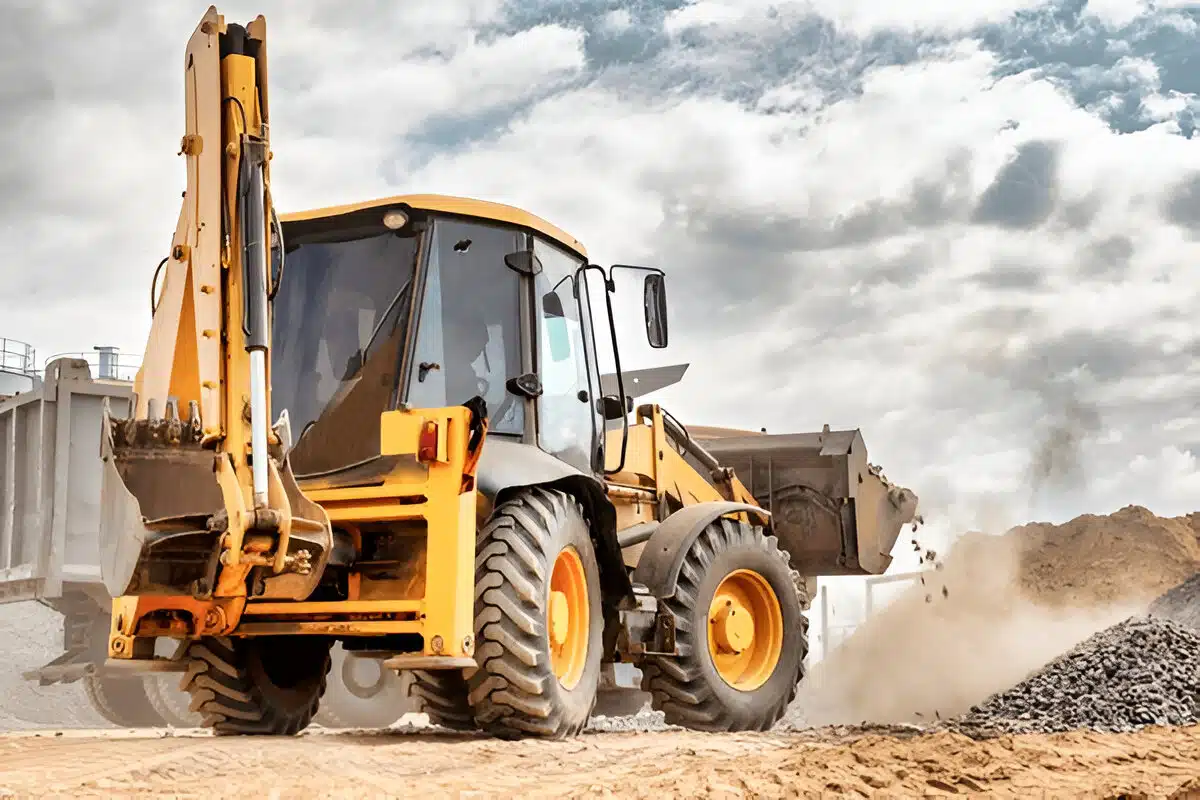
Choosing the right Backhoe Loader comes down to four numbers and one honest estimate. The numbers: backhoe digging depth (can it reach your deepest trench in one pass?), loader bucket capacity (does it fill your tipper in a sensible number of passes?), engine power, and operating weight against the ground you will work on. The estimate: annual running hours. Below roughly 800–1,000 hours a year, renting usually beats owning once finance, insurance, operator and idle time are counted.
The right backhoe loader greatly affects your project when you are involved in heavy-duty construction and excavation. Backhoe loaders are very important in construction, landscaping, and agriculture; hence, choosing the right one increases productivity, safety, and overall cost-effectiveness. Using the wrong equipment can lead to higher costs and safety hazards.
Machine selection is a safety decision as much as a commercial one: a machine worked outside its intended duty (over-reached, overloaded, or run on ground it was never specified for) is where a large share of site incidents begin. Selecting an appropriate backhoe loader greatly influences a project’s productivity, reduces downtime, and maintains safety on the job site.
This post sets out the factors to weigh when buying or renting a backhoe loader.
Understanding the Project Need
Type of Project
Major types would fall under excavation, landscaping, and utility. For construction, generally, a larger, more powerful, and full-sized backhoe would be needed, whereas landscaping or utility work would need something smaller and more agile.
Scope of Work
Determining the tasks that needed to be done, like digging, lifting, trenching, etc. A backhoe suited for the primary task of digging must have enough depth and reach capabilities. A greater lifting capacity backhoe is needed for lifting and material-handling purposes.
Work Environment
A backhoe loader works on hard, soft, or rocky ground. It is always preferred with hydraulic strength and durability for hard or rocky terrain. On soft surfaces, it tends to have more weight distribution and traction to avoid sinking or tipping.
Duration of Usage
The duration for which the machine is required is important to identify. If the project is short-term, renting may be the best option; however, for long-term use, investing in a durable backhoe would be advisable.
Limitation of Space
Tight spaces or narrow access points may require a compact model for improved maneuverability without compromising performance.
Key Features to Consider
While selecting a backhoe loader, several key features influence to a great extent the working of the loader, how efficiently it works, and how well-suited it is for the job.
Engine Power
Mentioning the engine power indicates the performance of the machine under the most unfavorable conditions when performance comes into question, expressed with horsepower measurement (HP). Besides that, sufficient torque is essential for lifting and digging operations; heavy machinery is constantly pressured to provide more horsepower and torque to not overload the machine itself.
Digging Depth and Reach
Digging depth and reach enable the backhoe to excavate material deep or far. Consider your project’s requirements; if deep foundations or extensive excavation are needed, a model with extended reach is essential.
Lift Capacity
Lift capacity means the weight capacity that a backhoe can carry. Depending on whether it is soil, gravel, or debris, for whatever project you are working on, make sure to consider the loader’s capacity to lift and transport within an acceptable range for the equipment; otherwise, the machine will be overworked.
Hydraulic System
The hydraulic system should be strong for lifting and digging. Make sure that the backhoe hydraulic system is robust enough for the job, whether it needs to lift heavily or dig through hard ground.
Stability and Mobility
The choice of either wheeled or tracked backhoes affects stability and mobility. Wheeled backhoes are generally faster and designed for dry, smooth surfaces, whereas tracked models are more stable on uneven or soft ground, making them a better choice in difficult conditions.
In India the choice is narrower than that sounds. All 51 backhoe loaders listed on Desi Machines as of November 2026 run on tyres, so the real decision is 2WD or 4WD; if the ground needs tracks, the machine you want is a crawler excavator. The 2WD vs 4WD backhoe loader guide covers when the driven front axle pays for itself.
Attachments
Consider what attachments you will need for your work, such as augers, breakers, or forks. Ensure that the backhoe loader can accommodate these attachments and is compatible with the machine’s hydraulic system.
Choosing the Right Size and Model
When purchasing a backhoe, careful consideration should be given to the appropriate models or sizes to fit certain project requirements. Generally, backhoes are divided into three types (compact, medium, and full-sized), with each type designed for a different application.
- Compact Models are best for jobs in very tight spaces, such as residential construction, landscaping, and small excavation jobs. They are highly maneuverable and can enter into narrow or confined areas, so they fit light jobs requiring great precision but no sacrifice of efficiency.
- Mid-Sized Models perfectly balance power and maneuverability; thus, they can be used to do anything from medium to large projects, having a greater lifting capacity and achieving a greater digging depth than compact models. These backhoes can perform utility installation and small-to-medium construction jobs and give flexibility and substantial ability to work within various environments.
- Full-sized models come into the picture in extreme work conditions with large capacities, such as major construction jobs, road works, and deep excavations. These backhoes can be called upon when much power, reach, and lifting capacity are in demand. There will be tougher materials to work with and even tougher environments to work in, leaving the spectrum of space requirements for operation on the wide end.
Also, weight and maneuverability should be considered when selecting a suitable backhoe. The distribution of the weight and overall size of the machine dictates the extent to which it can maneuver on the site and carry loads. Heavier models are powerful but will not operate well in confined areas; on the other hand, lighter ones will not be effective for bigger demanding jobs.
In the Indian market that three-way split is lopsided. The JCB 2DX (5,220 kg, about ₹25–29 lakh) is the only compact model listed; almost every other backhoe loader weighs 7.2 to 8.8 tonnes, and the heaviest reaches 9.7 tonnes. Most buyers end up comparing three full-size machines: the JCB 3DX (about ₹28–32 lakh), the Tata Hitachi Shinrai Prime (about ₹31–35 lakh) and the Mahindra EarthMaster SX IV (about ₹29–33 lakh). For deeper trenches the JCB 4DX digs 5,360 mm and sits at about ₹34–38 lakh. All prices are indicative bands around the listed price as of November 2026.
Choosing a backhoe loader by job, size and budget
The choice of the correct backhoe loader is vital for the successful completion of any construction project. This importance can be attributed to the assessment of the specific project requirements, special features of the machine, its size, and budget, which would ensure that one’s choice of the model is ideally suited in all aspects of power, maneuverability, and efficiency. From a small residential task to a large construction project, picking the right machine from the heavy construction equipment in this class ensures maximum productivity, cost savings, and overall success for any project.
In the end, a careful assessment of your specific needs along with some good experts’ advice will enable you to make a well-informed decision. Buying or renting the right backhoe loader will go a long way toward enhancing productivity and ensuring that the job is done efficiently.
Spec Checklist Before You Sign
Take this list to the dealer and make them answer each line for the exact variant quoted, not for the model family:
- Backhoe digging depth: against the deepest trench you actually dig. One pass beats re-positioning. Full-size machines listed in India dig about 4.1 to 5.4 m; the bucket capacity and dig depth guide gives the figure for each model.
- Loader bucket capacity and tipper match: most full-size loader shovels hold 1.0 to 1.26 m³, so count the passes to fill your tipper. One extra pass per load, all day, is real money.
- 2WD or 4WD: 4WD for monsoon, slopes and unmade ground; 2WD is cheaper to buy and to keep running on hard standing.
- Auxiliary hydraulics: specify them at order if you will ever run a breaker or auger. Retro-fitting costs more. The backhoe loader attachments guide lists what each tool needs.
- Dealer distance and parts: the nearest service point matters more than a small price difference. Downtime is the expensive part.
- Resale: the volume brands hold value best; see what holds resale value in India.
For a brand-level view, compare JCB vs CAT vs CASE for Indian conditions and the full manufacturer list. If the decision hinges on cash flow rather than machine, look at equipment finance first.
Specifications vary by variant and model year. Confirm the current on-road price and variant with the dealer or the OEM before you buy.