Excavator
294 models
Excavator
294 models  Backhoe Loader
51 models
Backhoe Loader
51 models  Crane
68 models
Crane
68 models  Concrete Mixer
79 models
Concrete Mixer
79 models  Wheel Loader
54 models
Wheel Loader
54 models  Compactor / Roller
45 models
Compactor / Roller
45 models  Motor Grader
42 models
Motor Grader
42 models  Concrete Pump
66 models
Concrete Pump
66 models  Skid Steer Loader
11 models
Skid Steer Loader
11 models  Telehandler
13 models
Telehandler
13 models 


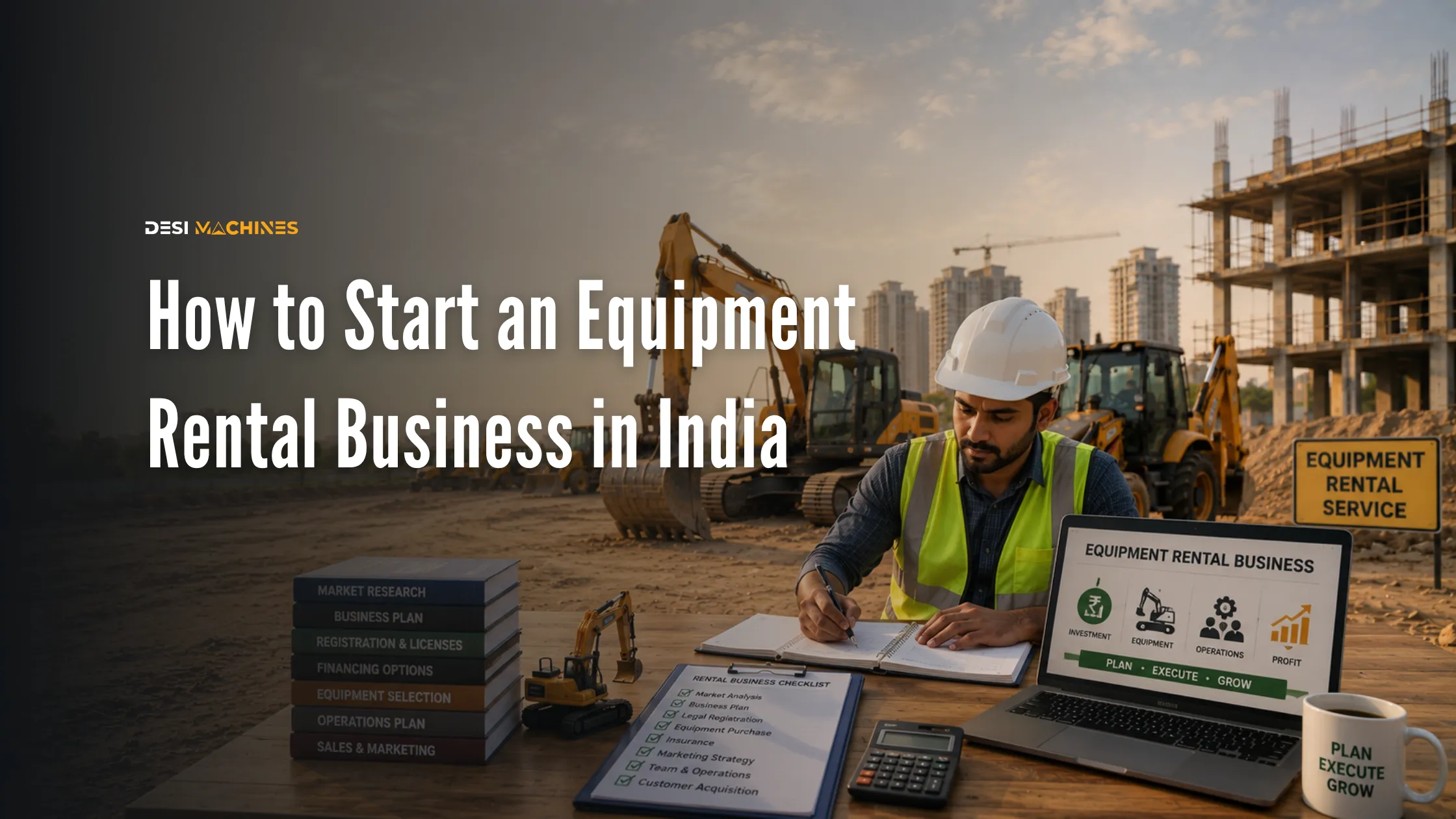
In short: To start an equipment rental business in India you need three things in this order — a machine your district actually hires, enough working capital to survive the gap between doing the work and being paid for it, and a rate you can defend. On indicative July 2026 numbers a backhoe loader on dry hire earns about ₹550–900 an hour, roughly ₹90,000–1,40,000 a month, and leaves around ₹35,000–90,000 after a ₹20 lakh loan EMI but before insurance, overheads and idle days. Whether you land at the bottom or the top of that spread is decided by utilisation, not by your rate card.
Plenty of people buy a machine first and work out the business afterwards. That order is expensive. The machine is the easy part — financing is available, dealers are helpful, and a backhoe will be delivered to your yard within weeks. What takes longer to build is the thing that actually pays the EMI: a steady flow of hire days.
This is the setup guide. If you are still deciding whether to own at all, the buy versus rent decision comes first, and the earnings maths is worked through in detail in our analysis of what one machine really earns. What follows assumes you have decided to own and hire out.
What you are actually starting
A machine-hire business is a utilisation business wearing a machine’s clothes. Your costs are almost entirely fixed — the EMI arrives on the same date whether the machine worked twenty-six days or six, and so does the operator’s salary if you keep one on the payroll. Your revenue is entirely variable. That mismatch is the whole business.
It has a practical consequence for how you plan. Two owners in the same district, with the same machine and the same loan, can end the year ₹6 lakh apart without either of them quoting a different rate. One kept the machine billing; the other did not. So every decision below — which machine, which district, which customers, which contract terms — should be judged on one question: does this add billed days?
Choose the first machine on demand, not on preference
The most common first machine in India is a backhoe loader, and the reasons are structural rather than sentimental. It digs and loads, so it suits the mixed small jobs that make up most local work. It drives itself between sites on its own wheels, so you are not paying for a trailer every time the job changes. And the demand for it is spread thinly across many small contractors instead of being concentrated in a handful of large projects, which means losing one customer does not empty your month.
An excavator earns a better hourly rate — an indicative ₹1,400–2,200 an hour for a 20-tonne machine on wet hire against ₹550–900 for a backhoe on dry hire — but it is a different business. It needs a trailer and a permit to move, and it needs a pipeline of genuine earthwork rather than odd jobs. A mini excavator, at an indicative ₹500–900 an hour, fits urban and tight-access work where a backhoe simply cannot turn.
Before you commit, spend a fortnight finding out what your own taluka actually hires. Ask the contractors, not the dealer. If every second site is running a backhoe and nobody has a compactor, that gap is worth more than any brochure. Current models and prices for both classes are listed under backhoe loaders and excavators.
What it costs to reach day one
Budget in three pots. Owners reliably fund the first two and forget the third.
| What it covers | Why it is separate |
|---|---|
| Margin money on the machine | The share of the price the lender will not fund. On the worked example behind our profit analysis, roughly ₹5 lakh of own money sat under a ₹20 lakh loan. |
| Getting it road- and site-legal | Registration, insurance, first set of consumables and any attachment the work needs. One-time, but due before the machine earns a rupee. |
| Working capital | Two to three months of EMI, wages and diesel held back in cash. This is the pot that gets skipped, and skipping it is what turns a slow first quarter into a defaulted instalment. |
On the financed side, the arithmetic is unforgiving in a useful way. A ₹20 lakh loan at 12% over five years carries an EMI of about ₹44,500 a month (indicative). That figure does not care about your monsoon. Terms, tenures and margin requirements differ sharply between banks and NBFCs — the current options are set out under equipment finance, and it is worth comparing at least three before signing.
Register the business properly the first time
Most first machines in India are bought in an individual’s name and hired out informally. It works until it does not — usually the first time a serious contractor asks for a GST invoice and you cannot raise one, or a bank asks for two years of business accounts you never kept.
The minimum sensible setup is a registered entity, a current account in that name, the machine’s registration and insurance in the same name, and GST registration with proper tax invoices, since hiring out machinery is a taxable service. Keep the machine’s papers, service records and hire invoices in one place from the first month — resale value later depends on them as much as on the hour meter.
Two numbers deliberately do not appear here: the GST rate on machine hire and the turnover threshold that forces registration. Both move, and both are the kind of figure that is worth being right about. Confirm them with a chartered accountant before your first invoice.
Price the machine so it pays for itself
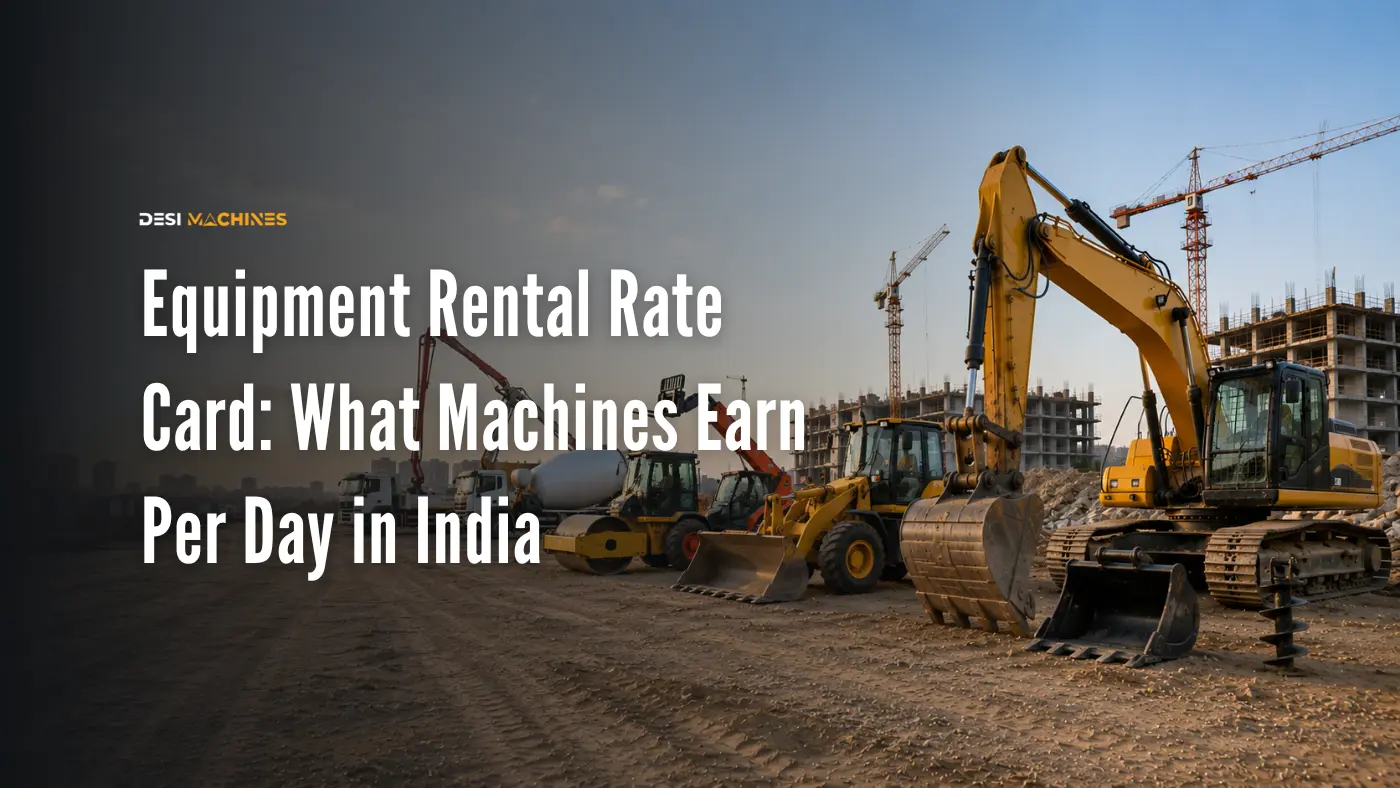
Rates are set by the market, not by your costs — but your costs tell you which jobs to refuse. Indicative July 2026 hire rates give you the market side:
| Machine | Indicative rate (Jul 2026) |
|---|---|
| Backhoe loader — dry hire | ₹550–900 per hour · ₹5,000–9,000 a day |
| Backhoe loader — wet hire | ₹900–1,300 per hour |
| Mini excavator (2–3 t) | ₹500–900 per hour |
| Excavator (20 t) — wet hire | ₹1,400–2,200 per hour |
| Hydra crane (14–16 t) | ₹18,000–35,000 a day |
The fuller picture, including how monthly hires are discounted and what shifts a rate up or down, is in the equipment rental rate card.
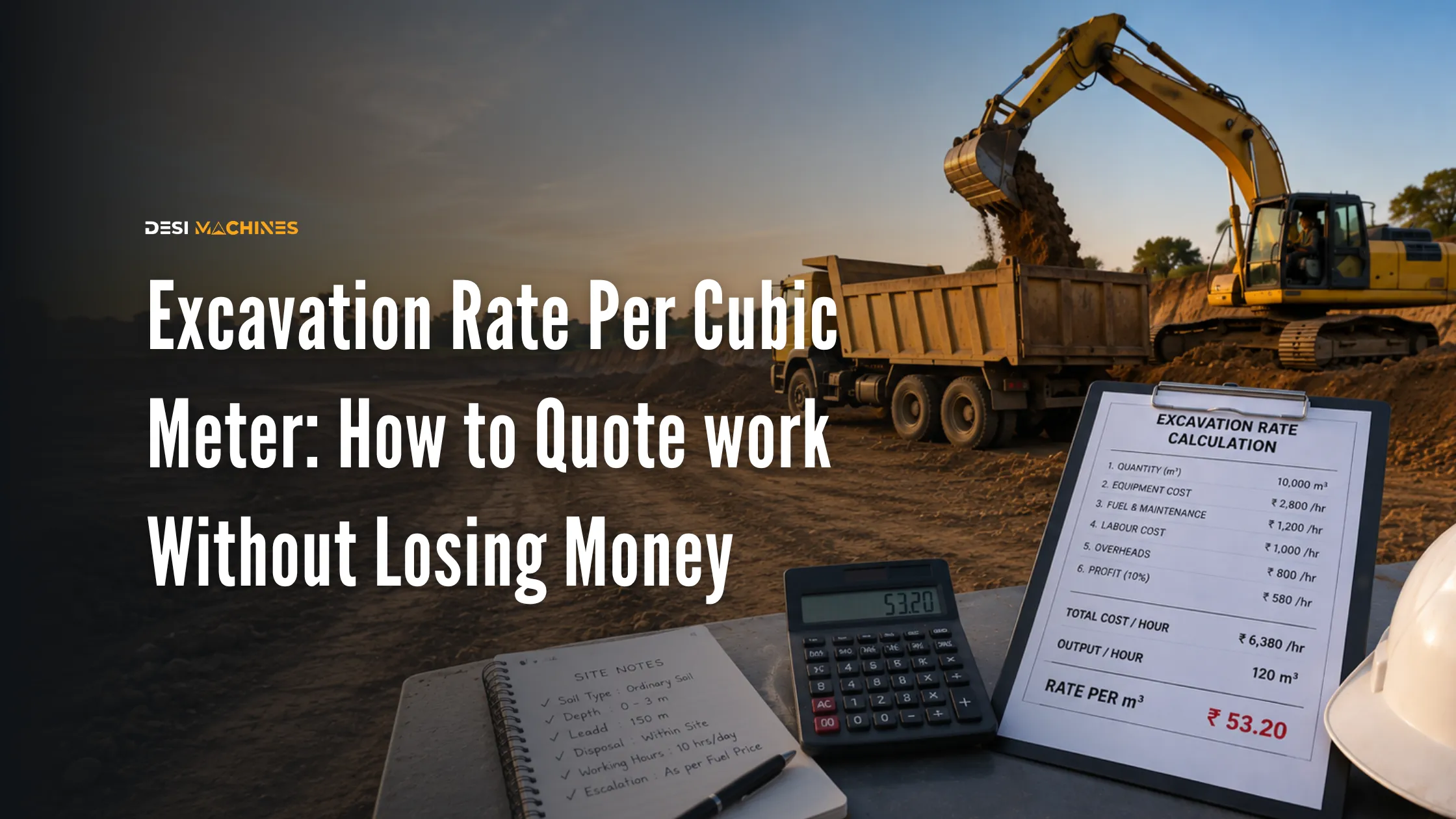
The one structural decision inside pricing is dry versus wet hire. Dry is the simpler business to start: the hirer brings the operator and the diesel, and you carry no wage on an idle day. Wet quotes higher, but that premium of roughly ₹300–400 an hour has to pay an operator who costs an indicative ₹22,000–30,000 a month whether the machine moves or not. We worked the break-even out separately in the wet lease versus dry lease comparison, and it lands at roughly 45–80 billed hours a month before an operator on your payroll pays for himself. Below that, start dry.
Where the first year’s work actually comes from
New owners tend to over-invest in being findable and under-invest in being reliable. In practice the first jobs arrive from four places: contractors and site supervisors already working nearby, the dealer who sold you the machine and hears about breakdowns before anyone else, material suppliers who know which sites are about to start, and other machine owners passing on work they cannot take this week.
That last one is worth taking seriously. The owner two villages away is a competitor for perhaps four weeks a year and a source of overflow work for the other forty-eight. Owners who treat each other as a referral network keep utilisation up; owners who undercut each other train the whole district to expect a lower rate. Listing apps and aggregators widen that circle further, on terms worth checking first: the arithmetic on whether a rental platform earns its commission is a ten-minute job.
The three things that kill a new rental business
Idle days, counted properly. An idle day is not a zero — it is a real cost. On a 20-tonne excavator it runs to an indicative ₹16,000–25,000 once the EMI share, a retained operator, fixed overheads and the hire you did not bill are all counted, before any repair. Six idle days a month is not a slow patch; it is roughly the difference between the two ends of that ₹35,000–90,000 profit spread.
Getting paid late. Hire income in this trade is routinely settled 60 to 90 days after the work, and sometimes only after a retention argument. Your EMI is monthly. That gap is a financing cost you are paying on the customer’s behalf, and it is the single most common reason a profitable-on-paper machine causes a cash crisis. Agree payment terms in writing before the machine leaves your yard, invoice the same week, and be willing to lose a customer who does not pay.
Skipping service to save cash. Routine servicing and wear parts run an indicative ₹60,000–1.2 lakh a year on a backhoe in regular work. It is tempting to defer that in a lean month, and it is the most expensive saving available — a deferred ₹10,000 service is how a ₹1 lakh hydraulic repair begins, usually in the middle of your busiest fortnight. Diesel and running costs are broken down further in our fuel consumption analysis, and the full five-year picture in the cost of ownership guide.
A fourth, quieter risk: being underinsured. A machine on hire is on someone else’s site, operated by people you did not train. Cover for that sits differently from a standard policy — the options are laid out under equipment insurance.
The bottom line
The machine is not the business. Utilisation is the business, and everything else — which machine, which customers, dry or wet, what you put in the contract — is a lever on how many days it bills. Start with the machine your district already hires, keep three months of costs in cash, register properly before the first invoice rather than after the first problem, and price against the market while knowing your own floor.
If you are at the point of choosing the machine and arranging the money, compare current models under backhoe loaders and check what the loan will actually cost through equipment finance before you commit to a rate card.
Rates, schemes, specifications and prices change — confirm current terms with our team, the OEM, bank or insurer before deciding. Figures here are indicative as of July 2026 and taken from our listings and published analyses at the time of writing.
Pricing the first rental machine
Rental economics start with what the machine costs you. Check indicative prices across the backhoe loader and excavator ranges, compare shortlisted machines in the comparison tool, and size the EMI against your expected hire rate on the equipment finance page.
Prices above are indicative ex-showroom ranges as of 16 August 2026 and vary by variant, state levies, attachments and dealer. Confirm the current hire rates, loan terms and registration requirements with the dealer or OEM before you buy.