
 Excavator
316 models
 Backhoe Loader
54 models
 Crane
68 models
 Concrete Mixer
79 models
 Wheel Loader
54 models
 Compactor / Roller
45 models
 Motor Grader
42 models

 Concrete Pump
66 models
 Skid Steer Loader
11 models


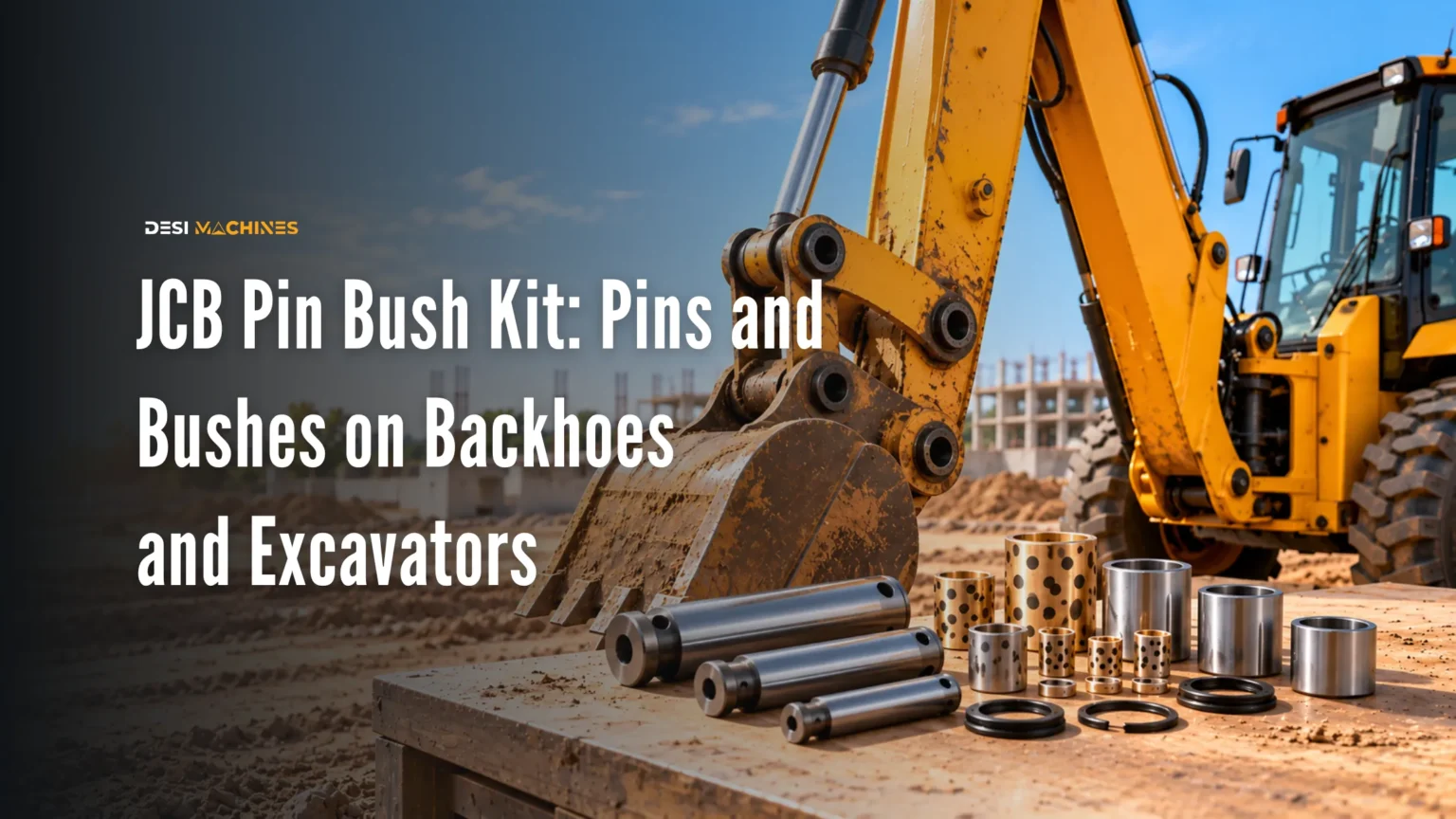
What a pin and bush kit costs depends on four things: which joint it covers, the make and model it was drawn for, the grade of the steel, and whether you buy a full set or single pieces. A bucket or loader-arm kit for a backhoe loader is the cheapest of them; a king post kit costs the most, because it carries the whole rear end of the machine. Excavator pins and bushes are more often sold by the piece than as a kit. To get a real figure, give a dealer your make, model and year and the joint you are repairing, and ask for the pin and bush sizes on the same quote.
Most people in India call a backhoe loader a JCB, whoever made it, and pins and bushes are sold the same way. This page covers backhoe loaders from JCB, CASE, Mahindra, Tata Hitachi, ACE, Bull, Caterpillar and the other makers sold here, and excavators of every make: what the parts do, how to tell they are worn, what a kit contains, pin sizes by machine class, and what moves the price.
What do pins and bushes do on a backhoe or excavator?
The pin carries the load and lets the joint turn. The bush is a replaceable sleeve pressed into the hole in the boom, arm or bucket, so that the pin wears the bush and not the steel of the arm. When the bush is worn out, you press in a new one. Without a bush, the pin would wear the hole itself, and a worn hole means welding and machining.
Every backhoe loader has pins and bushes at the loader arm and bucket, the king post and swing frame, the boom, the dipper, the rear bucket linkage and the stabiliser legs. An excavator has them at the boom foot, the boom-to-arm joint, the arm-to-bucket joint, the bucket link and every cylinder end. Each joint has a grease point; where they are and how often to grease them is set out in the guide to greasing points, grades and intervals.
What types of pins and bushes are there?
Hardened or plain
Pins for the working joints are made of alloy or carbon steel and hardened on the surface, and sellers often quote a hardness of 50 to 60 HRC. A hard surface wears slowly against the bush. A plain mild steel pin is cheaper but wears much faster in a loaded joint. Ask the seller for the material and hardness in writing.
Greased or sealed
Most pins in India run in plain steel bushes that are greased through a nipple every shift. Some makers now fit grease-holding bushes that go much longer between greasing. Hitachi, for example, states that the HN bushings on its compact Zaxis excavators need front greasing at 500 hours, and the bucket joint at 100 hours.
Steel or bronze bush
Steel bushes are the usual choice on digging joints; softer bronze bushes appear in some slower pivots. Replace a bush with the type the machine left the factory with.
How do you know pins and bushes are worn?
Rest the bucket lightly on the ground, have someone move the arm slowly, and watch each joint. Wear shows up as movement that should not be there.
- Play. The bucket or arm moves sideways or up and down by hand, or the joint shifts before the cylinder starts to move it.
- Knocking. A clunk each time the boom, dipper or loader arm changes direction.
- Oval holes. The hole in the bush, or in the arm itself, has worn out of round. A pin that fits tight one way and loose the other is a sign.
- Dry points. No old grease showing at the edges of the joint, a squeak, or bright polished metal at the pin end. These joints are wearing fastest.
- Sideways drift. On an excavator the bucket no longer lines up with the arm; on a backhoe the rear end sits crooked when the king post pins are worn.
Change a worn bush early. Once the pin has worn the hole in the boom or arm oval, a new pin and bush will not fit tight, and the hole has to be built up by welding and bored true again. That repair is described in the guide to excavator boom repair, and it costs many times more than the kit. The same checks are worth making on any used backhoe loader before you buy it.
What does a pin bush kit contain?
A kit covers one joint or one group of joints, and sellers name it after that part: bucket kit, loader kit, king post (often written KPC) kit, dipper kit or front axle kit. A typical kit holds the pins for that joint, the matching bushes, and often the locking bolts, washers or collars that stop the pin turning or sliding out. Some kits also include grease nipples and shims.
Kits are made for one make and model. Backhoe loaders from different makers weigh about the same, but their joints are not drawn to the same size, so a kit made for a 3DX will not fit a CASE 770, a Mahindra EarthMaster or a Tata Hitachi Shinrai. Before you buy, ask for the list of parts in the kit with the pin diameter and length, the bush outer and inner diameter, and the make, model and year it fits.
What size are excavator and backhoe loader pins?
Bucket pin size rises with machine weight, and machines of one weight class from different makers tend to share a diameter. What those pins actually join, and the four dimensions a bucket swap has to match, is covered in the excavator bucket linkage guide. The table gives the diameters published in attachment makers’ pin charts, next to the makes sold in India in each class. The charts cover older model series, so a current model may differ.
| Machine class | Bucket pin diameter | Examples in the published charts | Makes sold in India in this class |
|---|---|---|---|
| Backhoe loader, 7 – 9.7 tonnes | 45 mm rear; 45 – 50 mm front | JCB 3CX, 4CX (45 mm); CAT 416B, 432 (50 mm front, 45 mm rear) | JCB, CASE, Mahindra, Tata Hitachi, ACE, Bull, CAT, Escorts Kubota, Manitou, BEML, Bobcat |
| Mini excavator, 5 – 6 tonnes | 45 mm | CAT 305C CR, Hitachi Zaxis 50U, Hyundai R55-3 | JCB, SANY, Tata Hitachi, Kubota, Yanmar, Bobcat |
| Excavator, 7 – 8 tonnes | 45 – 50 mm | CAT 307C (45 mm), Hitachi Zaxis 80, CASE CX80 (50 mm) | JCB, Tata Hitachi, Hyundai, Komatsu, Kobelco, SANY |
| Excavator, 12 – 14 tonnes | 65 mm | CAT 312C, Zaxis 120, Hyundai R140LC-7, JCB JS130, Komatsu PC130-8, Kobelco SK130 | Tata Hitachi, Komatsu, Hyundai, JCB, SANY, Kobelco, Volvo, CAT |
| Excavator, 20 – 22 tonnes | 80 mm | CAT 320C, Zaxis 200, Hyundai R210LC-7, Volvo EC210B, JCB JS220, Komatsu PC210, Kobelco SK200, CASE CX210, Doosan DX225 | Tata Hitachi, Komatsu, Hyundai, JCB, SANY, Kobelco, CASE, CAT, Volvo, LiuGong, XCMG |
| Excavator, 30 – 35 tonnes | 90 – 100 mm | CAT 330C (90 or 100 mm by linkage), Zaxis 330, Komatsu PC350-6 (90 mm), Hyundai R320LC-3 | Tata Hitachi, Komatsu, Hyundai, JCB, SANY, Volvo |
This is a general guide based on machine size class. Always confirm the fit with your machine’s operator manual or the manufacturer before buying or fitting.
Matching the diameter is not enough. The length of the pin, the distance between the two pins (pin centres) and the width of the ears it passes through must match too, and these differ from maker to maker even inside one weight class. That is also why a bucket from one machine does not always fit another; the bucket price guide covers bucket fitment in more detail.
What does a pin bush kit cost for each make?
No one figure fits every make, because a seller prices the kit against the joint and the machine it was drawn for. These are the things that move the quote, and what to ask for each one.
| What moves the price | Why it matters | What to ask the dealer |
|---|---|---|
| Which joint the kit covers | A king post or boom foot kit holds bigger and heavier parts than a bucket or loader kit, so it costs more. | Which joints does this kit cover, and how many pins and bushes are in it? |
| Set or single piece | Backhoe parts are usually sold as a set for one joint; excavator pins and bushes are more often sold by the piece. | Is this a full set, and can I buy one pin or one bush on its own? |
| Make, model and year | Joints on machines of the same weight are drawn to different sizes, so a kit fits one make and model. | Which model and which years does this kit fit? |
| Pin and bush size | Diameter, pin length, pin centres and ear width all have to match the machine. | Pin diameter and length, and the bush outer and inner diameter? |
| Grade of the steel | A hardened alloy pin lasts far longer in a loaded joint than a plain mild steel one, and costs more. | What material is it, and what surface hardness, in writing? |
| Quantity | Many sellers quote a wholesale rate against a minimum order of several pieces, so one set over the counter at a local shop works out dearer. | Is this rate for a single set, or does it need a minimum order? |
| Fitting | Pressing out a worn bush is workshop work, and a king post or boom foot job needs the machine lifted. | Is labour included, and can you do it at my site or only in the workshop? |
Kits for the JCB 3DX class are the easiest to find on the open market. For Mahindra, Tata Hitachi, ACE and Bull backhoe loaders, and for the CASE 770 and the older L&T 770, most sellers stock the parts but give the price on request, so name the make, model, year and joint when you ask. This guide carries no part prices: they change with the joint, the make, the grade and the seller, and a printed figure would be wrong for most readers. A dealer quote against your own machine is the only one worth going by.
Pins and bushes wear first on most digging machines, alongside teeth and hoses, as the guides to backhoe loader parts and excavator parts explain. To compare the machines themselves, browse the range of backhoe loaders and excavators.
The grease gun guide covers the gun and the grease that keep these joints alive.
Prices, specifications and fitments are indicative, vary by maker, model, city and date, and should be confirmed with the manufacturer or an authorised dealer before buying. DesiMachines is not liable for decisions taken on the basis of information that may have changed after publication.
Get a pin and bush kit price from a dealer near you
Tell us your machine and what you need, and we will ask the nearest dealer to reach out to you with a price.