Excavator
294 models
Excavator
294 models  Backhoe Loader
51 models
Backhoe Loader
51 models  Crane
68 models
Crane
68 models  Concrete Mixer
79 models
Concrete Mixer
79 models  Wheel Loader
54 models
Wheel Loader
54 models  Compactor / Roller
45 models
Compactor / Roller
45 models  Motor Grader
42 models
Motor Grader
42 models  Concrete Pump
66 models
Concrete Pump
66 models  Skid Steer Loader
11 models
Skid Steer Loader
11 models  Telehandler
13 models
Telehandler
13 models 


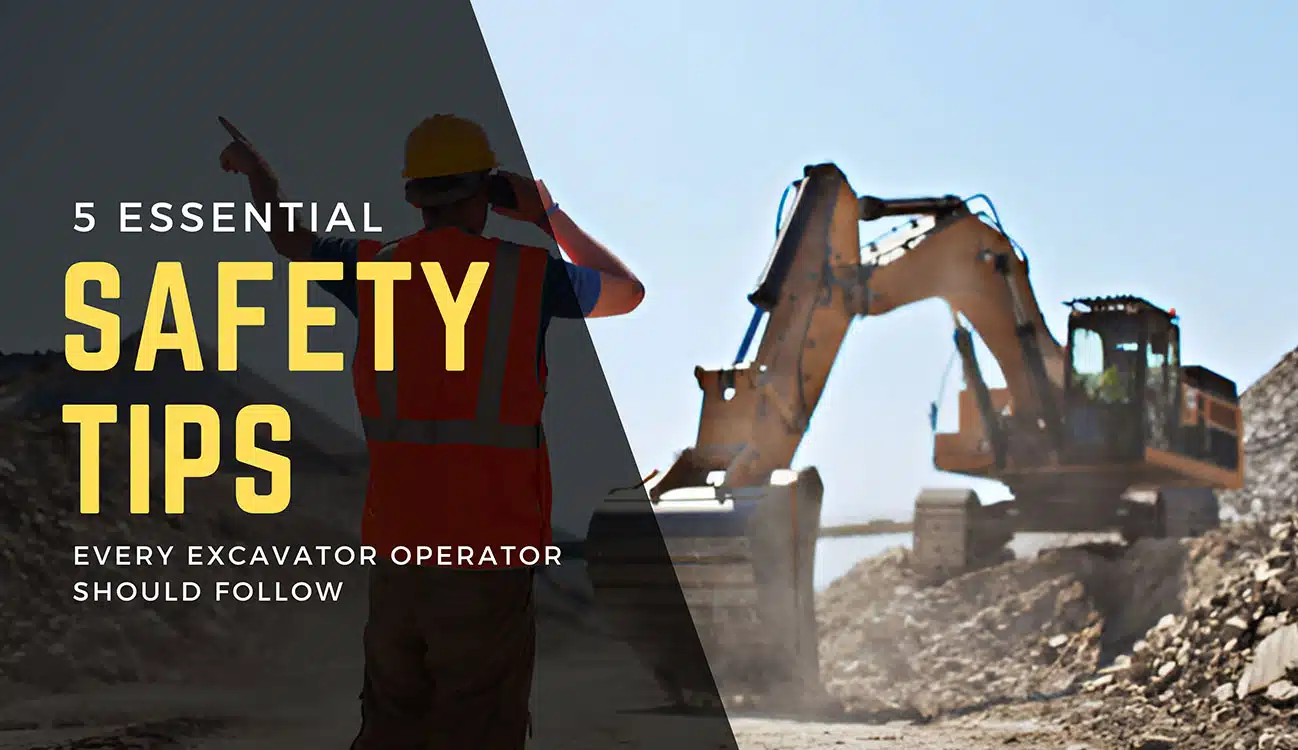
Excavator operator safety tips at a glance
The five safety tips that prevent most excavator accidents on Indian sites are: wear full PPE, inspect the machine before every shift, control and mark the swing and work zone, put only a trained and licensed operator in the seat, and stay inside the machine’s rated load and reach. Get those five right and you remove the causes behind the majority of struck-by, tip-over and underground-strike incidents.
An excavator is powerful and versatile — digging, trenching, demolition, material handling — and that same power is what makes it unforgiving when something is skipped. Unlike a road vehicle, it needs a trained operator and a routine that gets followed on the bad days too. Here is what that routine looks like in practice.
Excavators work in rough conditions and need steady maintenance, but maintenance alone does not keep a crew safe. The operator also has to follow a set of safety tips that prevent accidents before they start. It is very necessary to ensure operators’ and crew members’ safety. However experienced the operator, the same checks have to be done before the machine starts, so that everyone on site stays safe. It is very much necessary to follow a comprehensive safety plan; otherwise, the possibility of significant risk could occur. Here are a few safety tips that should be followed while operating an excavator.
1. Ensuring to wear proper gear
Excavators are generally used in construction sites. Multiple uses of excavators include demolition and moving things from one site to another. This process involves risk factors for the operators. It is very essential to wear proper protective equipment (PPE) while operating an excavator. That applies to the operator and to every crew member working around the machine.
Protective gear includes a hard hat that protects your head from falling debris, which is very common in construction sites. A steel-toe boot protects your feet from heavy materials like rocks, concrete, debris, etc. A high-visibility vest that makes you visible to other co-workers and is necessary in low-light areas because these heavy works are often assigned at night to prevent disturbances. Gloves are essential gear to wear for operating the excavator and material handling. Lastly, to protect your ear from heavy noises generated from the machines.
2. Proper inspection of the machine
This is one of the major safety measures one has to follow. An excavator is a huge machine and involves different parts. If a single part is not functioning properly, then the excavator can malfunction, which can lead to accidents or mishaps. So, to avoid this, proper checking of the machine is very much necessary before and after the task. An all-around inspection is necessary to check that the excavator is in working condition and ready for the day’s task.
One of the very important components of an excavator is the hydraulic system. It is very important to check the hydraulic oil regularly. Insufficient or dirty oil can lead to damage to the hydraulic system. The undercarriage, tracks, rollers, sprockets, and idlers go under pressure. It is very important to maintain the undercarriages because, in India, excavators operate in varied and rough terrains. One important thing to check regularly is the track tension. The track must not be too loose or too tight. Uneven adjustment of tracks can lead to unnecessary stress on the tracks. The engine is the main source of power, so its maintenance is one of the top priorities. Operators should regularly check for signs of damage, such as overheating or poor fuel efficiency. Unusual smoke or smell from the engine can be alarming and needs to be checked promptly, and treatment needs to be done to prevent further damage.
3. Be aware of your surroundings
Excavators generally work on rough and uneven ground. So, excavators are prone to accidents. Chances of tripping increase in the case of slopes. These can be prevented by taking several safety measures. Marking the work area can ensure no unwanted entry is allowed. The work zone must be made clear, and no personnel, workers, or equipment are there. This increases the chances of accidents. When operating in a crowded area, apart from the operator, an assistant or spotter is required to guide the operator. In hilly regions, extra attention is to be given so that the excavator doesn’t trip on downslopes. Sudden movements need to be avoided to maintain control. The buckets can be used to stabilize the machine in hilly regions. Taking these measures can ensure safety while working in different terrains.
4. Expertise in operating excavators
The important job is to operate an excavator. The excavator’s operator is specially trained in operating the excavator and its different attachments. One must possess an ‘excavator license’ or ‘heavy equipment operator certification’ to become eligible for operating an excavator. To get this license, one has to attend training courses and hand-to-hand training. If the operator is inefficient, then it can lead to high chances of accidents. An excavator operator must know all the parts and attachments of the excavators. An excavator comes with different attachments. Different attachments have different functions. So, knowledge of different attachments is necessary.
5. Operating excavators properly
It is very essential to properly follow the procedures while doing a specific task. These heavy machines come with great risk factors and responsibility. Staying focused comes first under the basic principles of the operation. There is no scope for distraction, as it can lead to accidents. If the operator is feeling fatigued, sleepy, or unwell, he can rest. In some situations or terrain where the terrain or conditions are difficult, it is necessary to pause and understand the problem before acting. The excavator comes with different weight capacities. The excavator that you are using must not exceed the weight capacity of the machine, or it will not function properly or can lead to sudden failure. The operator must efficiently balance the load while increasing and decreasing to prevent accidents. The boom and the bucket should be properly angled while lifting. Before digging, the operator must know exactly what is under the ground at that spot. One must verify and make sure of underground hazards, which can be ensured by using tools. There are underground cables, pipelines, gas lines, etc., that can be present underground. Proper verification from authorities of the presence of lines is necessary.
Why these safety tips also cut your costs
Every item above is also a cost control. A struck hydraulic line, a tipped machine or a cut cable stops the job, and a stopped machine still costs you EMI, operator wages and site overheads — we have broken that number down in what machine downtime really costs you. The pre-shift inspection in point 2 is the same walkaround that drives routine excavator maintenance, and the parts it catches early are the ones covered in excavator maintenance cost in India.
Insurance matters too, and most rejected claims fail on paperwork rather than damage: a claim after an incident goes much more smoothly when the machine has a documented inspection routine and a licensed operator. If your cover is due, read how premiums are set in our guide to construction equipment insurance, or compare machines on the excavator range.
The bottom line
There are many challenges in the excavation process, but it is also a very exciting job. By complying with the above safety measures and adhering to safety equipment, accidents can be easily avoided, ensuring productivity and safe work.
This guide is general safety information, not a substitute for your machine’s operator manual or site-specific rules. Confirm requirements with your employer, your equipment dealer and the relevant safety authority before work begins.