Excavator
294 models
Excavator
294 models  Backhoe Loader
51 models
Backhoe Loader
51 models  Crane
68 models
Crane
68 models  Concrete Mixer
79 models
Concrete Mixer
79 models  Wheel Loader
54 models
Wheel Loader
54 models  Compactor / Roller
45 models
Compactor / Roller
45 models  Motor Grader
42 models
Motor Grader
42 models  Dozer
41 models
Dozer
41 models  Concrete Pump
66 models
Concrete Pump
66 models  Skid Steer Loader
11 models
Skid Steer Loader
11 models  Telehandler
13 models
Telehandler
13 models 


How to choose the right excavator: the six decisions
To choose the right excavator, settle six things in order: the job you are buying it for, the operating weight class that job needs, wheels or tracks for your ground, engine power, the attachments you will actually run, and whether you buy, finance or rent. As a rough guide — 0–6 tonne for landscaping and trenching, 6–15 tonne for utility and small sites, 15–25 tonne for general contracting and roads, 25–50 tonne for large earthworks, and above 50 tonne for mining. Most buying mistakes are a machine sized for the job the owner hopes to win rather than the work they actually have.
An excavator is the machine that has to earn its keep on landscaping, digging, lifting and demolition, and India has a long list of brands and models selling into every one of those jobs. The factors below are what separate a machine that pays for itself from one that sits idle or works beyond its limits.
Demand for excavators in India tracks public infrastructure spending — roads, railways, bridges, irrigation and urban works — alongside agriculture and private construction. For a buyer that matters in two practical ways: machines in the popular weight classes hold their resale value better, and dealer and parts support is deepest for the models that sell in volume near you.
Excavators are of different types, sizes, specifications, and features. Not all excavators are fit for all jobs. Many factors need to be kept in mind while selecting an appropriate excavator for your projects.
Factors to be kept in mind while choosing the best excavator
1. Determining the type of excavation job:
The excavation job varies concerning size, type, tenure, etc. One must identify the type of job before choosing the best excavator. In India, infrastructural development is growing at a very fast pace. Small, medium, and large projects are taking place. Excavators are used in different jobs, including lifting, digging, grading, demolition, and more. The buyer has to identify their work scope and then has to choose the model ideal for the job. Choosing the wrong model can lead to delays in work, high operating costs, damaged work sites, and poor operator comfort and efficiency. For example, if a particular model is best fit for digging purposes and the purpose for which it is selected is for demolition purposes, it will not give the desired result. This doesn’t mean the model is faulty or the operator is unskilled; it’s the wrong machine for the wrong job. So, it is highly recommended to identify the work scope and specifications of the job. At Desi Machines it is easier to compare the product, as it has a unique feature to compare different models of different brands. So, the buyer has a clear scenario of the distinctive specifications of different products, which enables them to choose wisely.
2. Deciding the size of the excavator
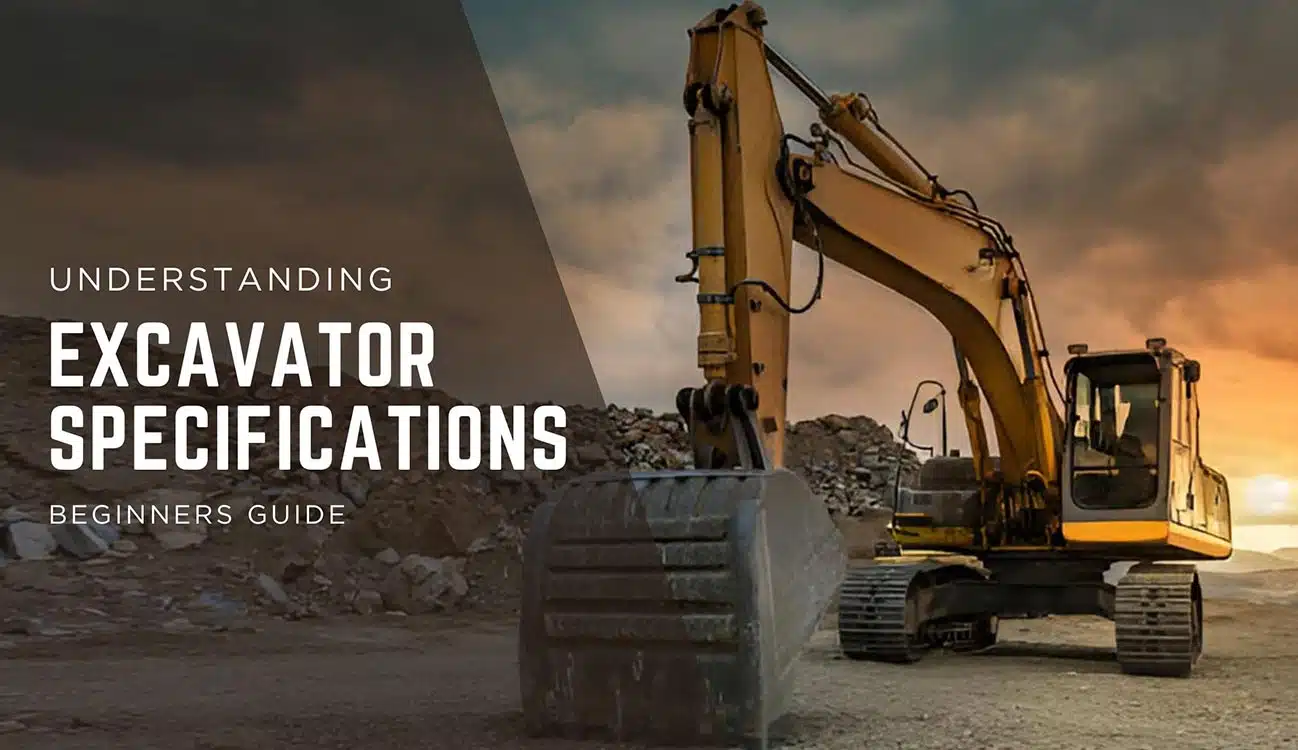
The excavator comes in different sizes. It caters to multiple sizes of projects, from small to medium to large-scale projects with various engine capacities. It is very necessary to identify the size of the project, and according to that, the company should acquire the excavator. Excavators come in various sizes—mini, small, medium, large, extra-large, and long-reach excavators. Mini or compact excavators are excavators with a capacity of 0-6 tons and are generally used for landscaping, trenching, and small demolitions. Small excavators are excavators with a capacity of 6-15 tons. Medium excavators are called mid-size excavators with a 15-25 ton capacity. They are generally used for medium-sized construction, utility, or road maintenance jobs. The large excavators are used for large-scale projects. They have a capacity of 25-50 tons and are generally used for massive workloads and digging at greater depths. Extra-large excavators, which have a capacity of more than 50 tons, are generally used in mining and massive excavation. Long-reach excavators are heavy, engine-powered, and are used in dredging, demolition, deep excavation, and reaching areas that are hard to access. At Desi Machines, the platform has an intuitive search option and easy-to-compare, which helps buyers to identify which size excavator is required for the project. It has a huge section on different excavators of different sizes and different engine power excavators. For example, a project requires a 16-ton capacity excavator. So, Desi Machines helps the buyer to decide whether to buy a single machine of 16 tons or two machines of 8 tons each. It also distinguishes between various models of the same size so that it becomes easy for the buyer to decide.
3. Choosing which terrain to work on:
Excavators come with wheels as well as tracks that are similar to tanks. The one with wheels is called a wheeled excavator, while the other with a chain is called a tracked excavator. Both have expertise in different terrains. Track excavators, also called crawlers, perform well in muddy, slushy, uneven terrain. They are mostly used in hilly regions. Crawler excavators distribute weight better with a lower center-of-gravity track and perform better than rubber, while wheel excavators are dynamic when working on roads or working in urban areas. Crawlers cannot move faster and need transportation in a trailer from one place to another, while wheeled excavators are fast and can go from one place to another quickly. Wheeled excavators are easier on asphalt, while crawler excavators can tear it apart very quickly. Crawlers are best used in sites where protecting the terrain isn’t a concern, while wheeled excavators are ideal where you want your machine to be more agile and faster. Moreover, while crawlers perform well in uneven terrain, they are expensive, as they will require transportation costs, while wheeled excavators will reduce transportation costs. At Desi Machines, we host both wheeled and crawler excavators with easy-to-compare features that help the buyer to identify the best excavator suited for him given the terrain that will be worked on.
4. Choosing the right power engine for your task:
Engine choice decides how much work the machine gets through and how much diesel it burns doing it. Consider the machine size, application, and workload while evaluating. The right engine with adequate horsepower will allow the excavator to operate smoothly with sufficient torque to engage in heavy-duty operations. Due to their high torque and great fuel efficiency levels, diesel engines are best suited for excavators. Also consider emissions compliance, which completes the Environmental Protection Agency regulations. Engines with advanced technologies like turbocharging and electronic fuel injection should be the right choice now that power systems are designed for lower fuel consumption. Reliable brands with a strong service network guarantee long operational life and support during maintenance. Desi Machines has a range of excavators that cover a wide range of power. Experts are there to guide you on what engine power will suit your task. A correctly rated engine lifts productivity and keeps downtime low.
5. Choosing the ideal attachment:
Excavators come with different attachments. Attachment varies lifting capacity of excavators. Which attachment to use depends on the scope of work and its lifting capacity. Choosing the ideal attachment for your excavators and identifying your scope of work is a challenging thing. Desi Machines provides you with guidance from experts to determine what attachment is necessary for the desired work. Some examples of buckets are digging buckets, rock buckets, utility buckets, grading buckets, etc. Digging buckets are also called trenching buckets and come with 12-, 18-, and 24-inch blades. It has bolt-on or cat-style teeth or adapters in the bucket. A rock bucket is generally used on a hard surface or where heavy-duty work is required. It has thicker wear plates to add bulk to the product and is generally used in quarries. The utility bucket is generally made of 500 Brunel cast steel and is generally used in the agricultural sector. A grading bucket, also called a ditching bucket, is a wider and shallower bucket than the standard digging bucket. They are used in leveling or grading and shifting soil in landscaping scenarios. Its wider buckets are made so that it does not become too heavy and overburden the machine. Apart from these major buckets, there are more options at Desi Machines, and expert guidance is available for the buyer for which bucket or attachment to buy for which job.
6. Determining ownership and rental costs:
These heavy machines come with different acquisition methods. This means buyers can buy the product, lease the product, or rent the product. The decision depends on the buyer, which option is suitable, keeping various factors in mind such as operational cost, tenure of the project, scale of the project, etc. For example, if the scale of operation is low, then it’s better to take the machine for rent, whereas if the buyer wants it for long-term and multi-functional use, then he can opt to buy the product. If you decide to buy, you can pay outright or finance the machine. At Desi Machines, we tie up with authorized and reliable financing companies that provide financing options for this heavy machinery. We also have industry experts who can guide you throughout the buying process.
Work out the running cost before you sign
The purchase price is the smaller half of the decision. Diesel is usually the largest running cost, and you can size it from our figures on excavator fuel consumption per hour. Add scheduled servicing from excavator maintenance cost in India and the undercarriage bill, which is the cost most first-time buyers miss entirely.
If the machine is going on finance, work the EMI against the hours you can realistically bill using our equipment loan EMI guide and the construction equipment finance pages. Buying used instead? The checks are different — see buying used construction equipment.
One last input worth settling before you sign: how long the class of machine you have chosen should actually last. The expected lifespan by machine type is measured in engine hours rather than years, and it changes the arithmetic on buying new against buying used.
How to match an excavator to your project
These are the major lookouts before choosing the Desi Machines for your company. We will help you with all the information and guidance from industry experts to make the decision. We also provide all-around support in connecting all necessary institutions with the buyer like brands, financing companies, insurance companies, etc.
Weight classes and guidance here are general. Confirm exact specifications, lifting capacities and current pricing with the manufacturer or an authorised dealer before you commit to a machine.