Excavator
294 models
 Backhoe Loader
51 models
 Crane
68 models
 Concrete Mixer
79 models
 Wheel Loader
54 models
 Compactor / Roller
45 models
 Motor Grader
42 models
 Dozer
41 models
 Concrete Pump
66 models
 Skid Steer Loader
11 models
 Telehandler
13 models


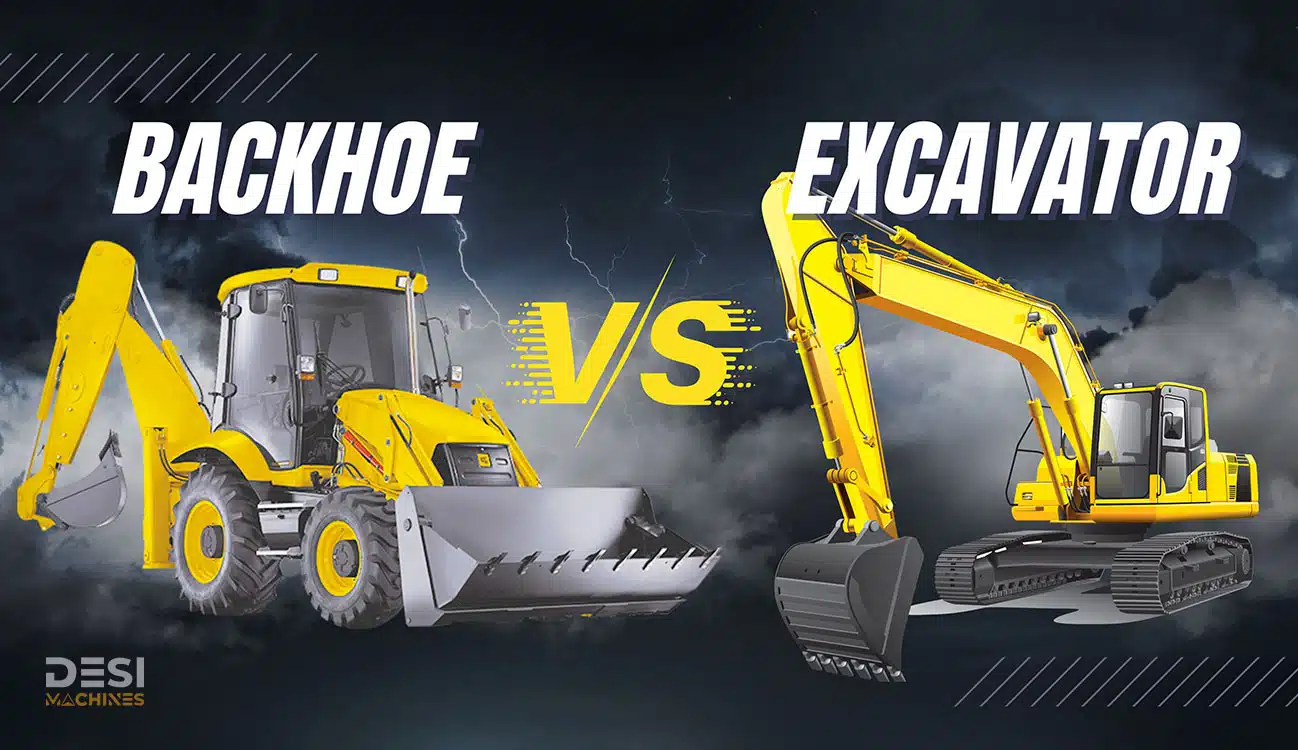
The short answer: backhoe vs excavator comes down to how much of your day is digging. A backhoe loader is two machines on one chassis — a loader in front, a digging arm behind — so it loads, carries, backfills and drives itself between jobs on its own wheels. An excavator does one thing far better: it digs deeper, reaches further and swings a full 360°, but it needs a trailer to move and cannot load a tipper the way a loader bucket can. The rule of thumb: if digging is under half your work and the site keeps moving, take the backhoe loader; if you are on one site digging most of the day, take the excavator.
Specifications and figures move with variant and model year — confirm the details for your machine with the OEM dealer before you commit.
Choosing the right heavy construction machine can be confusing, especially when you are deciding between a backhoe loader and an excavator. Both are powerful machines, both are extremely versatile, and both will get widespread use in construction across India. However, the instant you go out to the market, it is clear that each machine serves a different purpose with a different operating style.
The differences that matter are not subtle once you know where to look: what each machine does across a working day, how deep it digs, how it gets to site, and what it costs to keep running. This guide takes those in turn, with the model lists and the comparison table you need to place a machine against your own job.
What Is a Backhoe Loader
A backhoe loader is a combination of two pieces of equipment in one machine. The backhoe loader has a front loader bucket that can lift, haul, and load dirt, gravel, and material. Behind the front bucket, the digging arm is used to dig trenches, dig pits, and break down small structures. Switching from loading a bucket to switching to a digging operation makes the backhoe excavator a highly popular machine across India.
Backhoe loaders are great as it has endless diversity. On one hand, you can load sand, while on the other hand, you can dig a gravel pit, or dig a ground for the general foundation of a new property.
What Is an Excavator
The excavator machine has one primary purpose of digging. It does it with power. It has a large boom, stick, and bucket attached to a rotating cab that rotates a perfect 360 degrees. This makes an excavator machine unique by providing flexibility to work in one spot.
The most deciding factor that contractors consider when comparing an excavator to a backhoe machine is the digging power. When you think of an excavator, you generally think of large projects such as highways, metros, underpasses, pipelines, and mining areas.
Backhoe vs excavator: what backhoe, backhoe loader and backhoe excavator each mean
Most of the confusion in a backhoe vs excavator decision is vocabulary rather than engineering. Three terms get used for the same machine, and one of them is not a machine at all.
A backhoe is the digging arm itself — the boom, dipper and bucket mounted at the rear that pull material back towards the machine. It is an implement, not a vehicle, and on its own it goes nowhere.
A backhoe loader is the machine that carries one. It puts a loader bucket on the front and a backhoe on the rear of a single wheeled chassis, which is why it can dig a trench, load the spoil into a tipper and then drive itself to the next site. This is the machine Indian sites mean when they say JCB, and it is the machine this page weighs against an excavator.
Backhoe excavator is not a fourth thing you can buy. It is what people type when they know the machine digs like an excavator but carries a loader like a tractor, and what they are describing is a backhoe loader. If a quotation comes back headed backhoe excavator, ask which of the two machines below is actually on it before you compare the number with anything.
An excavator is the separate machine: boom, stick and bucket on a house that swings a full 360 degrees, usually on tracks, with nothing on the front. The two are different enough to be listed and priced as separate categories — backhoe loaders and excavators carry their own model lists, not variants of one machine.
So is a backhoe the same as an excavator?
No. They share a digging geometry — both pull a bucket back towards the machine, which is why the names blur in the first place — and they differ in nearly everything that decides a purchase. An excavator swings through a full circle, while a backhoe loader works its rear arm through a limited arc and has to be repositioned more often. An excavator digs deeper and holds a line better in hard ground. A backhoe loader travels to site on its own wheels at road speed and loads from the front, which an excavator cannot do at all.
The useful question is therefore not which machine is better in the abstract. It is how much of your day is digging, and the rest of this comparison works through exactly that.
A Simple Visual Comparison
To simplify things, here is a chart for visual comparison of the most significant performance areas in comparing backhoe loaders vs excavators. This chart gives you a fast visual glance before we look at the in-depth information about the machines and their performance.

The Real Differences Between Backhoe and Excavator
Most people search online for the difference between a backhoe and an excavator. It’s simple to explain in plain terms. Both machines dig and move materials, but the style, power, flexibility, and depth of work are very different. Here is the difference in clear and conversational terms.
1. Versatility at Location
Flexibility is what the backhoe loader’s all about. It is that machine that you would select when your day involves a lot of different tasks. You may be lifting pipes, digging a short trench, cleaning a site, transporting bricks, or loading trucks. One machine handles everything.
An excavator does one thing and does it well: digging deep, powerfully, and precisely. It may not lift or move materials with as much versatility as a backhoe excavator, but for digging power, it’s far ahead.
2. Depth of Digging and Hydraulic Strength
Excavators go much deeper. Their hydraulic systems are stronger and faster. For digging foundations, long trenches, sewage channels, or pits for big projects, the excavator will always do better.
Backhoe loaders also dig, but not as deeply. They work perfectly for home construction, small buildings, farms, and municipal tasks.
3. Mobility and Movement
Backhoe loaders run on wheels. This makes them fast and easy to move from one spot to another. Indian cities, towns, and rural roads benefit from this mobility. You do not always need a trailer or heavy transport.
Excavators usually run on tracks. Tracks give stability. They grip mud, loose soil, and rocky terrain well. But they move slowly and are not ideal for road travel. A trailer or truck is normally needed.
4. Precision and Operator Control
Excavators give smoother, more precise control while digging. The cab rotates easily, visibility is good, and the hydraulic movements feel smooth and predictable.
With backhoe loaders, you need to be able to adjust between the front and back attachments, which is often easy for experienced users, but may take some getting used to for new users.
5. Cost and Budget Considerations
Backhoe loaders are less expensive. Backhoe loaders are a good machine for contractors who are starting up a new business or working on a budget. A backhoe saves money because you can do multiple jobs with one piece of equipment.
Excavators will cost more, but excavators provide the best value whenever you need serious digging ability in your project. For large infrastructure companies, it pays off very quickly.
Where Backhoe Loaders Are Used Most
Backhoe excavators dominate many Indian job sites. You will see them across towns, villages, industries, and in the construction zones.
Urban Construction Work
They work well in tight spaces and busy city streets.
Road Repair and Maintenance
Municipal departments rely on them for cleaning drains, repairing roads, and shifting material.
Agriculture
Farm owners use them to level land, dig pits, clean water bodies, and shift loads.
Small and Medium Construction
Backhoes are relied on every day by builders of small homes and commercial buildings.
Where Excavators Perform Best
Excavators are the heroes of heavy work.
Large Construction Projects
High-rise buildings and metro projects require deep excavation.
Mining and Quarrying
Mining companies use excavators to remove large volumes of earth.
River Deepening and Dredging
Excavators with long reach booms clean lakes, canals, and rivers.
Demolition Work
Excavators are able to power hydraulic breakers and crushers for structure removal.
Excavator With Backhoe Attachments
Some people try to bridge the difference with an excavator with backhoe attachments. Though that does create a kind of hybrid, it still does not replace the true versatility of a pure backhoe loader. In that respect, the backhoe loader remains the best multi-purpose machine.
Popular Backhoe Loader Models in India
The best-selling and most-trusted backhoe loaders found throughout the country are listed below.
- JCB 3DX Series Backhoe Loader: This legendary model has built a reputation through strong performance, dependability, and great resale potential.
- Mahindra EarthMaster VX Backhoe Loader: This high-performance machine has gained popularity due to its fuel efficiency and advanced technology-driven controls.
- CAT 424 Backhoe Loader: This powerful machine features an advanced hydraulic system and is incredibly durable.
- CASE 770 NXe Backhoe Loader: Ideal for urban and rural applications, this model is highly fuel-efficient while delivering superior performance.
- Manitou MBL 745 HT BS V Backhoe Loader: This premium backhoe loader combines comfort, power, and modern technology.
All of these models have proven their reliability and demand in India due to their performance, low maintenance, and versatile use.
Popular Excavator Models in India
Following is a list of some of the most used excavators trusted across the country:
- Komatsu PC210 Excavator: Very good hydraulic efficiency, high operational lifetime.
- Tata Hitachi EX 210 Excavator: A very popular and demanding excavator due to the combination of excellent fuel efficiency and digging power.
- Hyundai 220 LC Excavator: Comfort, power, and stability are all built into this modern excavator.
- JCB 220LC Excavator: JCB’s premium excavator with a strong reputation in Indian infrastructure projects.
- CAT 320D3 Excavator: It’s a strong performer globally, known for precision, advanced hydraulics, and reliability.
These excavators are the backbone of road building, mining, large construction, and major infrastructure work.
Which One Should You Choose
Choosing a backhoe loader versus an excavator will depend on your daily work, your budget, and your long-term goals.
Here is a simple way to decide.
If your work changes throughout the day, consider going for a backhoe excavator.
If your work requires deep digging and raw power, go for an excavator.
If you need one machine that can do many things, pick a backhoe loader.
If you require just one machine that does one thing better than anything else, pick an excavator.
Before committing either way, assess the soil you are actually digging, the length of the project, how often the machine has to move between sites, the fuel burn you expect, and the experience of the operator you will put in the seat.
Backhoe Loader vs Excavator Quick Comparison Table
| Feature | Backhoe Loader | Excavator |
|---|---|---|
| Versatility | Very High | Medium |
| Digging Depth | Medium | Very Deep |
| Mobility | Fast on roads | Slow but stable |
| Ideal For | Mixed tasks | Pure digging power |
| Cost | Lower | Higher |
Which suits your work, a backhoe loader or an excavator?
Knowing the difference between backhoe and excavator machines is the real key to making an informed purchasing decision. Both machines have their strengths, and both are important on the jobsite. The real key is finding the right machine for your specific job.
A machine bought against the actual shape of your work pays for itself in fuel, idle hours and resale; one bought on badge alone usually does not. Once the vocabulary is clear — the backhoe is the arm, the backhoe loader is the machine that carries it, the excavator is the specialist — the comparison stops being confusing and becomes a straightforward question about your own site. The full heavy construction equipment range is the place to shortlist once that question is settled.
If the terminology is still the confusing part, the tractor-loader-backhoe (TLB) explainer covers why a backhoe loader, a TLB and what everyone calls a “JCB” are all the same machine.
Compare backhoe loaders and excavators model by model
If the choice is down to a shortlist, the comparison hubs list every pair we cover, so you can see the specifications and price ranges side by side.