Excavator
294 models
Excavator
294 models  Backhoe Loader
51 models
Backhoe Loader
51 models  Crane
68 models
Crane
68 models  Concrete Mixer
79 models
Concrete Mixer
79 models  Wheel Loader
54 models
Wheel Loader
54 models  Compactor / Roller
45 models
Compactor / Roller
45 models  Motor Grader
42 models
Motor Grader
42 models  Concrete Pump
66 models
Concrete Pump
66 models  Skid Steer Loader
11 models
Skid Steer Loader
11 models  Telehandler
13 models
Telehandler
13 models  Dozer
Dozer 


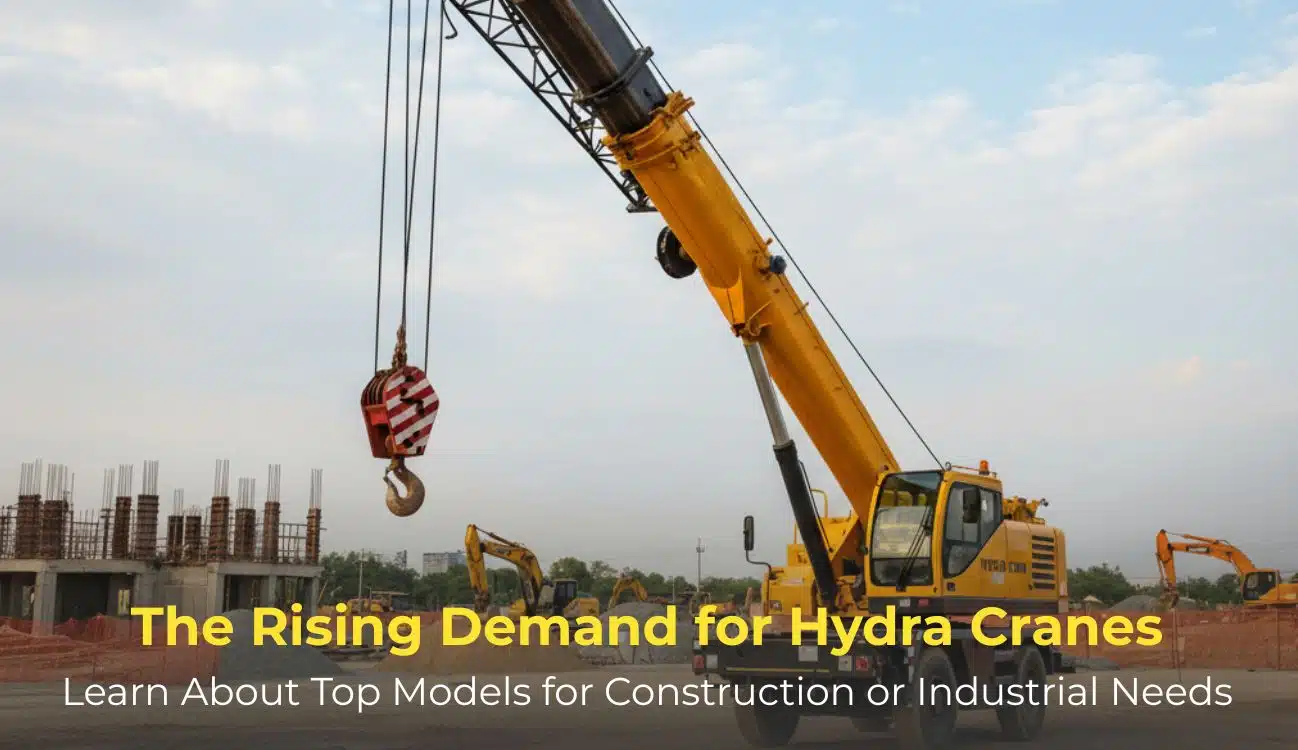
Hydra cranes are picking up steam in the emerging markets of the world because they are cost-effective, portable, and multi-industry compatible. Whether mining and construction, shipbuilding facilities, or manufacturing plants, the likes of ACE 14T and Franna 20T are at the forefront. With minimal capital expenditure, high capital appreciation, and a very active market CAGR of 25–30%, hydra cranes are revolutionizing infrastructure development in Asia, Africa, and Latin America.
From urban flyovers to industrial corridors, one machine is becoming indispensable in the modern build cycle—the hydra crane. In an era of tight timelines, safety above all, and adaptability, the increasing use of mobile, hydraulic, and farana cranes is no accident. As the infrastructure bulges in Asia, Africa, and Latin America, demand is skyrocketing—not for any crane, but for durable, user-friendly, and high-capacity machines such as the ACE 14-ton crane or the reliable Frana pick-and-carry.
The developing economies are experiencing a construction boom fueled by industrialization, urbanization, and infrastructure growth. On sites where the schedule is the binding constraint, the hydra crane is becoming the cost-effective, efficient and convenient option. From moving heavy equipment to lifting construction material amid urban congestion, the mobile crane is transforming project efficiency and speed.
Why Are Hydra Cranes Booming in Emerging Economies?
Affordability Meets Functionality
Hydra cranes offer a wonderful compromise between cost and capacity. Machines like the ACE 12-ton crane and Kubota’s lower-range series of mobile cranes offer the required lifting capacity without the expense of larger truck or tower cranes.
Compact and Road-Friendly
Unlike crawlers or tower cranes, hydra cranes are road-friendly and lightweight. Due to their mobility, they are suitable for infrastructure activities spanning multiple locations, i.e., metro construction, bridging, and logistics terminals.
High ROI for Small Contractors
For small and medium-sized contractors, the possession of a hydra crane such as TIL 14T guarantees a faster return with low maintenance expenses. This is one of the reasons why the demand for the 12-ton and 14-ton trucks has increased manyfold in India, Bangladesh, and Kenya.
Low Maintenance, High Availability
The majority of hydra cranes, particularly ACE and Franna models, are tough operation machines. They have readily available local spare parts, and they do not necessitate high-technology machinery or expensive downtime for repair.
Ease of Operation and Versatile Usage
Whether to lift precast concrete slabs, offload steel coils, or assist with dockside logistics, hydra cranes are simple to convert. Operators who know one model, e.g., the Franna 20T, can usually operate others with minimal training.
Most Popular Hydra and Farana Cranes in the Market
In developing economies, the demand for efficient and multi-purpose lifting equipment is revolutionizing equipment selection. Among the most reliable Hydra and farana cranes that are now making a difference are:
Hydra Cranes
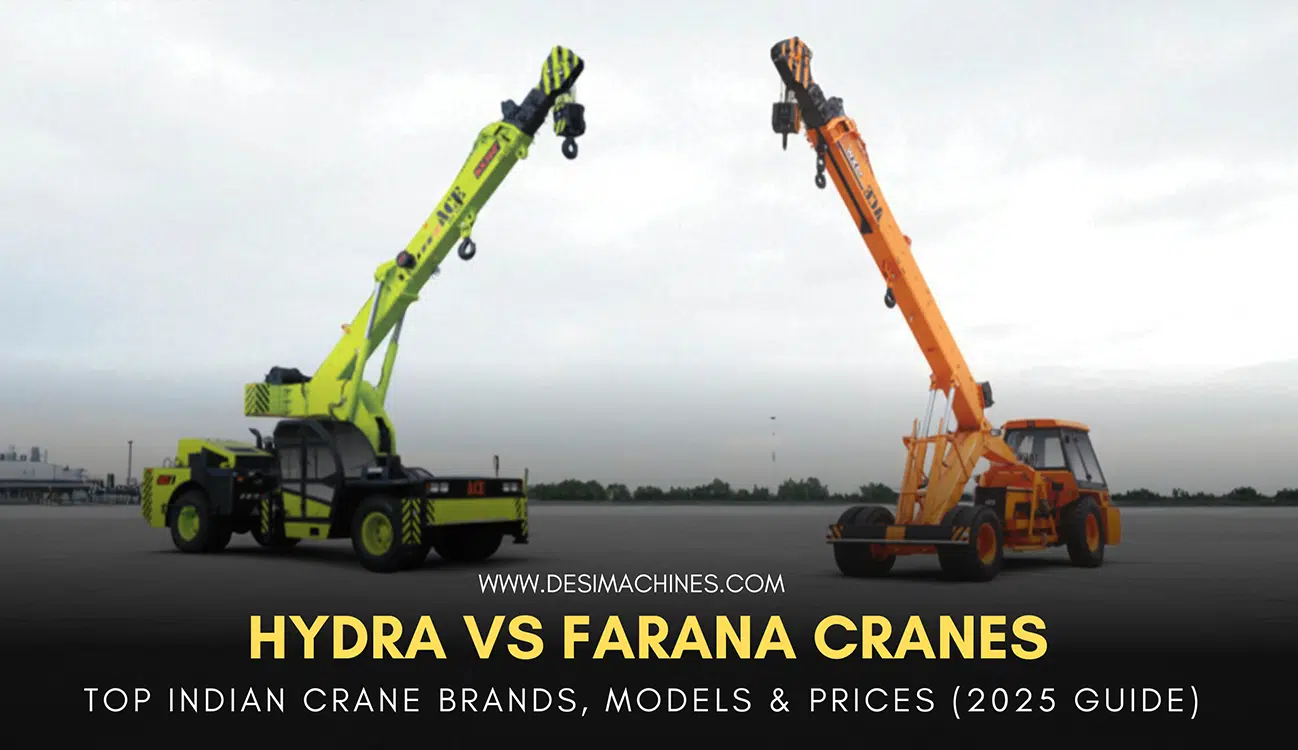
A highly reliable pick-and-carry crane, suitable for medium-sized building sites, factories, and yard operations. It offers power together with simplicity in use, and has been a customer favorite among the Indian clients. Some of the popular Hydra Cranes are Escorts Hydra 14, ACE 14X, Franna MAC 2, etc.
Farana Cranes
Created to be versatile, this locally made model is best suited for city infrastructure building. Capable of maneuvering in tight spots without a loss of capacity, it has proven a workhorse. Some popular Farana Cranes are TIL Pick-n-Carry 12T, ACE FX 210, Franna AT 20, etc.
Read More: Hydra vs Farana Cranes: Top Indian Crane Brands, Models & Prices
Hydra Crane Price in India (2026)
The affordability argument above is only worth as much as the numbers behind it. These are the indicative ex-showroom bands for pick-and-carry cranes listed on Desi Machines as of 15 August 2026:
| Class | Typical models | Indicative price |
|---|---|---|
| 9–11 tonne | ACE Rhino 90C, Rhino 110C | ₹12–14 lakh |
| 12–14 tonne | ACE 12XW, ACE 14XW | ₹16–20 lakh |
| 15–18 tonne | ACE 15XW, ACE 18XW | ₹21–28 lakh |
| 20–25 tonne | ACE 20XW, ACE 25XW | ₹28–34 lakh |
| Farana / F-series 15–35 t | ACE F150, Escorts F15, ACE F350 | ₹31–66 lakh |
The pattern worth noting: a 25-tonne pick-and-carry costs roughly twice a 12-tonne, not four times. Capacity is the cheapest thing to buy on this class of machine, which is why owners who size down to save money usually regret it on the first lift that needs the next bracket up.
Cross-Sector Utility of Hydra Cranes
Hydra cranes are not limited to a typical building construction site anymore. Because of their mobility, lifting capacity, and portability, they are now used in great numbers in various industries:
- Manufacturing Plants: Hydra cranes are usually used for the transportation of material, installation of machines, and movement of heavy parts within narrow factory spaces.
- Shipyards: They are tasked with transferring marine equipment, engines, and cargo between wharves and ships and vice versa with precision and effectiveness.
- Infrastructure Projects: From lifting precast concrete girders to facilitating metro rail, road, and flyover construction, hydra cranes are an essential need for successful project implementation.
- Mining Sites: Their tough construction enables them to move over uneven terrain, hence their usage in hauling tools, structural components, and support systems across mining areas.
Advanced models like the Franna 15-ton crane and the newer boom models from ACE are now the norm since they can perform under adverse conditions, e.g., heat and remote areas.
Hydra cranes are transforming into do-it-all machines with great versatility across sectors.
Market Trends of Hydra and Frana Cranes & Data-Backed Growth
India’s crane industry has been growing rapidly, with a steady 25–30% CAGR in recent years, as highlighted by Economic Times. The expansion is primarily because of infrastructure growth in tier-2 and tier-3 cities. Of all the types of cranes, the hydra crane is particularly cost-effective and versatile in accomplishing diverse lifting work. With its small size and high maneuverability, it is best suited for congested city centers with chaotic traffic and medium-load jobs and is a class above the big machines, such as crawler cranes or tower cranes.
The Road Ahead
With the support of policy for infrastructure, the increase in the number of PPP construction projects, and technology that enables remote monitoring of the fleet, the hydra crane industry is poised for a revolution. The manufacturers are now incorporating GPS-enabled controls, ergonomic cabins, and enhanced safety features in future models.
If you are looking to purchase a quality crane, online heavy equipment platform such as Desi Machines offer careful listings of genuine hydra cranes, crane trucks, etc.
Conclusion
The hydra crane is no longer an opening act—it’s the headlining attraction for infrastructure and industrial work. With a smaller footprint, high return on investment, and versatility on a wide range of terrain, it’s no wonder demand is booming in developing economies. If you’re a contractor, equipment owner, or fleet operator, now’s the time to find out what hydra cranes can do for your business.
Prices above are indicative ex-showroom ranges as of 15 August 2026 and vary by variant, state levies, attachments and dealer. Confirm the current price, boom configuration and delivery timeline with the dealer or OEM before you buy.