Excavator
316 models
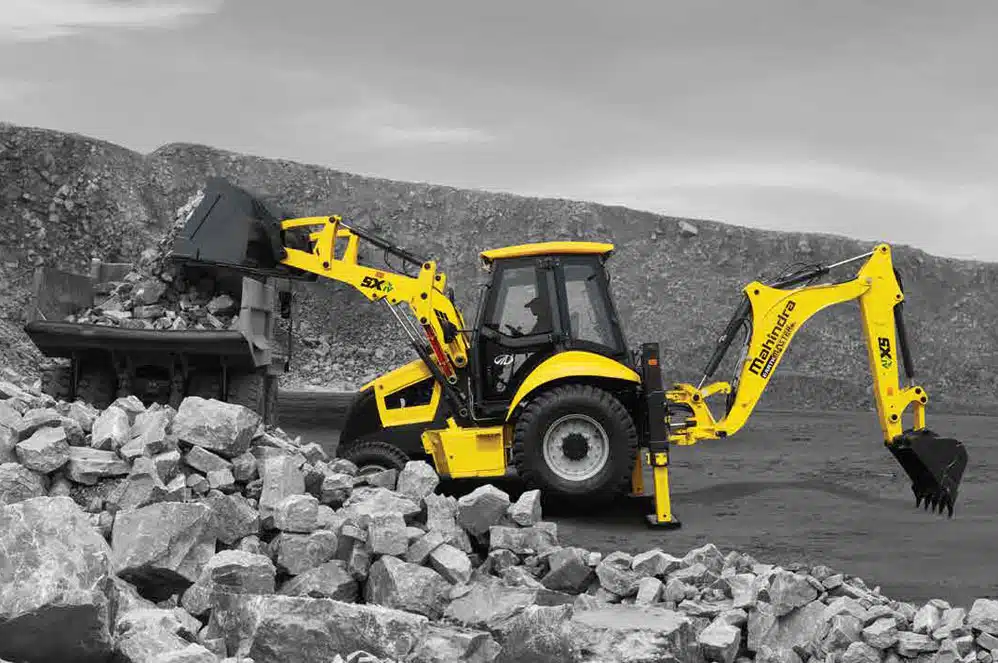
 Backhoe Loader
54 models
 Crane
68 models
 Concrete Mixer
79 models
 Wheel Loader
54 models
 Compactor / Roller
45 models
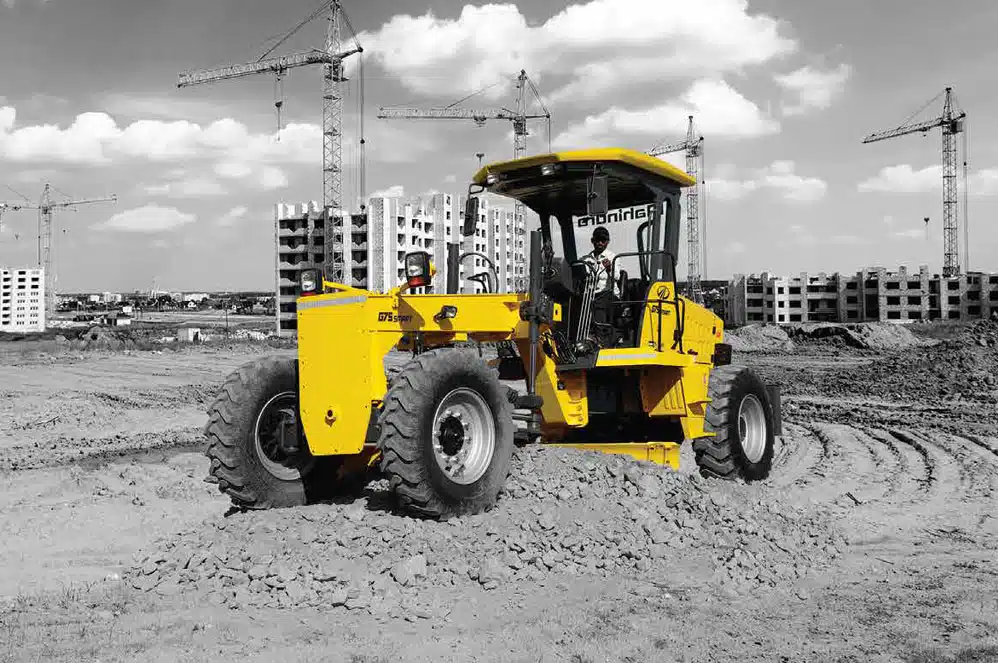
 Motor Grader
42 models

 Concrete Pump
66 models
 Skid Steer Loader
11 models


Rs 3,000 buys the smallest paid class in Delhi Jal Board contractor registration: Class V, which lets you bid for DJB works up to Rs 40 lakh. DJB runs its own register under the Rules for Enlistment of Contractors in DJB, 2023, with eight classes from a probationary class (Rs 10 lakh limit) to Class I Super (Rs 650 crore), fees up to Rs 40,000, a paper application and five-year validity. It is separate from CPWD. Firms without DJB enlistment can still bid, but each tender then tests their turnover, bank strength and similar work in full.
On 14 November 2026 the Delhi government’s e-procurement portal showed 287 live Delhi Jal Board tenders. Many were small: a water line in one ward, a sewer relay in one colony block, a desilting machine on hire for a few months. That steady flow of Rs 10 lakh to Rs 50 lakh jobs is what a DJB enlistment order is for.
Does Delhi Jal Board keep its own contractor register?
It does. The “Enlistment of Contractor’s in DJB” page on the Delhi Jal Board website carries the 2023 rules, a corrigendum of 28 August 2023, a fee-account circular of 22 October 2025, the enlisted list and a debarment circular (read on 14 November 2026). The rules were circulated on 24 February 2023 and repealed all earlier DJB enlistment rules. No newer rule book has appeared, and the October 2025 circular asks to be uploaded “with the Rules for Enlistment of Contractor in DJB 2023”, so those rules are still in force.
The published register is an “Amended list of Registered Contractors” as on 16 August 2023, with about 1,150 entries. Only a few dozen sit in the pipeline, pumping and plant classes; the rest are General Works and probationary firms.
Rule 3.2 limits what you get: the right to take part in tenders, “subject to the conditions of each notice inviting tender”, and no promise of work.
Delhi Jal Board contractor registration classes, limits and fees
The 2023 rules create six categories: treatment plants (TP), pumping stations and reservoirs (PS), water and sewer line works (W&S), trenchless rehabilitation (TRB), and General Works, enlisted separately for Civil and E&M. A higher category covers those below it, so a W&S firm can also bid for General Works.
| Class | Categories | Tendering limit | Processing fee | Banker’s or turnover certificate | Or net worth |
|---|---|---|---|---|---|
| I Super | TP, PS, W&S, TRB | Rs 650 crore | Rs 40,000 | Rs 208 crore | Rs 65 crore |
| IA | TP, PS, W&S, TRB | Rs 100 crore | Rs 25,000 | Rs 24 crore | Rs 7.5 crore |
| I | TP, PS, W&S, TRB | Rs 50 crore | Rs 20,000 | Rs 10 crore | Rs 5 crore |
| II | PS, W&S, TRB | Rs 15 crore | Rs 15,000 | Rs 3 crore | Rs 1.5 crore |
| III | General Works | Rs 5 crore | Rs 10,000 | Rs 80 lakh | Rs 40 lakh |
| IV | General Works | Rs 130 lakh | Rs 5,000 | Rs 26 lakh | Rs 13 lakh |
| V | General Works | Rs 40 lakh | Rs 3,000 | Rs 8 lakh | Rs 4 lakh |
| Probationary (P) | General Works | Rs 10 lakh | Nil, Rs 1 lakh security deposit | Not required | Not required |
From Class II upward you need a banker’s or net worth certificate plus a CA turnover certificate; for Classes III to V any one of the three will do. The banker’s certificate must come from a scheduled bank and be under three months old. SC and ST applicants for Class V need only Rs 4 lakh.
Experience must come from works completed in the last seven years, with values brought up to date at 7 percent simple interest a year. For Class V that means three works of Rs 3 lakh, two of Rs 4 lakh or one of Rs 8 lakh. Class IV asks for Rs 10, 15 or 30 lakh on the same pattern, and Class III for Rs 35, 50 or 100 lakh, with most of the qualifying works tied to water or sewer infrastructure. Entry to the W&S category starts at Class II: three water or sewer line works of Rs 1.1 crore, two of Rs 1.6 crore or one of Rs 3.2 crore.
The probationary class needs no experience, but it opens only when DJB notifies it. After five completed DJB works the firm can move to Class V; if it never upgrades, the Rs 1 lakh deposit is forfeited.
How to apply, and what DJB checks
There is no online application form. The rules ask you to fill Annexure-I (the application) and Annexure-II (the document list), both printed at the end of the rule book, and to send them by Speed Post or by hand. Civil and other categories go to CE (P&D) through EE (Planning) Colony, Rooms 104 and 106A, Varunalaya Phase-I, Karol Bagh. General Works E&M goes to CE (SDW) S&E at Kilokari SPS, Lajpat Nagar.
The processing fee is paid by RTGS or NEFT before you apply, and an application without it is rejected. The bank details printed in the 2023 rules are out of date. The corrigendum of 22 October 2025 moved the fee to a DJB Deposit Receipt Account with SBI, Tis Hazari, so copy the account number from that circular.
With the forms go proof of constitution, PAN, GST, the original financial certificate, award letters and final bills for each work claimed, and an Annexure-III performance certificate for every work, signed by an officer of Superintending Engineer rank. DJB scores each work on delay, quality, capability and how the contract ended; you need 70 percent overall.
Timing matters. The enlistment committee meets in January and July to clear applications received in the previous six months, so a June filing makes the July round and an August filing waits until January. You get one chance to fix shortcomings, with a month to reply, and a rejected applicant can seek review within 60 days.
Bidding for DJB work without enlistment
Note viii under Table 1 says firms not enlisted with DJB “shall also be eligible to participate provided they meet the eligibility criteria”. What enlistment buys is an exemption: no technical and financial evaluation for an enlisted firm bidding within its limit, while unregistered firms, and any work above Rs 500 crore, get the full check.
No clause accepts a CPWD enlistment in place of DJB’s, unlike Delhi PWD, which uses the CPWD list (see Delhi PWD contractor registration). DDA and the MCD keep their own lists; see DDA contractor registration and municipal corporation contractor registration.
For non-enlisted bidders, the DJB Board revised its General Conditions of Contract in 2025. The circular of 21 July 2025 set average turnover at 30 percent of the estimated cost over the last three years, and a banker’s certificate of 40 percent or a CA net worth certificate of 10 percent. A circular of 29 September 2025 widened the similar-work window for pipeline jobs to the last ten years: one work of 80 percent of the estimated cost, two of 60 percent or three of 40 percent. The same circular says the credentials of all bidders will be considered for works above Rs 3 crore, under a heading marked as a one-time relaxation valid to 30 June 2026, so check which version each notice applies.
Take a live example. On 13 November 2026 a DJB division published a tender to replace a 250 mm sewer line in D1B Block, Janakpuri, with a tender value of Rs 45,80,485, EMD of Rs 92,000, a Rs 500 fee and 60 days to finish. The portal’s “Tenderer Class” field reads “As per Tender Document”, so the class asked is in the NIT itself. Set against the rules, the two routes look like this:
| Test | DJB-enlisted firm | Non-enlisted firm (2025 GCC criteria) |
|---|---|---|
| Class needed | IV or above (Class V stops at Rs 40 lakh) | None |
| Similar work | Already checked at enlistment | One of Rs 36.64 lakh, two of Rs 27.48 lakh or three of Rs 18.32 lakh |
| Average turnover | Already checked | Rs 13.74 lakh |
| Bank strength | Already checked | Banker’s certificate Rs 18.32 lakh, or net worth Rs 4.58 lakh |
| EMD | Rs 92,000, no exemption | Rs 92,000, no exemption |
The non-enlisted figures are worked from the 2025 circulars and the tender value. The NIT, which the portal releases only after a captcha, can add particular conditions such as past pipe of two-thirds the largest diameter in the bill of quantities over at least 500 metres. Note too that since July 2025 pipe network works above Rs 3 crore carry a five-year defect liability period.
Machines DJB work calls for
Enlistment does not check your fleet. Rule 6.5 takes an undertaking to hire or arrange the plant each work needs, and Rule 13.5 lets DJB demote a firm that fails to deploy it.
The work is trenching in tight streets. Water and sewer line replacements in colony lanes suit a backhoe loader such as the JCB 3DX, and where the lane is too narrow, a mini excavator like the Kubota U30-6S. The 287 live tenders also included hire of 4,000-litre jetting-cum-suction machines, super suckers and three-wheeler desilters, work that suits a machine owner. For water work in other states, compare Jal Jeevan Mission contractor registration and PHED contractor registration. If a machine purchase decides whether you can take a DJB job, line up construction equipment finance before the bid date.
Suppliers have a separate route. General Works E&M includes a supply sub-category, and in April 2026 DJB issued its 4th expression of interest to empanel manufacturers of 15 mm water meters. That is what “Delhi Jal Board vendor registration” usually means.
When to enlist with DJB and when to bid on your own papers
Enlist if you want repeat DJB work under Rs 1.3 crore. One Class IV or V order covers dozens of ward-level jobs without proving turnover and bank strength each time, for a fee of Rs 5,000 or less. File ahead of the January or July round, and collect an Annexure-III certificate from each client as works finish.
Bid on your own papers if DJB is an occasional client, or if you already hold a CPWD or state enlistment and want one job. Either way, track the live DJB tenders and opportunities and match each one to your class limit or to the 80, 60 and 40 percent test before you pay an EMD.
Figures here come from the Rules for Enlistment of Contractors in DJB, 2023, the DJB corrigenda of 28 August 2023 and 22 October 2025, the General Conditions of Contract circulars of 21 July 2025 and 29 September 2025, and tender detail pages on the Delhi e-procurement portal, all read on 14 November 2026. Rules, fees, classes and tender terms change. Contractors should confirm the current position with the Delhi Jal Board enlistment office and the tender document itself before they apply or bid. DesiMachines is not liable for decisions taken on information that may have changed after publication.