Excavator
294 models
Excavator
294 models  Backhoe Loader
51 models
Backhoe Loader
51 models  Crane
68 models
Crane
68 models  Concrete Mixer
79 models
Concrete Mixer
79 models  Wheel Loader
54 models
Wheel Loader
54 models  Compactor / Roller
45 models
Compactor / Roller
45 models  Motor Grader
42 models
Motor Grader
42 models  Dozer
41 models
Dozer
41 models  Concrete Pump
66 models
Concrete Pump
66 models  Skid Steer Loader
11 models
Skid Steer Loader
11 models  Telehandler
13 models
Telehandler
13 models 


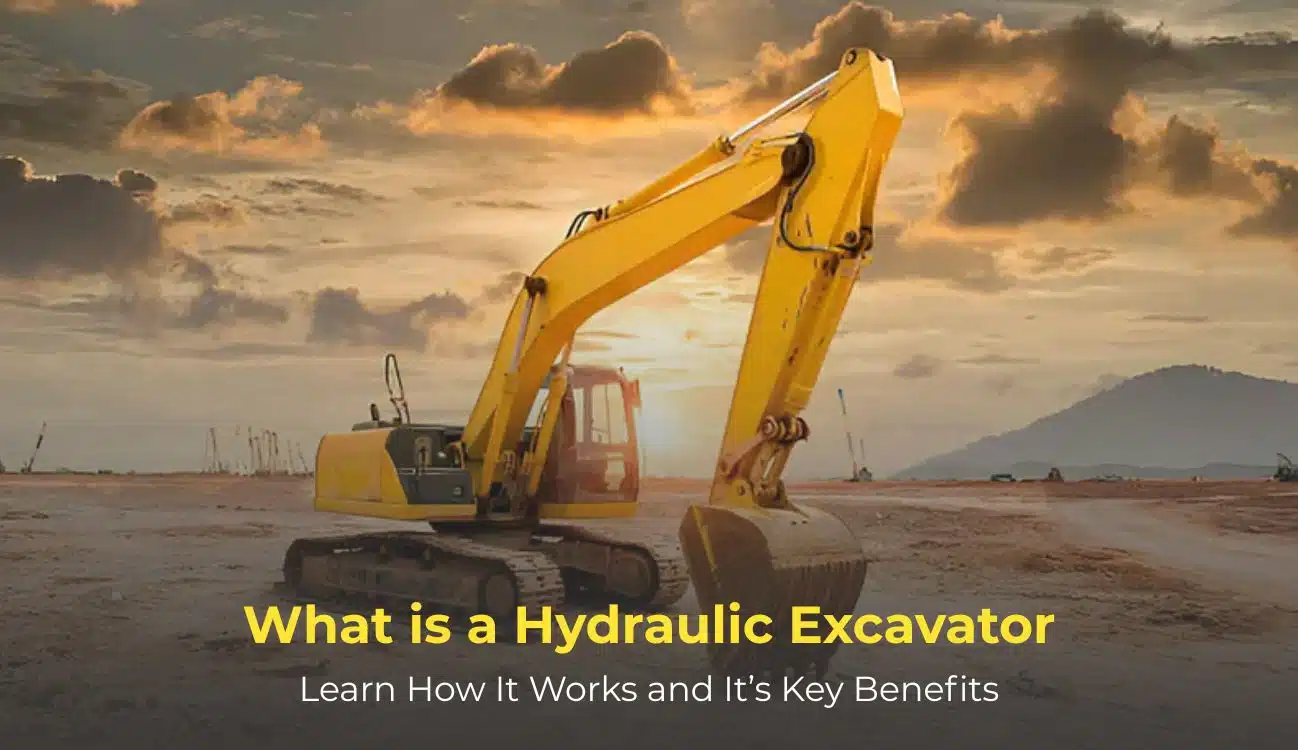
Hydraulic excavators are large and complex pieces of construction machinery used primarily to dig trenches, lift objects, and move a wide range of materials. Unlike other types of equipment that rely on mechanical forces to do their work, hydraulic excavators rely solely on hydraulic power. This enables hydraulic excavators to perform very heavy and difficult jobs while providing operators with precise control over the equipment.
Hydraulic excavators are often found on construction projects, in open-pit mines, along highways, and on-site at various types of infrastructure development projects. Contractors prefer hydraulic excavators because they provide a lot of power, are very accurate, and can be depended on to work reliably. Manual tools and other simpler types of machinery cannot perform many of the tasks that hydraulic excavators can perform.
Today, nearly all modern excavators operate using hydraulic system technology. Improvements in the overall performance of hydraulic systems have led to increased efficiency, improved safety, and decreased fuel use, making them an essential tool in virtually every major industry throughout the world.
Main Parts of a Hydraulic Excavator
The various key components of a hydraulic excavator work together to facilitate a smooth, controlled operation of the machine.
| Component | Function |
|---|---|
| Boom | Provides reach and supports the digging arm |
| Stick (Arm) | Extends the digging depth and the lifting range |
| Bucket | Scoops, digs, and lifts soil or debris |
| Hydraulic System | Converts engine power into movement |
| Operator Cab | Contains controls and provides safety to the operator |
| Wheels or Tracks | Allow for movement across different types of terrain |
How Does a Hydraulic Excavator Work?
Hydraulic excavators operate based on the use of hydraulic fluid to generate power. The hydraulic fluid is pressurized in a closed environment, which creates force on the arms, bucket, and boom of the machine.
Hydraulic systems are much smoother and more precise than mechanical systems; they allow the movement of large loads with less effort.
Basic Hydraulic Working Principle
Oil in a pressurized form is pumped by a pump through hoses to hydraulic cylinders. The pressure inside the cylinders creates force by moving pistons, which is used to create the movement to dig, lift, and swing.
Key Hydraulic Components
| Component | Role |
|---|---|
| Hydraulic Pump | To provide the movement of fluid throughout the entire hydraulic system. |
| Hydraulic Cylinders | To transform the pressure from fluid within the system into physical motion. |
| Hydraulic Fluid | To transfer energy from one point in the system to another. |
Step-by-Step Working Process
- Hydraulic fluid is pumped by an engine to a hydraulic pump
- The pump pushes hydraulic fluid into hydraulic cylinders.
- The pressure builds in cylinders; pistons cause the arm, boom, or bucket to move.
- Pistons make the arm, boom, or bucket move.
- The movement of the machine is controlled by the flow of hydraulic fluid through the controls.
- The hydraulic fluid is recycled back to the hydraulic tank.
This closed-loop system ensures efficiency and reuse of hydraulic fluid.
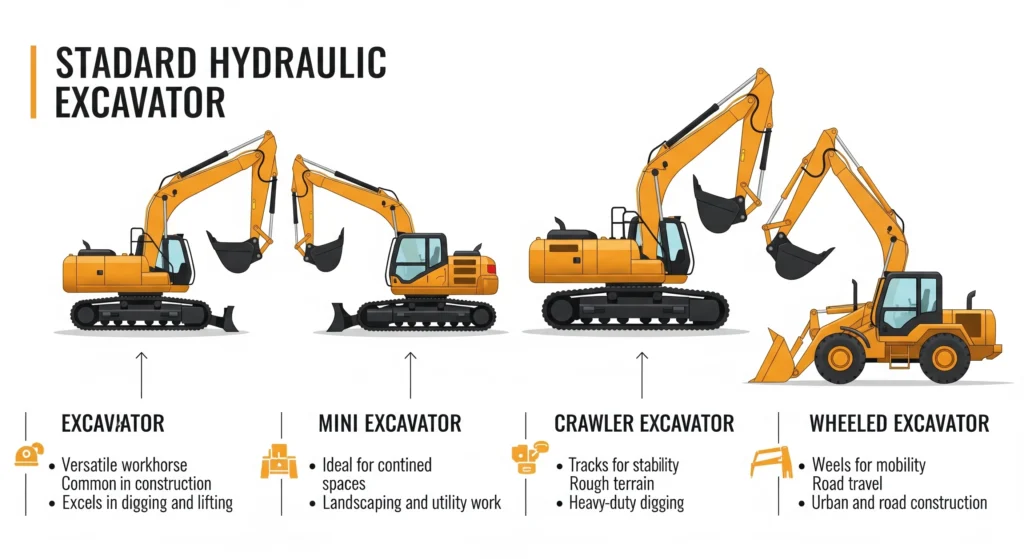
Types of Hydraulic Excavators
Excavators can be divided into different categories depending on their use in specific applications.
Standard Hydraulic Excavators
These types of excavators are generally used for general construction applications, whereby large construction operations are being performed and consist of lifting, digging, trenching, and material handling.
Mini Excavators
Mini excavators are best utilized in confined spaces for landscaping, smaller construction projects, and urban utility projects.
Crawler Excavators
Crawler excavators are powered by tracks, giving them a large amount of stability when operating on uneven surfaces. The most common uses for crawler excavators are mining, demolition, and quarrying.
Wheeled Excavators
Wheeled excavators have wheels instead of tracks, making it faster for them faster to transport to jobs on the road. For this reason, wheeled excavators are often used more for city-related construction and maintenance of roadways.
Long Reach Excavators
Long Reach Excavators have extended boom arms that are utilized for dredging, deep trenching, and riverbank work applications.
Main Advantages of Hydraulic Excavators
There are many benefits to operating hydraulic excavators.
Powerful Performance
The high pressure produced within the hydraulic system allows the operator to get the maximum amount of digging or lifting force possible out of the excavator.
Accuracy and Control
The precise movement control afforded to the operator allows improved quality of work and therefore less chance of making subsequent errors.
Versatility
It is possible to use multiple attachments, allowing one machine to perform a greater number of different functions.
Fuel Efficiency
With new designs and upgrades to previous models, the fuel usage of modern hydraulic excavators has decreased compared to older models, helping to save money on operating costs over time.
Improved Safety
A smooth and stable operating machine, along with the operator’s ability to have precise control over movements, improves the safety at the job site.
Durability and Long Life
Strong materials and improved hydraulic systems on hydraulic excavators typically contribute to greater than average life expectancy for the equipment.
Higher Productivity
Production cycles are faster, resulting in shorter project timelines and fewer hours without the excavator.
Environmental Benefits
New hydraulic excavators are producing fewer emissions as compared to older models and require less fuel to operate due to improved efficiencies.
Uses of Hydraulic Excavators
Hydraulic excavators are used in a variety of industries and applications:
Construction Industry
Hydraulic excavators are often used to dig foundations, trench excavations, and basements; they are useful for demolition and material removal.
Quarrying and Mining
Hydraulic excavators are used to remove overburden material and to recover various types of minerals and generally perform well in harsh environments.
Road and Highway Projects
Hydraulic excavators are used for grading, utility excavation, and clearing debris from work sites.
Landscaping
Hydraulic Excavators Are Used For Landscaping Surfaces And Preparing Areas For Future Use.
Agriculture
Hydraulic Excavators Are Used To Assist In Irrigation Activities And Prepare Ground For Agricultural Use.
Forestry
Hydraulic Excavators Are Used For Site Preparation, Clearing Land, And Preparing Soil For Planting.
Comparison: Excavator Types by Application
| Excavator Type | Best Used For |
|---|---|
| Standard | Construction and infrastructure |
| Mini | Urban and residential sites |
| Crawler | Mining and demolition |
| Wheeled | Road and city projects |
| Long Reach | Dredging and deep excavation |
Excavator size classes, weight and price in India
A hydraulic excavator is bought by size class, and the class decides both the work it suits and what it costs. The bands below are drawn from the 294 excavators listed on Desi Machines, grouped by the same classes the catalogue uses.
| Class | Operating weight | Engine power | Indicative price (Aug 2026) | Models listed |
|---|---|---|---|---|
| Mini | 0–6 t | 13–49 HP | ₹20–36 lakh | 49 |
| Small | 6–15 t | 47–108 HP | ₹28–54 lakh | 46 |
| Medium | 15–25 t | 114–197 HP | ₹50–94 lakh | 77 |
| Large | 25–50 t | 170–416 HP | ₹62 lakh–2.6 crore | 46 |
| Extra-large | Above 50 t | 320–4,000 HP | ₹1.25–5 crore | 50 |
| Long reach | 22–55 t | 139–403 HP | ₹65–84 lakh | 12 |
Prices are indicative ranges across the models in each class that carry a published price, not a quote for any one machine, and the extra-large band rests on the few models in that class that are publicly priced. The 15–25 t medium class is the volume segment on Indian infrastructure work, which is why most model line-ups are deepest there.
What a hydraulic excavator costs to own
A 15–25 tonne machine — the class most Indian contractors buy — sits at roughly ₹50–94 lakh on our catalogue, against ₹20–36 lakh for a mini and ₹62 lakh and upward once you pass 25 tonnes. The hydraulics that make the machine capable are also what decide its running cost: pump and cylinder condition, oil and filter discipline, and the quality of the hoses do more for lifetime cost than headline horsepower. Before buying, weigh the class against the work in choosing the right excavator, and if the machine is going on finance, size the instalment against billable hours using our construction equipment finance pages. Owners keeping an older machine in service will find the common failure points in hydraulic excavator issues and fixes.
What makes a hydraulic excavator worth owning
Today’s construction industry relies heavily on hydraulic excavators, as they provide strength, precision, and versatility in a single piece of heavy construction equipment. The hydraulic system allows for controlled movements and efficient operation.
As hydraulic technology continues to improve, hydraulic excavators will continue to be fuel-efficient and safe for contractors and operators alike. All of these advancements provide long-term value to contractors and operators. Regardless of whether they are working in construction, mining, or infrastructure development, hydraulic excavators are a vital asset.
Compare Excavator Prices & Models →
See current prices, specs and EMI for 100+ excavators from Tata Hitachi, JCB, SANY, Komatsu, CAT and more — with a free quote from your nearest dealer.
Specifications, component life and running costs vary by make, model and duty cycle. Confirm exact specifications, service intervals and current pricing with the manufacturer or an authorised dealer.