Excavator
294 models
 Backhoe Loader
51 models
 Crane
68 models
 Concrete Mixer
79 models
 Wheel Loader
54 models
 Compactor / Roller
45 models
 Motor Grader
42 models
 Dozer
41 models
 Concrete Pump
66 models
 Skid Steer Loader
11 models
 Telehandler
13 models


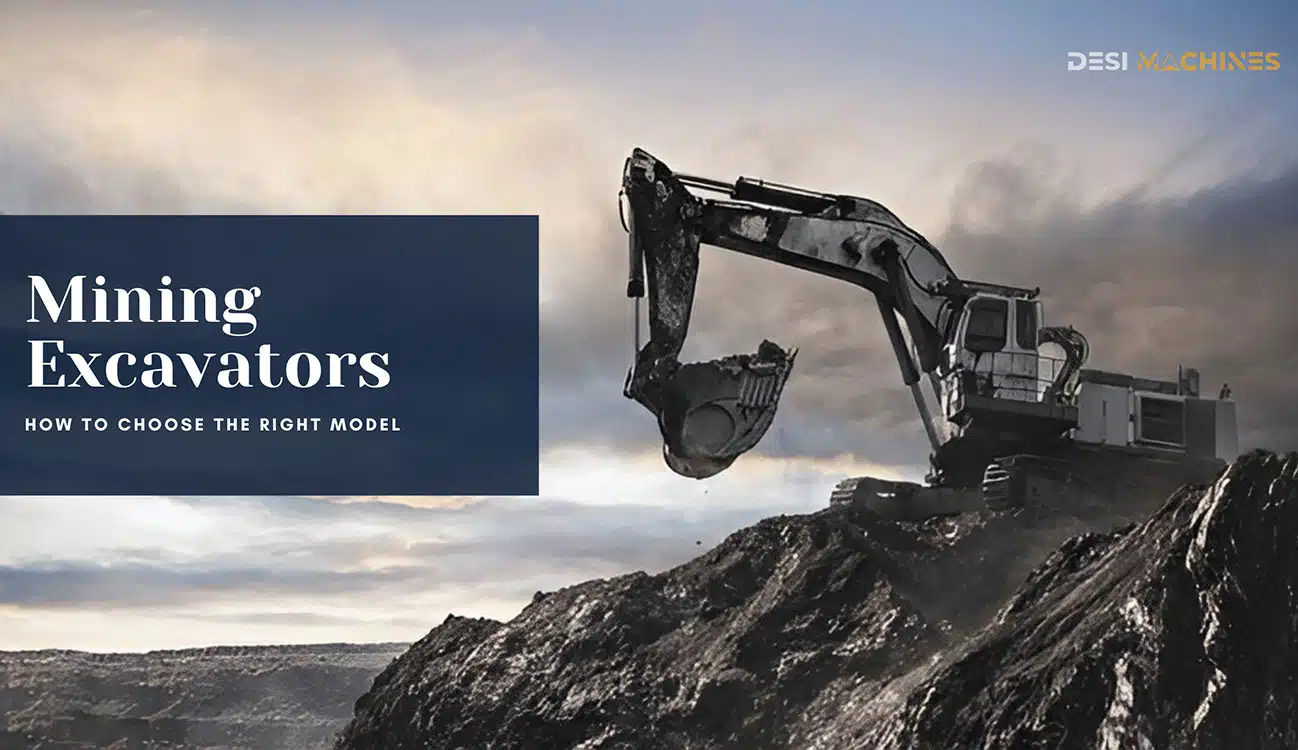
Choose mining excavators by the truck you have to load and the bench you have to dig, not by horsepower. A 20–30 t machine suits contract mining and overburden on small benches; 35–50 t is the volume workhorse matched to 25–35 t tippers; above 70 t you are into dedicated open-pit loading. Then check bucket capacity against material density, undercarriage rating for the terrain, and — the one most buyers underweight — how far away the nearest service centre and parts depot actually are.
The mining industry has been evolving since its inception. In the mining world, efficiency and productivity are the keys to success. With the advent of advanced technology, the mining industry has seen substantial growth in recent times. However, with the availability of so much equipment and different types of excavators offering almost similar functions, identifying the correct model of equipment for the project is very necessary; otherwise, the mining activity will not reach its maximum potential.
Choosing the right model for the right tasks is necessary to get optimal performance and results. Mining excavators are large machinery used for large-scale excavation, material handling, and digging. These excavators are equipped with advanced technology, which allows them to work in the harshest conditions. The excavator you choose must align with the scope of the work and match your site requirements to get the best performance and uptime and reduce downtime or maintenance. This is the reason why proper identification of excavators is necessary on heavy-duty work.
What Are Mining Excavators?
Mining excavators are heavy machines that are used in mines to do heavy-duty work and can withstand the rigorous conditions of mining. These mining excavators are larger and equipped with reinforced frames, heavy-duty hydraulics, and robust buckets that are used to move large quantities of materials quickly and efficiently and can also withstand the strain of continuous heavy-duty excavation work with extended operating hours. Mining excavators are designed for durability and power, as they have to work in open-pit mines or quarries. They do deep and extensive mining tasks as they are equipped with an advanced hydraulic system, which is used for heavy lifting and digging activities where precision, power, and durability are important.
Key Factors to Consider When Choosing a Mining Excavator
Load Capacity & Bucket Size
The load capacity of a mining excavator is a crucial specification to focus on when choosing a mining excavator. The load capacity determines efficiency and productivity. Mining involves lifting heavy materials and moving them from one place to another. The more the load capacity, the more weight the excavator can lift (compare bucket and tonnage classes across the large excavator range), which is very much essential in large-scale mining operations. The bucket size also acts as the determining factor, as it impacts material handling and loading time.
Operating Weight and Power
Operating weight is the first number to check when you shortlist mining excavators. These types of excavators are generally heavier and larger than standard models. The weight provides stability, but the surface needs to be looked at to support the machine at mining sites. The engine power influences the performance of the excavator. These machines are equipped with high horsepower to cater to the needs of heavy-duty mining tasks.
Durability & Construction Quality
As we know, these mining excavators are built for heavy-duty work, so the machine should be well-built to withstand the harsh conditions and wear and tear at construction sites. Regular maintenance and proper servicing are very important to ensure the durability of the excavator. Timely replacement and repair of faulty parts can increase the longevity of the machine.
Hydraulic System and Attachments
The hydraulic system is the powerhouse of the excavator. With the help of the hydraulic system, the excavator performs its major functions like digging and lifting. Nowadays modern hydraulic systems are equipped with technological advancements that increase efficiency and productivity. It also enables the excavator to carry a heavy load and operate the excavator in rough and challenging terrain. Excavators come with attachments like rock breakers, grapples, buckets, and drilling tools, which are required for different mining activities. So proper selection of attachments according to the requirement is also necessary when choosing the best model for heavy-duty needs.
How to Evaluate the Best Excavator Model for Your Mining Needs
- Analyze Project Requirements: The mining operation and the scope of work should be well analyzed before selecting mining excavators. Not all mining excavators are suitable for all mining operations. For example, large machines are suitable for larger operations, while small operations may require small and mid-size excavators.
- Understand Site Conditions: Analyzing the job site is crucial because of the material type (i.e., rock or soil), terrain surface (i.e., hard or soft), and the scale of operations. Weather analysis is also crucial, i.e., which weather will suit which machines.
- Cost vs. Performance: It is important to oversee the operating cost of the excavator If the machine is high-performing, then it will incur high operating costs and vice versa. Analyzing the requirements according to the scope and scale of work is vital.
- Manufacturer Reputation & Support: The manufacturer from whom the excavator is acquired should be reputable and have a good customer support system. These machines go through heavy wear and tear, so the availability of service centers and spare parts is an important aspect.
Mining excavator models in India by weight class, with prices
Mining excavators sold in India fall into a few working classes, and the class follows the job: 20–25 tonne heavy-duty machines for contract mining and small benches, 35–50 tonne quarry machines as the volume workhorses, and 50–100 tonne machines that shade into dedicated open-pit loading above about 70 tonnes. The table lists heavy-duty, quarry and mining models from each class that carry a listed price, with weights and bucket sizes from the makers’ specification sheets.
| Class | Model | Operating weight | Bucket | Indicative price (Oct 2026) |
|---|---|---|---|---|
| 20–25 t | SANY SY220C-9HD | 21,900 kg | 1.2 m³ | ₹52–66 lakh |
| 20–25 t | Kobelco SK220XDLC | 22,200 kg | 0.8–0.93 m³ | ₹61–75 lakh |
| 20–25 t | Tata Hitachi Zaxis 220LC Ultra | 21,300–21,700 kg | 0.90–1.22 m³ | ₹65–73 lakh |
| 35–40 t | Tata Hitachi Zaxis 370LCH Ultra | 35,700 kg | 1.3–2.5 m³ | ₹1.1–1.3 crore |
| 35–40 t | SANY SY380C-10HD | 36,000 kg | 1.4–3.5 m³ | ₹1.15–1.35 crore |
| 35–40 t | JCB 385LC Quarry Master | 37,733 kg | 1.4–1.6 m³ | ₹1.15–1.35 crore |
| 45–50 t | Volvo EC480D | 47,300–53,100 kg | 1.77–3.8 m³ | ₹1.7–2.3 crore |
| 45–50 t | Tata Hitachi Zaxis 490H Ultra | 47,400 kg | 1.9–3.1 m³ | ₹1.7–2.0 crore |
| 45–50 t | SANY SY500C-10HD | 49,500 kg | 3.1 m³ | ₹1.3–1.5 crore |
| 50–100 t | SANY SY580C-10HD | 52,000 kg | 2.5–3.5 m³ | ₹1.4–1.7 crore |
| 50–100 t | LiuGong 965E HD | 62,600 kg | 4.1 m³ | ₹1.15–1.35 crore |
| 50–100 t | Volvo EC750D | 72,700–74,700 kg | 3.3–5.16 m³ | ₹3.3–4.0 crore |
| 50–100 t | LiuGong 975E HD | 75,000 kg | 5.6 m³ | ₹1.3–1.55 crore |
| 50–100 t | Kobelco SK850LC | 78,200–80,500 kg | 2.8–5.4 m³ | ₹3.6–4.2 crore |
| 50–100 t | Volvo EC950E | 89,960–91,840 kg | 3.9–6 m³ | ₹4.25–5.0 crore |
Prices are indicative ranges as of October 2026, ex-showroom, before GST, finance and transport. Variant, bucket and dealer offer move the final figure.
Two things in that table surprise most buyers. Price does not follow tonnage: the 75-tonne LiuGong 975E HD lists at well under half the price of the 72.7-tonne Volvo EC750D, and the 52-tonne SANY SY580C-10HD costs more than the 62.6-tonne LiuGong 965E HD. Brand, build standard and the service network behind the machine move the number as much as size does. And the price list stops at about 90 tonnes. Of the 51 machines in the mining excavator listings, from the 51.3-tonne Komatsu PC500LC-10R to the 825-tonne Tata Hitachi EX 8000-6, 44 are quoted on request, and no machine heavier than the Volvo EC950E carries a listed price.
For a first purchase, a contractor moving from construction into contract mining usually starts in the 20–25 tonne heavy-duty or 35–40 tonne quarry class rather than with a dedicated mining machine. The operators, parts and service network are the ones the construction trade already uses. Step up a class when the tippers you load outgrow the bucket, not before. How mine owners and contractors split these machines across a fleet is set out in how construction and mining fleets are organised, and the rest of the machines a mine runs beside the excavator are under mining applications.
Which mining excavator fits your tonnage and budget?
Once the shortlist is down to two or three machines, the deciding number is usually monthly outflow rather than sticker price. Run the tonnage you actually need through an equipment finance EMI estimate before you commit.
So, we learned that while choosing the best model for heavy-duty mining activities, we need to consider factors like durability, load capacity, hydraulic power, and overall performance of mining excavators. It is also important to consider the site conditions, the weather conditions, the reputable manufacturer, etc. Combining all the factors and conditions, we need to decide which model will suit the specific job.
Specifications and dealer offers change between model years — confirm the current spec, warranty and service terms with the dealer or the OEM before you commit.