Key Facts:
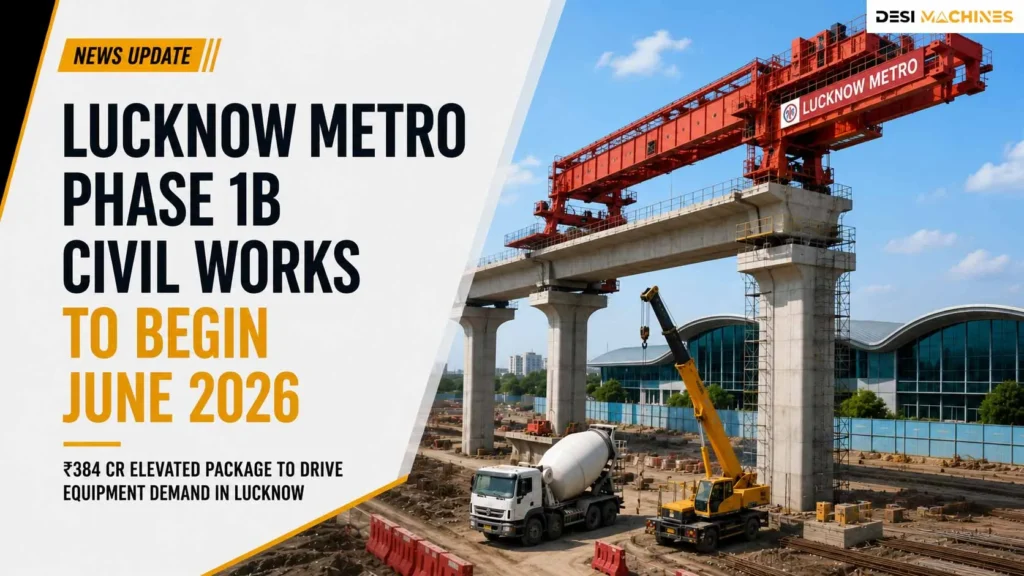
- Ranjit Buildcon is the lowest bidder (L1) at Rs 383.98 crore for the elevated civil package of Lucknow Metro Phase 1B; PNC Infratech bid Rs 442.5 crore (UPMRC tender floated January 2026).
- Scope: about 4.6 km of elevated viaduct, a 740-meter depot connection ramp, and five elevated stations—Thakurganj, Balaganj, Sarfarajganj, Musabagh, and Vasantkunj.
- Phase 1B is the 11.16 km Charbagh–Vasant Kunj East-West corridor (about 4.29 km elevated, 6.88 km underground, 12 stations); cabinet-approved at Rs 5,801 crore.
- Major construction is expected to commence in June 2026; stated contract duration is 2,738 days.
What happened
The Uttar Pradesh Metro Rail Corporation (UPMRC) named Ranjit Buildcon Limited as the L1 (lowest) bidder for the elevated viaduct package of Lucknow Metro’s Phase 1B East-West corridor, per Metro Rail Today (28 May 2026). The Rs 383.98 crore package covers the design and build of roughly 4.6 km of viaduct, a 740-meter ramp to the depot, and five elevated stations, along with station buildings, pre-engineered structures, water, drainage, firefighting, and E&M works. PNC Infratech bid Rs 442.5 crore; LCC Projects was rejected at the technical stage. A formal Letter of acceptance normally follows L1 selection. Groundwork is expected to begin in June 2026.
What does Phase 1B mean for equipment demand?
Metro viaducts are equipment-intensive, and the elevated stretch is where machine demand lands first. Around Lucknow, expect early pull for piling and foundation rigs, crawler and tower cranes, concrete batching plants, transit mixers and boom pumps, and—for segmental spans—launching girders and precast casting-yard gear. Five elevated stations add structural-steel handling, PEB erection, and finishing equipment. The roughly 6.88 km underground stretch will be tendered separately and bring tunnelling and muck-handling needs later, because the elevated package moves first, above-ground machines get deployed sooner.
A single Rs 383.98 crore civil package rarely justifies buying a full new fleet outright. Contractors typically run owned core machines alongside rentals to manage a multi-year build, so this favors rental yards and used-equipment supply around Lucknow over the next two to three active-construction years and supports financing demand for cranes and concrete equipment.
DesiMachines view:
A confirmed Phase 1B start could tighten local availability of cranes and concrete plants and firm up rental rates through 2026–27, though the effect is likely to be gradual and concentrated near the corridor rather than statewide. Remember this is an L1 selection, not yet a signed contract—demand timing hinges on the Letter of Acceptance and financial close.
What should buyers watch?
- The Letter of Acceptance and appointed date—these, not the L1 notice, trigger real machine mobilization.
- Whether the viaduct uses precast-segmental or cast-in-situ spans: precast tilts demand toward launching girders and casting-yard cranes.
- Timing of the separate underground packages, which determines tunneling and allied equipment demand.
Machines, tenders and news for this industry: Railway and Metro

 Excavator
294 models
Excavator
294 models  Backhoe Loader
51 models
Backhoe Loader
51 models  Crane
68 models
Crane
68 models  Concrete Mixer
79 models
Concrete Mixer
79 models  Wheel Loader
54 models
Wheel Loader
54 models  Compactor / Roller
45 models
Compactor / Roller
45 models  Motor Grader
42 models
Motor Grader
42 models  Dozer
41 models
Dozer
41 models  Concrete Pump
66 models
Concrete Pump
66 models  Skid Steer Loader
11 models
Skid Steer Loader
11 models  Telehandler
13 models
Telehandler
13 models