
 Excavator
294 models
Excavator
294 models  Backhoe Loader
51 models
Backhoe Loader
51 models  Crane
68 models
Crane
68 models  Concrete Mixer
79 models
Concrete Mixer
79 models  Wheel Loader
54 models
Wheel Loader
54 models  Compactor / Roller
45 models
Compactor / Roller
45 models  Motor Grader
42 models
Motor Grader
42 models  Dozer
41 models
Dozer
41 models  Concrete Pump
66 models
Concrete Pump
66 models  Skid Steer Loader
11 models
Skid Steer Loader
11 models  Telehandler
13 models
Telehandler
13 models 


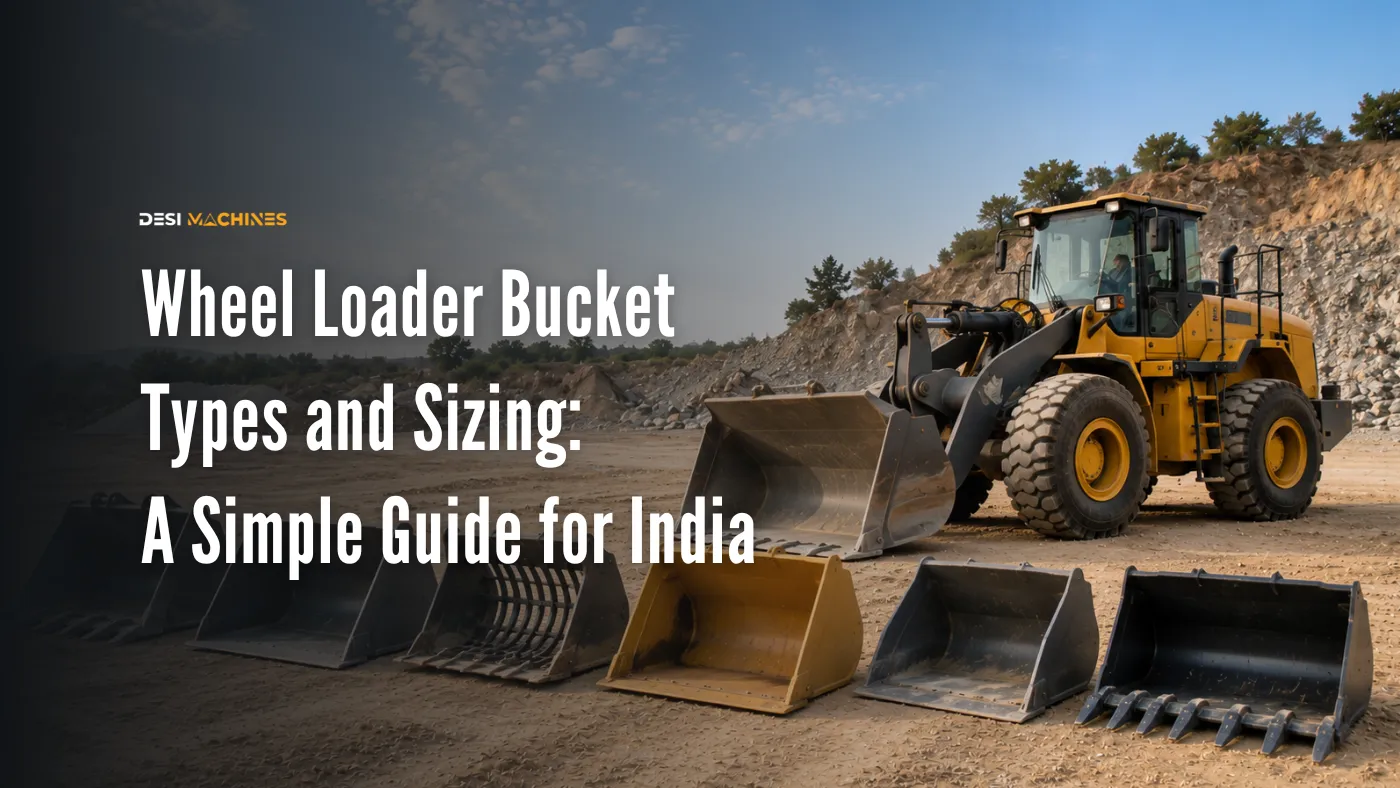
A wheel loader bucket is the wide scoop bolted to the front arms of the machine, and it is the part that decides how much material the loader picks up and how well it does it. The machine may be the same, but put the wrong bucket on it and you will either move less material than you paid for, or overload the loader and wear it out early.
Buckets are not all the same. They come in different shapes for different materials, and in different sizes for different machines. A bucket built for loose sand is the wrong tool for blasted rock, and a bucket sized for a big loader will overload a small one.
This guide explains the main bucket types in plain terms, how bucket size is measured, how to match the bucket to your material, and how to pick the right one so your wheel loader works at its best.
What are the different types of wheel loader buckets?
There are a handful of main wheel loader bucket types, and each is shaped for a particular kind of material. Knowing which is which saves you from buying the wrong one.
| Bucket type | Best for | What makes it different |
|---|---|---|
| General purpose (GP) | Sand, gravel, loose soil, mixed loose material | The all-rounder that comes with most machines |
| Rock bucket | Blasted rock, quarry stone, hard aggregate | Reinforced, thicker steel, spade-shaped edge with bolt-on teeth |
| Light-material (high-capacity) | Coal, mulch, grain, snow, low-density material | Much bigger volume because the load is light |
| High-tip (high-dump) | Loading tall trucks, hoppers and high-sided trailers | Extra reach and height at the point of dumping |
| Side-dump | Tunnels, narrow lanes, tight loading bays | Dumps to the side, so the loader need not turn around |
| Multi-purpose (4-in-1) | Loading, dozing, grabbing and levelling with one tool | A clamshell that opens; more common on smaller loaders |
Most buyers only ever need two: a general-purpose bucket for everyday loose material, and, if they work in a quarry or on rock, a rock bucket. The rest are for special jobs.
What is the most common wheel loader bucket?
The general-purpose (GP) bucket is the most common, and it is the one your machine most likely comes with. It is built for the everyday work most loaders do: scooping sand, gravel, murram, loose soil and mixed site material, and loading it into a tipper or trolley.
A GP bucket has a straight or slightly curved cutting edge and a shape that fills easily and empties cleanly. For most contractors doing general site work, road material, sand and aggregate, this one bucket does everything. You only step away from it when the material gets harder (rock) or much lighter and bulkier (coal, grain, mulch).
If you are still learning how the arms and bucket are actually powered, the wheel loader working guide explains the hydraulics behind the scoop and tip.
What size wheel loader bucket do I need?
Match the bucket size to your machine first, and to your material second. Bucket size is measured in cubic metres (m³) of volume, and every loader has a size range its arms and engine are built for. Fit a bucket that is too big and the machine will not lift a full load, will tip forward when it does, and will strain its hydraulics trying.
These are typical bucket ranges by loader class, to help you shortlist. They are general ranges, not the spec of any one model, so always confirm the exact bucket size the manufacturer approves for the machine you are buying.
The bucket you fit also changes the machine’s loading geometry, because both dump height and reach are measured to the bucket edge; the published figures class by class are in the guide to wheel loader dump height and reach.
| Loader class | Typical bucket capacity | Typical work |
|---|---|---|
| Compact / small | about 0.8 to 1.5 m³ | Farms, small sites, tight yards, block plants |
| Mid-size | about 2.0 to 3.5 m³ | General construction, road work, aggregate loading |
| Large | about 4 to 6 m³ | Quarries, big batching plants, bulk stockpiles |
| Mining | 7 m³ and above | Mines and large quarries loading dumpers |
On the Indian market you can see this range across real machines. A compact loader like the ACE ALN 100 suits farm and small-site work, mid-size machines like the L&T 9020 and Hyundai HL630I-V handle general construction and aggregate, and the big mining loaders run the largest buckets of all. The size classes themselves are explained in the wheel loader size class guide.
Struck vs heaped capacity: how is bucket size measured?
Bucket size is quoted two ways, and the difference matters when you compare machines. Struck capacity is the volume the bucket holds when the material is level with the top edges, as if scraped flat. Heaped capacity is the volume when the material is piled up above the edges at its natural angle, which is how the bucket actually carries most loose material.
Heaped capacity is always the bigger number, so that is the one sellers put in the brochure. When you compare two machines, make sure you are reading the same figure for both, heaped against heaped, or you are not comparing fairly.
The standard heaped figure assumes a natural pile at a fixed slope (measured to a set rule so every manufacturer quotes it the same way). It is a fair comparison number, but the real load you carry still depends on the material and how well the bucket fills, which is the next thing to understand.
How do you match a bucket to the material?
Match the bucket to the material by its weight, not just its volume. Two things decide the right bucket: how heavy the material is (its density), and how easily it fills the bucket (the fill factor).
Density. A cubic metre of blasted rock weighs far more than a cubic metre of coal or mulch. That is why light materials use a big bucket and heavy materials use a smaller one. If you scoop a full bucket of wet rock with a bucket sized for sand, you overload the machine, it tips forward, and the hydraulics and tyres wear out early. Sizing by weight keeps the loader inside its safe lifting limit.
Fill factor. This is how full the bucket really gets in one pass. Loose dry sand fills a bucket almost completely. Sticky clay or chunky blasted rock leaves gaps and fills less. A good operator and the right bucket shape get more into every scoop, which means fewer passes and less fuel per truck loaded.
The honest way to think about it: pick the bucket that lets the machine carry a full, safe load of your material in one clean pass. Too big and you overload; too small and you waste cycles. Overloading shows up in the tyres first, which is why wheel loader tyre sizes and types is worth reading alongside this.
Can you change the bucket on a wheel loader?
Yes. Most wheel loaders use a quick-coupler at the front that lets you swap the bucket, or fit forks and other tools, without heavy spanner work. The coupler locks the bucket onto the arms with two pins, and on many machines the operator can release and pick up a tool from the seat.
This means one loader can carry a GP bucket for general work, a rock bucket when it goes to the quarry, and pallet forks when it needs to lift bagged cement or bundles. The idea is the same as on a skid steer, where swapping the tool is the whole point; you can see how that works on a smaller machine in the how a skid steer loader works guide.
Two cautions. The coupler and the bucket mounting must match the machine, so buy a bucket approved for your loader. And a bucket is priced separately from the machine and is usually quoted on request, based on the type and size you need, so ask the dealer for the figure before you plan the job.
Which wheel loader bucket is right for you?
For most contractors the answer is simple: a general-purpose bucket, sized to your machine, covers the great majority of work. Add a rock bucket only if you regularly load blasted stone, and a light-material bucket only if you handle coal, grain or mulch in volume.
Get the size right first, because that protects the machine. A bucket too large for the loader is the single most common mistake, and it costs you in tipping risk, hydraulic strain and early tyre wear. When in doubt, take the manufacturer’s approved bucket size for your model and material, not the biggest one that will physically bolt on.
From there, choose the machine and bucket together. The complete wheel loader guide walks through types, brands and buying, and the wider complete guide to loaders shows where the wheel loader sits against backhoes, skid steers and telehandlers. If you are financing the machine, understanding your equipment finance options early makes the buying decision easier.
The bucket is not the only tool the machine takes. Forks, grapples, blades and sweepers all mount on the same arms, and our guide to wheel loader attachments covers what fits, how couplers work and why the safe load changes with the tool.
Choosing your loader and bucket? Browse wheel loader models, prices and specifications in India and get the best current offer near you.
Bucket size decides how many passes each tipper takes, which is where it turns into a day’s output: see wheel loader productivity and truck matching.
Prices, specifications and features are indicative, vary by variant, location and date, and should always be confirmed with the official OEM or authorised dealer before any purchase decision. DesiMachines is not liable for decisions taken on the basis of information that may have changed after publication. Price figures are taken from our listings at the time of writing.
Machines, tenders and news for this industry: Steel, Cement and Process Plants · Ports and Dredging
