
 Excavator
294 models
Excavator
294 models  Backhoe Loader
51 models
Backhoe Loader
51 models  Crane
68 models
Crane
68 models  Concrete Mixer
79 models
Concrete Mixer
79 models  Wheel Loader
54 models
Wheel Loader
54 models  Compactor / Roller
45 models
Compactor / Roller
45 models  Motor Grader
42 models
Motor Grader
42 models  Concrete Pump
66 models
Concrete Pump
66 models  Skid Steer Loader
11 models
Skid Steer Loader
11 models  Telehandler
13 models
Telehandler
13 models  Dozer
Dozer 


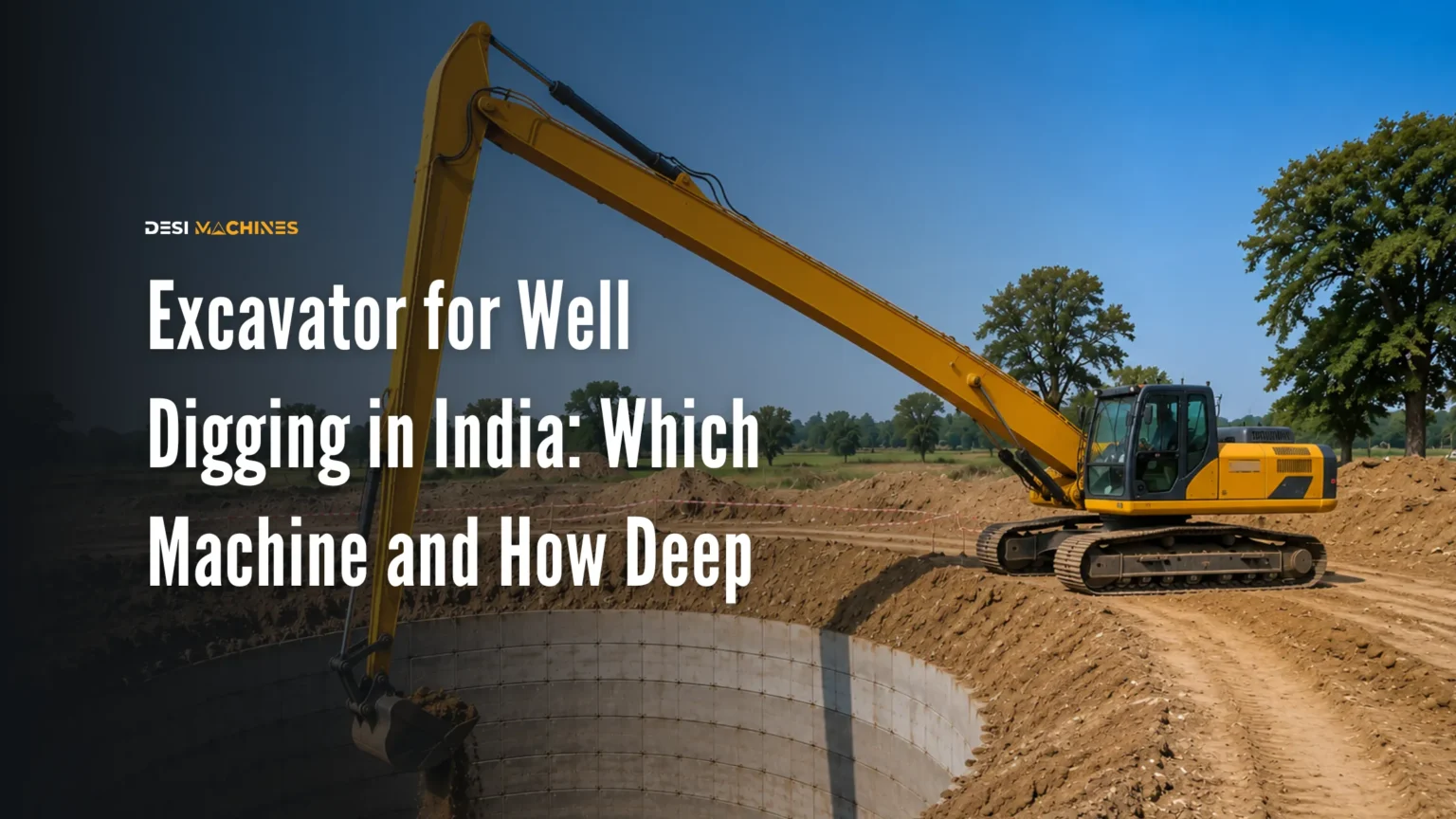
An excavator for well digging is a tracked hydraulic excavator used to dig an open well — the wide, round, walk-down well that most of rural India calls a kuan — along with the farm ponds and recharge pits built the same way. It is the machine that has replaced hand digging for this work, because it moves in a day what a labour gang moves in a fortnight.
One thing to be clear about first: an excavator cannot make a borewell. A borewell is a narrow hole drilled by a rotary rig, usually 100 to 150 mm across and often 60 metres or deeper. An open well is dug, is several metres wide, and rarely goes past 15 metres. Different hole, different machine, and no excavator of any size drills a borewell.
This guide covers which machine suits which job, how deep a machine actually reaches in one pass, how the deeper part of a well gets dug, what hiring one costs, and where the ground stops being safe.
What is the difference between an open well and a borewell?
An open well is a wide pit dug down to the water table and lined with stone, brick or concrete rings. It is typically 2 to 5 metres across and 6 to 15 metres deep. It stores water as well as collecting it, so it keeps giving through a dry spell even when the inflow is slow. It can be dug by machine.
A borewell is a narrow shaft drilled by a rig, cased with a pipe, and pumped by a submersible. It reaches far deeper aquifers than any dug well, but it stores nothing — when the aquifer drops, the borewell dries the same week.
The confusion matters because a lot of people search for a “well digging machine” when what they need is a drilling rig, and a lot of others hire a rig when a dug well would have served their field better. If your water is shallow and your need is storage, an open well is the right structure, and an excavator is the right machine to make it.
How deep can an excavator dig in one pass?
Less than most people expect. A standard machine digs to roughly its published maximum digging depth, measured from where the machine is standing, and that figure is smaller than the machine looks. Across the excavators listed for the Indian market, the middle of each class sits at about 3.0 metres (3,000 mm) for a mini machine under 7 tonne, 5.1 metres at 7 to 15 tonne, and 6.2 metres for the common 15 to 25 tonne class. Even a 25 to 40 tonne machine only reaches about 6.9 metres.
So a single 20 tonne machine standing at ground level reaches around 6 metres. That is enough for a shallow well, a recharge pit or a farm pond, and not enough for a 12 metre kuan. Depths for every size class are set out in the excavator digging depth by size guide, and the class bands themselves in excavator size classes.
The exception is a long-reach machine, an excavator fitted with a longer boom and arm. The JCB NXT 245HD LR digs to 12,040 mm (12.0 m) against about 6.2 m for a standard machine of similar weight. It carries a much smaller bucket in exchange, so it is slower per pass, but it reaches the bottom of a deep well from the bank without any staging at all.
How do you dig deeper than the machine can reach?
You dig in steps, and this is how nearly every deep open well is actually made. The method is called benching, and it works like a staircase.
The machine digs the first six metres from ground level and opens the pit wider than the finished well needs to be. A ramp is cut down one side. The machine then drives down onto the floor it has just made and digs the next stage from there, throwing the spoil up onto the bench above, where a second machine or a tractor-trolley carries it away. Repeat, and a 12 metre well is two passes; 15 to 18 metres is three.
Three things decide whether benching is sensible on your site. There must be room for the ramp, which means the excavation is much wider at the top than the well itself. The soil must hold a slope without sliding, which sandy and loose soils will not do below a few metres. And the machine has to be able to get back out, which sounds obvious until water comes in faster than expected and the ramp turns to slurry.
Where any of those fail, the deeper section is finished by hand or by a specialist well-digging crew working inside rings, and the machine’s job ends at the depth it can safely reach. An honest contractor tells you that at the quotation stage.
Can a JCB dig a well?
Yes, for shallow work, and it is what most villages actually use. A backhoe loader — the machine everyone calls a JCB, whatever the make — is cheaper to hire, drives itself to site on its own wheels, and needs no trailer. For a recharge pit, a small farm pond, or the top stage of a well, it is often the sensible choice.
The limit is depth. Across the backhoe loaders listed for India, maximum digging depth runs from about 3,020 mm to 5,360 mm, with the middle of the range at 4,700 mm. The deepest is the JCB 4DX at 5,360 mm (5.4 m); the widely used JCB 3DX Super reaches 5,050 mm (5.1 m).
A backhoe also digs a narrower hole and swings through a smaller arc, so opening out a 4 metre wide well takes it noticeably longer than an excavator of similar power. Use it where the well is shallow or the site is tight, and step up to a tracked machine when the pit is wide or the ground is hard. Compare live backhoe loader models if the machine will do other work on the farm as well.
Which machine suits which job?
Match the machine to the hole, not to what the contractor happens to own. The table below uses the published digging depths of the machines currently listed.
| Job | Machine to use | Reach in one pass | Why |
|---|---|---|---|
| Recharge pit, soak pit | Mini excavator (under 7 t) or backhoe loader | About 3.0–4.7 m | Small hole, tight access, lowest hire rate |
| Farm pond | 15–25 t excavator | About 6.2 m | Wide and shallow; bucket size decides the day’s output |
| Shallow open well (to 5 m) | Backhoe loader | Up to 5.4 m | Drives itself to site, no trailer cost |
| Open well, 6–12 m | 15–25 t excavator, benched in stages | About 6.2 m per stage | Needs room for a ramp and soil that holds a slope |
| Open well, 12 m plus, no room to bench | Long-reach excavator | Up to 12.0 m | Reaches from the bank; smaller bucket, slower going |
| Borewell of any depth | Not an excavator — a drilling rig | — | A drilled hole, not a dug one |
Browse the full range of excavators or the mini excavator range to see what is available in each class.
To see which machine fits your hole, try the machine finder: choose trench or foundation digging, set the depth, and it shortlists models.
What does it cost to hire a machine for well digging?
Almost nobody buys a machine to dig one well, so the real question is the hire rate. Indicative wet-hire rates, with operator, as of July 2026: a mini excavator of 2 to 3 tonne runs about ₹500–900 an hour, a 20 tonne excavator about ₹1,400–2,200 an hour, and a 30 tonne-plus machine about ₹2,200–3,500 an hour. A backhoe loader hires at roughly ₹550–900 an hour on dry hire. Fuller figures and the terms behind them are in the equipment rental rate card.
Four things move the final bill more than the hourly rate does:
- Getting the machine there. A tracked excavator travels on a trailer and that is charged both ways. On a single small job the transport can cost more than the digging, which is exactly why a wheeled backhoe often wins on a village site.
- Rock. Soft soil digs fast. Weathered rock slows everything, and hard rock stops a bucket altogether and needs a breaker attachment or blasting, at a different rate.
- Where the spoil goes. Digging is half the job; carting the earth away is the other half. If it can be spread on your own field, you save the trolley trips.
- Water. Once you are below the water table, work slows and a dewatering pump is added to the bill.
Take the quote per day or per job rather than per foot, and agree in writing what happens if rock appears. Hire terms, deposits and what dry hire excludes are covered in the excavator rental guide.
Ground, water and safety
An open excavation is the most dangerous thing on a small site, and it kills people every year in India. The danger is not the depth; it is the wall. A cubic metre of wet soil weighs well over a tonne, and a wall that has stood all morning can come down without warning when the sun dries the top or a machine tracks too near the edge.
Four rules cover most of it. Keep the machine and the spoil heap back from the edge, at least as far back as the pit is deep. Never let a person work at the bottom of an unsupported pit deeper than about 1.5 metres without shoring or sloped sides. Slope the walls back in loose or sandy soil instead of cutting them vertical. And stop when water starts flowing in faster than a pump can clear it, because saturated soil has almost no strength left.
Also check what the law says before you start. Groundwater extraction is regulated, and several states require permission for a new well or a borewell, particularly in notified over-exploited blocks. That is a question for your local groundwater or panchayat office, and it is far cheaper to ask before digging than after.
Getting more out of the machine you hire
A few practical things make the day go further. Use the right bucket: a wide, toothless mud bucket moves soft soil and slurry much faster than a narrow digging bucket, and the options are set out in the excavator bucket types guide. Plan the spoil before the first cut, because moving the same earth twice is the most common waste on these jobs. And start early, since a machine on hourly hire idles while you decide things.
If the machine is your own rather than hired, wet digging is hard on it. Silt packs into the tracks and rollers and grinds them out, so wash the undercarriage down at the end of each day and keep to the intervals in the construction equipment service schedule. Well and pond work is one of many jobs these machines do; the rest are set out in excavator applications, and the closely related canal work in the guide to dredging and desilting.
Well digging with an excavator: the short version
An excavator digs open wells, farm ponds and recharge pits; it does not drill borewells. A standard 20 tonne machine reaches about 6 metres in one pass and a backhoe loader about 4.7 to 5.4 metres, so anything deeper is dug in benched stages or with a long-reach machine that goes to 12 metres. Pick the backhoe for shallow, tight village jobs where transport cost matters, and a tracked excavator once the pit is wide or the ground is hard. Hire rather than buy for a one-off well, agree the terms for rock in advance, and keep people and machines back from an unsupported edge.
Start with the excavator guide for the rest of this cluster, or compare live excavator models and prices and speak to a dealer about the size your ground actually needs.
Specifications on this page are taken from our listings at the time of writing, and rental rates are indicative market ranges as of July 2026. Prices, specifications and features are indicative, vary by variant, location and date, and should always be confirmed with the official OEM or authorised dealer before any purchase decision. DesiMachines is not liable for decisions taken on the basis of information that may have changed after publication.