Excavator
316 models
 Backhoe Loader
54 models
 Crane
68 models
 Concrete Mixer
79 models
 Wheel Loader
65 models
 Compactor / Roller
45 models
 Motor Grader
42 models

 Concrete Pump
66 models
 Skid Steer Loader
11 models


The engine overhaul cost is the least useful number in this decision, because it answers a question you have not asked yet. An overhaul buys engine hours; what you need to know is whether the rest of the machine has those hours left in it. Settle three things first — which overhaul is in the quote, what the undercarriage, hydraulics and structure have left, and what a sound replacement machine costs today (a backhoe loader such as the JCB 3DX lists at around Rs 28.5-31.5 Lakh, indicative, as of Oct 2026) — and the repair-or-replace answer usually becomes obvious without any further arithmetic.
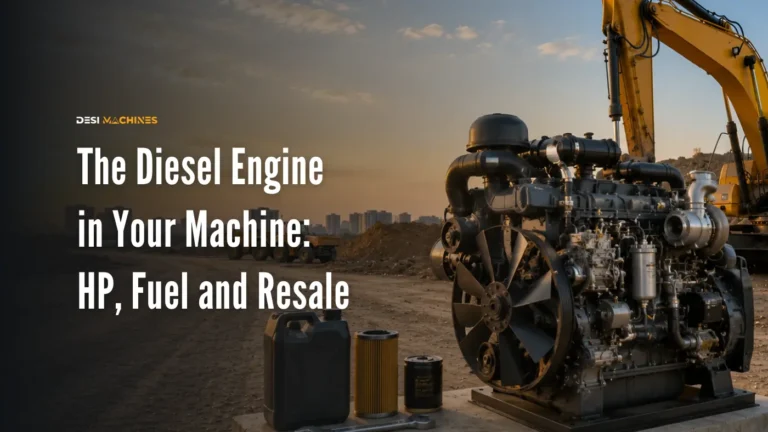
Owners treat the engine as the machine. It is the part that makes noise when it fails, the part the operator complains about, and the part with a quote attached. Yet it is also the one major assembly on a machine that can be made as good as new at a known price, which makes it the least risky thing on the machine and a poor reason, on its own, to retire anything.
What follows is the decision framework, not a price list. We do not publish overhaul rates, for a reason set out at the end.
What the engine overhaul cost is actually buying
Two jobs share the word and they are not close in scope, so the first thing to establish is which one you have been quoted.
A top overhaul is cylinder-head work. The head comes off, valves and guides are reconditioned or replaced, the head is skimmed and refitted with a new gasket, and injectors are usually serviced or replaced at the same time. The block, the pistons and the crankshaft stay where they are. It is the answer to poor compression in the head, oil consumption past the valve guides, or a blown gasket.
A major overhaul opens the block. Pistons, rings and liners, main and big-end bearings, the crankshaft reground or replaced, oil and water pumps, usually the turbocharger, and often the fuel injection pump as a separate job with its own specialist. It restores the engine but it is a substantially bigger spend and a much longer machine downtime.
There is a third route that owners often do not ask about: a factory-reconditioned replacement engine, fitted as a unit. It costs more than a rebuild in most cases, but it comes with a warranty and a known specification instead of a workshop’s judgement, and it puts the machine back to work in days rather than weeks.
What engine overhauling and overhauling charges mean on the bill
Engine overhauling is the same job as an engine overhaul. Indian workshops and their quotations use the longer form, and overhauling charges is the bill head that carries it. The words alone do not tell you whether a top or a major job has been quoted. The parts list attached to them does, which is why two quotes can carry the same phrase and similar money for work that differs by an entire engine block.
The term inside a major overhauling bill that the plain word overhaul never prepares you for is reboring. Where an engine has no replaceable cylinder liners, the block itself goes to a machine shop and is bored out to the next oversize, and oversize pistons are fitted to match. Where the engine does have liners, the old liners come out, new ones go in, and no boring is needed. Which of the two applies is a property of your engine rather than a choice the workshop makes, and it decides whether a machining line appears on your bill at all. Whether the engine in your machine is a lined or an unlined design, and what a kit for it contains, is set out in the engine overhaul kit guide.
So ask for three heads on the quote rather than two: parts, workshop labour, and machining or outside work. The last of those covers reboring, crankshaft regrinding, head skimming and injection pump calibration, and it usually leaves the workshop for a specialist. That head is the one that moves most between two quotes for the same engine, because it is the one being bought from somebody else. Ask plainly, too, whether the turbocharger and the fuel injection pump sit inside the quoted overhauling charges or outside them, because on a major job either is large enough to change the decision.
Get the machining operations named in writing before you authorise the work, and ask who is answerable if a rebored block or a reground crankshaft fails inside the warranty period: the workshop that quoted you, or the outside machine shop it was sent to.
Read the rest of the machine before you read the quote
An engine overhaul buys engine hours. If the machine around it is near the end of its own life, those hours are unusable and you have bought nothing.
Three assemblies decide this, and all three can be assessed before you authorise any engine work.
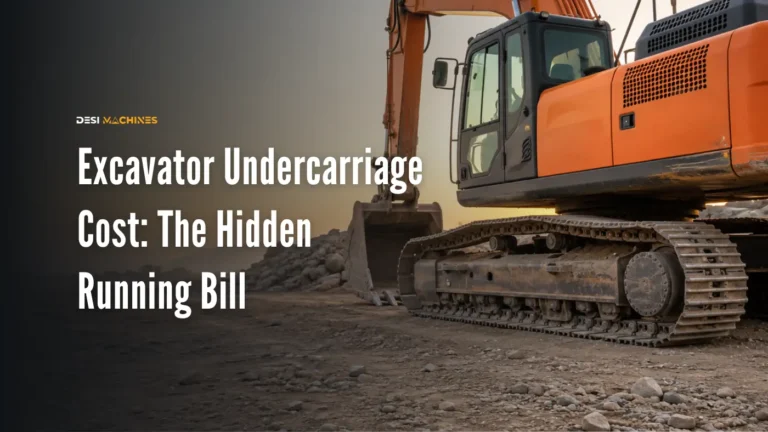
The undercarriage on a tracked machine is the big one, because it is the second most expensive assembly after the engine and it wears continuously rather than failing suddenly. Measure it properly: what a worn undercarriage costs to replace, and how to read the wear before it reaches that point, is the comparison that most often settles the question. An engine overhaul and an undercarriage replacement falling in the same year is usually the signal to sell.
On a backhoe loader the assembly to check alongside the engine is the gearbox. A transmission that is slipping, overheating or jumping out of gear can need anything from a cleaned strainer to a full strip-down, and the routes for a JCB transmission repair, including a factory exchange unit, follow the same rebuild-or-replace logic as the engine.
Hydraulics come next. Slow cycle times, drift on a held load, pump noise and a main pump that has already been rebuilt once are all telling you that a second large repair is queued behind the engine. Pumps and main control valves are not cheap, and the diagnosis is rarely quick.
Then the structure. Cracked and re-welded boom or dipper joints, a bent chassis, pin and bush wear through every joint — this is work that nobody quotes cheerfully and that no buyer forgives. A machine with a tired structure is worth its scrap and its attachments, whatever the engine does.
The four options, side by side
| Option | What it buys you | Makes sense when |
|---|---|---|
| Top overhaul | Head-end life, shortest downtime, smallest spend of the four | The fault is in the head and the block is sound on compression and oil pressure |
| Major overhaul | A rebuilt engine, same engine number, no registration step | Undercarriage, hydraulics and structure all have real life left, and you plan to keep the machine for years rather than months |
| Replacement or reconditioned engine | A known specification with a warranty, and the fastest return to work | Downtime is costing you more than the price difference, or the block is beyond economical repair |
| Sell and replace the machine | Resets every assembly’s clock, not only the engine’s | Two or more major assemblies are due together, or the overhaul approaches the gap between today’s machine value and a sound replacement |
Price the alternative, because that one you can price
The replacement side of the comparison is the half you can pin down today, so do that first and work backwards.
A new backhoe loader such as the JCB 3DX lists at around Rs 28.5-31.5 Lakh, and a 20-tonne class excavator such as the Tata Hitachi EX 210 Infra at around Rs 57.0-63.0 lakh (both indicative, as of Oct 2026). A sound used machine of the same class sits well below that, and for most owners facing a major overhaul the used market is the real comparison rather than the new one.
Then run the test that actually decides it. Take what your machine is worth today, with the engine as it stands. Add the overhaul quote. If that total lands close to what a sound replacement of the same class costs, the overhaul is buying you the most expensive hours on the market, because you finish with an old machine at near the price of a better one.
Two adjustments make the comparison honest. Count the downtime: a major overhaul can hold a machine for weeks, and if that machine is on hire or on a deadline job, the lost revenue belongs in the overhaul column. And count the money already stuck in the machine at nil, because what you paid for it four years ago has no bearing on which option is cheaper from here.
The fourteen-day step owners forget after an engine swap
Rebuild the engine and the engine number does not change. Replace it and it does, and on a registered machine that is a legal event.
Section 52 of the Motor Vehicles Act, 1988 treats a change in engine number as an alteration to the vehicle. The owner has to give notice to the registering authority within whose jurisdiction he resides and obtain approval, and where the authority sends no communication within seven days the approval is deemed to have been given. Once the alteration is made, sub-section (4) requires the owner, within fourteen days, to report it to the registering authority and forward the certificate of registration together with the prescribed fee so that the new particulars are entered.
The Act also lets a State Government notify, in the Official Gazette, that owners of not less than ten transport vehicles may change an engine number without prior approval, subject to conditions. Even there, the reporting and endorsement duty under sub-section (4) stays.
This matters commercially at resale, not only legally. A machine whose physical engine number does not match its registration certificate is a machine a careful buyer walks away from, and a lender will not finance. Get the endorsement done while the workshop bills are still in your hand.
Note the scope. This applies to registered motor vehicles, which covers backhoe loaders, cranes, tippers and other machines that carry a registration. A tracked excavator that is not registered as a motor vehicle has no RC to endorse, though you should still record the new engine number in your own asset and insurance papers.
What we are not quoting
No overhaul price. Workshop rates differ by city, parts prices differ between genuine, OEM-supplied and aftermarket, and the scope of any two quotes for “an overhaul” is rarely the same job. A national average would be wrong in every direction at once, and you would plan around it.
Ask for the quote in parts and labour separately, with the parts list named. That single request tells you more than any published figure could: whether the pistons and liners are in the scope, whether the turbocharger and the fuel injection pump are included or kept as surprises, and whether you are comparing two quotes for the same work.
The bottom line
Find out which overhaul you have been quoted, inspect the undercarriage, hydraulics and structure before you authorise anything, and price a sound replacement machine so you have something to compare the quote against. Where the engine is the only tired assembly on a machine you intend to keep, an overhaul is usually good money. Where two major assemblies are due in the same year, it rarely is. And if you fit a different engine on a registered machine, finish the job at the RTO within fourteen days.
If the sum points to replacement, compare current excavator models and prices and backhoe loader models and prices, and work out what the monthly outgo looks like under an equipment finance structure before you commit either way.
Rates, schemes, specifications and prices change — confirm current terms with the OEM, dealer, bank or insurer before deciding. Prices shown are indicative bands taken from our listings at the time of writing; statutory requirements vary by state and are amended from time to time, so confirm the current position with your registering authority before acting.