Excavator
294 models
Excavator
294 models  Backhoe Loader
51 models
Backhoe Loader
51 models  Crane
68 models
Crane
68 models  Concrete Mixer
79 models
Concrete Mixer
79 models  Wheel Loader
54 models
Wheel Loader
54 models  Compactor / Roller
45 models
Compactor / Roller
45 models  Motor Grader
42 models
Motor Grader
42 models  Dozer
41 models
Dozer
41 models  Concrete Pump
66 models
Concrete Pump
66 models  Skid Steer Loader
11 models
Skid Steer Loader
11 models  Telehandler
13 models
Telehandler
13 models 


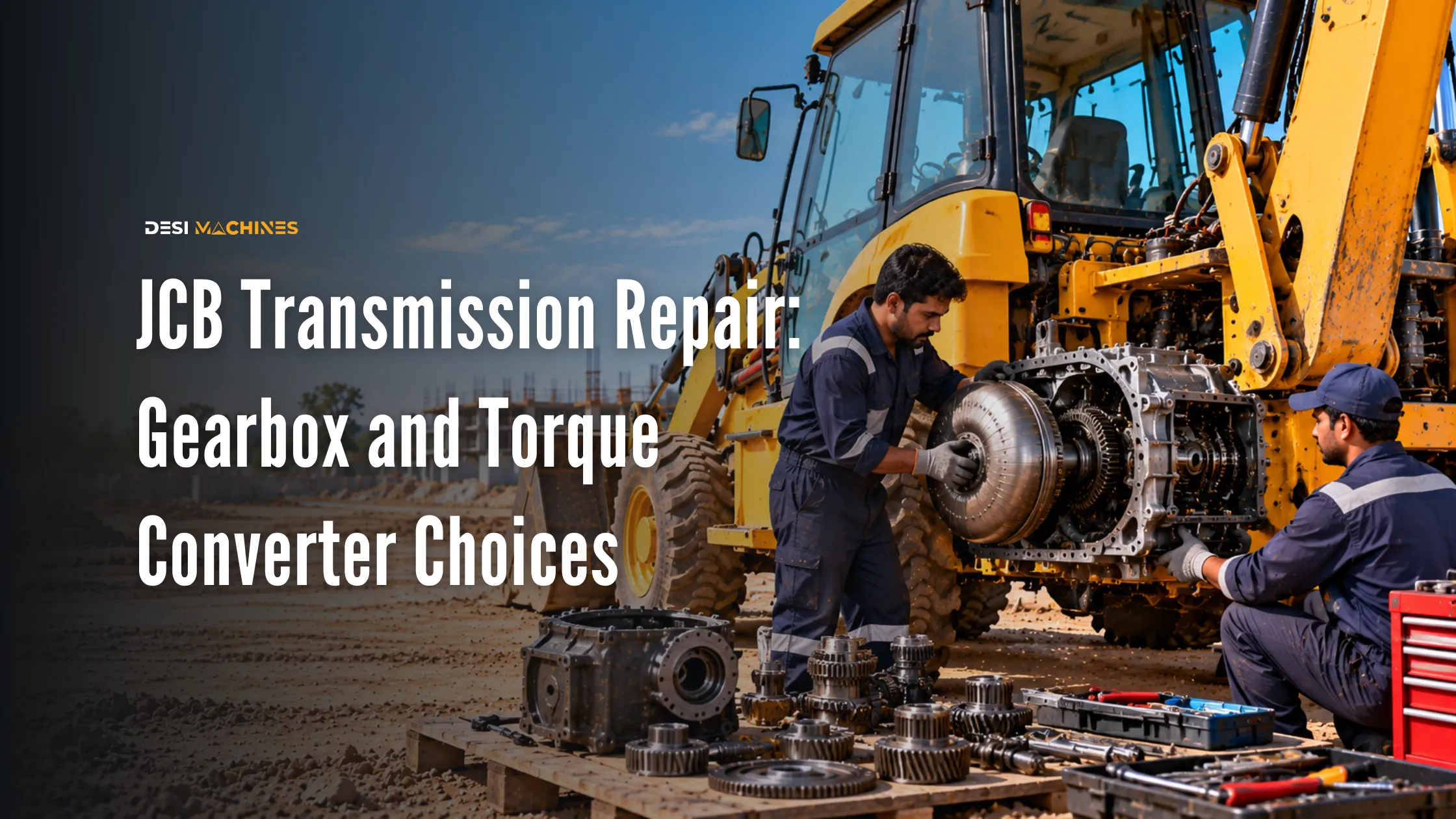
Does a backhoe that will not pull on a ramp need a new gearbox? Often not, and finding out before anyone lifts the cab floor is where a JCB transmission repair is won or lost. The fault list in JCB’s own service manual starts with the cheap checks (oil level, the suction strainer, the shuttle solenoid and wiring) before the expensive ones (clutch plates, bearings, synchro packs, the torque converter). If the gearbox has to come out, you have four routes: rebuild your own unit, fit a factory remanufactured exchange unit, fit a used unit, or sell the machine. Water in the oil is the failure that turns a small job into a big one.
The complaint usually arrives the same way. The machine is fine in the morning, and by afternoon it will not climb out of the trench in reverse, or it hesitates when the operator flicks the shuttle. Someone at the workshop says the gearbox has to come out, and the number that follows is large enough to make you wonder about the whole machine.
Before you agree to anything, it helps to know what the diagnosis should look like, what the routes are, and what your warranty says.
First, find out how big the job is
Most Indian backhoes use a four-speed synchro or power shuttle gearbox with a torque converter. The JCB 3DX brochure describes a four-speed, fully synchromesh gearbox with an integral torque converter and an electrically operated reversing shuttle, holding 17.5 litres of transmission oil. Our guide to how a backhoe loader transmission works covers the types and makers; this piece is about the bill.
JCB’s service manual for this gearbox (Section F, publication 9803/5100) starts fault-finding with a warm machine, the right quantity and grade of oil, and no obvious leaks. Then it works through symptoms. Grouped by how much they usually cost to put right, they look like this:
| What the workshop checks | Typical symptom | Size of job |
|---|---|---|
| Oil level (checked cold), suction strainer | Will not pull, overheating | Small: top up, clean, no strip-down |
| Shuttle solenoid, microswitches, relay, wiring loom | Fault only when hot, no drive one way | Small to medium: electrical, gearbox stays in |
| Pump output, converter pressures, mountings | Will not pull in either direction | Medium: tests first, then parts |
| Clutch sealing rings, clutch plates | Slipping, no drive in one direction | Large: gearbox out |
| Bearings, gears, synchro packs | Growl, grind, jumps out of gear, crash changes | Large: gearbox out and stripped |
| Torque converter | Will not pull, overheating | Large: gearbox out |
The order matters. A workshop that goes straight to “gearbox out” without a cold oil check, a strainer check and a stall test is asking you to pay for the most expensive answer first. How a workshop proves clutch plates are the problem, with the pressure and stall tests, is set out in our guide to backhoe clutch plates and what a clutch job costs.
Water: the failure that makes everything worse
JCB’s manual gives three causes of water in the transmission: contamination while filling or topping up, working in deep water, and an oil cooler failure. It then lists what follows. The oil goes milky (the manual sets a maximum water content of 0.10 per cent). Steam from the heat of the torque converter can build enough pressure to blow the dipstick out of its tube. Friction lining separates from the clutch plates, bearings wear, and clutch pistons can seize.
Two lessons follow for an owner. First, a milky dipstick is a stop-work sign, not a top-up job: the manual’s fix is to find the source, flush the system and refill, because fresh oil on top of water only spreads the damage. Second, two of the three causes are habits. Topping up from an open can in the rain, or parking the machine in a flooded pit overnight, is how a careless top-up becomes a gearbox job.
The four routes for a JCB transmission repair
Once the gearbox has to come out, the decision is less about the gearbox and more about the machine.
| Route | What you get | Suits |
|---|---|---|
| Rebuild your own unit | Your gearbox, new clutch packs, seals and bearings as needed | A machine with no urgent work, a workshop you trust |
| Factory exchange unit | A remanufactured unit with a warranty, credit for your old one | A machine on hire or on a contract, where days cost most |
| Used unit | The cheapest invoice, unknown hours and history | An old machine near the end of its working life |
| Sell and replace | Every assembly’s clock reset, not only the gearbox | Two or more major assemblies due at once |
The exchange route is less known than it should be. JCB’s remanufacturing programme in India, which it says was once known as JCB Service Exchange, rebuilds returned units to OEM specifications using genuine parts, sells them with an “as new” warranty, and gives you credit for the unit you send back. JCB says its remanufactured transmission range covers its own JCB transmissions and ZF transmissions. It does not publish the warranty length or a price, so ask the dealer for both in writing.
The same four-way logic appears in our piece on engine overhaul cost. If the engine is also tired, price the two jobs together before you spend on either.
Check the warranty before anyone opens the gearbox
Warranty terms differ by maker, and they are written to protect the maker. A few examples from the makers’ own India pages:
Mahindra lists a one-year standard warranty with unlimited hours on its EarthMaster VX, and its maintenance chart warns that the first service should be done at 50 hours and at least within 100 hours, failing which the warranty may expire. CASE India’s standard warranty on machines such as the CASE 770 NX runs 12 months from delivery and stays valid only if the machine is serviced as CASE prescribes, with genuine CASE service parts. CASE Protect, an extended warranty bought in the first year, covers transmissions among other assemblies. JCB offers optional extended warranty packages that it says cover defects in materials and workmanship for 5 years or 10,000 hours.
If your machine is anywhere near those limits, the cheapest JCB transmission repair may be the one the dealer does under cover. Ask before an outside workshop touches the unit, and keep the service record that proves the oil was changed on time.
What decides the bill
We are not printing a repair figure, because the spread between a strainer clean and a full strip-down with a new converter is too wide for any single number to help you. The lines that move it are these:
- Whether the gearbox comes out at all, which decides most of the labour.
- The parts list: clutch packs, sealing rings, bearings, synchro packs, the pump, the torque converter.
- A flush and fresh oil, 17.5 litres on a 3DX, priced from our guide to transmission oil price and grades.
- The oil cooler, if water came from it.
- Transport to the workshop, if the job is not done on site.
- The days the machine stands idle, which on a machine on hire is often the largest line.
For the last line, a backhoe’s idle day costs less than the ₹16,000 to 25,000 our equipment downtime cost estimate gives for a mid-size crawler excavator (indicative, as of Jul 2026), but it is still real money. The comparison between routes is short: extra idle days multiplied by your own day rate is the amount a cheaper quote has to beat before it is actually cheaper.
How to read the quote
Ask for the quote in lines: parts listed by name and number, labour, oil and flush, and the number of days. Ask what the stall test and the pressure checks showed, and for the old parts back. Ask what warranty the workshop gives on its own work, in months and hours. Get a second quote on the same basis, and include an exchange unit from the dealer as one of the two.
A one-line quote that says “gearbox overhaul” tells you none of this, and it is the easiest kind to inflate.
Keep the next one away
Mahindra’s EarthMaster maintenance chart checks transmission oil every 10 hours and changes the oil and filter every 1,500 hours, with a first filter change at 50 hours on a new gearbox. JCB says its own transmission oil allows a drain interval of up to 1,000 hours. Use your own machine’s schedule, the grade it names, and a clean container when you top up. Keep the machine out of standing water where you can, and treat a milky dipstick as a stop.
The bottom line
Size the job before you price it: cold oil check, strainer, wiring and a stall test come before the gearbox comes out. Check the warranty before an outside workshop opens anything. If the unit must come out, put a factory exchange unit and a rebuild side by side, and let your idle-day cost decide between them.
If the gearbox is one of several big jobs due together, compare a newer machine before you spend. The JCB 3DX and JCB 4DX are the most asked-about models; browse all live backhoe loader models and prices and check equipment finance options before you decide.
Repair costs, warranty terms, oil grades and service intervals vary by model, region and dealer, and change over time. Confirm current terms with your OEM dealer or an authorised workshop before you commit to a repair.