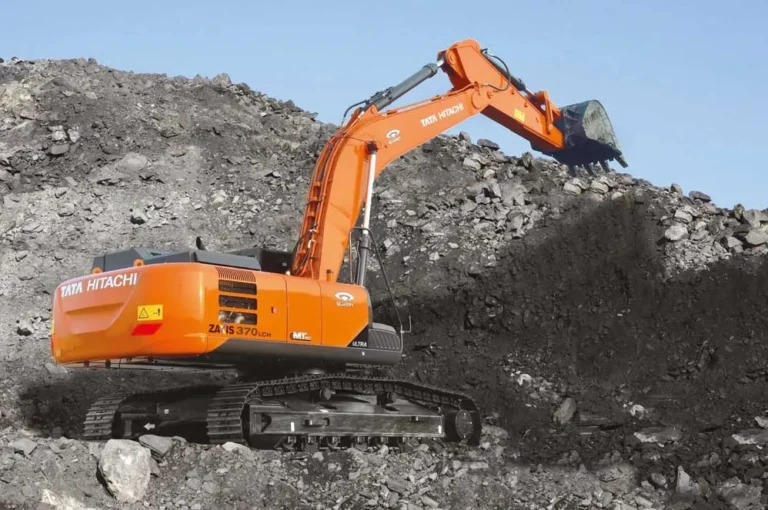
Excavator
294 models
 Backhoe Loader
51 models
 Crane
68 models
 Concrete Mixer
79 models
 Wheel Loader
54 models
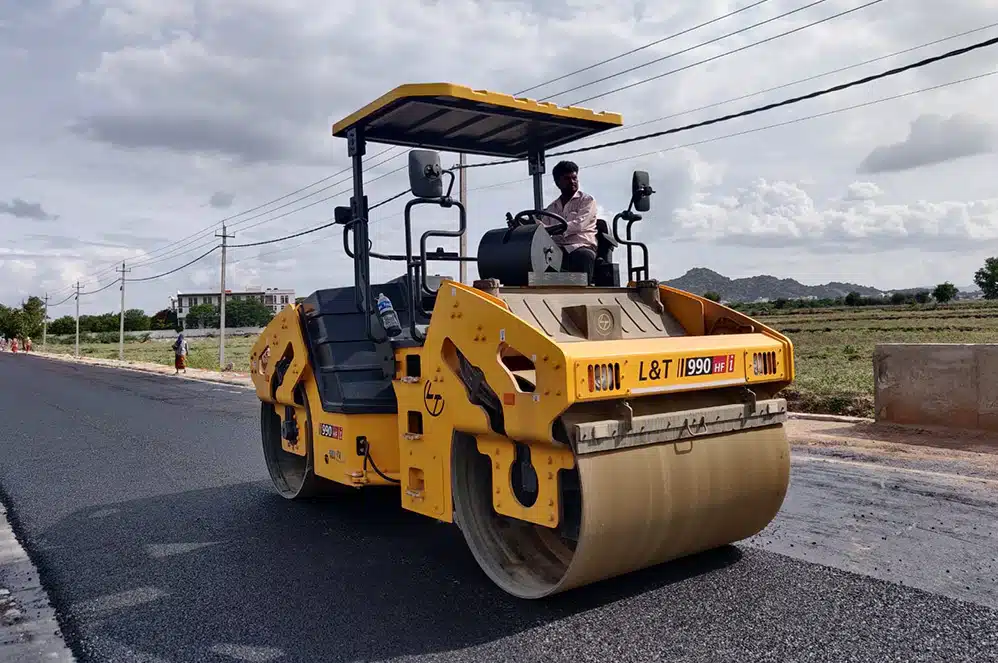
 Compactor / Roller
45 models
 Motor Grader
42 models

 Concrete Pump
66 models
 Skid Steer Loader
11 models


The illegal mining penalty under section 21(1) of the Mines and Minerals (Development and Regulation) Act, 1957 is imprisonment of up to five years and a fine of up to Rs 5 lakh per hectare of the area, and any machine used can be seized on the spot. Only a court can confiscate it. States add their own charges: Bihar’s 2024 rules set a compounding fee of Rs 10 lakh for an excavator or loader, plus the cost of the mineral. While the case runs, courts often hand a seized JCB back to its owner on a bond under section 497 of the Bharatiya Nagarik Suraksha Sanhita, 2023.
Rs 11 lakh in a personal bond, one surety and a Rs 2 lakh bank guarantee. That is what the Chhattisgarh High Court asked for on 12 March 2026 before a JCB seized in a sand-mining case near the Arpa river could go back to its registered owner. The court noted that the owner was not even an accused.
If you own an excavator, a backhoe or a tipper that works near sand, stone or earth, this is your exposure: what the Act punishes, what two states charge, and how a seized machine comes back.
What is the illegal mining penalty under the MMDR Act?
Section 4(1) of the MMDR Act bars any mining operation except under a mineral concession, exploration licence or mining lease. Section 4(1A) bars transporting or storing a mineral, or causing it to be transported or stored, except as the Act and its rules allow. Section 21(1) punishes a breach of either with imprisonment of up to five years and a fine of up to five lakh rupees per hectare of the area.
That per-hectare figure came with the Mines and Minerals (Development and Regulation) Amendment Act, 2015, which replaced sub-sections (1) and (2) of section 21 with effect from 12 January 2015. An Explanation added in 2021 says that “without lawful authority” means without a prospecting licence, mining lease, composite licence or exploration licence, or in breach of the state rules made under section 23C.
| Section | What it says | What it means for a machine owner |
|---|---|---|
| 21(1) | Up to 5 years’ jail and a fine of up to Rs 5 lakh per hectare for breaking section 4(1) or 4(1A) | Applies to whoever mines, transports or stores without authority |
| 21(2) | Rules may punish breaches with up to 2 years, a fine of up to Rs 5 lakh, or both, plus up to Rs 50,000 a day if it continues after conviction | State rules carry their own penalties |
| 21(4) | Any mineral, tool, equipment, vehicle or other thing used can be seized by an empowered officer | Your excavator, loader or tipper can be taken at the site |
| 21(4A) | Seized items can be confiscated only by order of the court that can take cognizance | The mining office cannot confiscate on its own |
| 21(5) | The State can recover the mineral or its price, plus rent, royalty or tax for the period | A money demand comes on top of any fine |
| 23A | The authorised officer may compound an offence before or after prosecution | Paying the compounding sum ends the proceedings for that offence |
| 30B | States may set up Special Courts; the judge must be or have been a District and Sessions Judge; appeal to the High Court within 60 days | Release applications and appeals often go here |
Section 22 lets a court take cognizance of an offence under the Act only on a written complaint by an authorised officer. That does not shield you from the police. In State (NCT of Delhi) v Sanjay, on 4 September 2014, the Supreme Court held that police can still register and investigate theft of sand from government land. Theft now falls under section 303 of the Bharatiya Nyaya Sanhita, and the Chhattisgarh case was registered under both laws.
Can my excavator be seized if someone else was using it?
Yes. Section 21(4) covers “any tool, equipment, vehicle or any other thing” used to raise or transport a mineral without lawful authority. It looks at the use, not the owner. A backhoe loader rented out to a sand contractor can be seized just like the hirer’s own tipper.
Confiscation is where the owner can argue, because section 21(4A) leaves it to the court, not the mining office. In Irfan v State of Haryana, on 15 October 2020, the Punjab and Haryana High Court quashed a Mining Officer’s confiscation order on a truck as passed “without any jurisdiction” and restored its release on a superdari bond of Rs 20 lakh.
For an owner who did not know, section 21 offers no written defence. The “without his knowledge” escape in section 23 covers only people in charge of a company or firm. Courts have filled part of the gap. In Bishwajit Dey v State of Assam, on 7 January 2025, the Supreme Court read the narcotics law and held that a seized vehicle is not liable to confiscation if the owner proves it was used without his knowledge or connivance and that he took all reasonable precautions. That ruling is under a different Act, but the Chhattisgarh High Court quoted it when it released the JCB in March 2026.
So keep paper that shows care: a written hire agreement naming the site, a copy of the hirer’s lease or permit, and your operator’s log. Our guides on the quarry lease and on royalty and transit passes for earthwork show what a lawful site should be able to produce.
How a seized JCB or excavator is released
From 1 July 2024, section 497 of the BNSS replaced section 451 of the old Code for custody of property pending trial, and section 503 replaced section 457 for property seized by police. Section 497 makes the court list the property within 14 days, photograph or video it, and order its disposal, confiscation or delivery within 30 days after that.
In Sunderbhai Ambalal Desai v State of Gujarat, in 2002, the Supreme Court said there is no use keeping seized vehicles at police stations for a long time, and that magistrates should pass orders at once on a bond, a guarantee and security for return. The orders below show what owners were asked to give.
| Court and date | Machine | Condition for release |
|---|---|---|
| Gujarat High Court, 24 March 2025 | JCB seized for illegal mining and transport of a minor mineral | Rs 10 lakh bank guarantee set by the Surat court replaced with a solvent surety of Rs 10 lakh |
| Chhattisgarh High Court, 12 March 2026 | JCB in a sand-mining case; owner not accused | Personal bond of Rs 11 lakh, one surety, Rs 2 lakh bank guarantee, no change to the machine and no third-party rights |
| Rajasthan High Court, Jodhpur, 13 May 2026 | JCB seized in June 2024 for alleged bajri mining | Bank guarantee of Rs 27,27,500 replaced with a personal bond of Rs 25 lakh and one surety |
In the Rajasthan case the mining department had raised Rs 29,97,500, and the trial court tied release to a guarantee of almost that sum. The High Court noted that no confiscation proceedings had begun under rule 54 of the Rajasthan Minor Mineral Concession Rules, 2017, and held that “interim custody of vehicles ought ordinarily to be granted when confiscation proceedings are not pending.”
State rules: what Bihar and Haryana charge
Section 23C lets each state make its own rules on illegal mining, transport and storage. Bihar’s Amendment Rules of 2024, notified in Hindi on 16 October 2024 and published in English in the Bihar Gazette of 4 December 2024, rewrote rule 56. With the Collector’s written permission, a District Mining Officer, Assistant Director or Mine Inspector may compound the offence, before or after prosecution, on payment of the cost of the mineral and this fee.
| Vehicle or equipment (Bihar rule 56) | Compounding fee |
|---|---|
| Tractor and trolley | Rs 1,00,000 |
| Matador or half truck (407, 408) | Rs 2,50,000 |
| Full-body truck, 6 wheels | Rs 4,00,000 |
| Hydraulic dumper, 6 wheels or 10 and above | Rs 8,00,000 |
| Crane, boat, excavator, loader, power hammer, compressor, drilling machine and similar | Rs 10,00,000 |
The English text ties this table to rule 56(1)(ii), which covers transport or storage without a valid challan. In place of the cost of the mineral, environmental compensation and tax, the officer may charge 25 times the royalty, and for any other vehicle the fee plus mineral cost cannot be under Rs 25,000. Storing a quantity that does not match the challan can draw a further Rs 5 lakh. The Amendment Rules of 6 May 2026 added that all confiscated tools, boats and vehicles are to be auctioned, and set an appeal fee of Rs 10,000, or Rs 5,000 where the appeal concerns a tractor.
Haryana works on a ladder. Under rule 104 of the Haryana rules of 2012, a first case of illegal mining means the machines stay impounded until you pay the mineral’s price, the royalty and a fine of at least Rs 10,000. A second case means at least seven days’ impounding and a fine of at least Rs 15,000. A third brings an FIR and confiscation for at least 30 days. Rule 102 runs a similar scale for carriers without a transit pass, and rule 109(3) bars any order without a show-cause notice. A rule 98A added on 2 July 2025 repeats that only a competent court can confiscate a seized vehicle, as rule 12(11) of Uttar Pradesh’s 2018 rules also says.
The loan does not stop while the machine waits
Nothing in section 21 or the state rules above pauses an EMI. In the Bishwajit Dey case, the truck had been bought on an EMI of Rs 1,00,020 a month, and the Supreme Court said release would help the owner earn and help the “bank/financier (who would be repaid the loan disbursed by it)”. If a seizure puts you behind, our guide to machine loan default covers what the lender can do. Before you finance a machine for a sand or quarry job, check the site’s papers, then compare equipment finance options. None of the rules or orders we read deals with insurance, so ask your insurer in writing whether seizure is covered.
The bottom line
The Act punishes the person who mines, but the seizure power reaches every machine on the site. Your best protection is paper: the hirer’s lease or permit, transit passes for every load, and a written hire agreement. If a machine is taken, apply to the court quickly under section 497 of the BNSS, and challenge any confiscation order a mining office passes on its own. Clean paperwork is also what keeps sand business profit intact. When you add an excavator to the fleet, review your equipment insurance cover at the same time.
Sources: the MMDR Act, 1957 as amended up to 2023, BNSS sections 497 and 503, Bihar’s rule amendments of 2024 and May 2026, Haryana’s 2012 rules with the July 2025 amendment, and court orders dated as cited. Rates, schemes, rules and fees change; confirm current terms with the state mining department, a lawyer, your bank or the court before deciding. This is general information for a machine owner or contractor, not legal advice, and DesiMachines is not liable for decisions taken on information that may have changed after publication.