Excavator
294 models
 Backhoe Loader
51 models
 Crane
68 models
 Concrete Mixer
79 models
 Wheel Loader
54 models
 Compactor / Roller
45 models
 Motor Grader
42 models

 Concrete Pump
66 models
 Skid Steer Loader
11 models


NIT in tender stands for Notice Inviting Tender: the short notice a government department publishes to say it wants a work done, with the name of the work, the estimated cost, the EMD and document fee, the contractor class it needs, the completion period and the key dates. The Department of Expenditure’s 2025 works manual says the NIT must give a contractor enough information to decide whether to bid and, if so, how. Read it first, and walk away early if the class, the time allowed for the work or the EMD does not fit your firm.
Three road jobs in southern Odisha share one notice number, and they do not ask for the same contractor. Under reference CE-Roads-II-03/2026-27, the Chief Engineer, Roads-II, Odisha put up three packages on 23 October 2026. Two of them want a Special class contractor or equivalent; the third, at Rs 19.69 crore, accepts A class. A contractor who reads only the headline misses that difference.
This guide uses that real Odisha notice to show what each line means and which lines should stop you from bidding.
What is NIT in tender?
Expanded, the NIT full form in tender is Notice Inviting Tender. The Department of Expenditure’s Manual for Procurement of Works, Second Edition 2025, with a foreword dated 23 December 2025, defines a notice inviting tenders as a document “and any amendment thereto published or notified by the Procuring Entity, which informs the potential bidders that it intends to procure the subject goods, services, works or a combination thereof”.
Paragraph 4.2.1 of the same manual explains why it matters. The NIT “has legal importance, since it is this part of tender document, which is soliciting offers from the bidders.” It adds that the NIT and its appendix, the Tender Information Summary, “must contain sufficient information in brief for a prospective bidder to decide whether to participate in the tender or not and, if it decides to participate, how to go about it.”
So the notice inviting tender is the department’s invitation to make an offer. It is not the contract, and it is not the whole tender.
NIT, tender document and bid: three different papers
The manual lists what a works tender document usually holds. The NIT with its Tender Information Summary comes first, followed by instructions to bidders and their appendix, general and special conditions of contract, the schedule of requirements, drawings and specifications, qualification and evaluation criteria, forms such as bank guarantee formats, and the financial bid as a bill of quantities in Excel. The bid is what you send back.
On an e-procurement portal you will also see an e-tender notice: the portal’s own screen of fields such as tender ID, value, EMD and dates. It repeats the key terms in a fixed layout; the NIT itself is the department’s signed notice, usually a PDF. On the Odisha packages, the documents section lists three files: a notice uploaded with a corrigendum, a separate corrigendum file, and an 11,817 KB detailed file called the DTCN. When the portal screen and the PDF disagree, ask the tender inviting authority before you bid, not after.
A real NIT in tender, read line by line
These figures come from the three tender pages on the Odisha government’s e-procurement portal, read on 26 October 2026. All three were published on 23 October 2026, close at 05:30 PM on 9 November 2026 and open at 11:30 AM on 10 November 2026 at the Engineer-in-Chief (Civil) office in Bhubaneswar.
| NIT line | Adava to Paniganda, Gajapati | Umerkote to Malgam, Nabarangapur | Ramagiri to Narayanpur, Gajapati |
|---|---|---|---|
| Tender ID | 2026_EICCL_144215_1 | 2026_EICCL_144212_1 | 2026_EICCL_144219_1 |
| Work | Widening and strengthening, 0/00 to 19/951 km | Widening and strengthening, 52/00 to 63/796 km | Strengthening of SH-4, 15/000 to 30/596 km |
| Tender value (estimated cost) | Rs 36,12,52,877 | Rs 25,89,42,282 | Rs 19,68,70,674 |
| EMD | Rs 36,13,000 | Rs 25,89,000 | Rs 19,69,000 |
| Tender fee | Rs 10,000 | Rs 10,000 | Rs 10,000 |
| Tenderer class | Special or equivalent | Special or equivalent | A or equivalent |
| Period of work | 540 days | 420 days | 365 days |
| Bid validity | 90 days | 90 days | 90 days |
| Form of contract | Percentage | Percentage | Percentage |
All three are open tenders funded under CRIF with two covers. Cover 1 asks for online proof of the tender cost and EMD, GSTIN, PAN, RC and an affidavit, then a separate upload headed “Machineries and work experience”, then other documents as per the DTCN. Cover 2 is the bill of quantities. The portal shows EMD exemption as allowed and tender fee exemption as not allowed. Pre-bid meeting and clarification dates are marked NA. The two Gajapati and Nabarangapur widening jobs are also summarised in the Odisha CRIF road tenders listing.
What each line of the notice tells you
Start with the NIT number in tender, the department’s reference, here CE-Roads-II-03/2026-27. The portal then gives each package its own tender ID. One NIT number can cover several works, so search, pay and write letters using the tender ID.
The name of work tells you the road, the chainage and the district. 19.951 km of widening under the Paralakhemundi division and 11.796 km under the Nabarangapur division are separate camps in separate districts, with separate hire and haulage costs.
The estimated cost put to tender is the department’s own costing of the work. Two different figures get called the NIT cost in tender. The first is this work value. The second is the cost of the tender document, a fee for the papers. The 2025 manual, at paragraph 4.6.1, says “Normally, no tender document fee should be charged”, but that manual is for central ministries and departments, and Odisha charges Rs 10,000 per package with no exemption.
The EMD is about 1 per cent of the tender value on each Odisha package. How EMD is set, who is exempt and when it comes back are covered in our guide to EMD in tender. If three EMDs together are more cash than you can spare, a bank guarantee line or working capital finance is worth arranging before the deadline week, not during it.
Class is the line that rules most firms in or out. “Special or equivalent” asks for a Special class registration or one the department accepts as equal; the portal page does not say what counts as equal, so check the DTCN. If your registration is lower, stop here. Our PWD contractor registration guide explains how classes and their limits work across states.
The period of work is the completion time from the start date. A short period on a long road means more machines on site at once, so it changes your fleet plan as much as your price. The form of contract, percentage here, tells you how you will quote; see item rate versus percentage rate tenders. The 90-day bid validity is how long your offer must stay open; the bid validity period guide covers what happens if the department asks you to extend it.
How many days does a notice have to give you?
For central ministries and departments, paragraph 3.7.2 of the 2025 works manual says: “Ordinarily, the due date fixed for opening of the tender shall be minimum 21 (twenty-one) days from the date of advertisement, which may vary, considering the nature of work to be executed and the timelines required.” Rule 161(vi) of the General Financial Rules, 2017, in the version updated to 31 January 2026, sets three weeks from publication of the tender notice, or from when the bidding document is available, whichever is later, as the ordinary minimum for bid submission. Rule 161 sits in the chapter on goods; the works manual cites the same rule for open tenders for works.
Other dates in the manual help you plan. Where a pre-bid meeting is held, it should normally fall 15 to 21 days after the tender document is issued. If a clarification end date is not given, written questions must reach the department 7 days before the bid deadline. When a corrigendum changes the requirement significantly or leaves too little time, the submission date is to be extended by not less than 3 days.
State works follow their own codes. The Odisha notice gave 17 days from publication to the close of bids. What matters is whether you have enough working days to visit the site, get machine hire and material quotes, and upload.
Where the full tender document sits
Rule 159 of the GFR makes it mandatory for central ministries, their offices and autonomous bodies to publish tender enquiries, corrigenda and award details on the GeM-Central Public Procurement Portal, and on their own website if they have one. Rule 161 adds that the advertisement should give the complete web address from which the bidding documents can be downloaded. State departments publish on their own e-procurement portals, such as the Odisha portal used above. On the Odisha portal you can browse tenders by organisation without logging in, while the NIT files open after a captcha check.
Corrigenda count as much as the notice. Under paragraph 4.4 of the manual, a corrigendum amends the tender documents, so a changed date, quantity or eligibility line replaces the old one. Check the corrigendum list again on the day you submit. Our step-by-step guide on how to bid for government construction tenders covers portal registration and the digital signature certificate.
The lines that decide bid or no-bid
Most no-bid decisions can be made from the notice alone. Check these in order:
- If your class or registration is below what the notice asks, you cannot bid in your own name.
- Count the working days to the closing date, and be honest about the time a site visit and pricing will take.
- Add up the EMD and fee for every package you want, along with any EMD already locked in a pending bid.
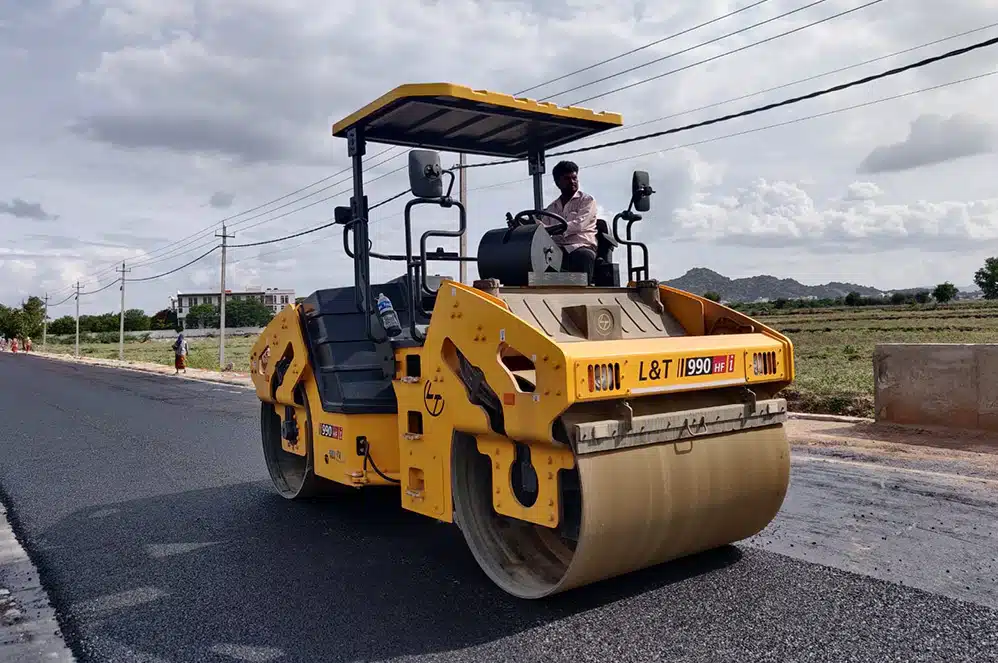
- Set the period of work against your fleet. 420 days for 11.8 km of widening means excavators, tippers, a motor grader and rollers working at the same time, owned or hired.
- Where the notice asks for machinery details, read the DTCN to see whether hired machines count and what proof is needed.
- Look at the location. A camp far from your base adds mobilisation cost that the estimate may not cover.
If any one of these fails, skip the tender.
The bottom line
A notice inviting tender answers one question: can you do this job? Read the NIT number and tender ID, the estimated cost, EMD, fee, class, period of work and critical dates, then open the full document only if those lines fit your firm. When they do, read every corrigendum before you submit. To find notices that match your class and machines, browse live government tenders by state and sector.
Rules here come from the Department of Expenditure’s Manual for Procurement of Works, Second Edition 2025 (foreword dated 23 December 2025), the General Financial Rules, 2017 as updated to 31 January 2026, and the Odisha e-procurement portal’s pages for tender IDs 2026_EICCL_144212_1, 144215_1 and 144219_1, read on 26 October 2026. Rates, schemes, rules and fees change; confirm current terms with the department, bank or tender inviting authority before deciding. A contractor should always rely on the final notice and corrigenda on the official portal. DesiMachines is not liable for decisions taken on information that may have changed after publication.