Excavator
294 models
 Backhoe Loader
51 models
 Crane
68 models
 Concrete Mixer
79 models
 Wheel Loader
54 models
 Compactor / Roller
45 models
 Motor Grader
42 models

 Concrete Pump
66 models
 Skid Steer Loader
11 models


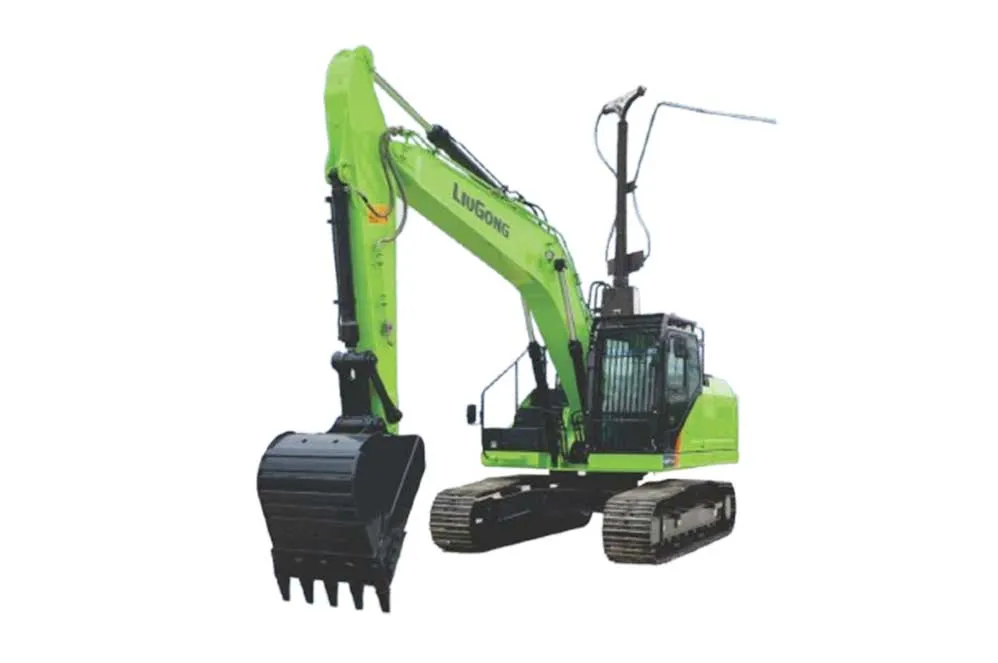
A LiuGong electric excavator is a tracked digger driven by an electric motor instead of a diesel engine, fed either by a battery carried on the machine or by a mains cable on a reel. Six of them are listed in India, spanning 2,750 kg to 39,000 kg, with indicative bands from ₹28.5–31.5 Lakh to ₹1.05–1.16 Crore as of October 2026. LiuGong is the only maker here whose whole electric excavator line carries a published figure: of the 13 electric excavators listed on this site, the six LiuGong machines are priced and the other seven are quote-only. This page sets them side by side on weight, bucket, digging depth, power and price, and says where each size earns its keep.
The six LiuGong electric excavators listed in India
The table is ordered by operating weight, lightest first. It is not a ranking: a 2.75 tonne machine and a 39 tonne machine do not compete for the same job. Every figure below comes from the machine’s own listing, linked in the first column, as of October 2026.
| Model | Operating weight | Bucket | Max digging depth | Rated power | Indicative price (Oct 2026) |
|---|---|---|---|---|---|
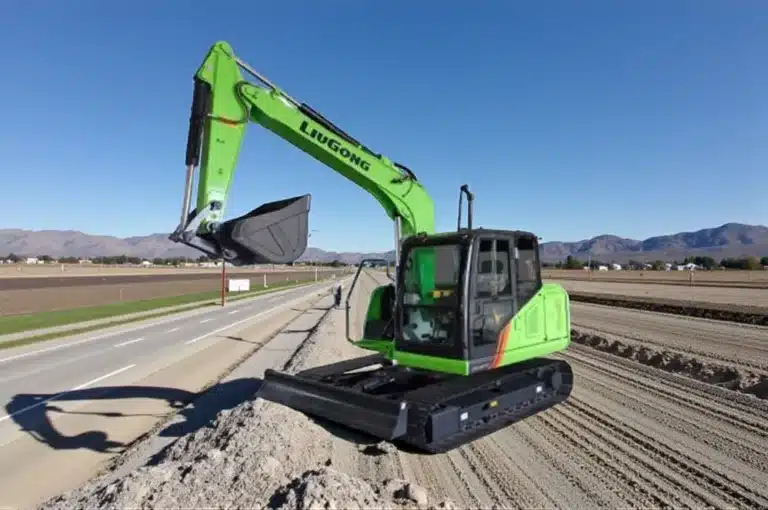
| LiuGong 9027FE EV | 2,750 kg | 0.08 m³ | 2,857 mm | 16.5 kW (21.1 HP) | ₹28.5–31.5 Lakh |
| LiuGong 908FE EV | 7,600 kg | 0.32 m³ | 4,110 mm | 47 kW (63 HP) | ₹31.4–34.7 Lakh |
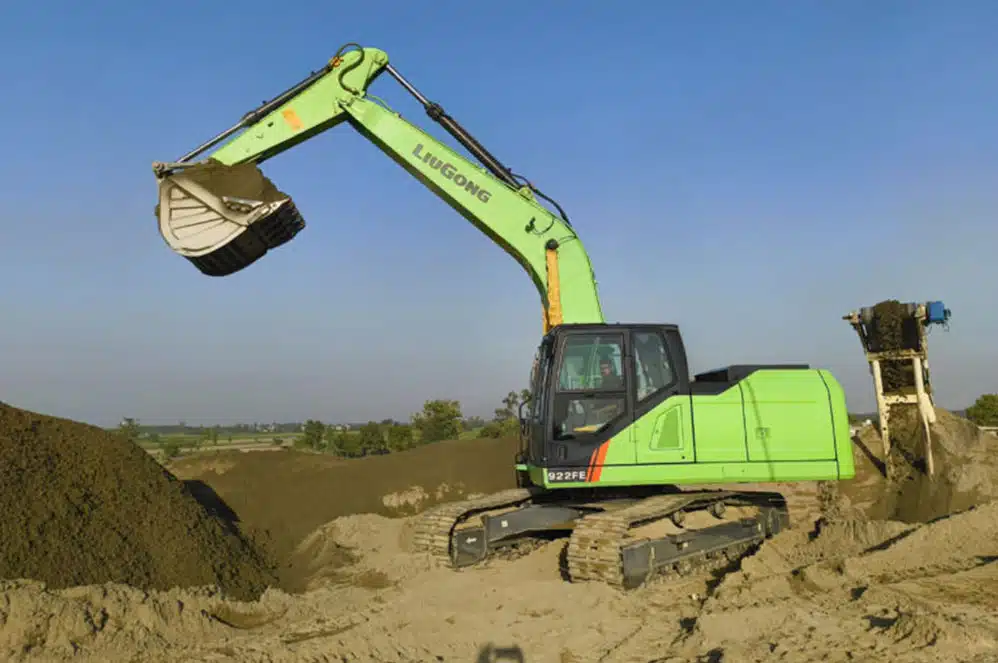
| LiuGong 922FE Cable | 22,000 kg | 1.15 m³ | 6,250 mm | 105 kW (140 HP) | ₹58.9–65.1 Lakh |
| LiuGong 922FE Battery | 24,100 kg | 1.0 m³ | 6,250 mm | 105 kW (140 HP) | ₹58.9–65.1 Lakh |
| LiuGong 926FE EV | 26,000 kg | 1.3 m³ | 6,380 mm | 150 kW (201 HP) | ₹68.4–75.6 Lakh |
| LiuGong 939FE EV | 39,000 kg | 2.0 m³ | 6,890 mm | 250 kW (325 HP) | ₹1.05–1.16 Crore |
Two things in that table are worth reading twice. The jump from the 908FE EV to the 922FE Cable is the largest gap in the range: 7.6 tonnes to 22 tonnes, with nothing listed in between. If your work sits at 12 or 15 tonnes, the electric answer is not here yet, and the same hole runs across the other makers too, as the small end of the electric excavator market shows. The second is that the 922FE Cable and 922FE Battery carry the same price band despite being different machines, which is the next section.
Cable or battery: one machine, two ways to feed it
The 922FE is sold in two forms, and the difference is only in where the electricity comes from. Both run the same 105 kW IPMSM motor. Both are rated at 152.5 kN bucket digging force and 126 kN arm digging force, both reach 9,530 mm, and both dig to 6,250 mm. LiuGong India’s own specification pages list the same two bucket options for each, 1.0 m³ heavy duty and 1.15 m³ general purpose, so the single bucket figure shown against each machine above is the variant recorded in that listing rather than a real difference between the two.
What does differ is weight. The Battery version is listed at 24,100 kg and the Cable at 22,000 kg: about 2.1 tonnes of the Battery machine is the pack it carries. LiuGong India’s own page gives the battery machine as 24,000 kg, which makes it roughly 2 tonnes either way. That weight is not free. It presses harder on soft ground, it counts against you on a low-bridge or permit route, and it is dead load the motor hauls up every gradient.
In exchange the battery machine goes where no cable reaches. LiuGong India’s 922FE Battery specification page gives it a 423 kWh LFP pack. The 922FE Cable page gives that machine a reel holding 35 or 45 metres of cable and a working range under 50 metres. Both pages were read on 29 October 2026. Fifty metres is the whole decision: a quarry face, a tunnel heading or a fixed demolition bay stays inside it for months, while a pipeline trench or a road job walks out of it on day one.
Which size suits which work
Electric machines are at their best where the work is repetitive, the site is fixed for a long stretch, and the machine can be plugged in without a special arrangement. That shapes the match more than the spec sheet does.
At 2,750 kg with a 0.08 m³ bucket and 1,550 mm overall width, the 9027FE EV is a machine for indoor and enclosed work: basement digs, service trenches inside a compound, warehouse and plant maintenance where a diesel exhaust is the problem you are solving. It fits through a standard gate. The 908FE EV at 7,600 kg and 0.32 m³ moves up to urban utility work, drain and cable trenching and night work in residential areas, where its 35 degree gradeability and 4,110 mm dig depth cover most municipal trenches.
The 22 and 24 tonne 922FE pair and the 26 tonne 926FE EV are the general-purpose earthmoving sizes, the class most Indian contractors already run in diesel. A 6,250 to 6,380 mm dig depth and buckets of 1.0 to 1.3 m³ handle foundations, bulk excavation and truck loading. Choose the Cable version where the machine stays inside that 50 metre circle, and the Battery version where it tracks around the site.
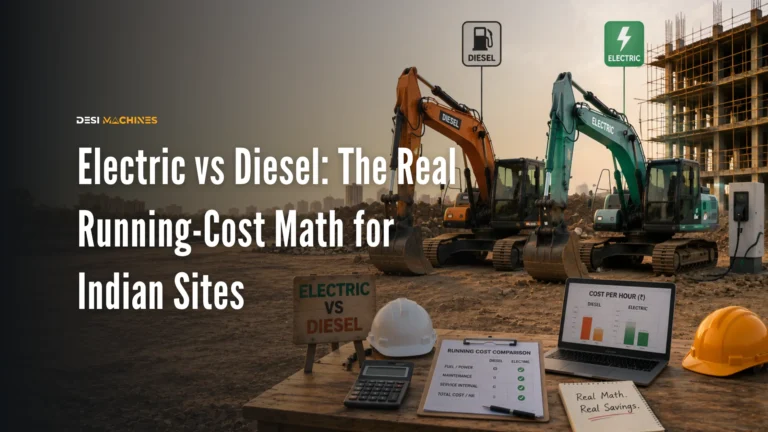
Quarry and mine-face work is where the 939FE EV belongs, at 39 tonnes, 2.0 m³ and 255 kN of bucket digging force. That is also where an electric machine has the clearest case: a fixed bench, a long shift pattern, a grid connection already on site for the crusher, and a diesel bill that an owner can measure. If you want the arithmetic behind that case rather than the claim, our breakdown of electric versus diesel excavator running cost works it through with the tariff and diesel price stated.
Power per tonne, and what it tells you
One number not printed on any spec sheet is useful when you are comparing electric machines across sizes: rated motor power divided by operating weight. We have divided the catalogue’s rated power in kW by its operating weight in tonnes and rounded to one decimal.
| Model | Rated power | Operating weight | kW per tonne |
|---|---|---|---|
| LiuGong 9027FE EV | 16.5 kW | 2.75 t | 6.0 |
| LiuGong 908FE EV | 47 kW | 7.6 t | 6.2 |
| LiuGong 922FE Cable | 105 kW | 22.0 t | 4.8 |
| LiuGong 922FE Battery | 105 kW | 24.1 t | 4.4 |
| LiuGong 926FE EV | 150 kW | 26.0 t | 5.8 |
| LiuGong 939FE EV | 250 kW | 39.0 t | 6.4 |
The range runs from 4.4 to 6.4 kW per tonne, and the 922FE pair sits at the bottom of it. The same 105 kW motor is hauling 22 or 24.1 tonnes, where the 926FE EV puts 150 kW under 26 tonnes. On paper that is a 4 tonne step up in weight for a 45 kW step up in power. It does not make the 926FE EV a better machine, and bucket and arm forces are the figures that decide what a bucket will break out. But it does mean the 922FE has less margin in reserve when it is working a hard face or climbing a ramp loaded, and it is worth asking a dealer to demonstrate both on the material you actually dig.
Ready to put a number against your own shift? Compare the full range of electric excavators and their specifications, or work out the monthly outgo first with our equipment finance calculations.
What LiuGong claims about running cost
This matters because the running-cost saving is the whole argument for paying an electric premium, and it is the part buyers are most often given without a number.
Read on 29 October 2026, LiuGong India’s 922FE Battery page says its battery technology “powers the machine with zero emissions, significantly reducing operating costs”, and credits an intelligent power control system with keeping energy use efficient. The Cable page carries the same wording for its electrical system. Both describe the 922FE as having the “highest output in this class of excavators”.
Those are LiuGong’s own claims, and they are qualitative. LiuGong India publishes no payback period, no cost per hour and no percentage saving against a diesel equivalent on any of these excavator pages, and no electricity tariff that such a figure would depend on. Payback figures for LiuGong machines do circulate in trade coverage, but the ones we found refer to a wheel loader rather than to any of these excavators, and we could not confirm them on LiuGong’s own pages, so they are left out here. If a dealer quotes you a payback, ask for it in writing with the tariff, the diesel price, the shift hours and the machine it applies to.
What to confirm before you order one
Three gaps are worth closing before money moves.
Availability. LiuGong India’s own product pages, checked across its full product list on 29 October 2026, carry the 922FE Cable and the 922FE Battery. The 9027FE EV, 908FE EV, 926FE EV and 939FE EV do not have a page there. Absence from a website is not proof a machine cannot be supplied, and makers routinely sell models their site has not caught up with. It does mean you should get availability, lead time and the nearest service point confirmed in writing rather than assumed.
Battery size and runtime. Only the 922FE Battery has a published pack size, the 423 kWh LFP figure on LiuGong India’s page. For the other machines listed as electric, neither the catalogue nor the India site records the pack capacity, the charging time or the hours a full charge gives on a working duty cycle. Those three numbers decide whether a machine finishes your shift. Ask for them against a stated duty cycle, not a best case.
What the warranty actually covers. All six are listed with a 1 year or 2,000 hour warranty. That is the machine warranty. The battery pack is the single most expensive component on a battery machine and its cover is usually written separately, in years and in charge cycles or hours. Get the pack’s own term, its capacity-retention threshold and what happens to the warranty if you fast-charge daily.
Our catalogue records four of the six simply as electric without saying whether each is battery or cable-fed, so treat the power source as something to confirm on the quotation rather than inferred from the EV in a model name.
The bottom line
Of the makers whose electric excavators are listed here, LiuGong covers the widest span of sizes at a published figure, from a 2.75 tonne indoor machine to a 39 tonne quarry machine, and it is the only one that carries a price on every model rather than quoting on request. The range has a real hole between 7.6 and 22 tonnes, two of the six are the same machine fed two different ways, and the specification that most affects a shift, battery capacity and runtime, is published for one machine out of six. None of that argues against buying one. It argues for asking the four questions above before you do, and for matching the machine to a site that is fixed, repetitive and already has power.
See how these sit against the rest of the market in our survey of the most advanced electric excavators and the dated electric excavator price ranges by model, or start with the fundamentals in the guide to electric construction machines. When you have a size in mind, compare the live electric excavator models and speak to a dealer.
Prices, specifications and features are indicative, vary by variant, location and date, and should always be confirmed with the official OEM or authorised dealer before any purchase decision. Machine figures and price bands are taken from our listings at the time of writing. DesiMachines is not liable for decisions taken on the basis of information that may have changed after publication.