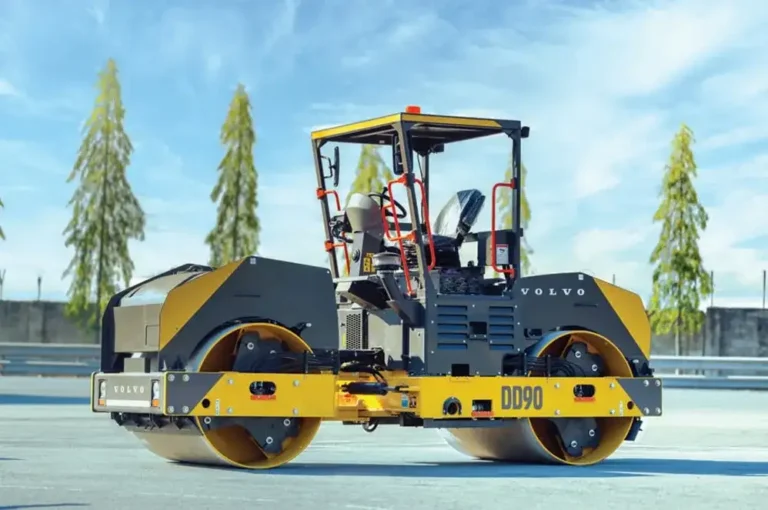
Excavator
294 models
 Backhoe Loader
51 models
 Crane
68 models
 Concrete Mixer
79 models
 Wheel Loader
54 models
 Compactor / Roller
45 models
 Motor Grader
42 models

 Concrete Pump
66 models
 Skid Steer Loader
11 models


The brick work rate per cubic meter for burnt clay brick masonry in a building’s superstructure is Rs 10,899.75 in cement mortar 1:4 and Rs 10,661.35 in 1:6 in Puducherry’s Schedule of Rates 2024-25, with material and labour. Maharashtra’s 2022-23 schedule puts 1:6 brick masonry at Rs 7,994, of which Rs 1,705 is labour. Each cubic metre takes about 494 bricks, 1.25 to 1.9 bags of cement and 0.27 cubic metres of sand. These are official estimating rates before GST; a local quote moves with brick, sand and mason prices in your town.
One cubic metre of brick wall needs 494 bricks, a quarter of a cubic metre of mortar and just under one mason-day of work. That recipe comes from the Central Public Works Department’s analysis of rates. What changes from one state book to the next is the price put on each input, and once you see that, a contractor’s per-cum quote is easy to check.
Brick work rate per cubic meter in the official schedules
State public works departments publish schedules of rates (SORs) to estimate their own jobs. Brick work is priced per cubic metre of finished wall, mortar included, with separate items for foundation and plinth and for the superstructure above plinth level.
| Schedule (date) | Item | CM 1:4 per cum | CM 1:6 per cum |
|---|---|---|---|
| Puducherry PSR 2024-25 (from 14 Aug 2024) | 6.4.1 / 6.4.2: burnt clay FPS bricks, superstructure up to floor five | Rs 10,899.75 | Rs 10,661.35 |
| Puducherry PSR 2024-25 | 6.1.1 / 6.1.2: same bricks, foundation and plinth | Rs 9,222.60 | Rs 8,984.20 |
| Maharashtra SSR 2022-23 (from 25 Jul 2022) | 27.05: second class burnt brick, superstructure | no wall item | Rs 7,994 |
| Haryana HSR 2023 (premium date 1 Apr 2023) | 7.22.1 / 7.22.2: non-modular class 10.5, superstructure | Rs 3,877 | Rs 3,961 |
| Chhattisgarh Building SOR (10 Jun 2026) | 7.1.2 / 7.1.4: modular bricks, foundation and plinth | Rs 3,409 | Rs 3,248 |
The Puducherry Schedule of Rates 2024-25 is the newest book here built on current wages and material prices, and its three correction slips leave the brick work chapter unchanged. Maharashtra’s general notes say its rates exclude GST and already carry 10% for overheads, 10% for contractor’s profit and 1% labour cess. Haryana prints 1:6 above 1:4 exactly as shown, an oddity in its own table.
The low Haryana and Chhattisgarh figures are not market prices. Chhattisgarh’s 2026 book states its cement base “as on date 01.01.2015” at Rs 4,845 a tonne. Treat the Puducherry and Maharashtra figures as the realistic range.
What goes into one cubic metre: the rate analysis
CPWD’s Delhi Analysis of Rates 2014 is the newest analysis on CPWD’s publications page. Its rupee figures are dated, but the quantities show what a rate is built from. Item 6.4 (superstructure brick work) per cubic metre:
| Input per cum | Superstructure (6.4) | Foundation and plinth (6.1) |
|---|---|---|
| Bricks, traditional (FPS) size | 494 | 494 |
| Cement mortar | 0.25 cum | 0.25 cum |
| Mason, 1st class + 2nd class | 0.47 + 0.47 day | 0.36 + 0.36 day |
| Coolie (helper) | 1.80 day, plus 1.13 for lifting to floors two to five | 1.37 day |
| Bhisti (water and curing) | 0.20 day | 0.20 day |
| Loadings | water 1%, then 15% profit and overheads | same |
Modular bricks need 487 bricks and 0.22 cum of mortar (item 6.2); Maharashtra’s quantity table counts 475 bricks. For cement and sand, CPWD’s mortar analysis puts 0.38 tonne of cement in a cubic metre of 1:4 mortar and 0.25 tonne in 1:6, with 1.07 cum of sand in both. At 0.25 cum of mortar per cubic metre of brick work, that is about 1.9 bags of cement for 1:4 and 1.25 bags for 1:6, plus about 0.27 cum of sand. Maharashtra’s table gives 1.24 bags and 0.25 cum for first class brick work in 1:6, which agrees. The same mortar analysis also charges for a mechanical mixer, so the official rate assumes mixed mortar, not hand-turned heaps.
Brick work labour rate per cubic meter (without material)
A “without material” quote means you buy the bricks, cement and sand and pay the contractor for the work alone. Two books print a labour figure directly. Maharashtra’s 2022-23 labour column is Rs 1,705 a cum for superstructure brick masonry and Rs 1,588 for foundation and plinth, about 21% of the completed rate. Haryana’s HSR 2023 shows Rs 570 of labour in item 7.22.1’s through rate of Rs 3,877, about 15%.
Both rest on old wages (Maharashtra paid a first class mason Rs 677 a day). At Puducherry’s 2024-25 wages, CPWD’s labour quantities cost more. This is our arithmetic, not a published rate:
| Worker (PSR 2024-25 day rate) | Days per cum | Amount |
|---|---|---|
| Mason, brick layer 1st class (Rs 1,000) | 0.47 | Rs 470.00 |
| Mason, brick layer 2nd class (Rs 950) | 0.47 | Rs 446.50 |
| Coolie (Rs 600) | 2.93 | Rs 1,758.00 |
| Bhisti (Rs 700) | 0.20 | Rs 140.00 |
| Mixing 0.25 cum of mortar (beldar Rs 750, bhisti) | 0.19 + 0.02 | Rs 152.88 |
| Wages per cum | Rs 2,967.38 |
Add CPWD’s 15% for profit and overheads and a labour-only rate of about Rs 3,412 a cubic metre is a fair benchmark in a high-wage area. Kerala PWD’s October to December 2026 market list puts a first class brick-laying mason at Rs 1,235.21 a day in Thiruvananthapuram, higher still. Our labour rate per day guide explains how a notified wage becomes a bid line. Government building tenders quote these same item numbers in their bills of quantities; live works are listed under tenders and opportunities.
Red clay brick vs fly ash brick masonry rate
Every schedule we checked prices fly ash brick work below burnt clay brick work, mostly because the brick itself costs less:
| Schedule and mortar | Burnt clay brick per cum | Fly ash brick per cum |
|---|---|---|
| Puducherry 2024-25, superstructure, 1:4 | Rs 10,899.75 (6.4.1) | Rs 9,942.69 (6.34.1) |
| Maharashtra 2022-23, superstructure, 1:6 | Rs 7,994 (27.05) | Rs 7,106 (27.13) |
| Haryana HSR 2023, superstructure, 1:4 | Rs 3,877 (7.22.1) | Rs 3,584 (7.47.1) |
| Chhattisgarh 2026, foundation, 1:4 | Rs 3,409 (7.1.2) | Rs 2,934 (7.5.2) |
Maharashtra keeps labour at Rs 1,705 for both and prices second class red bricks at Rs 8.50 each against Rs 7 for fly ash. Puducherry lists burnt clay bricks at Rs 7,500 per 1,000 and IS 12894 fly ash bricks at Rs 6,500. Strength and weight are compared in fly ash bricks vs red bricks, and the plant economics for makers are in fly ash brick business.
Why half brick walls are priced per square metre
A half brick partition, about 115 mm thick, is priced per square metre of wall face, because the thickness is fixed and the work is mostly labour and mortar. Puducherry’s item 6.13.2 is Rs 1,299.18 a sq m in 1:4 mortar, Maharashtra’s 27.06 is Rs 1,119 a sq m (Rs 203 labour) with steel bars every third course, and Chhattisgarh’s 9 cm modular item 7.9.2 is Rs 370. Converted, Puducherry’s figure is near Rs 11,297 a cum, more than its one-brick wall, so compare half brick quotes only with other per-sq-m quotes.
A worked example: 30 m of 9-inch wall
Take 30 m of 230 mm (9-inch) wall, 3 m high, ignoring openings: 20.7 cubic metres. At Puducherry’s item 6.4.2 (1:6) that is about Rs 2,20,690 before GST. You would need about 10,226 bricks before breakage, 26 bags of cement and 5.5 cum of sand. Labour alone, on the arithmetic above, is about Rs 61,425 in wages, or Rs 70,638 with 15%.
Many contractors quote per cubic foot or per sq ft of wall. One cubic metre is 35.315 cft, so Rs 10,661.35 a cum is about Rs 302 a cft, and since a cubic metre of 9-inch wall covers about 46.8 sq ft, about Rs 228 per sq ft of wall. For boundary walls priced per running foot, see the compound wall cost guide.
The bottom line
On the most current official book, brick work with material costs about Rs 10,660 to 10,900 a cubic metre in a superstructure and Rs 8,980 to 9,220 in foundations, before GST. Labour is a fifth to a third of that, depending on whose wages you use. Ask every contractor for the mortar mix, brick class and whether scaffolding and curing are included. The same reading works for plaster rates per sq ft, and the trench before the first course is priced in excavation rate per cubic meter. If you run a contracting business, find government works to bid on through live tenders and opportunities.
Schedule of rates figures are government estimating rates for the dates and states shown, exclude GST and are not market quotes; labour build-ups are our own arithmetic. Rates, schemes, specifications and prices change — confirm current terms with the OEM, dealer, bank or insurer, or the issuing department, before deciding. DesiMachines is not liable for decisions taken on information that may have changed after publication.