Excavator
294 models
Excavator
294 models  Backhoe Loader
51 models
Backhoe Loader
51 models  Crane
68 models
Crane
68 models  Concrete Mixer
79 models
Concrete Mixer
79 models  Wheel Loader
54 models
Wheel Loader
54 models  Compactor / Roller
45 models
Compactor / Roller
45 models  Motor Grader
42 models
Motor Grader
42 models  Dozer
41 models
Dozer
41 models  Concrete Pump
66 models
Concrete Pump
66 models  Skid Steer Loader
11 models
Skid Steer Loader
11 models  Telehandler
13 models
Telehandler
13 models 


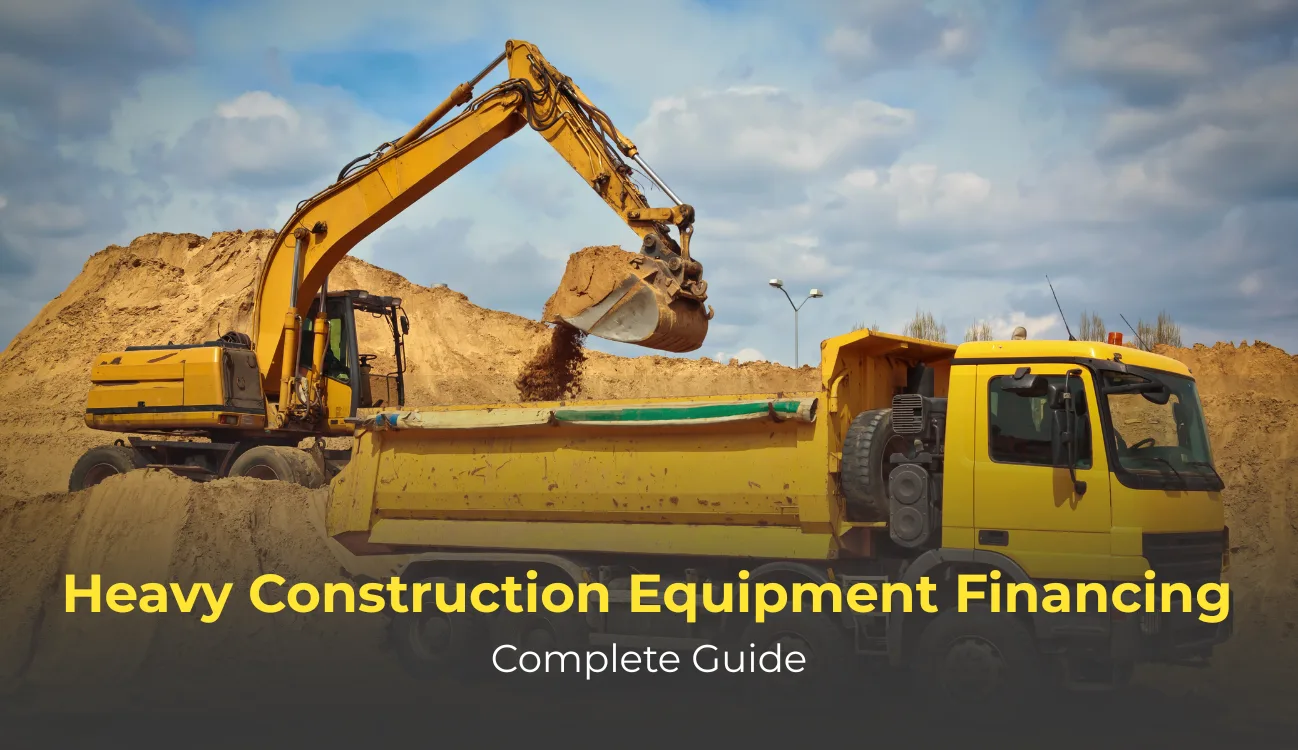
A construction equipment loan funds most of the price of a machine against the machine itself. Indicatively, banks lend 75–80% of the value and NBFCs 85–90%, so you put in a margin of roughly 10–25% plus the on-road extras, over a tenure of about three to five years. Approval turns on three things: how long you have been trading, your repayment record, and whether the machine is a common resaleable model or something niche. Everything below is the detail behind those three.
A project runs on the machines that turn up on site. The trouble is that a mid-size excavator ties up a sum most contractors would rather keep as working capital, and an idle bank balance wins no tenders. Financing is how the machine gets to site without the cash leaving the business in one go — you fund the margin, the lender funds the rest, and the machine earns while you repay.
Our construction equipment finance pages list the banks and NBFCs active in this market so you can compare what each will actually fund before you walk into a branch.
Who lends, and on what terms
Three kinds of lender compete for this business, and they behave differently. Public and private banks price lowest but ask for the most paperwork and a longer trading history. NBFCs and captive finance arms (the lending arm attached to a manufacturer) move faster and fund a larger share of the machine, and charge for it. Which one suits you depends less on the headline rate than on how quickly you need the machine and how complete your books are.
The loan is secured on the machine itself, which is hypothecated to the lender until you clear it. That security is why equipment finance is easier to get than an unsecured business loan of the same size — and why the lender cares so much about whether the model resells.
The terms worth checking before you sign:
- Margin (your share) – roughly 10–25% of the machine, plus insurance, registration and the first service, which lenders do not fund.
- Tenure – commonly three to five years. A longer tenure cuts the monthly instalment and raises the total interest you pay.
- Processing and documentation fees – typically 1–3% of the loan, payable upfront, and easy to miss when you compare offers on rate alone.
- Foreclosure charges – often 2–4% if you clear the loan early after a good season. Ask for this in writing before you sign.
- Repayment shape – some lenders will match instalments to project cash flow or allow a short moratorium while the machine is being commissioned.
Compare offers on the total you repay over the full tenure, not on the advertised rate. A lower rate carrying a 3% processing fee and a 4% foreclosure charge often costs more than a slightly dearer loan without them.
Types of Equipment Covered Under Machinery Loans
The scope of construction equipment financing is vast. Whether you’re purchasing a brand-new machine or opting for a used one, financing solutions are available across categories.
Some of the most commonly financed machines include:
- Excavators – Mini, medium, and large excavators are fundamental for digging, lifting, and earthmoving.
- Cranes – Tower cranes, crawler cranes, mobile cranes for lifting and material handling.
- Backhoe Loaders – A versatile favorite for Indian contractors.
- Wheel Loaders & Skid-Steer Loaders – For quarrying, construction, and material transport.
- Compactors & Road Rollers – Essential for road construction and infrastructure projects.
- Concrete Equipment – Concrete pumps, transit mixers, batching plants.
- Pavers & Motor Graders – Key for highways and smart city projects.
- Mining Equipment – High-value dump trucks, drilling rigs, and large excavators.
In fact, even used heavy construction equipment qualifies for financing with certain institutions, making it easier for smaller contractors to expand fleets without heavy upfront costs.
Popular financed models include the JCB 3DX backhoe loader and the Hyundai R215 excavator — open any model page to check its price, down payment and monthly EMI on the built-in calculator.
Eligibility Criteria for Construction Equipment Financing
While financing is accessible, eligibility is based on the applicant’s financial health, project history, and repayment ability. The typical criteria include:
- Business Background – Contractors, fleet owners, builders, or rental companies engaged in infrastructure, mining, or construction are eligible.
- Experience in Sector – Lenders usually prefer 2–3 years of operational experience in the construction business.
- Credit Profile – Most lenders treat a CIBIL score of 700 and above as comfortable and 650 as the floor. Below that the loan can still happen, but expect a bigger margin, a higher rate or a co-applicant.
- Turnover & Income Proof – Companies with stable annual turnover or contractors with strong project order books have higher chances of approval.
- Type of Equipment – Financing is easier for widely used machines like excavators, cranes, and loaders. Specialized or niche equipment may need stronger guarantees.
If you are unsure where you stand, check the score before you apply rather than after — a rejected application is itself recorded, and a second lender will see it.
Documents Required for Equipment Financing
To secure financing, contractors need to present a set of documents for verification. While requirements vary slightly across lenders, the standard list includes:
- KYC Documents – PAN, Aadhaar, GST registration, and company incorporation certificates.
- Financial Statements – Balance sheets, profit & loss accounts, and ITRs for the past 2–3 years.
- Bank Statements – Usually 6–12 months to assess cash flow.
- Business Proof – Work orders, project contracts, vendor agreements.
- Collateral (if applicable) – Some loans may be backed by hypothecation of the machine itself or other collateral.
- Identity & Address Proof – For both the business entity and the promoter/owner.
The machine itself often acts as the primary collateral, reducing the burden of additional guarantees.
Why Choose Construction Machinery Financing
- Preserve Working Capital – Instead of locking large sums in machinery, funds can be used for operations and expansion.
- Faster Growth – Financing allows immediate access to modern machines without waiting for internal funds.
- Tax Benefits – Loan repayments and interest payments may qualify for deductions under prevailing tax rules.
- Access to Latest Technology – Contractors can deploy advanced heavy construction equipment without worrying about upfront costs.
- Build Creditworthiness – Regular repayment of equipment finance loans enhances business credit profiles.
Desi Machines: Your Trusted Partner for Machinery Loans
At Desi Machines, we are more than just a marketplace for heavy equipment. We are your trusted aggregator and advisor.
Here’s how we make a difference in your financing journey:
- Full model listings – From excavators and cranes to loaders and compactors, all categories are available with financing options.
- Transparent Comparisons – Compare the specifications and the financing terms side by side, since the cheaper machine on a worse loan is often the dearer one.
- Financing & Insurance Solutions – With tie-ups across institutions, we help you find tailor-made financing and insurance products.
- Expert Advisory – Backed by over 10 years of industry experience, our team guides you on ROI, TCO (Total Cost of Ownership), and financing benefits.
- End-to-End Support – From machine selection to financing documentation, we simplify the entire process.
In short, you can shortlist the machine and line up the funding for it in the same place, instead of running the two conversations separately.
How to arrange a construction equipment loan
The construction industry is progressing at a rapid pace. Those with the necessary equipment will define the future. Because of construction equipment financing, limited capital doesn’t have to become an obstruction to progress anymore. Whether you need an excavator for a project in an urban landscape, a crane for high-rise construction, or a backhoe loader for multiple reasons, financing can help contractors and builders stay ahead of the competition.
One practical note: arrange the finance before you close the price with the dealer, not after. A sanctioned limit tells you what you can actually commit to, and it takes the pressure off the negotiation.
One thing worth settling before you sign: what it costs to get out early. Foreclosure charges on a machine loan indicatively run 2-5% of the outstanding principal on fixed-rate lending, usually after a lock-in of six to twelve EMIs. The RBI’s Pre-payment Charges on Loans Directions, 2025 removed those charges for many business borrowers, but only on floating-rate loans and only where the loan was sanctioned or renewed on or after 1 January 2026 — and most construction equipment loans are still written at a fixed rate. Read the clause in your sanction letter: equipment loan foreclosure charges works through what is actually chargeable.
Learn More:
Global Heavy Construction Equipment Market to Trends
Loan-to-value, tenure, fees and interest rates quoted here are indicative market ranges for planning and vary by lender, machine, and your own credit profile. Confirm the exact terms, fees and rate in writing with the bank or NBFC before you commit.