Excavator
294 models
 Backhoe Loader
51 models
 Crane
68 models
 Concrete Mixer
79 models
 Wheel Loader
54 models
 Compactor / Roller
45 models
 Motor Grader
42 models

 Concrete Pump
66 models
 Skid Steer Loader
11 models


Roller compactors — or road rollers as most Indian contractors call them — are the backbone of every road construction and infrastructure project in India. Whether you’re working on an NHAI highway package, a state PWD tender, or an industrial park development, the right compactor determines how fast you finish and how long the surface holds up. Soil compactors handle earthwork and subgrade preparation. Tandem rollers (double drum) finish asphalt layers. Pneumatic tyre rollers (PTR) seal the surface. Each type has a job, and each brand has its strengths.
Top Compactor Brands in India
Short answer for anyone comparing in a hurry: for dealer reach and resale, JCB and CASE; for compaction quality on expressway-grade asphalt, HAMM, Volvo and Dynapac; for the best price per tonne on a full-size soil compactor, SANY, ACE and L&T. Full-size soil compactors run roughly ₹30–40 lakh, tandem rollers ₹32–44 lakh and baby rollers ₹12–20 lakh, indicative as of 2 October 2026.
The Indian compactor market has a mix of global OEMs with local manufacturing, Indian companies with decades of experience, and Chinese brands offering aggressive pricing. Here’s what you need to know about each major player before you sign anything.
1. JCB Compactors
JCB doesn’t need an introduction on Indian construction sites. The brand recognition alone makes resale easier, and the dealer network is unmatched — you’ll find a JCB service centre within 100 km of almost any project site in India. The JCB VM117 is their flagship soil compactor: 74 HP, 11,525 kg operating weight, 2,130 mm drum width. Price range sits at ₹36–38 Lakh (indicative). For tandem rollers, the JCB VMT330 baby roller at ₹15–20 Lakh handles asphalt finishing on smaller projects. JCB’s after-sales support is the real differentiator. Parts availability in Tier 2 and Tier 3 towns is better than most competitors.
2. CASE Compactors
CASE delivered its 10,000th vibratory compactor in India — that’s not marketing, that’s market leadership. The CASE 1107NX is the workhorse: 101 HP Ashok Leyland engine, 11,100 kg operating weight, 2,150 mm drum width. Price: ₹34–36 Lakh (indicative). What sets CASE apart? Fuel efficiency. Their smart idling technology cuts fuel usage by approximately 3%, which adds up fast on a 6-month highway project. The 360-degree visibility from the operator cabin is another practical advantage — fewer blind spots mean fewer accidents. For baby rollers, the CASE 450NX at ₹15–18 Lakh is popular for urban road work.
3. L&T Compactors
L&T (Larsen & Toubro) brings the Made-in-India advantage with Komatsu technology backing. The L&T 1190D is their bread-and-butter model: 102 HP Mahindra engine, 11,150 kg operating weight, 2,100 mm drum width. Price: ₹30–32 Lakh (indicative). Value-for-money positioning, plain and simple. The L&T 990HFi tandem roller at ₹35–37 Lakh handles asphalt compaction, and the L&T 2490 HD pneumatic tyre roller at ₹35–37 Lakh seals the deal on highway projects. L&T’s service network is strong in western and southern India — weaker in the northeast. Check the nearest service point before buying if your site is in Assam or Meghalaya.
4. Volvo Compactors
Volvo is the premium choice. You pay more, you get more — better vibration systems, superior operator safety features, longer service intervals. The Volvo SD110 soil compactor runs 99.2 HP, 11,150 kg operating weight. Price: ₹38–40 Lakh (indicative). The Volvo DD90 tandem roller at ₹42–44 Lakh is built for expressway-grade asphalt work. And the Volvo PT220 pneumatic tyre roller handles ballasted weights up to 24,000 kg for heavy-duty sealing; it is quoted on request rather than carrying a listed range. Volvo machines are ideal for Bharatmala and Sagarmala projects where tender specs demand premium equipment. But here’s the honest truth: if your project is a 10 km state highway in Madhya Pradesh, you don’t need Volvo pricing. For most contractors the budget decides before the badge does.
5. Escorts Compactors
Escorts Kubota is the budget-friendly Indian option with a solid track record. The Escorts EC5250 soil compactor delivers 110 HP at around ₹30–32 Lakh (indicative), making it one of the most competitively priced full-size soil compactors from a reputed brand. Operating weight: 10,350 kg. The Escorts EC5250 Plus bumps that to 11,430 kg for heavier compaction needs, at ₹30–32 Lakh (indicative). For tandem work the range runs from the Escorts EC3664 baby roller at ₹12–16 Lakh (indicative) — the lowest-priced compactor named here — up to the HD 85 PLUS at ₹34–36 Lakh (indicative), which is a full 9,120 kg tandem rather than a baby roller. Escorts parts are widely available across India, and the brand has strong penetration in agricultural regions where contractors often run mixed fleets.
6. SANY Compactors
SANY is the Chinese brand that’s earned its place in India through competitive pricing and improving quality. The SANY SSR110C-10 PRO soil compactor offers 110 HP, 11,200 kg operating weight at ₹31–33 Lakh (indicative). The SANY STR90C-10 PRO tandem roller at ₹32–34 Lakh handles asphalt finishing. SANY’s market share is growing, especially on price-sensitive tenders. The service network is expanding but still lags behind JCB and L&T in smaller towns. Ask about service centre distance before committing.
7. HAMM Compactors
HAMM (part of Wirtgen Group) is the global specialist for large-scale compaction — mining, highways, airports. The HAMM HC 119i delivers 99.2 HP, 11,200 kg operating weight at ₹35–37 Lakh (indicative). The HAMM HC 119iD padfoot version at 11,800 kg handles cohesive soils better, at ₹35–37 Lakh (indicative). For tandem work, the HAMM HD 99i VV at 9,770 kg is built for precision asphalt compaction and is quoted on request. HAMM machines are over-engineered for most Indian road projects — but for mining haul roads in Jharkhand or airport runway work, they’re worth the premium. The durability holds up in rocky terrain where cheaper machines break down faster.
8. Dynapac Compactors
Dynapac is the compaction technology specialist — Swedish engineering with a focus on vibration control and drum design. The Dynapac CA305 CEV-V soil compactor runs 110 HP, 10,800 kg operating weight at ₹34–36 Lakh (indicative). The Dynapac CA245 CEV-V at 74.5 HP and 9,700 kg suits lighter applications, at the same ₹34–36 Lakh (indicative). For tandem rollers, the Dynapac CC425 CEV-V at ₹35–37 Lakh handles asphalt, and baby rollers like the Dynapac CC800 start at ₹13–17 Lakh. Dynapac excels in specific site conditions — waterlogged clay in Bengal, sandy riverbeds in Rajasthan — where precise vibration control prevents over-compaction.
9. Ammann Compactors
Ammann brings Swiss engineering and intelligent compaction technology to the Indian market. The Ammann ARS 110.2 soil compactor delivers the highest centrifugal force in its class with their 4-bearing vibratory system — faster compaction with fewer passes. That’s 101 HP, 11,100 kg operating weight, quoted on request rather than at a listed range. The Ammann ARX 90.2 tandem roller at ₹32–36 Lakh handles asphalt work, and the Ammann ARX 32.2 baby roller at ₹15–20 Lakh covers smaller projects. Ammann’s fuel efficiency is a genuine advantage on long projects.
10. ACE Compactors
ACE (Action Construction Equipment) is the homegrown Indian manufacturer known for cranes, but their compactor range is solid for budget-conscious buyers. The ACE ASD 115 soil compactor delivers 112 HP, 11,000 kg operating weight at ₹32–34 Lakh (indicative). The ACE ADD-95 tandem roller at ₹32–35 lakh handles asphalt compaction. ACE machines are built for Indian conditions — 45% gradeability for hilly terrain in Himachal and Uttarakhand. Parts availability is excellent across India, and the price-to-performance ratio beats most imported brands. On a fleet judged by running cost rather than badge, that is usually the deciding number.
Compare compactor models side by side on specification and listed price before shortlisting.
Leading Compactor Manufacturers in India
There’s a difference between brands selling in India and manufacturers actually building here. L&T manufactures compactors domestically with Komatsu technology — genuine Made-in-India machines. Escorts-Kubota has full manufacturing in Faridabad. ACE builds everything in India. JCB has a massive manufacturing facility in Pune. CASE assembles in India with CNH Industrial backing. SANY has expanded local assembly operations.
Global OEMs like Volvo, HAMM, Dynapac, and Ammann primarily import machines or assemble from imported kits. This affects spare parts availability and service turnaround. A breakdown on a Volvo in rural Chhattisgarh might mean 5–7 days waiting for parts. A breakdown on an L&T or Escorts? Usually 2–3 days. That’s the math, and it is the one that bites when the EMI is running and the site is idle.
Types of Compactors Available in India
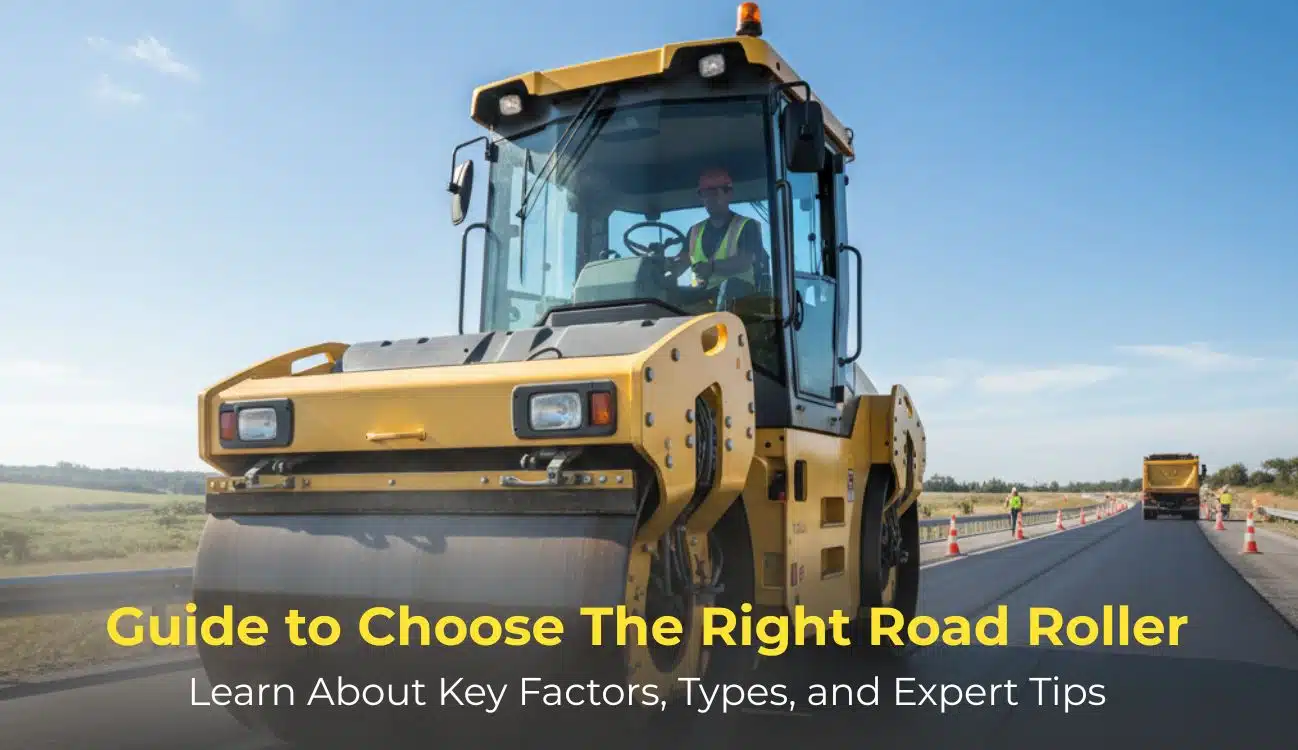
- Soil Compactors (Single Drum): Heavy single drum at front, rubber tyres at rear — used for subgrade preparation, embankment work, and earthwork compaction on highways.
- Tandem Rollers (Double Drum): Two smooth steel drums — used for asphalt finishing, surface course compaction, and urban road work.
- Pneumatic Tyre Rollers (PTR): Multiple rubber tyres — used for sealing asphalt layers and achieving the final surface finish on highways.
Those are the three types that matter on a road package. For the fuller classification — including the padfoot, vibratory and static variants and where each one is specified — see the guide to types of compactors.
Roller Compactor, Soil Compactor or Baby Roller: What the Names Mean
Four words get used for overlapping things on an Indian site, and buying the wrong one is an expensive misunderstanding. The distinction is worth stating plainly.
Road roller is the broad local term. Most contractors use it for any compaction machine, which is why a tender asking for a “road roller” tells you almost nothing on its own.
Soil compactor is the specific one: a single drum vibratory machine, smooth or padfoot, with rubber tyres driving at the rear. It is what compacts subgrade, embankment and base layers. On current listed ranges they run 9,700 kg to 14,760 kg and ₹30–40 Lakh. Earth compactor and soil compactor roller are the same machine under different names — the types of compactors guide sets out the full classification behind those labels.
Tandem roller is the double-drum machine for asphalt. Baby roller and mini roller are not a separate category at all — they are small tandem rollers, and the gap is bigger than the nickname suggests: the baby rollers on current listings weigh 1,575 kg to 3,450 kg, while every full-size tandem starts at 8,700 kg. There is nothing in between. That discontinuity is exactly why the price jumps from ₹12–20 Lakh to ₹32–44 Lakh with no middle rung — you are not buying a slightly bigger machine, you are buying a different class.
So the practical rule when you specify: say the drum count and the operating weight, not the nickname. “Single drum, 11 tonne” is unambiguous; “road roller” is not. The soil compactor listings and the tandem roller listings are split on exactly that line.
Price Range of Compactors in India
| Category | Price Range | Examples |
|---|---|---|
| Baby/Mini Rollers | ₹12–20 Lakh | CASE 450NX, JCB VMT330, Dynapac CC800 |
| Mid-Range Tandem Rollers | ₹32–37 Lakh | L&T 990HFi, ACE ADD-95, SANY TR90C-10 PRO |
| Standard Soil Compactors | ₹30–40 Lakh | Escorts EC5250, CASE 1107NX, JCB VM117 |
| Premium/Heavy-Duty | ₹37–44 Lakh | Volvo SD110, HAMM HC 139iD, Volvo DD90 |
| Pneumatic Tyre Rollers (PTR) | ₹25–40 Lakh | Dynapac CP275, L&T 2490 HD, SANY SPR260C-10 PRO |
Prices are ex-showroom. Factors affecting price: engine power (HP), drum width (mm), operating weight (kg), vibration control features, and brand positioning. On an asphalt package the machine is only half the cost line — the bitumen and road material suppliers you draw from decide the other half. Always verify with the OEM before committing—prices shift with location and financing terms.
Key Factors to Consider When Choosing a Compactor Brand
- Compaction Force (kN rating): Higher centrifugal force means fewer passes needed — directly affects productivity and fuel costs.
- Engine Power & Fuel Efficiency: A 10% difference in fuel consumption adds up to ₹2–4 lakh annually on a busy site.
- Drum Width & Operating Weight: Wider drums cover more area per pass; heavier machines compact deeper layers.
- After-Sales Service Network: Distance to the nearest service centre matters more than brand prestige. A breakdown 200 km from help means 3–5 days idle.
- Spare Parts Availability: Indian manufacturers (L&T, Escorts, ACE) have better parts availability in smaller towns.
- Vibration Control Features: Dual-frequency vibration systems adapt to different soil conditions—critical for black cotton soil near Nagpur or sandy terrain in Rajasthan.
- Operator Comfort & Safety: ROPS cabin, 360-degree visibility, ergonomic controls—operators work 10–12 hour shifts during the dry season.
- Project Type Suitability: Highway projects need 11+ ton machines; urban road work often uses baby rollers, which run 1,575 kg to 3,450 kg on current listed specifications.
Popular Compactor Models in India (2026)
| Model | Brand | Type | Price Range | Key Feature |
|---|---|---|---|---|
| 1107NX | CASE | Soil Compactor | ₹34–36 Lakh | Smart idling, 3% fuel savings |
| VM117 | JCB | Soil Compactor | ₹36–38 Lakh | Best dealer network in India |
| 1190D | L&T | Soil Compactor | ₹30-32 Lakh | Best value for money |
| SD110 | Volvo | Soil Compactor | ₹38–40 Lakh | Premium vibration system |
| HC 119i | HAMM | Soil Compactor | ₹35–37 Lakh | Mining-grade durability |
| 990HFi | L&T | Tandem Roller | ₹35–37 Lakh | Asphalt finishing specialist |
| EC5250 | Escorts | Soil Compactor | ₹30–32 Lakh | Lowest price, reliable performance |
Where to Buy Compactors in India
Every major brand has a strong presence across India — JCB, CASE, L&T, Volvo, SANY, HAMM, Escorts, ACE, and Dynapac all have showrooms in metro cities and regional hubs. Before making a purchase, do your homework. Compare specifications and listed prices across brands rather than taking a single dealer’s word, and settle how the machine will be paid for at the same time — the financing options page sets out what lenders ask for.
Always verify the official authorization and support network. Ask for the official authorization certificate. Check warranty terms in writing — not verbal promises. And here’s the real advice: call the service centre, not the sales team. Ask how many mechanics they have within 100 km of your site. That answer tells you more than any brochure.
Still deciding? The soil compactor, tandem roller and pneumatic roller listings carry the specification and the listed range for every model named above.
Every price above is an indicative ex-showroom range for India taken from our own current listings — actual on-road cost moves with variant, GST, freight, attachments and dealer discount. Confirm the figure with the dealer or OEM before you budget.