Excavator
294 models
Excavator
294 models  Backhoe Loader
51 models
Backhoe Loader
51 models  Crane
68 models
Crane
68 models  Concrete Mixer
79 models
Concrete Mixer
79 models  Wheel Loader
54 models
Wheel Loader
54 models  Compactor / Roller
45 models
Compactor / Roller
45 models  Motor Grader
42 models
Motor Grader
42 models  Dozer
41 models
Dozer
41 models  Concrete Pump
66 models
Concrete Pump
66 models  Skid Steer Loader
11 models
Skid Steer Loader
11 models  Telehandler
13 models
Telehandler
13 models 


Can a part off a broken-up backhoe save you money? For heavy steel that wears slowly, often yes. Used JCB spare parts such as buckets, loader arms, counterweights, axle housings, rims and cab panels can cut a repair bill sharply once checked for cracks. Wear and sealing parts (hoses, seals, filters, bearings, brake parts) are never worth buying used. And the law gives you less protection than most buyers think: under Section 16 of the Sale of Goods Act, 1930, a part you examined is largely bought as seen.
An owner with a cracked loader arm and a season of work booked has two quotes: a new arm from the dealer, or one off a dismantled machine for a fraction of the price. The second can be the best money spent all year. It can also be a bent arm with a ground-down weld repair hidden under fresh paint.
Here is how to tell the difference, and which parts to keep off the second-hand list altogether.
Where owners buy used JCB spare parts
Most people in India call any backhoe loader a JCB, and the parts trade works the same way: a “used JCB part” may come off a JCB, a CASE or a Mahindra. The sources are:
- Dealers who buy old or written-off backhoes and strip them for parts.
- Scrap and dismantling markets in the bigger transport hubs. Searches for these parts name markets in cities such as Ahmedabad and Patiala.
- Other owners breaking up a machine that is no longer worth running.
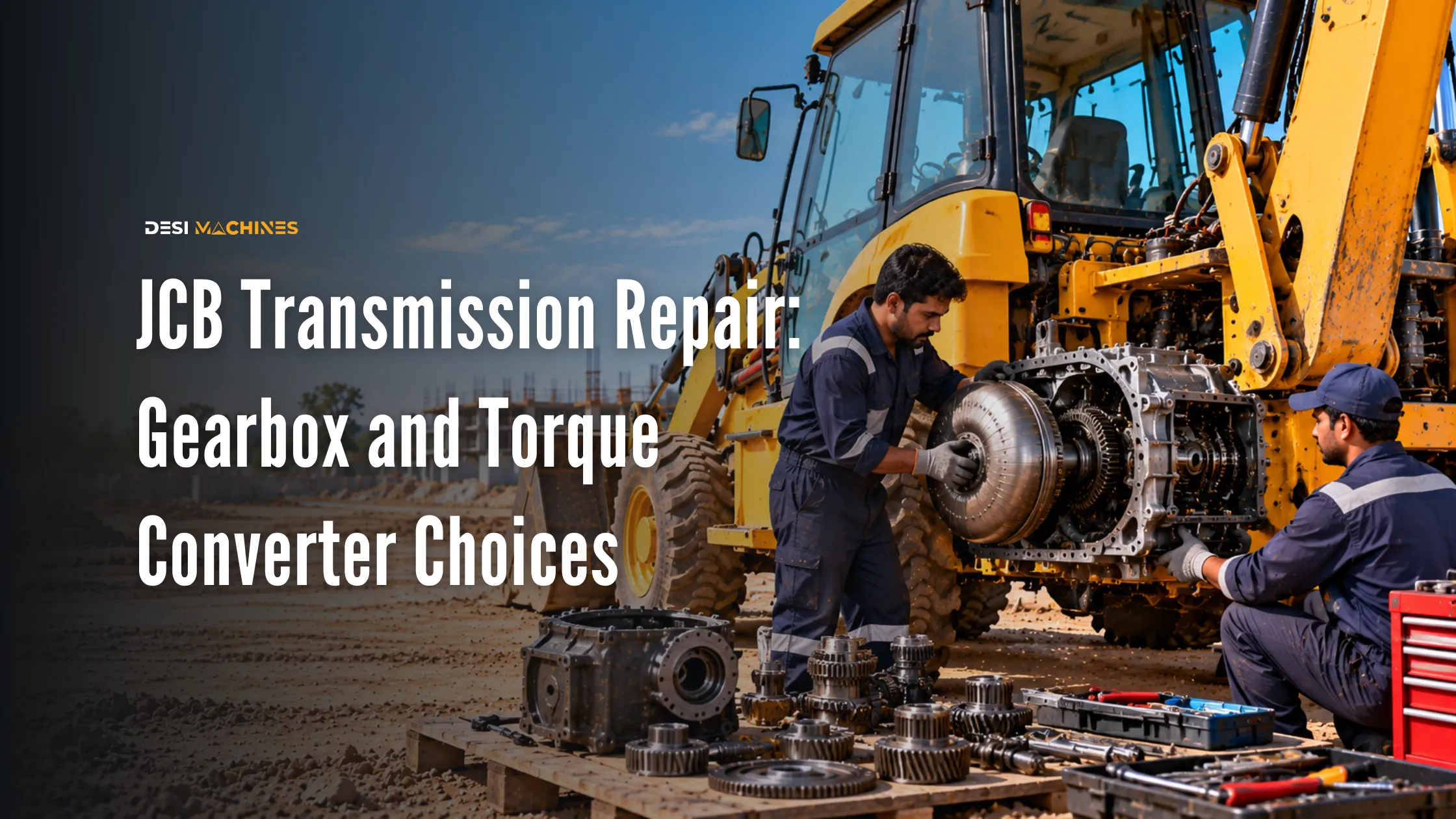
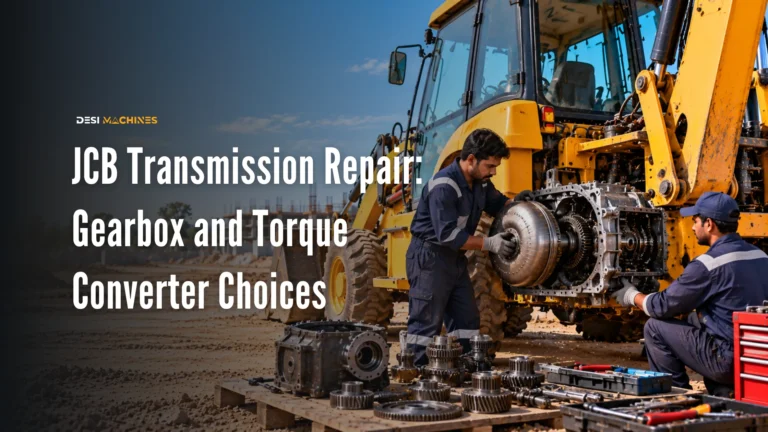
There is also a middle route for big assemblies: a factory exchange unit. The maker rebuilds a returned engine, gearbox or pump to its own standard and sells it with a warranty, giving you credit for your old unit. It costs more than a used unit and less than a new one. Our guide to JCB transmission repair compares it with a rebuild.
What is worth buying used, and what never is
Our guide to buying construction equipment spare parts gives a rule that holds here too: if the part failing can damage something far more expensive than itself, match it exactly. Add a second test for used parts: is the part already part-way through its life the day it comes off the donor machine?
| Category | Examples | Why |
|---|---|---|
| Usually worth buying used | Bucket, loader arm, dipper, counterweight, axle housing, wheel rims, cab panels and glass, bonnet and mudguards | Heavy steel that wears slowly; a crack or bend can be seen |
| Only after a test | Engine, gearbox, axle centre, hydraulic pump, control valve, cylinders, starter, alternator | The faults are inside; you need to see it run or bench-test it |
| Never used | Hoses, seals and O-rings, filters, bearings, brake parts, pins and bushes, belts | Wear items, already part-used, and a failure can damage the pump, engine or brakes |
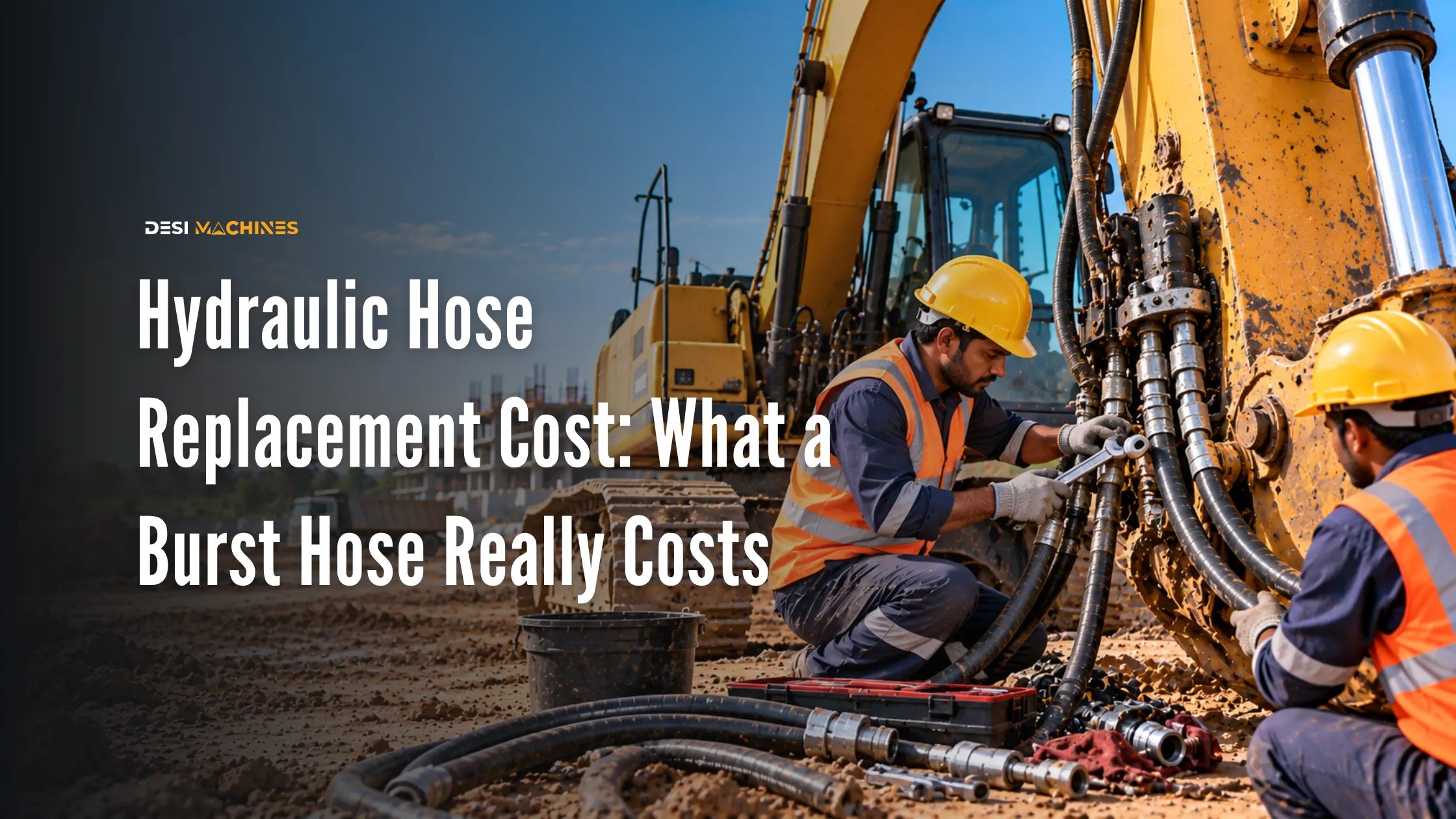
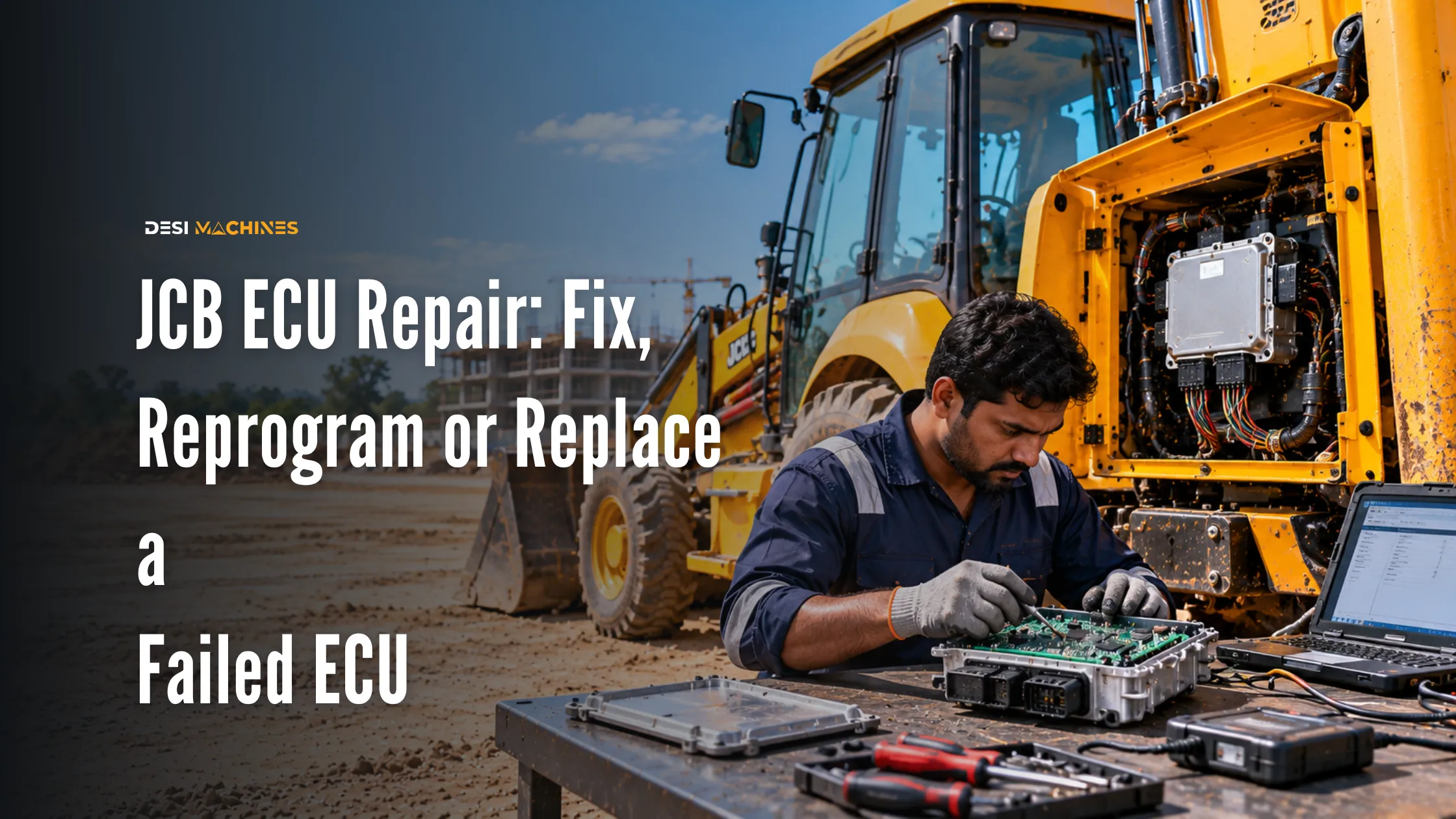
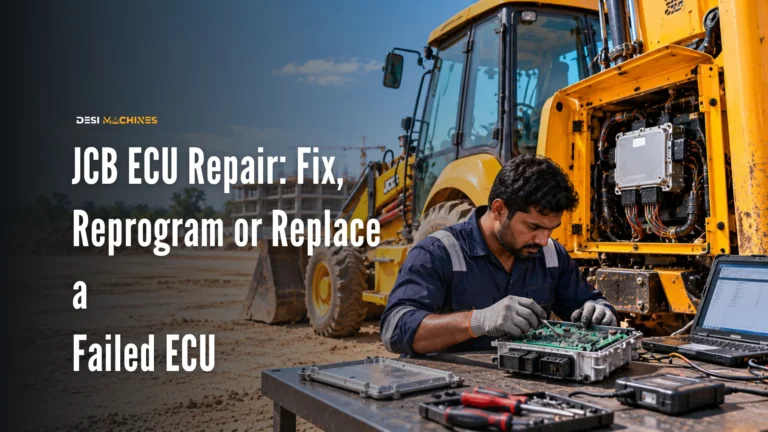
The “never” list is mostly cheap parts. Saving on a used hose saves little, and a hose that bursts can put a large share of the hydraulic oil on the ground in seconds. Our guide to hydraulic hose replacement cost shows what that failure costs. Electronic units are their own case: a replacement engine controller has to be programmed to your machine with the dealer’s tool, so a loose second-hand unit rarely works, as our piece on JCB ECU repair explains.
Working out whether a used part really saves money
The price gap on the bill is not the saving. The fitting labour is the same whether the part is new or used. So the honest comparison is:
- New part plus fitting, with a warranty.
- Used part plus fitting, plus the chance it fails and you pay the fitting and the idle days a second time.
For a bucket or a counterweight, that chance is low and the used part wins easily. For an engine or gearbox from an unknown machine, the chance is real, and a second strip-down plus a week off work can wipe out the whole saving. That is when a factory exchange unit, or the cost of a full engine overhaul on your own engine, belongs in the comparison.
How to check a used part before you pay
- Match the part number. Have your machine’s model, serial number and year ready. Parts can differ between versions and model years of the same backhoe.
- Ask where it came from. A photo of the donor machine and its hour meter tells you how hard the part has worked.
- For castings and arms, look for cracks around bosses and welds, fresh weld beads, grinding marks and new paint over old steel. Sight along an arm for bends.
- Check pin holes on any arm or bucket. An oval hole means a line boring job before the part is usable.
- For engines, gearboxes and pumps, see it run on the donor machine if you can, turn shafts by hand, and look at the drained oil for metal flakes or milky water.
- Get a written bill naming the seller, the part, its number and the machine it came from, and agree any return window in writing.
What the law gives you when you buy used
Less than most buyers expect. Section 16 of the Sale of Goods Act, 1930 starts from the position that there is no implied condition as to the quality or fitness of goods sold. It then gives two main exceptions:
- If you tell the seller the purpose, so that you are relying on their skill or judgement, and they deal in such goods, the goods must be reasonably fit for that purpose.
- If you buy by description from a seller who deals in such goods, they must be of merchantable quality. But if you examined the goods, this does not cover defects that examination ought to have revealed.
Section 15 adds that goods sold by description must match the description, and Section 41 gives you a reasonable chance to examine goods you have not seen before you are treated as having accepted them.
In practice that means three things. Tell the seller in writing which machine and which job the part is for. Get the part described on the bill, with its number. And check the part properly, because anything a proper look would have shown is yours once you take it.
The bottom line
Buy heavy steel used, after a careful look. Buy big assemblies used only after a test, and compare them with an exchange unit. Never buy wear and sealing parts used. Get the part number, the donor machine and the seller’s name on a written bill, because the law treats a part you examined as bought as seen.
If the repair list is getting long, price the alternative too. The JCB 3DX and JCB 4DX are the most asked-about backhoe loaders; browse all live backhoe loader models and prices, send a parts request through spare parts enquiries, or check equipment finance options.
Part compatibility, prices, warranties and legal remedies vary by machine, seller and circumstance. Confirm part numbers with your OEM dealer, and take legal advice on any dispute before you act.