Excavator
294 models
 Backhoe Loader
51 models
 Crane
68 models
 Concrete Mixer
79 models
 Wheel Loader
54 models
 Compactor / Roller
45 models
 Motor Grader
42 models

 Concrete Pump
66 models
 Skid Steer Loader
11 models


DMRC vendor registration exists, but it is built for material makers and sellers. Delhi Metro Rail Corporation’s Vendor Empanelment Portal (vep.dmrc.org) enlists manufacturers, authorised sellers and fabricators of 120 listed civil, electrical and architectural items, from bearings and prestressing strand to power cables. Works contractors and machine owners join no list. You enrol free on the Central Public Procurement Portal with a digital signature, and every DMRC tender tests your similar work and turnover afresh. A road and drainage job at Najafgarh, estimated at Rs 182.87 lakh in October 2026, asked for one similar completed work of Rs 146.30 lakh and the same average annual turnover.
Look for a contractor sign-up form on DMRC’s website and you land on a page called Vendor Onboarding. It has three buttons: approved manufacturers lists, technical specifications, and a portal for “Architectural, Civil, and Electrical Items”. None of them is meant for a firm that builds, repairs or hires out machines. For that firm, the route runs through each tender.
What follows comes from DMRC’s tender pages and documents, read on 30 October 2026.
Is there a DMRC vendor registration for contractors?
For works, no. DMRC does not grade contractors into classes, and it publishes no approved list of civil contractors. Each Notice Inviting Tender (NIT) is an open e-tender for “eligible applicants who fulfil qualification criteria” set out in that NIT. Proprietorships, partnerships, companies and joint ventures can all apply.
The portal that does exist has a narrow job. Its own landing page calls it the “Manufacturer / Authorised Seller / Fabricator Empanelment Portal for Civil, Electrical, and Architectural Materials”. DMRC’s item list dated 16 September 2026 names 20 civil items, 88 electrical and 12 architectural. The civil ones are materials: epoxy grout, spherical bearings, prestressing systems, reinforcement couplers, slag and fly ash, rock bolts, welding electrodes. Not one line covers construction work, plant or hire.
DMRC publishes the makes it has approved as Approved Manufacturers Lists. The civil list on the site is dated 25 September 2026, the electrical one 31 July 2026 and the architectural one 27 October 2026.
DMRC vendor registration portal or tender portal: which one you need
| Point | Vendor Empanelment Portal | Central Public Procurement Portal |
|---|---|---|
| Who it is for | Manufacturers, authorised sellers and fabricators of listed items | Anyone bidding for DMRC works, services or supplies |
| Address | vep.dmrc.org | etenders.gov.in (maintenance wing), eprocure.gov.in (Phase IV packages) |
| Cost | No fee shown on the registration form | Enrolment free; tender fee Rs 5,900 or Rs 23,600 in the notices read |
| What it asks | GST, PAN, CIN or firm registration number, an authorisation such as a power of attorney, mobile and email OTP | A digital signature with signing key usage, one per bidder |
| What it gives you | A route to DMRC’s approved makes lists | The right to download and bid for that tender |
DMRC vendor registration online for tenders: the steps
The enrolment steps are printed at the end of every NIT. In order:
- Get a digital signature certificate in the name of the person who signs under your power of attorney. The maintenance notices accept Class II or Class III; D2C-04 asks for Class III.
- Click “Online bidder Enrollment” on the portal, choose a user name and register one signature only. Enrolment is free of charge.
- Upload papers you reuse, such as PAN and audited balance sheets, to the “My Space” area so each bid does not start from scratch.
- Pay the tender fee and the earnest money deposit online through the portal. The maintenance notices accept no other mode, and EMD paid from any account other than the bidder’s own (or the joint venture’s) gets the bid rejected.
- Send queries online before the clarification cut-off. Pre-bid meetings run on video calls; send up to two names at least a day before.
What a current DMRC civil tender asks for
These four civil notices sat on DMRC’s tender page in October 2026, at a size a mid-sized contractor can chase.
| Work | Estimate | Period | EMD | One similar work | Average turnover |
|---|---|---|---|---|---|
| OCW-2312: approach road and drainage, Najafgarh staff quarters | Rs 182.87 lakh | 6 months | Rs 1,82,865 | Rs 146.30 lakh | Rs 146.30 lakh |
| OCW-2329: parking areas, Kashmere Gate station | Rs 445.35 lakh | 18 months | Rs 4,45,350 | Rs 356.28 lakh | Rs 356.28 lakh |
| OCM-2297: civil maintenance, Yamuna Bank depot | Rs 374.60 lakh | 3 years | Rs 1,24,869 | Rs 99.89 lakh | Rs 99.89 lakh |
| OCM-2338: civil maintenance, Line-7, Soorghat to Shalimar Bagh | Rs 706.41 lakh | 3 years | Rs 2,35,470 | Rs 188.38 lakh | Rs 188.38 lakh |
The figures follow one pattern. Take the estimate as the base, or one year’s value on the three-year maintenance contracts. EMD is 1% of that base, the experience bar is one similar work of 80%, two of 50% or three of 40%, and the three-year average turnover must reach 80%. Rs 706.41 lakh over three years is Rs 235.47 lakh a year, and 80% of that is the Rs 188.38 lakh in OCM-2338. The NIT prints only the results, so check the figures in the notice you bid on.
Read the definition of similar work before anything else. The two OCW jobs accept any civil work of “construction, maintenance, renovation, improvement, upgradation etc.” The two OCM contracts want that work done “in any operational Metro or Railway for viaduct/Station/Depot”. A road or building contractor can qualify for the first pair. For the second, only metro or railway experience counts.
Liquidity, profitability, net worth and bid capacity tests are all marked “Deleted” in these four notices. New metro, railway and civil works appear among the live government tenders and opportunities.
DMRC tender eligibility clauses that knock bidders out
The turnover and experience numbers are only half the test. DMRC’s NIT for contract OCM-2338, on sale from 28 October 2026, also rejects a bidder who:
- was incorporated less than three years before the month of bidding
- is banned by DMRC, any fully government-owned metro, or the housing and urban affairs ministry
- had a DMRC or metro contract worth over 10% of the NIT cost terminated for non-performance in the last three years
- paid delay damages or a penalty of 10% or more on such a contract in the last three years
- went through insolvency in the last five years, or has pending disputes above its last audited net worth
You also file a notarised affidavit on Rs 100 non-judicial stamp paper, and only Class-I or Class-II local suppliers may bid. CA certificates must carry a UDIN. Work for a private client needs the work order, bill of quantities and TDS entries in Form 26AS. Past work values are updated at 5% a year.
After financial bids open, DMRC sends the lowest bidder’s work certificates to the clients who issued them. If they are not verified within two months of the letter of acceptance, the notice treats it as fraudulent practice under DMRC’s Suspension/Banning Policy of August 2019. DMRC’s debarred list on the site is dated 16 October 2026.
Phase IV packages: what the big viaduct tender demands
Contract D2C-04 covers 11.3 km of elevated viaduct and ten stations on the Rithala to Kundli corridor. The Invitation for Bids is dated 25 August 2026, the work is funded by a JICA loan and bidding is international. After Addendum 2 the numbers are:
- bid security of INR 117.60 million (Rs 11.76 crore) and 42 months to finish
- average annual turnover of Rs 504 crore over the last five years
- Rs 84 crore of liquid assets or credit lines for construction cash flow
- available bid capacity of Rs 1,176 crore, worked out as 1.5 x A x N minus B
- one viaduct, bridge or flyover job of Rs 941 crore since 1 January 2019, or two of Rs 588 crore, or three of Rs 470 crore
Bids close at 3 pm on 19 November 2026. A firm with a few machines will not qualify, and the money for machine owners sits a level below.
Where a machine owner fits on a metro job
D2C-04’s qualification section lists no equipment (“N/A”). Instead, Annexure-3 of the Employer’s Requirements makes the winner sign an undertaking to deploy at least 10 rotary piling rigs, two batching plants of 60 and 30 cubic metres an hour, 6 boom placers, 8 cranes for launching, 12 transit mixers, 6 second-generation pick-and-carry hydras and 6 trailers of 175 tonnes. The bill of quantities has 9,122 metres of 1,000 mm bored piles and 5,725 metres of 600 mm piles, all drilled by hydraulic rigs.
The main contractor must source that fleet, much of it on hire or through specialist sub-contractors. Two clauses help you. D2C-04 counts similar work done “as prime contractor … or subcontractor” since January 2019, so a piling or crane sub-contract builds your own record. And the OCM-2338 notice lets a firm named as subcontractor appear in more than one bid, as long as it does not also bid itself.
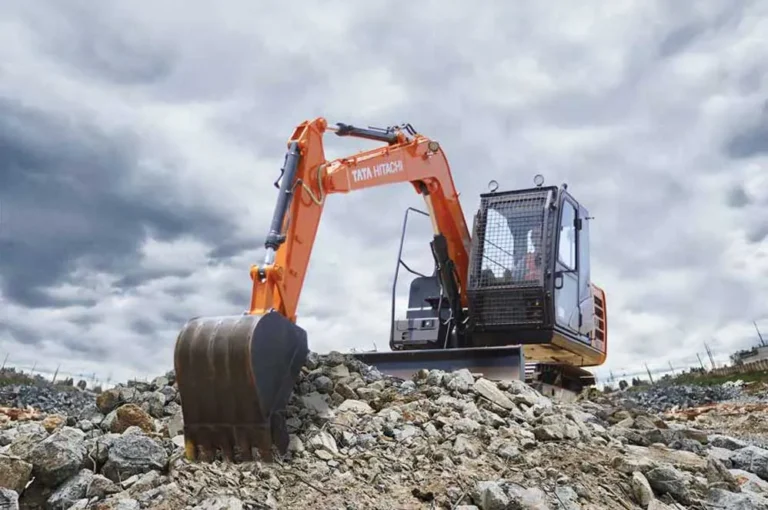
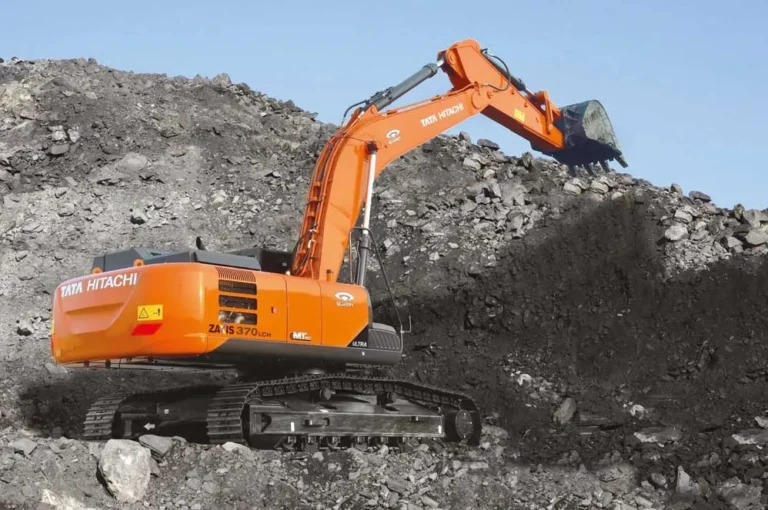
On the smaller jobs the machines are everyday ones. A road and drainage redevelopment like OCW-2312 needs an excavator in the 20-tonne class, such as the Tata Hitachi EX 210 Infra, and lifting work on metro sites often uses pick-and-carry cranes like the Escorts Hydra 14. Check what the main contractor means by “second-generation” before you quote a hydra for a Phase IV site.
Watch idle days. D2C-04’s particular conditions pay the main contractor 70% of hire charges for idle plant, owned or hired, during suspensions beyond 30 days in total. What you get depends on your own hire agreement, so write an idle-day rate into it.
When to bid DMRC directly, and when to work under the main contractor
Bid directly when your firm is over three years old, your average turnover clears 80% of the estimate, and you hold a client certificate for a civil job of 80% of the estimate. That puts OCW-type road and parking jobs within reach. Wait on the OCM maintenance contracts until you have metro or railway work on record. Take Phase IV packages only as a sub-contractor or hire partner, and collect a proper experience certificate from the main contractor each time. RVNL uses a similar tender-by-tender test, as the guide to RVNL vendor registration explains.
Read one full DMRC notice, such as the NIT for OCM-2338, to learn the standard terms. Material makers should start on the DMRC Vendor Empanelment Portal instead. Then track live metro and government tenders, and line up machinery loans before the bid date if a hire contract needs one more machine.
Figures come from DMRC tender documents and web pages dated August to October 2026, as cited above. Rates, schemes, specifications and prices change — confirm current terms with the OEM, dealer, bank or insurer, or the DMRC tender office, before deciding.