Excavator
294 models
 Backhoe Loader
51 models
 Crane
68 models
 Concrete Mixer
79 models
 Wheel Loader
54 models
 Compactor / Roller
45 models
 Motor Grader
42 models

 Concrete Pump
66 models
 Skid Steer Loader
11 models


Oil India vendor registration, for most contractors, means a free user ID on OIL’s e-tender portal or a GeM seller account, and nothing more before you bid. You need a Class III organisation digital signature with an encryption certificate, and every OIL tender then tests your experience, turnover and net worth again. A separate class-wise list of registered civil firms (Class A to E) handles small jobs at Duliajan, but OIL fills it only through notified drives for local residents. Oil India Limited is a different company from Indian Oil (IOCL).
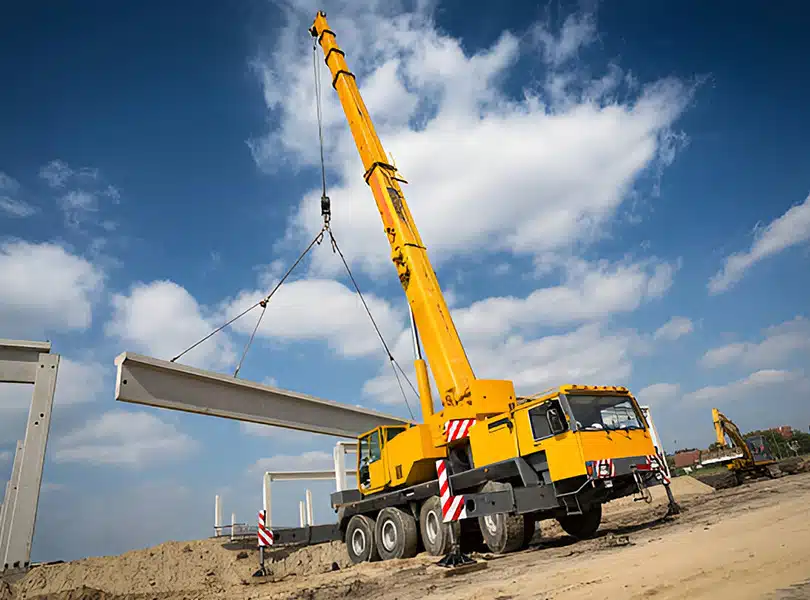
Most OIL work open to a machine owner needs no enlistment in advance. On 14 October 2026, OIL put a GeM bid (GEM/2026/B/8160263) out to hire five brand-new 45-tonne telescopic truck cranes for four years in Assam and Arunachal Pradesh. Any Indian firm with a GeM seller account could quote. What decides the result is the bid evaluation criteria (BEC) written into that tender: Rs 1,00,60,000 of completed crane or heavy-vehicle work, the same figure in annual turnover, and an EMD of Rs 16,10,000.
Oil India Limited is the upstream oil and gas producer whose field headquarters is at Duliajan, in Assam’s Dibrugarh district. Indian Oil Corporation is a separate PSU, and nothing below applies to IOCL tenders.
Does Oil India keep a vendor register?
It keeps several lists, and only the first two matter to most contractors. OIL’s notice on vendor registration for MSEs puts it plainly: “Against open tenders, vendors may participate directly by registering themselves online. No separate prior registration is required for the same.”
| Route | What it is | Who can get in | Status on 30 Oct 2026 |
|---|---|---|---|
| E-tender user ID | Login for OIL’s own e-tenders on its SAP SRM portal | Any firm, free, applied for online | Open at all times |
| GeM seller account | OIL runs many hiring services as GeM bids | Any registered GeM seller | Open at all times |
| Registered civil firms, Class A to E | Local firms for small civil and maintenance jobs at Duliajan | Residents of OIL’s operating districts, through notified drives | No drive open; last ones in 2018 and 2020 |
| Vendor Enlistment Portal | Item-wise enlistment calls | Firms meeting each call’s criteria | Six current calls listed, none for civil works or equipment hire |
The Vendor Enlistment Portal is the newest, with a user manual dated October 2025. You register by OTP, OIL reviews the application, and once approved you apply against listed opportunities. On 30 October 2026 it listed six, for electrical wiring materials, circuit breakers, steel items, hydro-fracturing, radial drilling and onshore seismic survey, and none for civil engineering or logistics services. ONGC has gone much further, as our guide to ONGC vendor registration explains.
Oil India vendor registration online: the e-tender user ID
OIL runs its own e-tenders on SAP SRM at etender.srm.oilindia.in. Anyone can view open tenders through the guest login. To bid, you need a vendor code and password. OIL’s e-tendering guide for bidders sets out the steps:
- Get a Class III Digital Signature Certificate issued in your organisation’s name, together with an encryption certificate. OIL has required this pair since April 2017, and its Works Manual says the portal accepts no other type. Our guide to the digital signature certificate for tenders covers how to buy one.
- Open the portal and choose “Supplier Enlistment for E-Tender”.
- Fill in the firm’s details and upload your PAN card and the previous year’s audited balance sheet.
- Answer the questionnaire OIL emails to you. A request ID is generated when you submit it.
- After OIL checks the documents, the vendor code and password arrive by email.
- For each open tender, register against that tender on the portal before you upload a bid.
Timing catches people out. OIL’s guidelines ask you to apply at least 7 days before the last date of tender fee payment, and IDs take up to 4 days once the information is complete.
GeM is the other door. The crane bid, a bid for ten brand-new tractor-trailers with 35-tonne semi low-bed trailers (GEM/2026/B/8115459, closing 3 November 2026) and dozens of other OIL hiring jobs run only on GeM, so finish your GeM registration for contractors.
The class-wise list of civil firms at Duliajan
For small civil jobs around its field headquarters, OIL has long used local registered contractors. Its Manual for Procurement of Works, posted on OIL’s procurement manuals page in September 2024, gives the current class limits and the one-time security deposit each class pays:
| Class | Tender value | One-time security deposit |
|---|---|---|
| A | Above Rs 90 lakh to Rs 150 lakh | Rs 2,00,000 |
| B | Above Rs 55 lakh to Rs 90 lakh | Rs 77,000 |
| C | Above Rs 25 lakh to Rs 55 lakh | Rs 44,000 |
| D | Above Rs 8 lakh to Rs 25 lakh | Rs 18,000 |
| E (2018 drive) | Up to Rs 15 lakh | Not published |
Civil jobs above Rs 8 lakh and up to Rs 150 lakh go out as limited e-tenders among these firms, class by class. Above Rs 150 lakh the job becomes an open e-tender. Registered A-class firms skip the bid security and the technical and financial documents up to Rs 200 lakh, and on roads and drilling locations up to Rs 500 lakh they skip the bid security and technical documents. Maintenance work is shared out under four-year zone contracts, at no more than Rs 8 lakh per job.
Getting onto this list is not open to outsiders. OIL’s revised notification of 19 January 2018 sought 250 new Class E firms from unemployed residents of Tinsukia, Dibrugarh, Sivasagar and Charaideo districts, aged 18 to 48, with a Class 10 pass and an employment exchange card. Applicants already registered as contractors with another PSU or government body were rejected. A 2020 drive in Arunachal Pradesh sought eight firms from the Diyun and Piyong circles, with the same age, schooling and unemployment conditions. OIL’s rules for these firms, reissued on 6 May 2026, cancel a registration on events such as a change in ownership, a ban, or five straight years without bidding in any OIL civil tender.
What a live OIL equipment hiring tender asks
The crane bid shows how OIL tests a machine owner. These are the main points of its BEC and terms, read from the tender document uploaded with the bid:
| Condition | What the bid says |
|---|---|
| Eligibility | Firm incorporated or registered in India, with at least 20% local content |
| Experience | One completed “similar work” worth at least Rs 1,00,60,000 for a PSU or government body, between 5 Nov 2019 and 4 Nov 2026 |
| Similar work | Crane services, or transport services with heavy vehicles of at least 12,000 kg gross vehicle weight |
| Turnover | At least Rs 1,00,60,000 in any one of the three preceding financial years |
| Net worth | Positive for the preceding financial year, with a CA certificate carrying UDIN |
| Machines | Three new cranes per bidder, bought and registered after the mobilisation notice, CEV Stage-V, ARAI-certified, boom of at least 42 m |
| Money | EMD Rs 16,10,000; performance security 3% of contract value; mobilisation within 4 months |
| Crew | One operator with an HMV licence and three helpers per crane |
Joint ventures, consortiums and a parent company’s experience are not accepted, so the record must be your own. The lowest bidder gets three cranes, and the next gets two only if it matches that price. A pick-and-carry hydra does not meet this specification; the bid wants a telescopic truck crane with a separate operator’s cabin.
How OIL sets experience and turnover for civil works
The Works Manual gives the standard BEC that OIL departments start from for open works tenders:
- Annual turnover of at least 50% of the estimated value (annualised for jobs over a year) in any one of the three preceding financial years.
- Positive net worth in the preceding year.
- Within the last seven years, one similar completed work of 80% of the estimated cost, two of 50%, or three of 40%, done for a government body, PSU, nationalised bank or public limited company.
Work done for your own company does not count. The same manual sets the bid security for works: nil up to Rs 25 lakh, a signed bid security declaration from Rs 25 lakh to Rs 50 lakh, and 2% of the estimated cost above that (our guide to EMD in tenders explains the forms it can take). An Integrity Pact applies from Rs 50 lakh.
OIL’s tender archive for late 2023 and early 2024 shows the kind of work involved: approach roads, plinths and rig foundations for drilling locations around Makum, Baghjan and Naharkatia, drilling sites near Bikaner and Jaisalmer in Rajasthan, and pipeline right-of-way upkeep with excavator hire. That is daily work for a backhoe loader such as the JCB 3DX and a 20-tonne excavator such as the Tata Hitachi EX 210 Infra.
OIL, ONGC and other PSU jobs for machine owners appear on the government tenders and opportunities board, with EMD, closing date and portal for each.
MSE and local supplier rules
The Works Manual states that the Public Procurement Policy for MSEs is not applicable in works contracts. Services are different. The crane bid gives MSE service providers purchase preference within L1 plus 15%, and GeM rules exempt them from EMD, though it allowed no MSE relaxation on experience or turnover.
The money on the services side is large. OIL’s plan for buying from MSEs in 2025-26 came to Rs 979 crore, including Rs 263 crore for hiring vehicles, Rs 133 crore for rig-related services and Rs 108 crore for miscellaneous services. The crane bid also repeats that only Class-I and Class-II local suppliers may bid in national competitive tenders. A startup or MSE that fails a tender’s experience test can send OIL a separate proposal, and a successful trial order can earn a relaxation next time.
Checklist before your first OIL bid
- Buy a Class III organisation DSC with an encryption certificate.
- Get an OIL e-tender user ID and a GeM seller account before you need them.
- Collect completion certificates showing the gross value of work done, not just work orders.
- Get a CA certificate of turnover and net worth with UDIN for the last three years.
- Keep your Udyam certificate current if you want MSE benefits on service bids.
- Check OIL’s vendor enlistment portal every few months for a call in your line of work.
The crane bid allows four months to put new machines on site, so line up equipment finance from banks and NBFCs before you submit the bid.
Sources: OIL’s Manual for Procurement of Works (posted September 2024), its bidder guidelines (2017), civil firm notices of 2018, 2020 and 6 May 2026, its 2025-26 MSE plan, its Vendor Enlistment Portal on 30 October 2026, and GeM bids GEM/2026/B/8160263 and GEM/2026/B/8115459. Rates, schemes, specifications and prices change — confirm current terms with the issuing department, the OEM, dealer, bank or insurer before deciding. DesiMachines is not liable for decisions taken on information that may have changed after publication.