Excavator
316 models
 Backhoe Loader
54 models
 Crane
68 models
 Concrete Mixer
79 models
 Wheel Loader
65 models
 Compactor / Roller
45 models
 Motor Grader
42 models

 Concrete Pump
66 models
 Skid Steer Loader
11 models


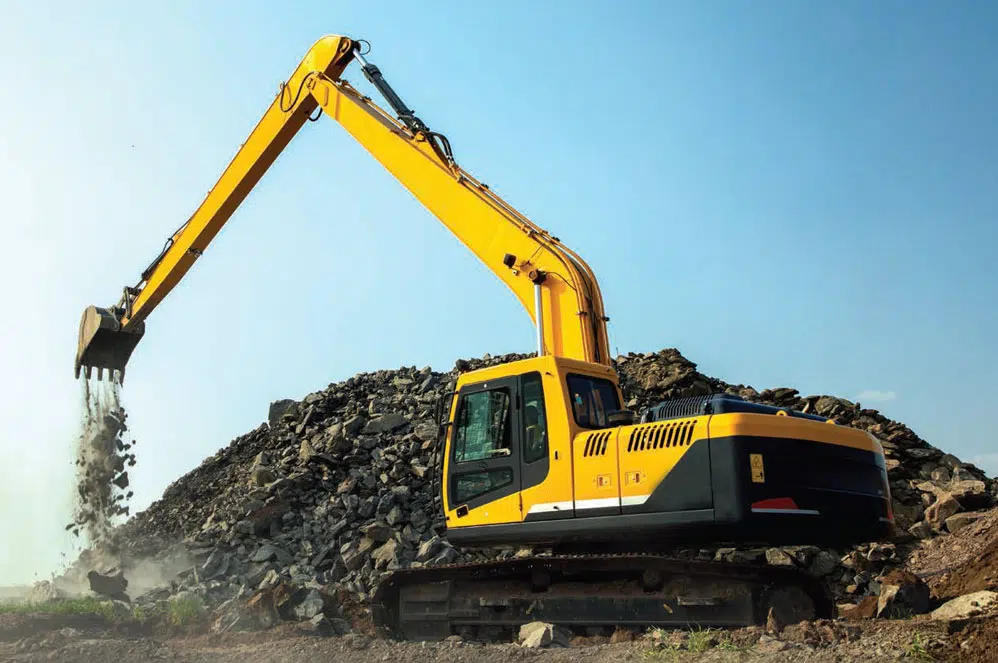
The short answer: long reach excavators are standard excavators fitted with an extended boom and arm, so the machine can reach about 15–22 m out and dig about 11–17 m down while its tracks stay on firm, stable ground. That single change is what makes them the right tool for canal and river dredging, deep basement digs, coastal protection work and high-reach demolition: jobs where a standard excavator would have to sit somewhere it cannot safely sit. The trade-off is lifting capacity: the longer the reach, the less the machine can pick up at full extension, which is why the reach class has to be matched to the job rather than bought at maximum.
Specifications vary by variant and model year, so confirm the exact configuration with the dealer or OEM before you buy or hire.
What’s the secret to achieving maximum efficiency, safety, and accuracy in deep excavation projects? The answer lies in using the proper equipment, specifically long-reach excavators, which are ideal for excavation at deep sites.
Excavation is an integral part of many construction projects, from laying foundations to installing utilities and digging trenches. As projects become more complex, the need for specialized machines that can access deep and challenging locations grows. Conventional excavators can no longer provide the precision required for these tasks.
Long reach excavators feature extended booms and arms, allowing them to reach farther and dig deeper than standard equipment. These machines excel at removing gravel from hard-to-reach sites or performing deep, narrow excavations. Applications such as trench foundations for high-rise buildings, utility trenching, and coastal work demand excellent versatility, safety, and performance from these machines.
What is a Long Reach Excavator?
Long Reach Excavator: Equipment characterized and provided with capabilities which make it able to perform many tasks that typical excavators cannot do, namely accessing extremely distant working areas and digging deeply underground. Such activities included deep trenching, digging foundations, working in confined spaces, and operation at heights out of reach of standard machines.
In numbers, as listed in India in November 2026: the common 20 to 25 tonne long-reach builds dig about 11.6 to 12 m below ground, such as the Tata Hitachi EX 215LC SLR at 11,628 mm and the JCB NXT 245HD LR at 12,040 mm. Only the extra-long-reach builds go past 15 m, led by the LiuGong 930E XLR at 17,209 mm. Horizontal reach runs from about 15 m to 22 m. The long-reach depth table sets out every listed build side by side.
Features of Long Reach Excavators
- Long Boom and Arm: Long reach excavators are distinguished specifically by their boom and arm, which are longer than those of normal excavators. With that design, it becomes capable of reaching farther and digging deeper than its counterparts.
- Specialized Design: These kinds of machines are specifically made for high-reach work, like bridge or coastal work.
- Multifunctional: They handle surface digging, lifting and disposal, a multipurpose versatility in excavations.
Why Choose Long-Reach Excavators for Deep Excavation?
Deep excavation projects are undeniably served best by long-reach excavators, which come with a host of advantages offered solely by these machines in construction and heavy-duty jobs.
- Enhanced Reach: One primary reason for getting a long-reach excavator is to have better reach so that operators working on sites can gain access to areas that are hard or even impossible for standard machines to reach. The longer boom and arm provide excellent vertical and horizontal reach and do not require any auxiliary machines such as cranes or scaffolding. This feature would prove so beneficial in trenching, digging foundations, or working in confined or elevated spaces, hence the need for other equipment.
- Increased Efficiency: Long reach excavators do a large area within a considerably reduced time frame. By reaching further, the operator can finish tasks at a faster rate, hence avoiding downtimes during those handling operations. This efficiency is paramount for any large project where time is of the essence. For digging, lifting or transporting work alike, these machines cover much more ground in fewer passes, which directly implies higher productivity together with less labor cost.
- Safety Benefits: Safety takes precedence in all excavation projects, and with long-reach excavators, safety is increased within the project situations. Working from a distance means that the operator does not need to be placed in hazardous or constricted work sites. Excavating at great heights or down into deep trenches can become a danger for both the operator and his crew. Long-reach excavators ease this risk by letting operators control the equipment from a safer distance, thus protecting the operator and the entire crew.
- Precision in Deep Excavation: Deep excavation operations demand precision, which comes as a strong forte of long-reach excavators. Thus, an operator on the joystick manipulation has increased machine control for accurate action in material excavations and possible removal in subjects of deep recess. From trench digging for the installation of utilities to precise excavation for material in tight, hard-to-reach areas, these machines do achieve the accuracy level needed in specialized according to project specifications, and that contributes toward the viability of created structures over time.
Key Benefits of Long-Reach Excavators for Deep Excavation Projects
Long reach excavators, apart from having their fair share of efficiency, have very good advantages that act as their selling points for deep excavation. From cost-effectiveness to multi-functionality, these machines have many advantages, making them an indispensable investment for any large-scale project.
- Cost-Effectiveness: By far the largest advantage of long-reach excavators is their capacity to save labor and operational costs. Long-reach excavators shine by being able to reach far into deep areas without extra machinery, operators, or manual labor. Thus, the need for an extra worker and equipment rental can be drastically minimized. Furthermore, by eliminating cranes, scaffolding, and other auxiliary tools from operation, these excavators truly remove a substantial amount of expense from a project. Their ability to operate over a larger radius in shorter amounts of time also helps in reducing the timeline of the project, thus saving additional costs.
- Improved Productivity: Long-reach excavators are meant for maximum efficiency, allowing operators to get things done faster, with more continuous operation. The long reach means that operators can work almost in different areas without having to always reposition the machines. More efficiency equals more productivity: workers can excavate, lift, and transport materials very fast and with less downtime. This is what keeps projects flowing and meeting deadlines, which is highly crucial given that timing essentially is everything in a deep excavation project.
- Flexibility in Various Terrain Types: Various Terrain: This is another important feature of a long-reach excavator that falls under versatile equipment concerning various terrain types. Whether wetlands, steep hillsides, or rocky ground might be the territory being dug, these machines accommodate difficult working conditions where other types of excavators might have struggled. They are built tough, with hydraulic power to go along; these dual features enable them to keep doing well in difficult excavation settings from one type of terrain to another. That makes them also the kind of equipment applicable to just about any project, from urban construction sites to rugged landscapes.
- Ideal for Special Projects: In such cases, long-reach excavators are extremely helpful for special projects that encompass deep excavations, such as utility trenching, foundation digging, or working along coasts. For example, when deep utility trenches are excavated for water pipes or cables, long-reach excavators are just perfect for the down capability of trenching with accuracy. For river and canal work, the dredging and desilting guide covers machine choice, and the canal and irrigation equipment page lists the machines and open tenders on that work. They are among the most practical machines for foundation excavation and coastal projects, where long reach and the ability to work in conservation with limited space, operation, or from a major depth are essential.
Challenges and Considerations of Long-Reach Excavator
While long-reach excavators have much to benefit the user, the more serious challenges and considerations must be contemplated before one buys or uses a long-reach excavator for deep excavation projects.
- Cost Considerations: Usually, long-reach excavators will demand higher capital costs when compared to traditional excavators. All these extra engineering and specialized designs bring more costs to these machines for both purchase and maintenance. Service and maintenance schedules, parts replacement, and ordinary hydraulic system maintenance will add up to ongoing running costs. However, the eventual greatly enhanced efficiency and productivity on the job can outweigh these cost considerations for bigger projects.
- Operator Training: A trained operator is what turns the extra reach into usable output. Operated by trained personnel with special instructions, long-reach excavators can be reliably and safely utilized. Training will enhance the precision of the machine when used, reduce the occurrence of accidents, and avoid excessive wear. Operators must also be aware of certain handling methods that specifically apply to deep excavation activities, particularly when the environment becomes aggressive.
- Environmental Conditions: Deep excavations under hostile conditions, such as in wetlands, rocky terrains, or coastal areas, might demand further modifications to the machines involved. Ground stability, water levels, and access restrictions all potentially affect the workings of a long-reach excavator. In some instances, special equipment or modifications will need to be used to adapt to these conditions, thereby adding complexity to the project.
Where a Long Reach Excavator Fits Your Fleet
Reach class is a buying decision, not an operating one. If the work is mostly trenching and foundations within 10 m, a standard excavator class costs less to buy and run. If dredging, slope work or demolition is a regular part of the order book, the extended-boom machine pays for itself in setups avoided. Compare the long reach excavators listed in India against the long-boom alternatives, check what the class costs to keep running in the hydraulic troubleshooting guide, and price the whole purchase, including equipment finance, before you sign. As of November 2026 the priced long-reach builds are listed at about ₹62 lakh to ₹85 lakh, from the XCMG XE245i LR at about ₹62–68 lakh to the JCB NXT 245HD LR at about ₹77–85 lakh.
Is a long-reach excavator worth hiring or buying?
Long-reach excavators are practical and unique in the sense they enable deep excavating projects that require reach, safety, and precision unmatched by standing excavators. The high-efficiency aspect works from the traceless entry to almost impossible locations to the multiuse capability, where no matter how difficult the terrain type, areas are tackled. Long-reach excavators are, without a doubt, a very expensive investment with highly trained operators; however, their long-term returns will prove priceless investments for any deep excavation project.
So, if you want a long-reach excavator for your next project, compare the listed builds by depth, reach and price first, then confirm the current on-road price and variant with the dealer or OEM before you buy.
Match the reach class to the job: a 20 to 25 tonne long-reach build digs to about 12 m, and the extra-long-reach class earns its price only where the job needs more depth than that.
Machines, tenders and news for this industry: Bridges and Tunnels · Municipal and Waste