Excavator
294 models
 Backhoe Loader
51 models
 Crane
68 models
 Concrete Mixer
79 models
 Wheel Loader
54 models
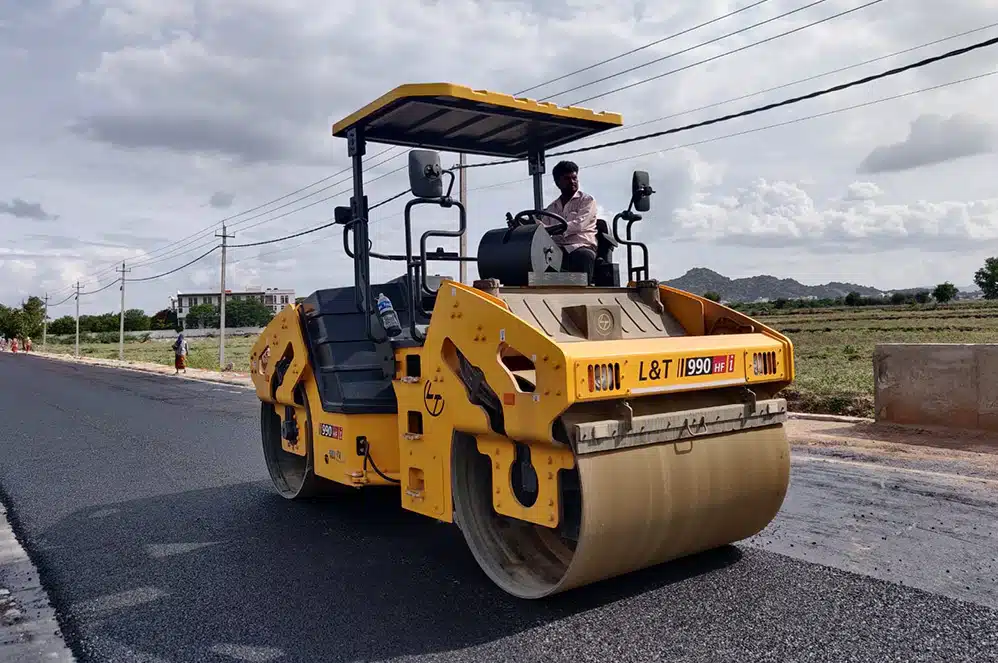
 Compactor / Roller
45 models
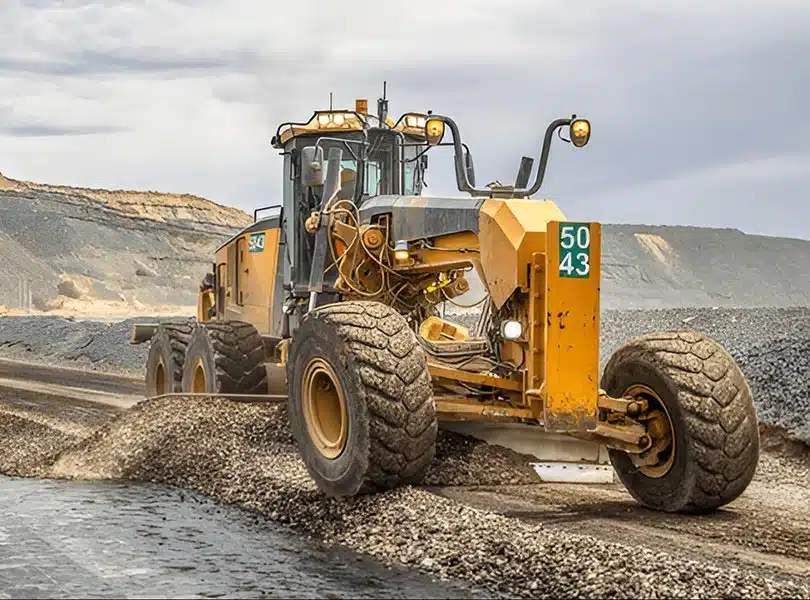
 Motor Grader
42 models

 Concrete Pump
66 models
 Skid Steer Loader
11 models


Can a hire firm with three machines get onto Tata Projects’ books? Yes. Tata Projects vendor registration starts with a short form on the Partner With Us page of tataprojects.com and ends in the company’s SAP Ariba supplier portal, where your PAN, GST registration, MSME status and bank account are checked, and the company publishes no fee for it. More than 72,000 vendors have been onboarded that way, and Tata Projects says the process now takes 5.25 days, down from 15. Registration buys you a place on the enquiry list. It does not buy an order, and you sign a Supplier Code of Conduct along the way.
Tata Projects is the Tata group’s unlisted EPC company, with a turnover of Rs 16,126 crore in 2025-26. Its sites include Noida International Airport at Jewar, metro lines in Mumbai, Pune and Chennai, and the HPCL refinery at Barmer. Being private, it buys outside CPPP and GeM, under its own rules. Everything below comes from the company’s own website, its Supplier Code of Conduct and its Integrated Annual Report 2025-26, as read on 1 November 2026.
How Tata Projects vendor registration works
The public door is the Partner With Us page. Its “Vendor Registration Form” button opens a web form with every field marked mandatory: vendor name, contact name, contact number, email, head office address, other locations, a description of the items you supply, an HSN code, a SAC code, and a single upload for your product catalogue or company profile (one file, up to 50 MB, in PDF, PowerPoint, Excel or image format).
One detail looks stale. The form has three boxes labelled only “FY 2018-2019”, “FY 2019-2020” and “FY 2020-2021”, with no word on what figure goes in them. Turnover is the obvious reading. As of November 2026 the years have not been moved forward, so put your latest three years of turnover in the profile file you upload, signed by your CA, so the buyer sees current numbers.
The supplier system itself is SAP Ariba. The 2025-26 integrated report says every new supplier onboarded through Ariba has its PAN, GST, MSME status, bank account and email verified, with PAN and GST checked automatically against government records. The undertaking at the end of the Supplier Code of Conduct also asks you to consent to Tata Projects storing the Aadhaar number entered while registering. Tata Projects does not publish a self-registration link to Ariba, so the website form is the way in.
| Question | What Tata Projects publishes (as on 1 November 2026) |
|---|---|
| Where to apply | Vendor Registration Form on the Partner With Us page |
| Supplier system | SAP Ariba Supplier Portal, over 72,000 vendors onboarded |
| Checks at onboarding | PAN, GST, MSME status, bank account, email; Aadhaar consent in the code undertaking |
| Time to register | 5.25 days, down from 15 days (FY2026) |
| Fee | Not published |
| Validity or renewal | Not published |
| Supplier classes or limits | Not published |
| How orders are placed | RFx and reverse auctions on Ariba Sourcing |
| Complaints after an order | vendorgrievance@tataprojects.com, with project code and order number |
The same Partner With Us page still sends bidders to a “TPL B2B Tender Portal” at procurement.tataprojects.com. On 1 November 2026 that address had no DNS record at all, so the live sourcing route is the Ariba one described in the annual report. Tata Projects does not post open tenders for suppliers on its public website.
Who counts as a supplier, and who gets orders
The definition is wide. Tata Projects’ Supplier Code of Conduct calls a supplier any business, company, contractor, partnership firm, individual or consultant that provides, sells or seeks to sell goods or services to the company, and that includes the supplier’s own subcontractors and agents. A crane hire firm, a quarry, a scaffolding contractor and a steel stockist all fall inside it.
Getting registered and getting an order are separate events. The code’s own disclaimer says registration “does not guarantee any enquiry/orders”, and that orders go out on techno-commercially competitive offers made in reply to Tata Projects’ enquiries. Some categories go through a Supplier Capability Evaluation first. In 2025-26 the company merged capability evaluation and product qualification into one standard procedure, with category-wise rules, and widened it to cover supply, installation, testing and commissioning (SITC) contractors. New suppliers are also screened on ESG criteria: 48 were screened that year and 36 were found compliant.
Most project volume is meant to run through a smaller group of firms. Tata Projects told its Strategic Partners Meet in September 2025 that it aims to run nearly 80% of project volumes through strategic partners, and it signed frame agreements and MoUs with more than 50 companies. For a machine owner, the likely result is that a good share of hire demand on a Tata Projects site comes from those partners’ orders, under their terms. A written subcontractor agreement matters more there than a Tata Projects vendor code. The standing paperwork any EPC buyer asks of a hire vendor is listed under getting on an EPC contractor’s vendor list, and none of it changes here.
The Supplier Code of Conduct you sign
The Tata Projects Supplier Code of Conduct, in its September 2026 version, ends with an undertaking signed by an authorised officer. Most of it is standard anti-bribery and labour language, but four clauses bite on a small hire firm.
Gifts to site staff must be modest and within the Tata Code of Conduct, and any financial or other tie with a Tata Projects employee must be disclosed and approved in advance. You cannot pass work to a subcontractor to dodge the code or a legal duty. Tata Projects and its advisors may audit your records on request. And the company expects suppliers to meet the SA 8000 social accountability standard and to keep written policies on anti-bribery, human rights, health and safety, labour rights and the environment. A two-machine operator rarely has those policies on paper. A short signed page on each is a sensible start.
Violations go to ecounsellor@tataprojects.com or tpl-whistleblower@tataprojects.com. The company’s Anti-Bribery and Anti-Corruption Policy, effective 15 February 2025, adds that third parties are checked at onboarding according to risk, with a detailed check for anyone who deals with government officials on Tata Projects’ behalf.
Is there a fee, and who should you trust?
No fee is published anywhere Tata Projects controls: the Partner With Us page, the registration form, the Supplier Code of Conduct and the 2025-26 integrated report are all silent on it. The company’s caution notice warns that impostors use fake social media accounts and look-alike names to collect personal data and money in its name, and that only its official website and authorised officers should be relied on. If a “registration consultant” asks for money to list you with Tata Projects, write to tpl@tataprojects.com before paying anything.
How fast Tata Projects pays, by its own figures
The supplier base doubled in a year, and the share bought from small firms rose sharply. The figures below are from the Business Responsibility and Sustainability Report inside the 2025-26 integrated report.
| Measure | FY2025 | FY2026 |
|---|---|---|
| Number of suppliers | 12,055 | 24,118 |
| Number of MSME suppliers | 4,980 | 18,311 |
| Input material sourced directly from MSMEs and small producers | 20% | 34.34% |
| Input material sourced within the district and neighbouring districts | 98% | 96.13% |
| Days of accounts payable | 196 | 184 |
The last row is the one to price in. Days of accounts payable is an average across everything the company buys, so your own bills may clear faster or slower. Still, 184 days is the company’s own measure, and a hire firm paying an EMI every month cannot carry six months of rent on its books. Register on Udyam before you take the first order. A micro or small supplier’s statutory protection on delayed payment is covered in recovering delayed payment on EPC work. When a bill does stall, the Vendor Grievance Form asks for your vendor code, the amount due and the number of days it has been pending, so keep those three figures ready.
Machines a hire vendor puts on a Tata Projects site
The company owns a fleet and tries to use it before it hires. Its Alternate Equipment Dashboard tracks 204 owned assets in 47 equipment categories and moves idle ones between projects, which the company says can save up to Rs 20 crore a year by replacing hired equipment. Hire demand is likely to be strongest for what that fleet lacks at a given site and month.
Bulk earthwork on airport, metro and refinery sites calls for a 20-tonne class excavator such as the Tata Hitachi EX 210LC Prime (20,600 kg, buckets of 0.9 to 1.17 cubic metres, about Rs 57–68 lakh, indicative, as of Nov 2026). Casting yards and rebar stacks keep a pick-and-carry crane busy, and the ACE 14XW lifts 14 tonnes with a 15.1 m maximum lifting height (about Rs 17–21 lakh, indicative, as of Nov 2026). Batching plants and aggregate yards need a loader in the 11.5-tonne class of the L&T 9020 (about Rs 50–58 lakh, indicative, as of Nov 2026).
Buy for a Tata Projects deployment only when the payment cycle is covered. If a hire order justifies a new machine, line up equipment finance with an EMI you can keep paying through a slow first bill.
Send the registration form with your Udyam number and fleet list in the profile, then compare current excavator models and prices before you promise Tata Projects a machine you do not yet own.
Figures come from Tata Projects’ Partner With Us page and vendor registration form, its caution notice, its Supplier Code of Conduct (September 2026), its Anti-Bribery and Anti-Corruption Policy (February 2025) and its Integrated Annual Report 2025-26, as read on 1 November 2026. Machine prices are indicative and vary by variant, location and date. Registration steps, supplier terms and payment practice change. Confirm the current position with Tata Projects through its official source, tataprojects.com, before you register or move a machine. DesiMachines is not liable for decisions a contractor takes on information that may have changed after publication.