Excavator
294 models
Excavator
294 models  Backhoe Loader
51 models
Backhoe Loader
51 models  Crane
68 models
Crane
68 models  Concrete Mixer
79 models
Concrete Mixer
79 models  Wheel Loader
54 models
Wheel Loader
54 models  Compactor / Roller
45 models
Compactor / Roller
45 models  Motor Grader
42 models
Motor Grader
42 models  Dozer
41 models
Dozer
41 models  Concrete Pump
66 models
Concrete Pump
66 models  Skid Steer Loader
11 models
Skid Steer Loader
11 models  Telehandler
13 models
Telehandler
13 models 


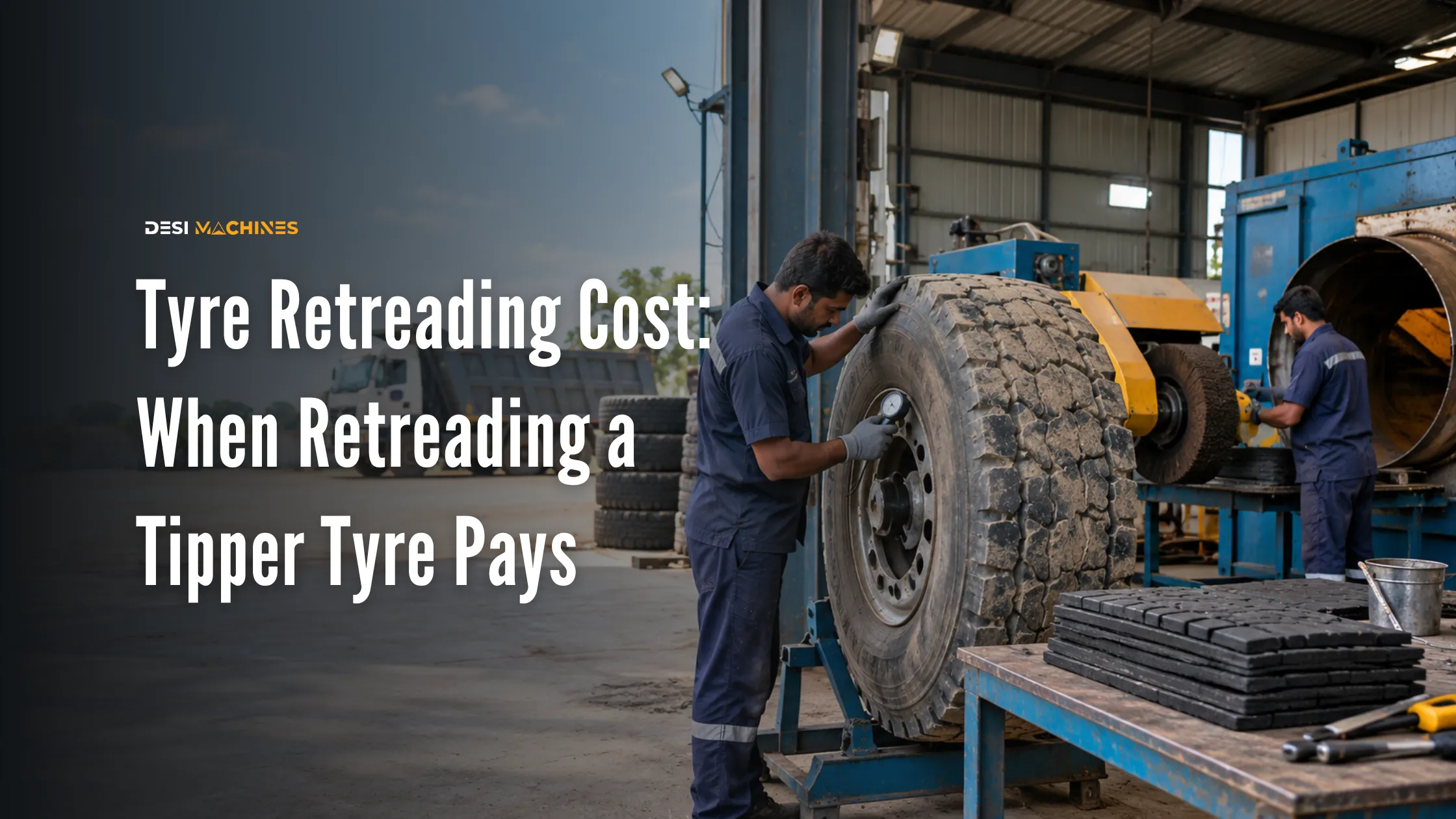
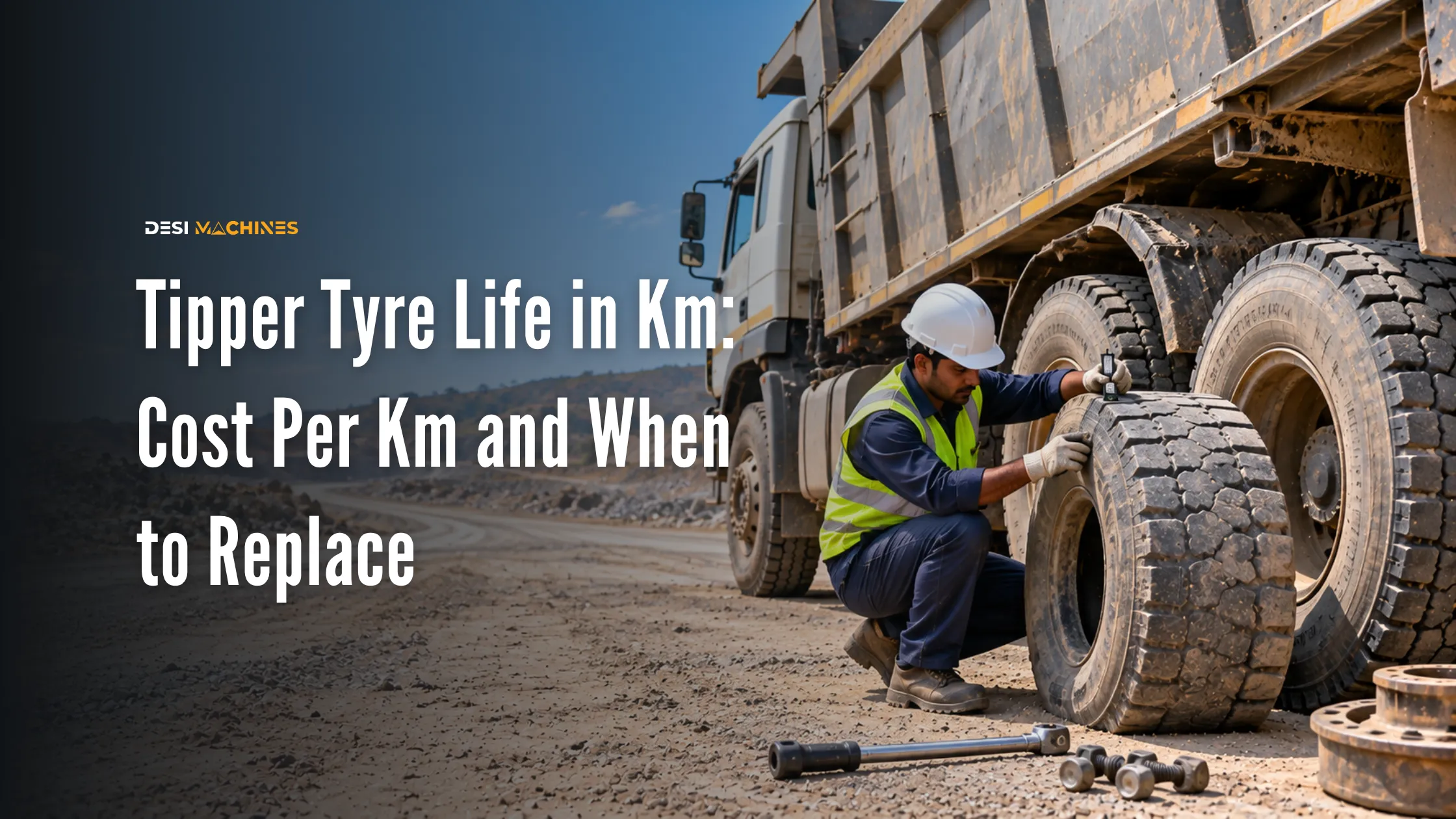
A worn tipper tyre with a sound casing is worth money, and the tyre retreading cost is what you pay to put a new tread on that casing. It pays when the retread’s price, divided by the km it runs, comes out below the same figure for a new tyre. There is no national rate card, so compare written quotes on cost per km, and send only casings that pass the BIS inspection standard IS 15731, because a casing damaged by overloading or running flat should not be retreaded at all.
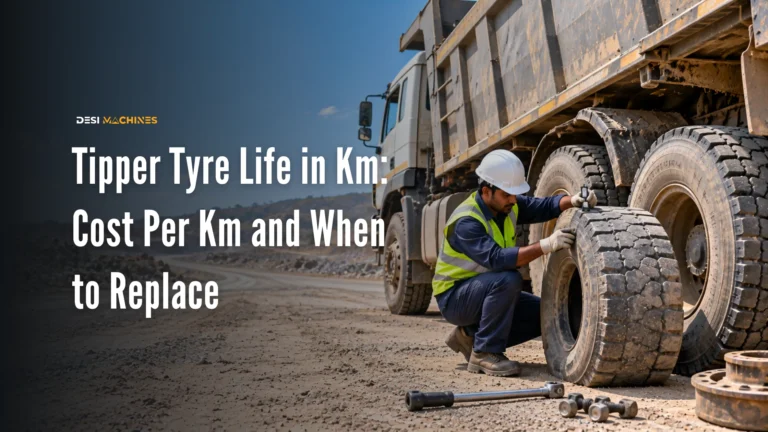
Tyres on a 6×4 tipper are bought ten at a time, and the bill hurts. The casing under a worn tread is the most expensive part of the tyre, and a retreader sells you a second tread on it. Whether that is a saving or a false economy comes down to two numbers you can measure on your own fleet: what each tyre costs, and how far it runs.
What tyre retreading cost actually pays for
Retreading buffs the old tread off a casing, repairs small injuries, and bonds or moulds fresh rubber onto it. The Bureau of Indian Standards covers the trade in four standards, all from its automotive tyres committee (TED 7):
| Standard | What it covers |
|---|---|
| IS 15704:2018 | Specification for retreaded tyres for commercial vehicles: marking, endurance test, load and speed limits |
| IS 15731:2018 | Selecting and inspecting a casing before it is retreaded |
| IS 15524:2004 | Retreading by the pre-cured (cold) process |
| IS 15724:2006 | Retreading by the hot (mould cure) process |
So the quote you get covers inspection, buffing, any repair patches, the tread rubber and the curing. Repairs are where two quotes for the same size drift apart: a clean casing needs none, a cut one may need a patch, and IS 15704 says a patch must withstand twice the tyre’s maximum inflation pressure. Ask for the repair charge to be written separately from the retread price, casing by casing.
The cost-per-km sum that decides it
Do not compare a retread’s price with a new tyre’s price. Compare what each costs for every km it runs.
Take your own records. A new tyre that costs N rupees and runs K km costs N ÷ K per km. A retread that costs R and runs k km costs R ÷ k. Retreading wins when R ÷ k is the smaller figure. Put another way, the retread pays when its price, as a share of a new tyre’s price, is smaller than its km as a share of a new tyre’s km.
The figures below are made up to show the arithmetic. They are not market rates.
| Illustrative case | Price | Km run | Cost per km |
|---|---|---|---|
| New tyre | ₹30,000 | 60,000 | ₹0.50 |
| Retread, good casing | ₹10,000 | 30,000 | ₹0.33 |
| Retread, tired casing that fails early | ₹10,000 | 12,000 | ₹0.83 |
The third row is the trap. A retread on a weak casing that comes off early costs more per km than a new tyre, and it can take a day of the truck off the road when it goes. Add a fair share of that downtime to the retread’s cost before you call it cheaper. The cost of equipment downtime shows how to put a rupee figure on an idle day.
For the new-tyre side of the sum, measure the km on your own trucks, by axle position and by route. The tipper tyre life piece sets out how to log it and how to work out cost per km for the whole vehicle.
The casing decides whether retreading is worth it
Retreading only works on a casing that is still sound. IS 15731 tells the retreader what to reject, and it is worth knowing the list, because most of the causes start on your trucks:
| Where | Reasons IS 15731 gives to reject a casing |
|---|---|
| Whole tyre | Broken or loose cords beyond repair limits, excessive cracking, ply separation, run-flat damage, previous repairs that are failing |
| Bead | Bent, distorted or broken beads, turn-up separation, cuts into the wire that have caused rust or separation |
| Tread area | Wear so deep that buffing is impossible, excessive rust in a radial’s belt package, deep regrooving that has damaged the belt |
| Sidewall | Weather cracks deeper than 2.4 mm, oil or grease contamination |
IS 15704 adds a blunt rule: tyres with visible damage from overload or under-inflation shall not be retreaded. That makes loading and pressure a retreading decision as well as a tyre-life one. A tipper that runs overloaded on soft tyres wears the tread faster and also ruins the casing you were counting on selling a second life to.
Two habits protect the casing. Pull the tyre before the tread is gone. IS 15704 requires at least six rows of tread-wear indicators, which show when the grooves are no more than 1.6 mm deep, and a tyre run past them into the belts may no longer buff cleanly. Then store pulled casings dry: IS 15731 asks for moisture-free storage, with casings stacked flat in piles no higher than eight.
Hot or pre-cured: which process for which job
Pre-cured, often called cold retreading, is covered by IS 15524. The tread arrives already vulcanised and patterned. It is bonded to the buffed casing with a layer of uncured bonding rubber and cured under heat and pressure inside a flexible rubber envelope. The standard limits the tread to no more than two pieces, the shorter at least 300 mm long, and requires the casing to be cemented within 12 hours of buffing.
Hot or mould-cure retreading is covered by IS 15724. Uncured rubber goes on the casing and the tread pattern is formed while it cures inside a mould. It suits sizes and patterns for which no pre-cured tread is available.
Neither standard tells you one process is better. Ask what pattern you will get and whether it suits your haul road. IS 15704 lets a retreader mark the BIS Standard Mark on the tyre but does not require it, so ask whether their retreads carry it.
What a properly retreaded tyre must carry
A retread made to IS 15704 has to show its history on the sidewall, and these markings are the easiest check you have when tyres come back:
The number of times the tyre has been retreaded must be marked. The date of retreading is marked too, by month and year or by week and year. The tyre’s size, structure (radial or bias) and service description stay on it. And the retread may not carry a higher speed symbol or load index than the tyre had in its first life; the standard allows an upgrade only on the first retread of an original tyre.
On performance, IS 15704 runs a drum endurance test: the tyre must finish with no tread, ply or cord separation, chunking or broken cords. The standard does not apply to retreads with a speed capability below 80 km/h, and it notes that a retread’s outer diameter may be up to 1.5 per cent larger than a new tyre’s. That last point matters on a tipper’s rear duals. Pair a retread with a retread of the same size and tread depth, not with a new tyre, or the larger tyre carries more than its share of the load.
Loader and backhoe tyres: OTR retreading
Off-the-road tyres are retreaded too, and the casings are worth more. A JCB 3DX and most other backhoes run 16.9-28 rears, listed at about ₹27,500 to ₹29,000 a tyre (indicative, as of Sep 2026), and a large wheel loader tyre of 20.5-25 or 23.5-25 lists at ₹75,500 to ₹93,000 (indicative, one listing each). Size-by-size prices are in the construction machine tyre price guide.
Be careful with the standard here. IS 15704 is written for commercial vehicle tyres, the categories that include buses, trucks and trailers, and it does not name earthmover sizes. For an OTR tyre, ask the retreader which process and which standard they work to, and judge the job on cost per hour of machine use, since a loader’s hour meter is a better record than its odometer.
Questions to ask a retreader before you hand over casings
Ask whether they inspect every casing to IS 15731 and will return a rejected casing with the reason written on the job card. Ask for the retread price and any repair charge as separate lines. Ask which process they use and whether their retreads carry the BIS Standard Mark. Ask what happens if a retread separates early: a replacement, a credit against the next job, or nothing. And ask how they mark the retread count, because a casing on its third life should be judged differently from one on its first.
Keep the job cards. Over a year they tell you which retreader’s work runs furthest per rupee, which is the only comparison that matters.
The bottom line
Retreading is a cost-per-km decision, not a price decision. It saves money on a sound casing pulled at the right time and loses money on a tired one. Protect the casings with correct loads and pressures, pull tyres before the 1.6 mm mark, and compare retreaders on the km their work actually delivers.
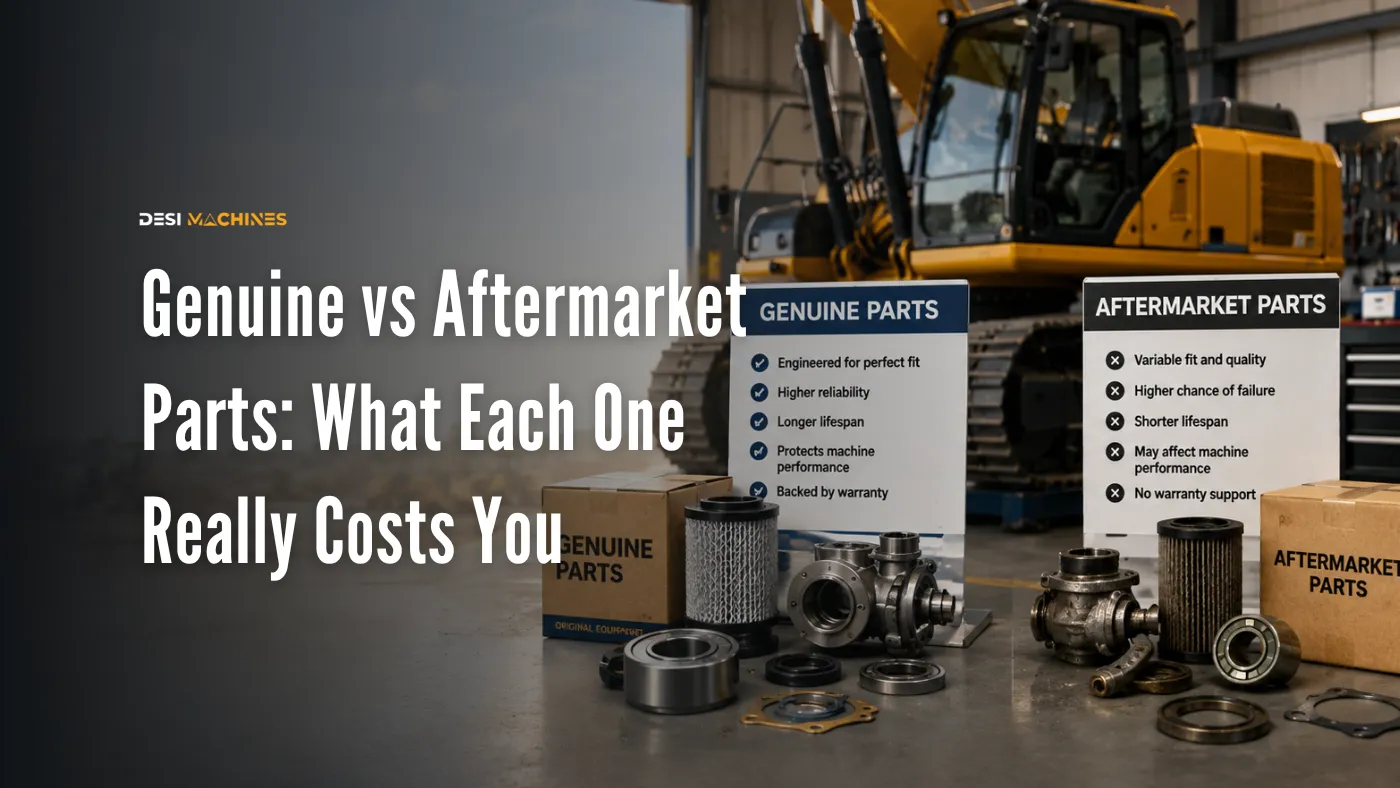
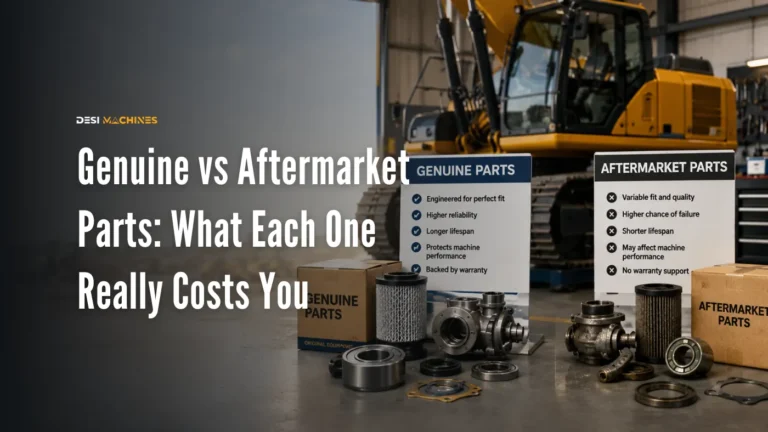
When it is time to buy new instead, compare construction machine tyres from dealers, and if a full set for the fleet is a large outlay, look at equipment finance options. For the wider question of when a cheaper part is a false economy, see genuine vs aftermarket parts.
Rates, schemes, specifications and prices change — confirm current terms with the OEM, dealer, bank or insurer before deciding. Tyre prices quoted are indicative listed prices at the time of writing; the cost-per-km table uses illustrative figures, not market rates.